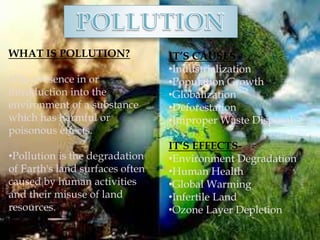
WHAT IS POLLUTION?
•The presence in or
introduction into the
environment of a substance
which has harmful or
poisonous effects.
•Pollution is the degradation
of Earth's land surfaces often
caused by human activities
and their misuse of land
resources.
IT’S CAUSES -
•Industrialization
•Population Growth
•Globalization
•Deforestation
•Improper Waste Disposal
IT’S EFFECTS-
•Environment Degradation
•Human Health
•Global Warming
•Infertile Land
•Ozone Layer Depletion
1. Air Pollution
2. Noise Pollution
3. Soil Pollution
4. Water Pollution
5. Radioactive Pollution
6. Thermal/Heat
Pollution
7. Light Pollution
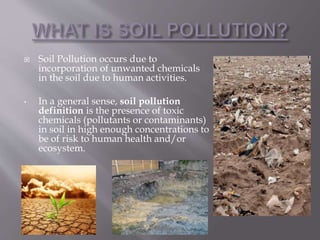
 Soil Pollution occurs due to
incorporation of unwanted chemicals
in the soil due to human activities.
• In a general sense, soil pollution
definition is the presence of toxic
chemicals (pollutants or contaminants)
in soil in high enough concentrations to
be of risk to human health and/or
ecosystem.
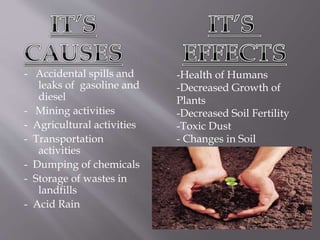
- Accidental spills and
leaks of gasoline and
diesel
- Mining activities
- Agricultural activities
- Transportation
activities
- Dumping of chemicals
- Storage of wastes in
landfills
- Acid Rain
-Health of Humans
-Decreased Growth of
Plants
-Decreased Soil Fertility
-Toxic Dust
- Changes in Soil
Structure
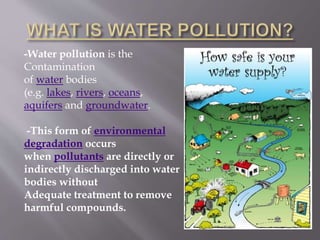
-Water pollution is the
Contamination
of water bodies
(e.g. lakes, rivers, oceans,
aquifers and groundwater.
-This form of environmental
degradation occurs
when pollutants are directly or
indirectly discharged into water
bodies without
Adequate treatment to remove
harmful compounds.
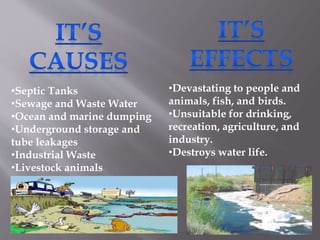
•Septic Tanks
•Sewage and Waste Water
•Ocean and marine dumping
•Underground storage and
tube leakages
•Industrial Waste
•Livestock animals
•Devastating to people and
animals, fish, and birds.
•Unsuitable for drinking,
recreation, agriculture, and
industry.
•Destroys water life.
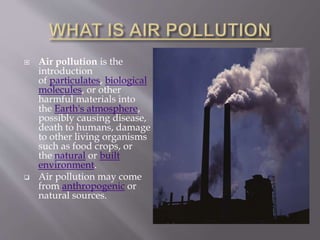
 Air pollution is the
introduction
of particulates, biological
molecules, or other
harmful materials into
the Earth's atmosphere,
possibly causing disease,
death to humans, damage
to other living organisms
such as food crops, or
the natural or built
environment.
 Air pollution may come
from anthropogenic or
natural sources.
1.Burning of Fossil
Fuels
2. Agricultural
Activities
3. Exhaust from
factories and
industries
4. Mining operations
5. Indoor air
pollution:
1. Respiratory and
heart problems
2. Global warming
3. Acid Rain
4. Eutrophication
5. Effect on Wildlife
6. Depletion of Ozone
layer
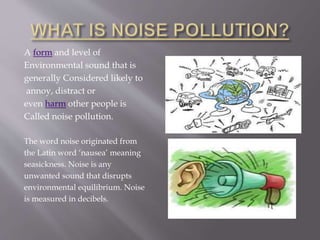
A form and level of
Environmental sound that is
generally Considered likely to
annoy, distract or
even harm other people is
Called noise pollution.
The word noise originated from
the Latin word ‘nausea’ meaning
seasickness. Noise is any
unwanted sound that disrupts
environmental equilibrium. Noise
is measured in decibels.
1. Industrialization
2. Poor Urban
Planning
3. Social Events
4. Transportation
5. Construction
Activities
6. Household Chores
1.Hearing Problems
2. Health Issues
3. Sleeping Disorders
4. Cardiovascular
Issues
5. Trouble
Communicating
6. Effect on Wildlife
 Thermal pollution is the
degradation of water
quality by any process that
changes ambient water
temperature.
 When water used as a
coolant is returned to the
natural environment at a
higher temperature, the
change in temperature
decreases oxygen supply
and affects
ecosystem composition.
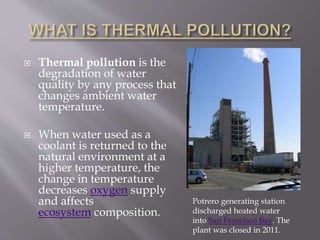
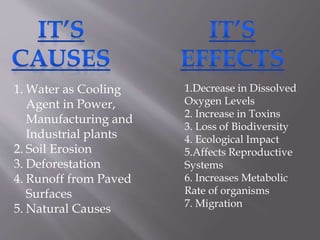
Potrero generating station
discharged heated water
into San Francisco Bay. The
plant was closed in 2011.
1. Water as Cooling
Agent in Power,
Manufacturing and
Industrial plants
2. Soil Erosion
3. Deforestation
4. Runoff from Paved
Surfaces
5. Natural Causes
1.Decrease in Dissolved
Oxygen Levels
2. Increase in Toxins
3. Loss of Biodiversity
4. Ecological Impact
5.Affects Reproductive
Systems
6. Increases Metabolic
Rate of organisms
7. Migration
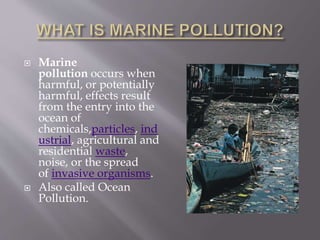
 Marine
pollution occurs when
harmful, or potentially
harmful, effects result
from the entry into the
ocean of
chemicals,particles, ind
ustrial, agricultural and
residential waste,
noise, or the spread
of invasive organisms.
 Also called Ocean
Pollution.
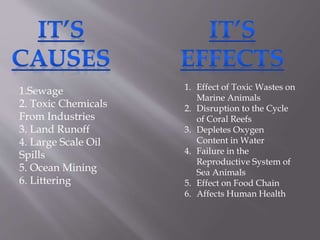
1.Sewage
2. Toxic Chemicals
From Industries
3. Land Runoff
4. Large Scale Oil
Spills
5. Ocean Mining
6. Littering
1. Effect of Toxic Wastes on
Marine Animals
2. Disruption to the Cycle
of Coral Reefs
3. Depletes Oxygen
Content in Water
4. Failure in the
Reproductive System of
Sea Animals
5. Effect on Food Chain
6. Affects Human Health
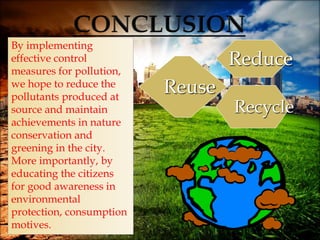
By implementing
effective control
measures for pollution,
we hope to reduce the
pollutants produced at
source and maintain
achievements in nature
conservation and
greening in the city.
More importantly, by
educating the citizens
for good awareness in
environmental
protection, consumption
motives.
Reduce
Recycle
Reuse

POLLUTION

  • 1.
    WHAT IS POLLUTION? •Thepresence in or introduction into the environment of a substance which has harmful or poisonous effects. •Pollution is the degradation of Earth's land surfaces often caused by human activities and their misuse of land resources. IT’S CAUSES - •Industrialization •Population Growth •Globalization •Deforestation •Improper Waste Disposal IT’S EFFECTS- •Environment Degradation •Human Health •Global Warming •Infertile Land •Ozone Layer Depletion
  • 2.
    1. Air Pollution 2.Noise Pollution 3. Soil Pollution 4. Water Pollution 5. Radioactive Pollution 6. Thermal/Heat Pollution 7. Light Pollution
  • 3.
     Soil Pollutionoccurs due to incorporation of unwanted chemicals in the soil due to human activities. • In a general sense, soil pollution definition is the presence of toxic chemicals (pollutants or contaminants) in soil in high enough concentrations to be of risk to human health and/or ecosystem.
  • 4.
    - Accidental spillsand leaks of gasoline and diesel - Mining activities - Agricultural activities - Transportation activities - Dumping of chemicals - Storage of wastes in landfills - Acid Rain -Health of Humans -Decreased Growth of Plants -Decreased Soil Fertility -Toxic Dust - Changes in Soil Structure
  • 5.
    -Water pollution isthe Contamination of water bodies (e.g. lakes, rivers, oceans, aquifers and groundwater. -This form of environmental degradation occurs when pollutants are directly or indirectly discharged into water bodies without Adequate treatment to remove harmful compounds.
  • 6.
    •Septic Tanks •Sewage andWaste Water •Ocean and marine dumping •Underground storage and tube leakages •Industrial Waste •Livestock animals •Devastating to people and animals, fish, and birds. •Unsuitable for drinking, recreation, agriculture, and industry. •Destroys water life.
  • 7.
     Air pollutionis the introduction of particulates, biological molecules, or other harmful materials into the Earth's atmosphere, possibly causing disease, death to humans, damage to other living organisms such as food crops, or the natural or built environment.  Air pollution may come from anthropogenic or natural sources.
  • 8.
    1.Burning of Fossil Fuels 2.Agricultural Activities 3. Exhaust from factories and industries 4. Mining operations 5. Indoor air pollution: 1. Respiratory and heart problems 2. Global warming 3. Acid Rain 4. Eutrophication 5. Effect on Wildlife 6. Depletion of Ozone layer
  • 9.
    A form andlevel of Environmental sound that is generally Considered likely to annoy, distract or even harm other people is Called noise pollution. The word noise originated from the Latin word ‘nausea’ meaning seasickness. Noise is any unwanted sound that disrupts environmental equilibrium. Noise is measured in decibels.
  • 10.
    1. Industrialization 2. PoorUrban Planning 3. Social Events 4. Transportation 5. Construction Activities 6. Household Chores 1.Hearing Problems 2. Health Issues 3. Sleeping Disorders 4. Cardiovascular Issues 5. Trouble Communicating 6. Effect on Wildlife
  • 11.
     Thermal pollutionis the degradation of water quality by any process that changes ambient water temperature.  When water used as a coolant is returned to the natural environment at a higher temperature, the change in temperature decreases oxygen supply and affects ecosystem composition. Potrero generating station discharged heated water into San Francisco Bay. The plant was closed in 2011.
  • 12.
    1. Water asCooling Agent in Power, Manufacturing and Industrial plants 2. Soil Erosion 3. Deforestation 4. Runoff from Paved Surfaces 5. Natural Causes 1.Decrease in Dissolved Oxygen Levels 2. Increase in Toxins 3. Loss of Biodiversity 4. Ecological Impact 5.Affects Reproductive Systems 6. Increases Metabolic Rate of organisms 7. Migration
  • 13.
     Marine pollution occurswhen harmful, or potentially harmful, effects result from the entry into the ocean of chemicals,particles, ind ustrial, agricultural and residential waste, noise, or the spread of invasive organisms.  Also called Ocean Pollution.
  • 14.
    1.Sewage 2. Toxic Chemicals FromIndustries 3. Land Runoff 4. Large Scale Oil Spills 5. Ocean Mining 6. Littering 1. Effect of Toxic Wastes on Marine Animals 2. Disruption to the Cycle of Coral Reefs 3. Depletes Oxygen Content in Water 4. Failure in the Reproductive System of Sea Animals 5. Effect on Food Chain 6. Affects Human Health
  • 15.
    By implementing effective control measuresfor pollution, we hope to reduce the pollutants produced at source and maintain achievements in nature conservation and greening in the city. More importantly, by educating the citizens for good awareness in environmental protection, consumption motives. Reduce Recycle Reuse