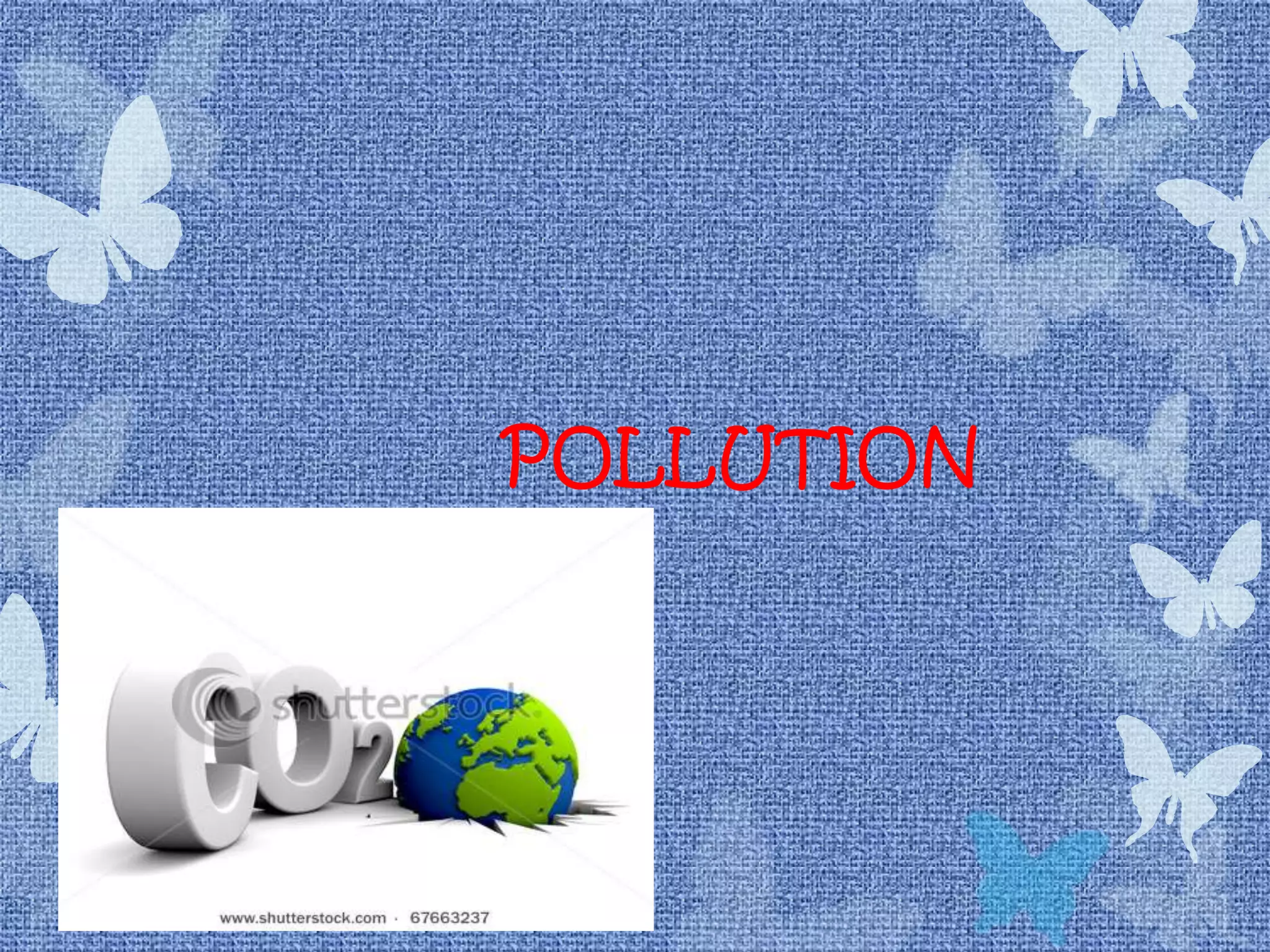
POLLUTION
TYPES OF POLLUTION
Air pollution
Water pollution
Noise pollution
Land pollution
WHAT IS POLLUTION?
Pollution is the introduction of harmful
 chemicals into our environment that
 causes harm or discomfort to the
 ecosystem that is physical systems or
 living organisms.
Pollution can take the form of chemical
 substances or energy, such as noise, heat
 or light.
AIR POLLUTION
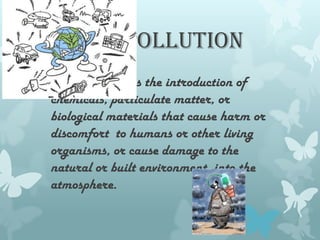
Air pollution is the introduction of
  chemicals, particulate matter, or
  biological materials that cause harm or
  discomfort to humans or other living
  organisms, or cause damage to the
  natural or built environment, into the
  atmosphere.
WATER POLLUTION
Water pollution is the contamination of
 water bodies. Water pollution occurs when
 pollutants are discharged directly or
 indirectly into water bodies.
Water pollution affects plants and
 organisms living in these bodies of water. In
 almost all cases the effect is damaging not
 only to individual species and
 populations, but also to the nature biological
 communities.
Noise pollution


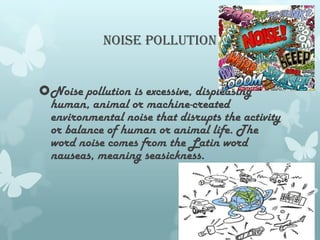
Noise pollution is excessive, displeasing
 human, animal or machine-created
 environmental noise that disrupts the activity
 or balance of human or animal life. The
 word noise comes from the Latin word
 nauseas, meaning seasickness.
LAND POLLUTION
 Land pollution is the degradation of Earth's land
  surfaces often caused by human activities and their misuse
  of land resources. It occurs when waste is not disposed
  properly. Health hazard disposal of urban and industrial
  wastes, exploitation of minerals, and improper use of soil
  by inadequate agricultural practices are a few factors.
  Urbanization and industrialization are major causes of
  land pollution. The Industrial Revolution set a series of
  events into motion which destroyed natural habitats and
  polluted the environment, causing diseases in both humans
  and other species of animals.
Thank you

Final pollution

  • 1.
  • 2.
    TYPES OF POLLUTION Airpollution Water pollution Noise pollution Land pollution
  • 3.
    WHAT IS POLLUTION? Pollutionis the introduction of harmful chemicals into our environment that causes harm or discomfort to the ecosystem that is physical systems or living organisms. Pollution can take the form of chemical substances or energy, such as noise, heat or light.
  • 4.
    AIR POLLUTION Air pollutionis the introduction of chemicals, particulate matter, or biological materials that cause harm or discomfort to humans or other living organisms, or cause damage to the natural or built environment, into the atmosphere.
  • 5.
    WATER POLLUTION Water pollutionis the contamination of water bodies. Water pollution occurs when pollutants are discharged directly or indirectly into water bodies. Water pollution affects plants and organisms living in these bodies of water. In almost all cases the effect is damaging not only to individual species and populations, but also to the nature biological communities.
  • 6.
    Noise pollution Noise pollutionis excessive, displeasing human, animal or machine-created environmental noise that disrupts the activity or balance of human or animal life. The word noise comes from the Latin word nauseas, meaning seasickness.
  • 7.
    LAND POLLUTION  Landpollution is the degradation of Earth's land surfaces often caused by human activities and their misuse of land resources. It occurs when waste is not disposed properly. Health hazard disposal of urban and industrial wastes, exploitation of minerals, and improper use of soil by inadequate agricultural practices are a few factors. Urbanization and industrialization are major causes of land pollution. The Industrial Revolution set a series of events into motion which destroyed natural habitats and polluted the environment, causing diseases in both humans and other species of animals.
  • 8.