English Painting
Project work
Bogdana Lesiv
Form 11
School №1
Painting in England began to develop later
than in over European countries. That's
why some of the greatest foreign masters
were attracted to England by the titles of
nobility conferred upon them. Holbein,
Antonio Mor, Rubens, Van Dyck were
almost English painters during longer or
shorter periods of their lives.
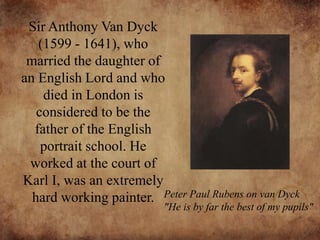
Sir Anthony Van Dyck
(1599 - 1641), who
married the daughter of
an English Lord and who
died in London is
considered to be the
father of the English
portrait school. He
worked at the court of
Karl I, was an extremely
hard working painter. Peter Paul Rubens on van Dyck
"He is by far the best of my pupils"
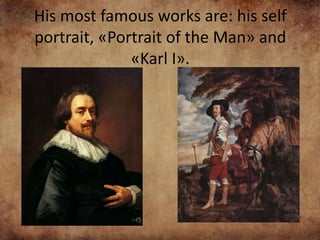
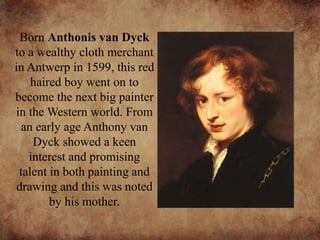
His most famous works are: his self
portrait, «Portrait of the Man» and
«Karl I».
Born Anthonis van Dyck
to a wealthy cloth merchant
in Antwerp in 1599, this red
haired boy went on to
become the next big painter
in the Western world. From
an early age Anthony van
Dyck showed a keen
interest and promising
talent in both painting and
drawing and this was noted
by his mother.
Anthony van Dyck was a recognized
artist across Europe
• He completed a total of 99 paintings, 72 of which were
portraits. It is believed that Rubens encouraged him to
focus on portraiture as it was obvious that this is where
his talent lay. The artist's portraits were mostly of
subjects from Royal and aristocratic circles whom he
had met on his pilgrimage to Italy.
• As well as portraits, van Dyck spent a great deal of time
painting religious works in Antwerp and these were in
great demand from local churches and royalty and the
artist was eventually made England's leading court
painter.
No other artist has lived such a rich life
as Anthony van Dyck and this was
most probably due to his extremely
sensitive nature and devoted
relationship with his mother. Just like
his paintings, van Dyck's life is a rich
picture full of dramatic events.
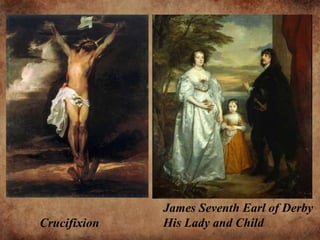
Crucifixion
James Seventh Earl of Derby
His Lady and Child
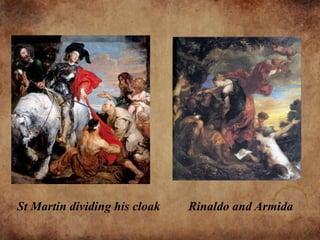
St Martin dividing his cloak Rinaldo and Armida
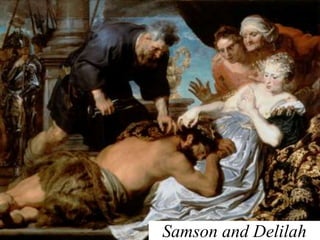
Samson and Delilah

English Painting

  • 1.
    English Painting Project work BogdanaLesiv Form 11 School №1
  • 2.
    Painting in Englandbegan to develop later than in over European countries. That's why some of the greatest foreign masters were attracted to England by the titles of nobility conferred upon them. Holbein, Antonio Mor, Rubens, Van Dyck were almost English painters during longer or shorter periods of their lives.
  • 3.
    Sir Anthony VanDyck (1599 - 1641), who married the daughter of an English Lord and who died in London is considered to be the father of the English portrait school. He worked at the court of Karl I, was an extremely hard working painter. Peter Paul Rubens on van Dyck "He is by far the best of my pupils"
  • 4.
    His most famousworks are: his self portrait, «Portrait of the Man» and «Karl I».
  • 5.
    Born Anthonis vanDyck to a wealthy cloth merchant in Antwerp in 1599, this red haired boy went on to become the next big painter in the Western world. From an early age Anthony van Dyck showed a keen interest and promising talent in both painting and drawing and this was noted by his mother.
  • 6.
    Anthony van Dyckwas a recognized artist across Europe • He completed a total of 99 paintings, 72 of which were portraits. It is believed that Rubens encouraged him to focus on portraiture as it was obvious that this is where his talent lay. The artist's portraits were mostly of subjects from Royal and aristocratic circles whom he had met on his pilgrimage to Italy. • As well as portraits, van Dyck spent a great deal of time painting religious works in Antwerp and these were in great demand from local churches and royalty and the artist was eventually made England's leading court painter.
  • 7.
    No other artisthas lived such a rich life as Anthony van Dyck and this was most probably due to his extremely sensitive nature and devoted relationship with his mother. Just like his paintings, van Dyck's life is a rich picture full of dramatic events.
  • 8.
    Crucifixion James Seventh Earlof Derby His Lady and Child
  • 9.
    St Martin dividinghis cloak Rinaldo and Armida
  • 10.