Energy Systems
Kaylum Storey
What is energy and where do we get it
from?
 Energy is what gives us the capacity to do stuff, which includes:
-Muscular contractions (movement)
-Circulation
-Transmissions of nerve impulses
-Digestion of foods
-Repairing and replacing tissues
 It is the bodies fuel, and is in the form of ATP (Adenosine Triphosphate),
made by 3 energy systems. ATP is found in almost every cell and the
majority of ATP is made in the mitochondria.
 We get most of our energy from food such as carbohydrates, proteins and
fats, but also from phosphate creatine, which comes from the muscles.
Immediate energy system/Creatine Phosphate
system
 This is ATP which is stored in the muscles, readily available. It works by
getting creatine phosphate and attaching it to Adenosine Diphosphate.
This creates ATP.
 It works without the presence of oxygen, meaning it is anaerobic. As a
result it works for a limited amount of time, about 5-10 seconds, as
there is also limited creatine phosphate available. No oxygen is required
as the creatine phosphate does not need to be broken down.
 Creatine phosphate is produced and stored in the muscles.
 The system only produces 1 ATP.
Sports the system is used in
 It works when energy is required instantaneously during high
intensity exercise. It is mainly used in track and field event
sports such as 100 and 200 meter sprints.
 It requires the use of fast twitch muscle fibers as they are used
for high intensity movement and strength over a short period of
time.
 The recovery rate after using this system is around 1 minute
and 30 seconds, although this depends on the duration,
intensity and fitness levels of the person.
ATP+Creatine Phosphate ATP+Creatine
Advantages and Disadvantages
 Advantages- You are able to perform high intensity
exercise, without needing oxygen, while also producing no
by products. It is also the quickest system of them all and
does not take too long too recover.
 Disadvantages- It can only be used for a short amount of
time, as you only have limited creatine phosphate
available. The use of this system will also lead to a large
oxygen debt.
Short term energy system/Lactic acid
system
 The short term energy system is used for a higher intensity
exercise over a longer period of time at the start of exercise,
usually for about 2-3 minutes. After this the muscles will fill
with lactic acid and as you fatigue, you then work more slowly.
 It uses glycogen stored in the liver and muscles and is made
without the presence of oxygen, meaning it is anaerobic. It
does this by adding glycogen to adenosine triphosphate which
produces ATP. This produces a by product of lactic acid.
 The system is used when the intensity of the exercise is higher
than the aerobic capacity
 The glycogen used is found in all foods.
 The system produces 2 or 3 ATP.
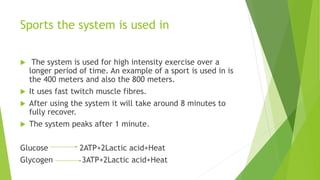
Sports the system is used in
 The system is used for high intensity exercise over a
longer period of time. An example of a sport is used in is
the 400 meters and also the 800 meters.
 It uses fast twitch muscle fibres.
 After using the system it will take around 8 minutes to
fully recover.
 The system peaks after 1 minute.
Glucose 2ATP+2Lactic acid+Heat
Glycogen 3ATP+2Lactic acid+Heat
Advantages and disadvantages
 Advantages- You are able to work for a high intensity and
yet work longer than you can using the creatine phosphate
system.
 Disadvantages-The system produces lactic acid as a by
product which can cause aches and pains in the muscles.
Long term energy system/Aerobic
energy system
 This system works by breaking down glycogen with oxygen. This
attaches to ADP to create ATP.
 The long term energy system is used over a longer period of time for
lower intensity exercise.
 It requires the use of oxygen, meaning it is aerobic, and works for
exercise that is over 3 minutes long.
 The system uses food to produce glycogen and produces by products
of waste substances such as sweat and carbon dioxide.
 Using this system in training will increase mitochondria and oxygen
supply.
 The use of molecule glucose produces 38 ATP, but if fatty acids is used
as an alternative molecule, 129 ATP is produced.
Sports the system is used in
 The system is used during rhythmical, repetitive activities such as
long distance running, cycling and swimming where the performer
is working at sub maximal intensity for a long period of time.
 It uses slow twitch muscle fibres because the muscles are working
for a long period of time at low intensity. This is suited for the
aerobic system.
 After using the system it can take up to 3 or 4 days to fully recover.
Glucose+Oxygen 38 ATP+Carbon Dioxide+Water+Heat
Fatty Acids+Oxygen 129 ATP+Carbon Dioxide+Water+Heat
Advantages and disadvantages
 Advantages-The aerobic system allows you to work for a
long period of time. This means it will be much better
suited for long distance events compared to the other two
systems.
 Disadvantages- The system only allows you to work at sub
maximal intensity but it is also difficult to take in enough
oxygen needed for the muscles to continue working. The
other two systems both work at a high intensity and also
require no oxygen.
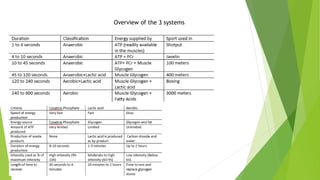
Overview of the 3 systems

Energy systems

  • 1.
  • 2.
    What is energyand where do we get it from?  Energy is what gives us the capacity to do stuff, which includes: -Muscular contractions (movement) -Circulation -Transmissions of nerve impulses -Digestion of foods -Repairing and replacing tissues  It is the bodies fuel, and is in the form of ATP (Adenosine Triphosphate), made by 3 energy systems. ATP is found in almost every cell and the majority of ATP is made in the mitochondria.  We get most of our energy from food such as carbohydrates, proteins and fats, but also from phosphate creatine, which comes from the muscles.
  • 3.
    Immediate energy system/CreatinePhosphate system  This is ATP which is stored in the muscles, readily available. It works by getting creatine phosphate and attaching it to Adenosine Diphosphate. This creates ATP.  It works without the presence of oxygen, meaning it is anaerobic. As a result it works for a limited amount of time, about 5-10 seconds, as there is also limited creatine phosphate available. No oxygen is required as the creatine phosphate does not need to be broken down.  Creatine phosphate is produced and stored in the muscles.  The system only produces 1 ATP.
  • 4.
    Sports the systemis used in  It works when energy is required instantaneously during high intensity exercise. It is mainly used in track and field event sports such as 100 and 200 meter sprints.  It requires the use of fast twitch muscle fibers as they are used for high intensity movement and strength over a short period of time.  The recovery rate after using this system is around 1 minute and 30 seconds, although this depends on the duration, intensity and fitness levels of the person. ATP+Creatine Phosphate ATP+Creatine
  • 5.
    Advantages and Disadvantages Advantages- You are able to perform high intensity exercise, without needing oxygen, while also producing no by products. It is also the quickest system of them all and does not take too long too recover.  Disadvantages- It can only be used for a short amount of time, as you only have limited creatine phosphate available. The use of this system will also lead to a large oxygen debt.
  • 6.
    Short term energysystem/Lactic acid system  The short term energy system is used for a higher intensity exercise over a longer period of time at the start of exercise, usually for about 2-3 minutes. After this the muscles will fill with lactic acid and as you fatigue, you then work more slowly.  It uses glycogen stored in the liver and muscles and is made without the presence of oxygen, meaning it is anaerobic. It does this by adding glycogen to adenosine triphosphate which produces ATP. This produces a by product of lactic acid.  The system is used when the intensity of the exercise is higher than the aerobic capacity  The glycogen used is found in all foods.  The system produces 2 or 3 ATP.
  • 7.
    Sports the systemis used in  The system is used for high intensity exercise over a longer period of time. An example of a sport is used in is the 400 meters and also the 800 meters.  It uses fast twitch muscle fibres.  After using the system it will take around 8 minutes to fully recover.  The system peaks after 1 minute. Glucose 2ATP+2Lactic acid+Heat Glycogen 3ATP+2Lactic acid+Heat
  • 8.
    Advantages and disadvantages Advantages- You are able to work for a high intensity and yet work longer than you can using the creatine phosphate system.  Disadvantages-The system produces lactic acid as a by product which can cause aches and pains in the muscles.
  • 9.
    Long term energysystem/Aerobic energy system  This system works by breaking down glycogen with oxygen. This attaches to ADP to create ATP.  The long term energy system is used over a longer period of time for lower intensity exercise.  It requires the use of oxygen, meaning it is aerobic, and works for exercise that is over 3 minutes long.  The system uses food to produce glycogen and produces by products of waste substances such as sweat and carbon dioxide.  Using this system in training will increase mitochondria and oxygen supply.  The use of molecule glucose produces 38 ATP, but if fatty acids is used as an alternative molecule, 129 ATP is produced.
  • 10.
    Sports the systemis used in  The system is used during rhythmical, repetitive activities such as long distance running, cycling and swimming where the performer is working at sub maximal intensity for a long period of time.  It uses slow twitch muscle fibres because the muscles are working for a long period of time at low intensity. This is suited for the aerobic system.  After using the system it can take up to 3 or 4 days to fully recover. Glucose+Oxygen 38 ATP+Carbon Dioxide+Water+Heat Fatty Acids+Oxygen 129 ATP+Carbon Dioxide+Water+Heat
  • 11.
    Advantages and disadvantages Advantages-The aerobic system allows you to work for a long period of time. This means it will be much better suited for long distance events compared to the other two systems.  Disadvantages- The system only allows you to work at sub maximal intensity but it is also difficult to take in enough oxygen needed for the muscles to continue working. The other two systems both work at a high intensity and also require no oxygen.
  • 12.
    Overview of the3 systems