Energy  resources
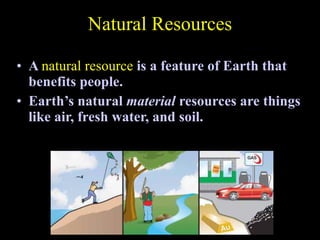
Natural Resources A  natural resource   is a feature of Earth that benefits people. Earth’s natural  material  resources are things like air, fresh water, and soil.
16.2 Electricity from fossil fuels A  nonrenewable resource   is not replaced as it is used.  Because it takes so long for these resources to form,  someday  we will not have enough fossil fuels to produce the electricity we need. The three major fossil fuels are  coal, oil, and natural gas. Video clip on fossil fuels
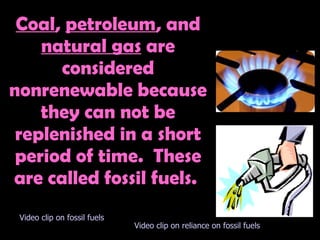
COAL, PETROLEUM, AND GAS Coal ,  petroleum , and  natural gas  are considered nonrenewable because they can not be replenished in a short period of time.  These are called fossil fuels.  Video clip on fossil fuels Video clip on reliance on fossil fuels
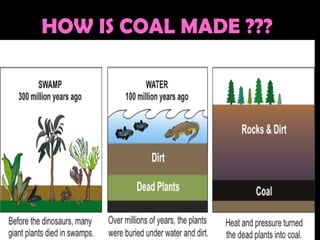
HOW IS COAL MADE ???
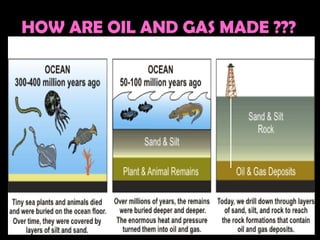
HOW ARE OIL AND GAS MADE ???
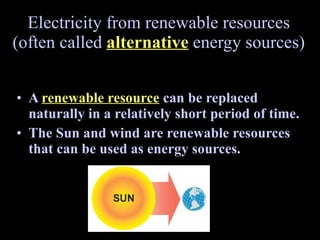
Electricity from renewable resources (often called  alternative  energy sources) A  renewable resource   can be replaced naturally in a relatively short period of time.  The Sun and wind are renewable resources that can be used as energy sources.
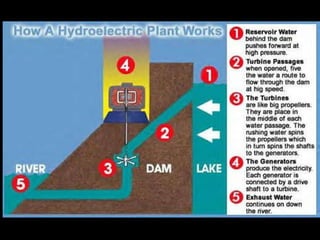
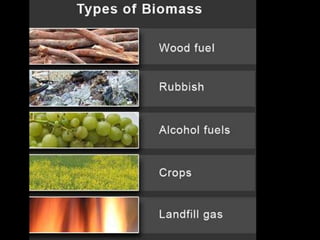
Electricity from renewable resources It is also possible to use: moving water (hydroelectric) hot spots near Earth’s surface (geothermal) Energy from plant material (biomass) Let’s look at some of these!
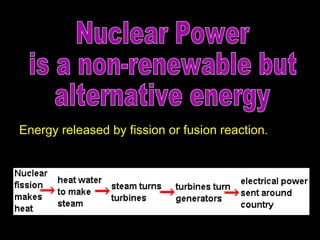
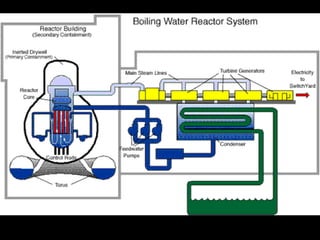
Nuclear Power is a non-renewable but  alternative energy Energy released by fission (or fusion) reaction.
 
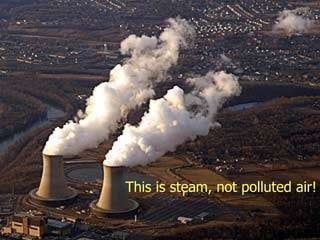
This is steam, not polluted air!
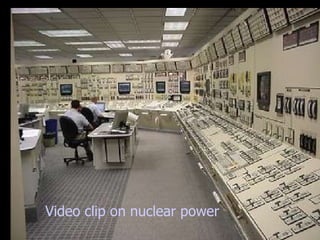
Video clip on nuclear power
Nuclear power costs about the same as coal,  so it's not expensive to make.   Does not produce smoke or carbon dioxide,  so it does not contribute to the greenhouse effect. Produces huge amounts of energy from small amounts of fuel. Nuclear power is reliable.  Advantages
- Although not much waste is produced,  it is very, very dangerous. It must be  sealed up and buried for many years to the radioactivity to die away.  -  Nuclear power is reliable, but a lot of  money has to be spent on safety . If it does go wrong, a nuclear accident  can be a major disaster.  Disadvantages
 
 
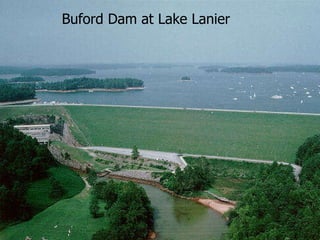
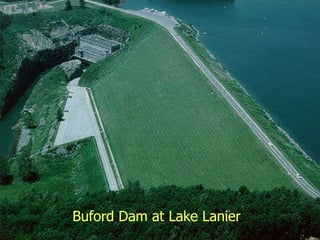
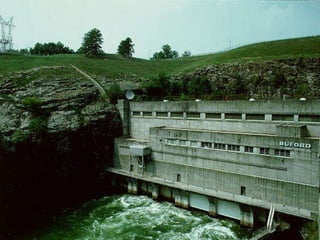
Buford Dam at Lake Lanier
 
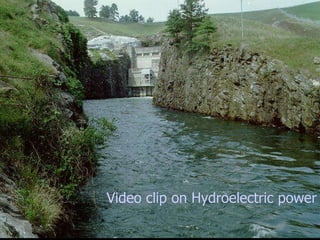
Video clip on Hydroelectric power
- Once the dam is built, the energy is free.  -   No waste or pollution produced. -   Much more reliable than wind, or solar    power.  -   Water can be stored above the dam ready   to cope with peaks in demand. -   Electricity can be generated constantly.  Advantages
Disadvantages The dams are very expensive to build. However,  many dams are also used for flood control or irrigation, so building costs can be shared.  -   Building a large dam will flood a very large area upstream, causing problems for animals that  used to live there.   - Finding a suitable site can be difficult –  the impact on residents and the  environment may be unacceptable.
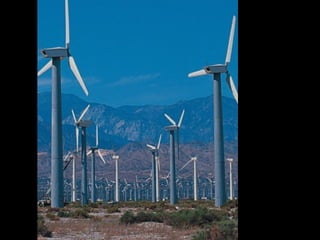
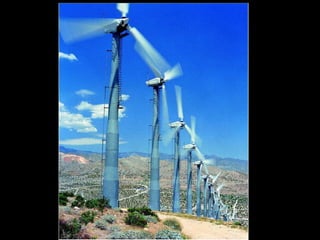
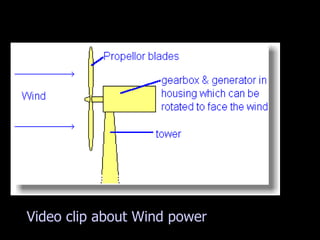
Wind power Windmills are built together in a “wind farm.” The use of a windmill to drive an electric generator.
 
 
Video clip about Wind power
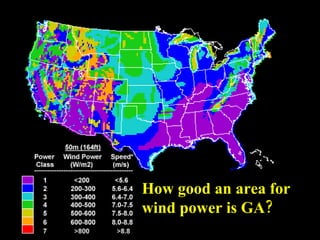
How good an area for wind power is GA?                                                                       
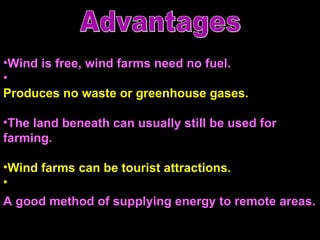
Wind is free, wind farms need no fuel.  Produces no waste or greenhouse gases.  The land beneath can usually still be used for farming. Wind farms can be tourist attractions.  A good method of supplying energy to remote areas.   Advantages
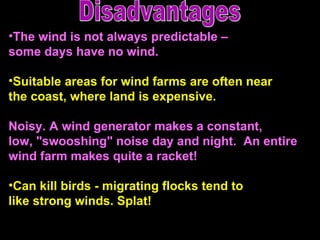
The wind is not always predictable –  some days have no wind.  Suitable areas for wind farms are often near  the coast, where land is expensive. Noisy. A wind generator makes a constant,  low, "swooshing" noise day and night.  An entire wind farm makes quite a racket!   Can kill birds - migrating flocks tend to  like strong winds. Splat!  Disadvantages
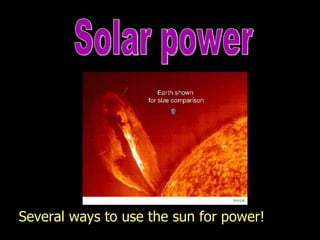
Solar power Several ways to use the sun for power! The energy received by Earth from the sun in the form of radiation.
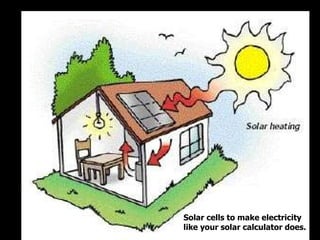
Solar cells to make electricity like your solar calculator does.
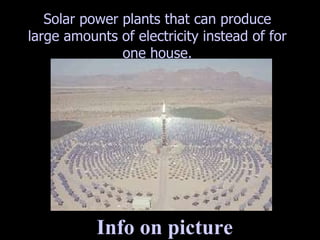
Info on picture Solar power plants that can produce large amounts of electricity instead of for one house.
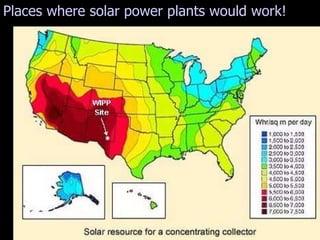
Places where solar power plants would work!
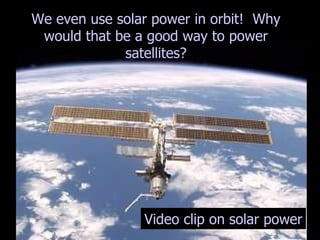
We even use solar power in orbit!  Why would that be a good way to power satellites? Video clip on solar power
Solar energy is free - it needs no fuel and produces no waste or pollution. In sunny countries, solar power  can be used  where there is no easy way to get electricity to a remote place.  Advantages
Doesn't work at night.  Very expensive to build solar  power stations. Solar cells cost a lot to make. Can be unreliable unless you're  in a very sunny climate. Disadvantages
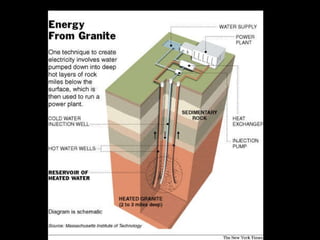
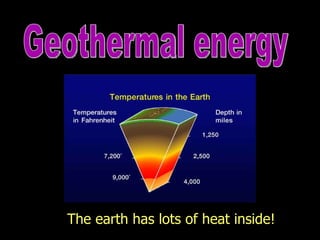
Geothermal energy The energy produced by heat within the Earth.
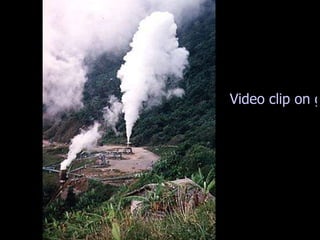
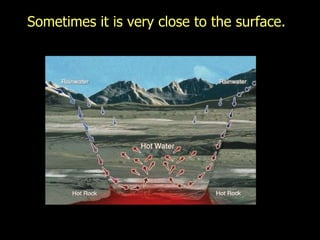
Sometimes it is very close to the surface.
 
Video clip on geothermal energy
What do you think would be the advantages and disadvantages of geothermal energy?
 
 
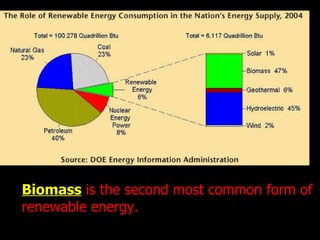
Biomass  is the second most common form of renewable energy.
What do you think would be the advantages and disadvantages of biomass energy? Short video review of energy
 
Use them only when necessary. Take care of them even when you are not using them.
 
Soil   Conservation  n any method to maintain the fertility of the soil by protecting it .  erosion
Soil Conservation Techniques  Contour Plowing :  farmers plow across the slope of hills to prevent erosion. Terracing :  changes one steep hill into a series of smaller, flatter fields. Crop Rotation :  farmers rotate the crops in their fields to use either less, or different nutrients from the soil. No-till farming : is the practice of leaving old stalks on the field instead of picking them up. It provides cover from the rain, and prevents erosion.

09 10 Energy Sources Carol

  • 1.
  • 2.
    Natural Resources A natural resource is a feature of Earth that benefits people. Earth’s natural material resources are things like air, fresh water, and soil.
  • 3.
    16.2 Electricity fromfossil fuels A nonrenewable resource is not replaced as it is used. Because it takes so long for these resources to form, someday we will not have enough fossil fuels to produce the electricity we need. The three major fossil fuels are coal, oil, and natural gas. Video clip on fossil fuels
  • 4.
    COAL, PETROLEUM, ANDGAS Coal , petroleum , and natural gas are considered nonrenewable because they can not be replenished in a short period of time. These are called fossil fuels. Video clip on fossil fuels Video clip on reliance on fossil fuels
  • 5.
    HOW IS COALMADE ???
  • 6.
    HOW ARE OILAND GAS MADE ???
  • 7.
    Electricity from renewableresources (often called alternative energy sources) A renewable resource can be replaced naturally in a relatively short period of time. The Sun and wind are renewable resources that can be used as energy sources.
  • 8.
    Electricity from renewableresources It is also possible to use: moving water (hydroelectric) hot spots near Earth’s surface (geothermal) Energy from plant material (biomass) Let’s look at some of these!
  • 9.
    Nuclear Power isa non-renewable but alternative energy Energy released by fission (or fusion) reaction.
  • 10.
  • 11.
    This is steam,not polluted air!
  • 12.
    Video clip onnuclear power
  • 13.
    Nuclear power costsabout the same as coal, so it's not expensive to make. Does not produce smoke or carbon dioxide, so it does not contribute to the greenhouse effect. Produces huge amounts of energy from small amounts of fuel. Nuclear power is reliable. Advantages
  • 14.
    - Although notmuch waste is produced, it is very, very dangerous. It must be sealed up and buried for many years to the radioactivity to die away. - Nuclear power is reliable, but a lot of money has to be spent on safety . If it does go wrong, a nuclear accident can be a major disaster. Disadvantages
  • 15.
  • 16.
  • 17.
    Buford Dam atLake Lanier
  • 18.
    Buford Dam atLake Lanier
  • 19.
  • 20.
    Video clip onHydroelectric power
  • 21.
    - Once thedam is built, the energy is free. - No waste or pollution produced. - Much more reliable than wind, or solar power. - Water can be stored above the dam ready to cope with peaks in demand. - Electricity can be generated constantly. Advantages
  • 22.
    Disadvantages The damsare very expensive to build. However, many dams are also used for flood control or irrigation, so building costs can be shared. - Building a large dam will flood a very large area upstream, causing problems for animals that used to live there. - Finding a suitable site can be difficult – the impact on residents and the environment may be unacceptable.
  • 23.
    Wind power Windmillsare built together in a “wind farm.” The use of a windmill to drive an electric generator.
  • 24.
  • 25.
  • 26.
    Video clip aboutWind power
  • 27.
    How good anarea for wind power is GA?                                                                       
  • 28.
    Wind is free,wind farms need no fuel. Produces no waste or greenhouse gases. The land beneath can usually still be used for farming. Wind farms can be tourist attractions. A good method of supplying energy to remote areas. Advantages
  • 29.
    The wind isnot always predictable – some days have no wind. Suitable areas for wind farms are often near the coast, where land is expensive. Noisy. A wind generator makes a constant, low, "swooshing" noise day and night. An entire wind farm makes quite a racket! Can kill birds - migrating flocks tend to like strong winds. Splat! Disadvantages
  • 30.
    Solar power Severalways to use the sun for power! The energy received by Earth from the sun in the form of radiation.
  • 31.
    Solar cells tomake electricity like your solar calculator does.
  • 32.
    Info on pictureSolar power plants that can produce large amounts of electricity instead of for one house.
  • 33.
    Places where solarpower plants would work!
  • 34.
    We even usesolar power in orbit! Why would that be a good way to power satellites? Video clip on solar power
  • 35.
    Solar energy isfree - it needs no fuel and produces no waste or pollution. In sunny countries, solar power can be used where there is no easy way to get electricity to a remote place. Advantages
  • 36.
    Doesn't work atnight. Very expensive to build solar power stations. Solar cells cost a lot to make. Can be unreliable unless you're in a very sunny climate. Disadvantages
  • 37.
    Geothermal energy Theenergy produced by heat within the Earth.
  • 38.
    Sometimes it isvery close to the surface.
  • 39.
  • 40.
    Video clip ongeothermal energy
  • 41.
    What do youthink would be the advantages and disadvantages of geothermal energy?
  • 42.
  • 43.
  • 44.
    Biomass isthe second most common form of renewable energy.
  • 45.
    What do youthink would be the advantages and disadvantages of biomass energy? Short video review of energy
  • 46.
  • 47.
    Use them onlywhen necessary. Take care of them even when you are not using them.
  • 48.
  • 49.
    Soil Conservation n any method to maintain the fertility of the soil by protecting it . erosion
  • 50.
    Soil Conservation Techniques Contour Plowing : farmers plow across the slope of hills to prevent erosion. Terracing : changes one steep hill into a series of smaller, flatter fields. Crop Rotation : farmers rotate the crops in their fields to use either less, or different nutrients from the soil. No-till farming : is the practice of leaving old stalks on the field instead of picking them up. It provides cover from the rain, and prevents erosion.