Emporiatrics
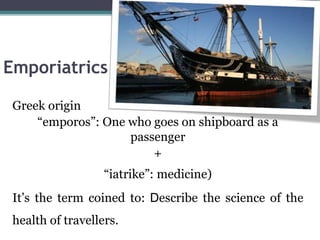
Greek origin
“emporos”: One who goes on shipboard as a
passenger
+
“iatrike”: medicine)
It’s the term coined to: Describe the science of the
health of travellers.
• It is a science which deals with promoting and
protecting the health of international travelers,
providing them the advice related to the travel they are
about to undertake.
• It is a fast developing specialty as the international
travel is fast increasing.
• Every year 660 million people travel internationally.
Definition
• Practice of “Emporiatrics”
• Rapid development over the last 25 years
• Fairfield Hospital in Melbourne started the first ever
travel clinic in early-mid 80’s
• Now a recognized clinical entity primarily involved
in risk management
• Strong overlap with public health and occupational
health and general practice
Travel Medicine
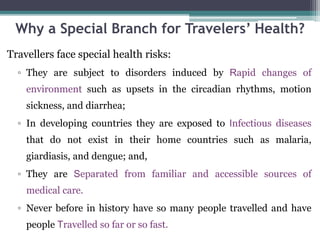
Why a Special Branch for Travelers’ Health?
Travellers face special health risks:
▫ They are subject to disorders induced by Rapid changes of
environment such as upsets in the circadian rhythms, motion
sickness, and diarrhea;
▫ In developing countries they are exposed to Infectious diseases
that do not exist in their home countries such as malaria,
giardiasis, and dengue; and,
▫ They are Separated from familiar and accessible sources of
medical care.
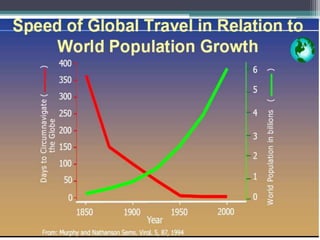
▫ Never before in history have so many people travelled and have
people Travelled so far or so fast.
Types of Travellers:
• Business men and
• Tourists
▫ VFR
▫ Non VFR
They often travel by air or railways (The records of which are
available)
• Immigrants,
• Refugees, and
• Migrant laborers
Who frequently travel by other means
Documented
Undocumented
So Who’s Responsibility is Emporiatrics?
• Meeting the health needs of these travellers who are
moving rapidly between countries and continents is
a responsibility shared by:
▫ the medical professionals,
▫ by the travellers themselves,
▫ by travel organizations,
▫ by airline and shipping companies, and
▫ by host governments for policy making
• Knowledge of morbidity and mortality of travellers
• Understanding of epidemiology and geography of communicable
diseases
• Awareness of non-communicable risks
• Vaccines, indications, side-effects
• Knowledge of post-travel illness presentation and management
• Geography , esp of major tourist destinations
• Ability to communicate complex issues in simple ways
• Understanding of when to refer
Knowledge of Travel- Related Risks
• Food and Water
• Insects
• Animals and Birds
• Environmental hazards
▫ Soil
▫ Sun
▫ Heat/humidity
▫ Cold/ dry
• Altitude
• Marine hazards
• Respiratory Hazards
• Sex and body-fluid exposure
• Vehicular and other Accidents
• DVT risk
Risk to be considered and discussed
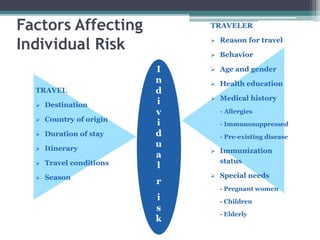
Factors Affecting
Individual Risk
I
n
d
i
v
i
d
u
a
l
r
i
s
k
TRAVEL
 Destination
 Country of origin
 Duration of stay
 Itinerary
 Travel conditions
 Season
TRAVELER
 Reason for travel
 Behavior
 Age and gender
 Health education
 Medical history
- Allergies
- Immunosuppressed
- Pre-existing disease
 Immunization
status
 Special needs
- Pregnant women
- Children
- Elderly
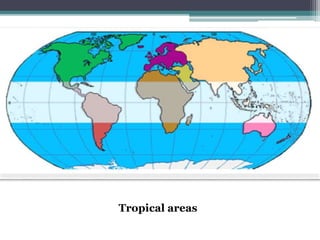
WorldMap
Tropical areas
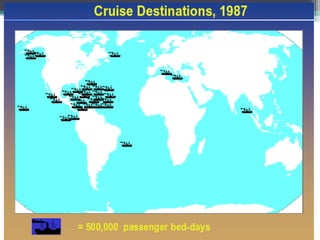
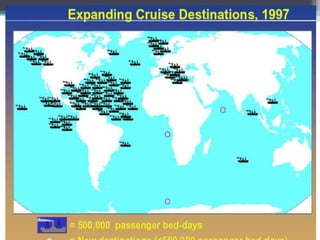
• Cruise ships
• Diving
• Extended stay
• Extreme travel
• Mass gatherings
• Wilderness
Special itineraries
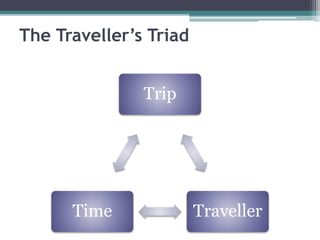
The Traveller’s Triad
Trip
TravellerTime
• Person: medical conditions past and present,
allergies, medications, vaccine history, previous
travel
• Trip: reason, style and comfort level, rural vs urban,
accommodation, activities, exposures, budget
• Time: duration, season, frequency
“This Person, This Trip, This Time”
• Identifying risks for individuals or groups
• Advising about risk reduction strategies
• Recommending and providing risk reduction
interventions
• Encouraging behavioral change to change risk level
Risk Management
• Information enabling behaviour modification
• Vaccinations
• Medications (including antimalarials)
• Other- travel insurance, pre existing medical
problems, nets, syringes, medical kits
Risk Reduction Interventions
• Understand basic current epidemiology
• Be aware of outbreaks and emergent issues
• Provide written material targeting specific risks
• Be able to communicate using electronic media
Provide Up-to date Information
• Cornerstone of clinical decision process
▫ Opportunity to define the risk profile
▫ Requires appropriate time, and done in advance of travel.
▫ May need multiple visits, allow a plan
▫ Good documentation essential
▫ Discussion of costs and priorities
▫ Consider family requirements
Travel Consultation
• Tailored advice to the traveller, itinerary and time
• Travellers vary by age, sex, pregnancy, medical history, immune
status, current health, medications, vaccination history, allergies
and prior travel experience
• Itineraries vary by length of stay, activities, environmental
exposures, types of accommodation, season and budget
• Time variation is obviously important
• Advice should be understandable, re-enforced and in various media
• Personal advice is more likely to be understood,
remembered or facilitate behavioral change.
Individualized Advice
• Advice and recommendations should be within the
travellers budget
• Costs should be made clear and should be presented
in some priority order
• Alternate strategies may need to be discussed
Consider Costs
• These are designed to assist travelers in meeting medical
needs when their access to quality medical care is
compromised.
• All travel medicine consultants recommend that travelers
carry some form of medical first aid kit. A range is available,
and often needs to be tailored to meet the specific
requirements of the traveler and their proposed itinerary.
• Many travel clinics sell medical first aid kits; these often
contain prescription items.
Medical travel kits
• Essential items for all travelers
• Items to treat cuts, scratches, burns, strains, splinters
• Paracetamol
• Repellent
• Consider condoms
• Additional items for Europe, USA, Japan
• Antinauseants, eg prochlorperazine
• Broad-spectrum antibiotic for respiratory infection
• Antacids
• Minor sedative
• Laxative
Medical travel kits
Medical travel kits
• Additional items for less developed countries (gastro kit)
▫ Rehydration solution
▫ Loperamide
▫ Tinidazole
▫ Norfloxacin – or azithromycin for children
• Comprehensive medical kit ; Asia, Africa and South America
▫ All of the above
▫ Sterile needles and syringes. Alcohol swabs
▫ Antihistamines
▫ Antifungal and antibiotic cream
• No antimalarial gives 100% prevention
• P vivax and P ovale may be present months after
return
• No global consensus
• Fever in returned travellers is malaria until proved
otherwise
Principles of malaria prophylaxis
3 prong approach
• Behavioural modification
▫ Awareness of malarial risk
▫ Minimising exposure to mosquitoes
• Emphasis on extreme significance of early
diagnosis & treatment
• Antimalarial chemoprophylaxis
Malarial Prophylaxis
• Avoid outdoor exposure, dawn to dusk
• Wear long sleeved loose clothing after dusk, light
colors
• Avoid perfumes and colognes
• Use repellent with 20-40% DEET
• Use knockdown sprays, coils, vapours, etc indoors
• Sleep under nets impregnated with permethrin
Personal Protection from Mosquitoes
• Category A – considered low risk
▫ Western Europe/North America/Japan/UK/NZ/Singapore
• Should be fully vaccinated & up to date with
▫ Diphtheria/tetanus/whooping cough
▫ Routine paediatric vaccines
▫ MMR
▫ Polio
▫ Chicken pox
▫ Influenza
Vaccinations
• Category B Travel – considered to be low to
intermediate risk
▫ Eastern Europe/Israel/Korea/Malaysia/Pacific Is/South
Africa
• Vaccinations should be as for Category A, plus:
▫ Hepatitis A & B
▫ Typhoid
▫ QFT
Vaccinations
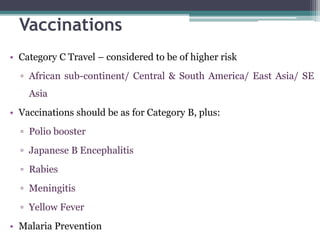
• Category C Travel – considered to be of higher risk
▫ African sub-continent/ Central & South America/ East Asia/ SE
Asia
• Vaccinations should be as for Category B, plus:
▫ Polio booster
▫ Japanese B Encephalitis
▫ Rabies
▫ Meningitis
▫ Yellow Fever
• Malaria Prevention
Vaccinations
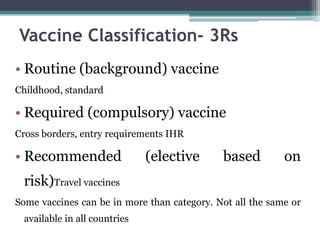
• Routine (background) vaccine
Childhood, standard
• Required (compulsory) vaccine
Cross borders, entry requirements IHR
• Recommended (elective based on
risk)Travel vaccines
Some vaccines can be in more than category. Not all the same or
available in all countries
Vaccine Classification- 3Rs
In May 2005, The 58th World Health Assembly
adopted the revised International Health
Regulations, “IHR”
• To prevent, protect against, control and provide a
public health response to the international spread
of disease in ways that are commensurate with
and restricted to public health risks, and which
avoid unnecessary interference with
international traffic.
International Health Regulations IHR (2005)
• The International Health Regulations are a formal
code of conduct for public health emergencies of
international concern.
• They're a matter of responsible citizenship and
collective protection.
• They involve all 193 World Health Organization
member countries.
International Health Regulations IHR (2005)
• They are an international agreement that gives rise to
international obligations. They focus on serious
public health threats with potential to spread beyond
a country's border to other parts of the world.
• Such events are defined as public health emergencies
of international concern, or PHEIC. The revised
International Health Regulations outline the
assessment, the management and the information
sharing for PHEICs.
International Health Regulations IHR (2005)
• IHRs serve a common interest.
• First of all, they address serious and unusual disease events
that are inevitable in our world today.
• They serve a common interest by recognizing that a health
threat in one part of the world can threaten health
anywhere, or everywhere.
• And they are a formal code of conduct that helps contain or
prevent serious risks to public health, while discouraging
unnecessary or excessive traffic or trade restrictions for,
quote, "public health," purposes.
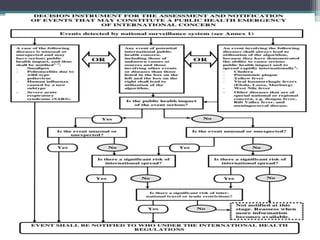
IHR focuses to address two main
Questions:
1. Is the number of cases and/or number of
deaths for this type of event large for the
given place, time or population?
2. Has the event the potential to have a high
public health impact?
Emporiatrics

Emporiatrics

  • 2.
    Emporiatrics Greek origin “emporos”: Onewho goes on shipboard as a passenger + “iatrike”: medicine) It’s the term coined to: Describe the science of the health of travellers.
  • 3.
    • It isa science which deals with promoting and protecting the health of international travelers, providing them the advice related to the travel they are about to undertake. • It is a fast developing specialty as the international travel is fast increasing. • Every year 660 million people travel internationally. Definition
  • 4.
    • Practice of“Emporiatrics” • Rapid development over the last 25 years • Fairfield Hospital in Melbourne started the first ever travel clinic in early-mid 80’s • Now a recognized clinical entity primarily involved in risk management • Strong overlap with public health and occupational health and general practice Travel Medicine
  • 5.
    Why a SpecialBranch for Travelers’ Health? Travellers face special health risks: ▫ They are subject to disorders induced by Rapid changes of environment such as upsets in the circadian rhythms, motion sickness, and diarrhea; ▫ In developing countries they are exposed to Infectious diseases that do not exist in their home countries such as malaria, giardiasis, and dengue; and, ▫ They are Separated from familiar and accessible sources of medical care. ▫ Never before in history have so many people travelled and have people Travelled so far or so fast.
  • 10.
    Types of Travellers: •Business men and • Tourists ▫ VFR ▫ Non VFR They often travel by air or railways (The records of which are available) • Immigrants, • Refugees, and • Migrant laborers Who frequently travel by other means Documented Undocumented
  • 11.
    So Who’s Responsibilityis Emporiatrics? • Meeting the health needs of these travellers who are moving rapidly between countries and continents is a responsibility shared by: ▫ the medical professionals, ▫ by the travellers themselves, ▫ by travel organizations, ▫ by airline and shipping companies, and ▫ by host governments for policy making
  • 12.
    • Knowledge ofmorbidity and mortality of travellers • Understanding of epidemiology and geography of communicable diseases • Awareness of non-communicable risks • Vaccines, indications, side-effects • Knowledge of post-travel illness presentation and management • Geography , esp of major tourist destinations • Ability to communicate complex issues in simple ways • Understanding of when to refer Knowledge of Travel- Related Risks
  • 13.
    • Food andWater • Insects • Animals and Birds • Environmental hazards ▫ Soil ▫ Sun ▫ Heat/humidity ▫ Cold/ dry • Altitude • Marine hazards • Respiratory Hazards • Sex and body-fluid exposure • Vehicular and other Accidents • DVT risk Risk to be considered and discussed
  • 14.
    Factors Affecting Individual Risk I n d i v i d u a l r i s k TRAVEL Destination  Country of origin  Duration of stay  Itinerary  Travel conditions  Season TRAVELER  Reason for travel  Behavior  Age and gender  Health education  Medical history - Allergies - Immunosuppressed - Pre-existing disease  Immunization status  Special needs - Pregnant women - Children - Elderly
  • 15.
  • 16.
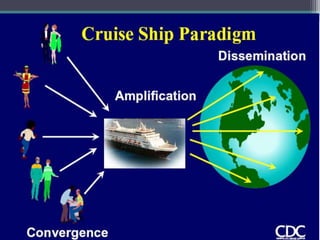
    • Cruise ships •Diving • Extended stay • Extreme travel • Mass gatherings • Wilderness Special itineraries
  • 17.
  • 18.
    • Person: medicalconditions past and present, allergies, medications, vaccine history, previous travel • Trip: reason, style and comfort level, rural vs urban, accommodation, activities, exposures, budget • Time: duration, season, frequency “This Person, This Trip, This Time”
  • 19.
    • Identifying risksfor individuals or groups • Advising about risk reduction strategies • Recommending and providing risk reduction interventions • Encouraging behavioral change to change risk level Risk Management
  • 20.
    • Information enablingbehaviour modification • Vaccinations • Medications (including antimalarials) • Other- travel insurance, pre existing medical problems, nets, syringes, medical kits Risk Reduction Interventions
  • 21.
    • Understand basiccurrent epidemiology • Be aware of outbreaks and emergent issues • Provide written material targeting specific risks • Be able to communicate using electronic media Provide Up-to date Information
  • 22.
    • Cornerstone ofclinical decision process ▫ Opportunity to define the risk profile ▫ Requires appropriate time, and done in advance of travel. ▫ May need multiple visits, allow a plan ▫ Good documentation essential ▫ Discussion of costs and priorities ▫ Consider family requirements Travel Consultation
  • 23.
    • Tailored adviceto the traveller, itinerary and time • Travellers vary by age, sex, pregnancy, medical history, immune status, current health, medications, vaccination history, allergies and prior travel experience • Itineraries vary by length of stay, activities, environmental exposures, types of accommodation, season and budget • Time variation is obviously important • Advice should be understandable, re-enforced and in various media • Personal advice is more likely to be understood, remembered or facilitate behavioral change. Individualized Advice
  • 24.
    • Advice andrecommendations should be within the travellers budget • Costs should be made clear and should be presented in some priority order • Alternate strategies may need to be discussed Consider Costs
  • 25.
    • These aredesigned to assist travelers in meeting medical needs when their access to quality medical care is compromised. • All travel medicine consultants recommend that travelers carry some form of medical first aid kit. A range is available, and often needs to be tailored to meet the specific requirements of the traveler and their proposed itinerary. • Many travel clinics sell medical first aid kits; these often contain prescription items. Medical travel kits
  • 26.
    • Essential itemsfor all travelers • Items to treat cuts, scratches, burns, strains, splinters • Paracetamol • Repellent • Consider condoms • Additional items for Europe, USA, Japan • Antinauseants, eg prochlorperazine • Broad-spectrum antibiotic for respiratory infection • Antacids • Minor sedative • Laxative Medical travel kits
  • 27.
    Medical travel kits •Additional items for less developed countries (gastro kit) ▫ Rehydration solution ▫ Loperamide ▫ Tinidazole ▫ Norfloxacin – or azithromycin for children • Comprehensive medical kit ; Asia, Africa and South America ▫ All of the above ▫ Sterile needles and syringes. Alcohol swabs ▫ Antihistamines ▫ Antifungal and antibiotic cream
  • 28.
    • No antimalarialgives 100% prevention • P vivax and P ovale may be present months after return • No global consensus • Fever in returned travellers is malaria until proved otherwise Principles of malaria prophylaxis
  • 29.
    3 prong approach •Behavioural modification ▫ Awareness of malarial risk ▫ Minimising exposure to mosquitoes • Emphasis on extreme significance of early diagnosis & treatment • Antimalarial chemoprophylaxis Malarial Prophylaxis
  • 30.
    • Avoid outdoorexposure, dawn to dusk • Wear long sleeved loose clothing after dusk, light colors • Avoid perfumes and colognes • Use repellent with 20-40% DEET • Use knockdown sprays, coils, vapours, etc indoors • Sleep under nets impregnated with permethrin Personal Protection from Mosquitoes
  • 31.
    • Category A– considered low risk ▫ Western Europe/North America/Japan/UK/NZ/Singapore • Should be fully vaccinated & up to date with ▫ Diphtheria/tetanus/whooping cough ▫ Routine paediatric vaccines ▫ MMR ▫ Polio ▫ Chicken pox ▫ Influenza Vaccinations
  • 32.
    • Category BTravel – considered to be low to intermediate risk ▫ Eastern Europe/Israel/Korea/Malaysia/Pacific Is/South Africa • Vaccinations should be as for Category A, plus: ▫ Hepatitis A & B ▫ Typhoid ▫ QFT Vaccinations
  • 33.
    • Category CTravel – considered to be of higher risk ▫ African sub-continent/ Central & South America/ East Asia/ SE Asia • Vaccinations should be as for Category B, plus: ▫ Polio booster ▫ Japanese B Encephalitis ▫ Rabies ▫ Meningitis ▫ Yellow Fever • Malaria Prevention Vaccinations
  • 34.
    • Routine (background)vaccine Childhood, standard • Required (compulsory) vaccine Cross borders, entry requirements IHR • Recommended (elective based on risk)Travel vaccines Some vaccines can be in more than category. Not all the same or available in all countries Vaccine Classification- 3Rs
  • 35.
    In May 2005,The 58th World Health Assembly adopted the revised International Health Regulations, “IHR” • To prevent, protect against, control and provide a public health response to the international spread of disease in ways that are commensurate with and restricted to public health risks, and which avoid unnecessary interference with international traffic.
  • 36.
    International Health RegulationsIHR (2005) • The International Health Regulations are a formal code of conduct for public health emergencies of international concern. • They're a matter of responsible citizenship and collective protection. • They involve all 193 World Health Organization member countries.
  • 37.
    International Health RegulationsIHR (2005) • They are an international agreement that gives rise to international obligations. They focus on serious public health threats with potential to spread beyond a country's border to other parts of the world. • Such events are defined as public health emergencies of international concern, or PHEIC. The revised International Health Regulations outline the assessment, the management and the information sharing for PHEICs.
  • 38.
    International Health RegulationsIHR (2005) • IHRs serve a common interest. • First of all, they address serious and unusual disease events that are inevitable in our world today. • They serve a common interest by recognizing that a health threat in one part of the world can threaten health anywhere, or everywhere. • And they are a formal code of conduct that helps contain or prevent serious risks to public health, while discouraging unnecessary or excessive traffic or trade restrictions for, quote, "public health," purposes.
  • 40.
    IHR focuses toaddress two main Questions: 1. Is the number of cases and/or number of deaths for this type of event large for the given place, time or population? 2. Has the event the potential to have a high public health impact?