il
• Lecturer of occupational and environmental medicine-BU
Emotional intelligence and
professionalism
By
Nashwa Nabil
Lecturer of occupational medicine-Benha Faculty of
medicine
medicine-BU
• Objectives (Learning outcomes)
• What is emotional intelligence
• Why emotional intelligence is important in
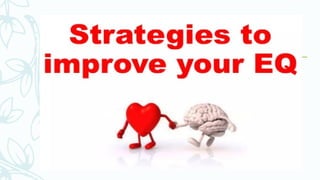
• What are the 4 main skills of emotional intelligence
• How to improve emotional intelligence at workplace
Definition
:
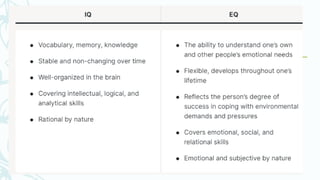
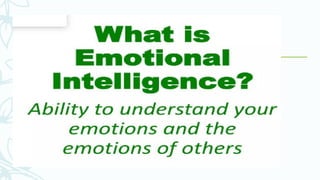
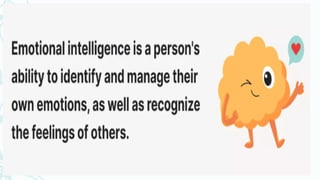
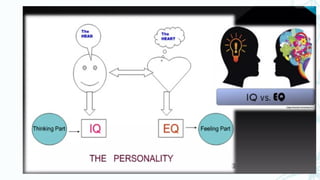
– Emotional intelligence (otherwise known as
emotional quotient or EQ)
is the ability to understand, use, and manage
your own emotions in positive ways to relieve
stress, communicate effectively, guide
thinking and overcome challenges
– (EQ) is “the ability to manage one’s own
emotions and perceive others’ feeling.”
–
–
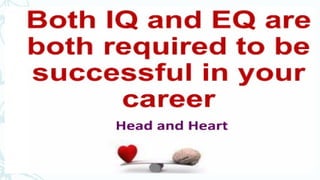
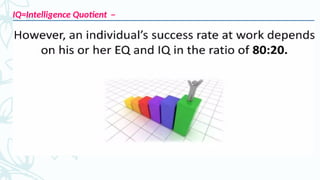
IQ=Intelligence Quotient
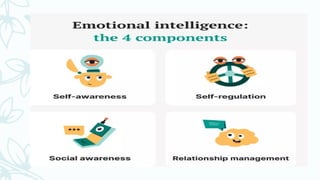
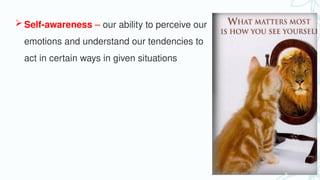
 Self-awareness – our ability to perceive our
emotions and understand our tendencies to
act in certain ways in given situations
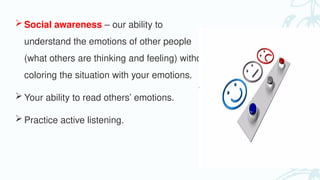
 Social awareness – our ability to
understand the emotions of other people
(what others are thinking and feeling) without
coloring the situation with your emotions.
 Your ability to read others’ emotions.
 Practice active listening.
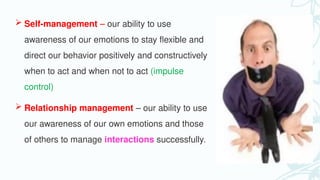
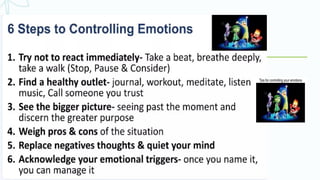
 Self-management – our ability to use
awareness of our emotions to stay flexible and
direct our behavior positively and constructively
when to act and when not to act (impulse
control)
 Relationship management – our ability to use
our awareness of our own emotions and those
of others to manage interactions successfully.
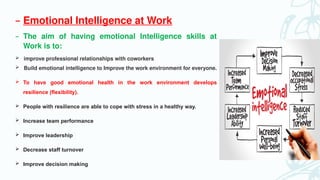
– Emotional Intelligence at Work
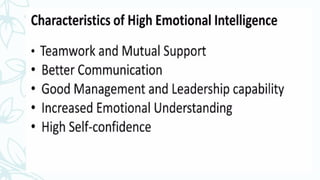
– The aim of having emotional Intelligence skills at
Work is to:
 improve professional relationships with coworkers
 Build emotional intelligence to Improve the work environment for everyone.
 To have good emotional health in the work environment develops
resilience (flexibility).
 People with resilience are able to cope with stress in a healthy way.
 Increase team performance
 Improve leadership
 Decrease staff turnover
 Improve decision making
Recognize how our emotional health and physical health are related:
– Poor emotional health can weaken the human body's immune
system. This makes it more likely to get colds and other infections
during emotionally difficult times.
– Also, when a person is feeling stressed, anxious, or upset, he/she
may not take care of their health thus more absentees .
Learn techniques to understand, use and appreciate the
role of emotional intelligence in the workplace
I. Self-awareness: the ability to recognize your emotions and their impact that guide your decisions.
No one is perfect
.
Quit judging your feeling as good or bad
Know what pushes you (your triggers)
We all have areas that need improvement
.
Self-awareness allows you to recognize your weaknesses, not as
flaws, but as opportunities for growth and improvement
.
It’s about identifying the gaps and knowing where to put your
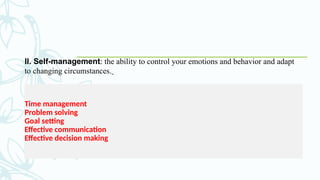
II. Self-management: the ability to control your emotions and behavior and adapt
to changing circumstances.
Time management
Problem solving
Goal setting
Effective communication
Effective decision making
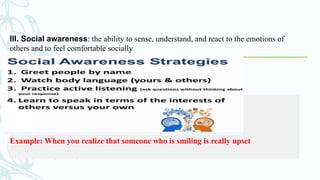
III. Social awareness: the ability to sense, understand, and react to the emotions of
others and to feel comfortable socially
Example: When you realize that someone who is smiling is really upset
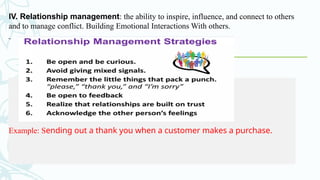
IV. Relationship management: the ability to inspire, influence, and connect to others
and to manage conflict. Building Emotional Interactions With others.
Example: Sending out a thank you when a customer makes a purchase.
10
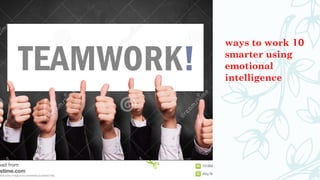
ways to work
smarter using
emotional
intelligence
– Use your body to sharpen your mind. Along with adopting good health
habits generally, spending about twenty minutes exercising once or twice a day
adds energy, sensitivity, patience, flexibility, good sleep quality and creativity to
your portfolio.
– Invite feelings, not just thoughts. Make it safe for people to tell you how they
feel, and they’ll work harder and better. People tell the truth to those who withhold
judgments, keep confidences, and maintain their calm.
– Establish emotional boundaries. Intimacy with a boss, employee, or coworker
can flood the workplace with emotional memories that cause thoughtful, reasonable
professionals to lose their objectivity and provoke anger by down looking on
coworkers
Be flexible. Be ready to modify long-term goals based on active awareness of
how short-term objectives are going.
-Begin any negative comment with a positive one. You’re much more likely to
get an empathetic ear if you preface criticism with appreciation, and complaints with
your intention to cooperate.
– Listen with empathy. Using your emotions will never distract you from the task
at hand. Empathy gives you instant understanding of what someone is saying
– Take the risk of appearing imperfect. High performers ask for help when they
need it and admit to being wrong when they make a mistake. Then they move on,
effective and efficient.
References
Cherniss C.,Roche C. Barbarasch B. 2016. Emotional Intelligence.
Encyclopedia. Mental Health (Second Edition), Editor(s): Howard S.
Friedman. Academic Press,2016, Pages
108-115.https://doi.org/10.1016/B978-0-12-397045-9.00207-X
.
Emotional intelligence.pptx by Dr nashwa nabil

Emotional intelligence.pptx by Dr nashwa nabil

  • 1.
    il • Lecturer ofoccupational and environmental medicine-BU Emotional intelligence and professionalism By Nashwa Nabil Lecturer of occupational medicine-Benha Faculty of medicine medicine-BU
  • 2.
    • Objectives (Learningoutcomes) • What is emotional intelligence • Why emotional intelligence is important in • What are the 4 main skills of emotional intelligence • How to improve emotional intelligence at workplace
  • 3.
    Definition : – Emotional intelligence(otherwise known as emotional quotient or EQ) is the ability to understand, use, and manage your own emotions in positive ways to relieve stress, communicate effectively, guide thinking and overcome challenges – (EQ) is “the ability to manage one’s own emotions and perceive others’ feeling.”
  • 5.
  • 13.
     Self-awareness –our ability to perceive our emotions and understand our tendencies to act in certain ways in given situations
  • 14.
     Social awareness– our ability to understand the emotions of other people (what others are thinking and feeling) without coloring the situation with your emotions.  Your ability to read others’ emotions.  Practice active listening.
  • 15.
     Self-management –our ability to use awareness of our emotions to stay flexible and direct our behavior positively and constructively when to act and when not to act (impulse control)  Relationship management – our ability to use our awareness of our own emotions and those of others to manage interactions successfully.
  • 17.
    – Emotional Intelligenceat Work – The aim of having emotional Intelligence skills at Work is to:  improve professional relationships with coworkers  Build emotional intelligence to Improve the work environment for everyone.  To have good emotional health in the work environment develops resilience (flexibility).  People with resilience are able to cope with stress in a healthy way.  Increase team performance  Improve leadership  Decrease staff turnover  Improve decision making
  • 18.
    Recognize how ouremotional health and physical health are related: – Poor emotional health can weaken the human body's immune system. This makes it more likely to get colds and other infections during emotionally difficult times. – Also, when a person is feeling stressed, anxious, or upset, he/she may not take care of their health thus more absentees .
  • 20.
    Learn techniques tounderstand, use and appreciate the role of emotional intelligence in the workplace I. Self-awareness: the ability to recognize your emotions and their impact that guide your decisions. No one is perfect . Quit judging your feeling as good or bad Know what pushes you (your triggers) We all have areas that need improvement . Self-awareness allows you to recognize your weaknesses, not as flaws, but as opportunities for growth and improvement . It’s about identifying the gaps and knowing where to put your
  • 21.
    II. Self-management: theability to control your emotions and behavior and adapt to changing circumstances. Time management Problem solving Goal setting Effective communication Effective decision making
  • 23.
    III. Social awareness:the ability to sense, understand, and react to the emotions of others and to feel comfortable socially Example: When you realize that someone who is smiling is really upset
  • 24.
    IV. Relationship management:the ability to inspire, influence, and connect to others and to manage conflict. Building Emotional Interactions With others. Example: Sending out a thank you when a customer makes a purchase.
  • 27.
    10 ways to work smarterusing emotional intelligence
  • 28.
    – Use yourbody to sharpen your mind. Along with adopting good health habits generally, spending about twenty minutes exercising once or twice a day adds energy, sensitivity, patience, flexibility, good sleep quality and creativity to your portfolio. – Invite feelings, not just thoughts. Make it safe for people to tell you how they feel, and they’ll work harder and better. People tell the truth to those who withhold judgments, keep confidences, and maintain their calm. – Establish emotional boundaries. Intimacy with a boss, employee, or coworker can flood the workplace with emotional memories that cause thoughtful, reasonable professionals to lose their objectivity and provoke anger by down looking on coworkers
  • 29.
    Be flexible. Beready to modify long-term goals based on active awareness of how short-term objectives are going.
  • 30.
    -Begin any negativecomment with a positive one. You’re much more likely to get an empathetic ear if you preface criticism with appreciation, and complaints with your intention to cooperate.
  • 31.
    – Listen withempathy. Using your emotions will never distract you from the task at hand. Empathy gives you instant understanding of what someone is saying – Take the risk of appearing imperfect. High performers ask for help when they need it and admit to being wrong when they make a mistake. Then they move on, effective and efficient.
  • 32.
    References Cherniss C.,Roche C.Barbarasch B. 2016. Emotional Intelligence. Encyclopedia. Mental Health (Second Edition), Editor(s): Howard S. Friedman. Academic Press,2016, Pages 108-115.https://doi.org/10.1016/B978-0-12-397045-9.00207-X .