By: Dr. Ritika Dixit
Associate professor
Dept. of Rachana Sharir
 It is the process of fusion of two mature germ cells, an
ovum and a spermatozoon to form a single cell Zygote.
 Fertilization is a process of fusion of cell division.
 Haploid gametes fuse to form a diploid
undifferentiated zygote.
 Site of fertilization:
--Ampulla of fallopian tube.
Stages of fertilization:
1. Approximation of gametes
2. Contact and fusion of gametes
3. Effects of fertilization.
 Transport of spermatozoa & ovum in female genital
tract towards the ampulla of uterine tube.
 Transportation of spermatozoa is affected by the
following factors:
1. Liquefaction of semen: semen contains fibrinolysin
that liquefies semen within 30 mins. After ejaculation
2. Contractions of uterine tubes: prostaglandins of
semen stimulate peristaltic contraction in the female
genital tract.
3. Effects of oxytocin: secretion of oxytocin from
neurohypophysis also produces uterine contraction.
4. Aspiration of sperms : repeated uterine contractions
generate vacuum that aspirates sperm into uterine
cavity and later into uterine tube.
5. Chemotaxis: sperm is attracted towards ovum by
chemicals secreted by corona radiata cells that
surround the ovum.
 Only 1% of deposited sperm in vagina enter the uterine
cervix and only 300-500 sperms reach the fallopian
tube.
# transport of Ovum –
- Ovum enters the fimbriated part of fallopian tube due
to cilliary beats and rhythmic contractions of uterine
tube musculature.
- Transcoelomic migration: ovum released by an ovary
aspirated into fallopian tube by transcoelomic
migration.
# ovum takes 25 mins to reach ampulla of uterine tube.
Three barriers:
- Sperm must break three barriers- corona radiata, zona
pellucida and vitelline membrane.
-
 4 Phases are involved in the penetration of sperm into
ovum as follows:
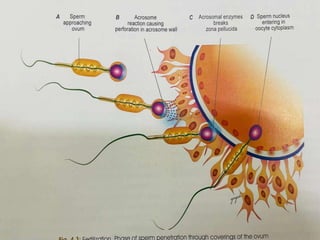
Phase I- acrosome reaction
- Acrosome cap establishes multiple contacts with
plasma membrane of sperm head and releases
acrosomal enzymes.
- Acrosome enzymes include hyaluronidase acrosine
Phase II – hyaluronidase disintigrates corona radiata
Sperm head binds with Zp2 and Zp3 receptor proteins of
zona pellucida
Acrosine disintegrates zona pellucida
Disintigrin peptide of sperms and integrin of vitelline
membrane of ovum help in fusion of sperm plasma
membrane with vitelline membrane
Phase III –
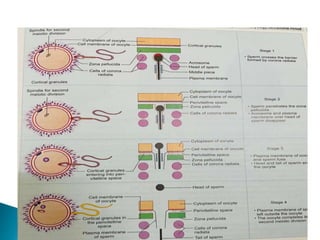
Calcium wave for the depolarization of oocyte
- Sperm fusion with vitelline memb. Of oocyte induces
calcium wave and depolarizes vitelline memb.
- Calcium wave is responsible for the following changes :
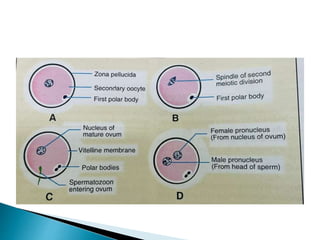
i. Secondary oocyte completes second meiotic division
and one set of chromosomes as a female pronucleus
and expel another set as a second polar body.
ii. Ca wave triggers release of cortical granules
to form oocyte that hydrolyses Zp3 receptors
on zona pellucida and prevents further
binding of sperms.
iii. Release of cortical granules alters the
vitelline membrane and induces vitelline
block that prevents polyspermy.
Phase iv– nuclear fusion
- Only nucleus and tail of sperm enter into the
cytoplasm of oocyte leaving behind body and
cytoplasm
- Male pronucleus approaches towards the female
pronucleus.
- Tail of sperm degenerates.
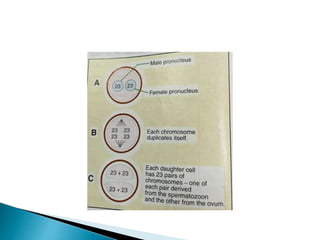
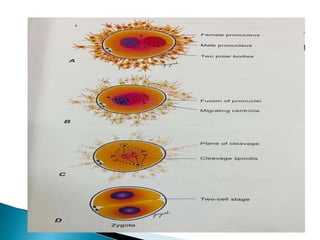
- Both male and female pronuclei replicate their DNA
and lose their nuclear membrane.
- Finally cytoplasm divides to form two cells with diploid
number of chromosomes. It is called zygote.
i. Completion of second meiotic division of secondary
oocyte.
ii. Restoration of diploid numbers of chromosomes.
iii. Determination of chromosomal sex.
iv. Initiation of cleavage.
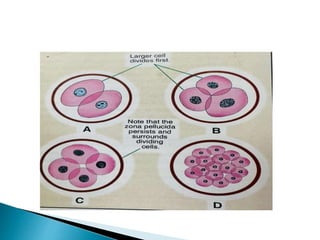
 It is aproces of repeated mitotic segmentation of
zygote within zona pellucida to give rise to small cells
called blastomeres.
 In a cleavage fertilised ovum is divided to form 2 cell 3-
cell 4-cell stage and so on.
 Duration : upto 6-7 days after fertilization.
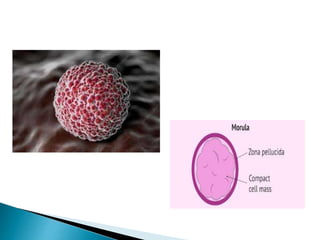
 16- cell stage looks similar to mulberry.
 Morula consists of –
-inner cell mass or embryoblast.
-Outer trophoblast (trophoectoderm) that forms
coverings of embryo.
-morula is covered by zona pellucida.
embryology : fertilization and cleavage.

embryology : fertilization and cleavage.

  • 1.
    By: Dr. RitikaDixit Associate professor Dept. of Rachana Sharir
  • 2.
     It isthe process of fusion of two mature germ cells, an ovum and a spermatozoon to form a single cell Zygote.  Fertilization is a process of fusion of cell division.  Haploid gametes fuse to form a diploid undifferentiated zygote.
  • 3.
     Site offertilization: --Ampulla of fallopian tube. Stages of fertilization: 1. Approximation of gametes 2. Contact and fusion of gametes 3. Effects of fertilization.
  • 4.
     Transport ofspermatozoa & ovum in female genital tract towards the ampulla of uterine tube.  Transportation of spermatozoa is affected by the following factors: 1. Liquefaction of semen: semen contains fibrinolysin that liquefies semen within 30 mins. After ejaculation
  • 5.
    2. Contractions ofuterine tubes: prostaglandins of semen stimulate peristaltic contraction in the female genital tract. 3. Effects of oxytocin: secretion of oxytocin from neurohypophysis also produces uterine contraction. 4. Aspiration of sperms : repeated uterine contractions generate vacuum that aspirates sperm into uterine cavity and later into uterine tube. 5. Chemotaxis: sperm is attracted towards ovum by chemicals secreted by corona radiata cells that surround the ovum.
  • 6.
     Only 1%of deposited sperm in vagina enter the uterine cervix and only 300-500 sperms reach the fallopian tube. # transport of Ovum – - Ovum enters the fimbriated part of fallopian tube due to cilliary beats and rhythmic contractions of uterine tube musculature. - Transcoelomic migration: ovum released by an ovary aspirated into fallopian tube by transcoelomic migration. # ovum takes 25 mins to reach ampulla of uterine tube.
  • 7.
    Three barriers: - Spermmust break three barriers- corona radiata, zona pellucida and vitelline membrane. -
  • 8.
     4 Phasesare involved in the penetration of sperm into ovum as follows: Phase I- acrosome reaction - Acrosome cap establishes multiple contacts with plasma membrane of sperm head and releases acrosomal enzymes. - Acrosome enzymes include hyaluronidase acrosine
  • 9.
    Phase II –hyaluronidase disintigrates corona radiata Sperm head binds with Zp2 and Zp3 receptor proteins of zona pellucida Acrosine disintegrates zona pellucida Disintigrin peptide of sperms and integrin of vitelline membrane of ovum help in fusion of sperm plasma membrane with vitelline membrane
  • 10.
    Phase III – Calciumwave for the depolarization of oocyte - Sperm fusion with vitelline memb. Of oocyte induces calcium wave and depolarizes vitelline memb. - Calcium wave is responsible for the following changes : i. Secondary oocyte completes second meiotic division and one set of chromosomes as a female pronucleus and expel another set as a second polar body.
  • 11.
    ii. Ca wavetriggers release of cortical granules to form oocyte that hydrolyses Zp3 receptors on zona pellucida and prevents further binding of sperms. iii. Release of cortical granules alters the vitelline membrane and induces vitelline block that prevents polyspermy.
  • 12.
    Phase iv– nuclearfusion - Only nucleus and tail of sperm enter into the cytoplasm of oocyte leaving behind body and cytoplasm - Male pronucleus approaches towards the female pronucleus. - Tail of sperm degenerates. - Both male and female pronuclei replicate their DNA and lose their nuclear membrane. - Finally cytoplasm divides to form two cells with diploid number of chromosomes. It is called zygote.
  • 16.
    i. Completion ofsecond meiotic division of secondary oocyte. ii. Restoration of diploid numbers of chromosomes. iii. Determination of chromosomal sex. iv. Initiation of cleavage.
  • 19.
     It isaproces of repeated mitotic segmentation of zygote within zona pellucida to give rise to small cells called blastomeres.  In a cleavage fertilised ovum is divided to form 2 cell 3- cell 4-cell stage and so on.  Duration : upto 6-7 days after fertilization.
  • 21.
     16- cellstage looks similar to mulberry.  Morula consists of – -inner cell mass or embryoblast. -Outer trophoblast (trophoectoderm) that forms coverings of embryo. -morula is covered by zona pellucida.