This presentation contains
graphic elements and scenes
some viewers may find disturbing.
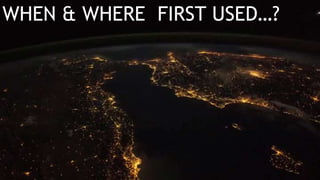
WHEN & WHERE FIRST USED…?
CENSORED
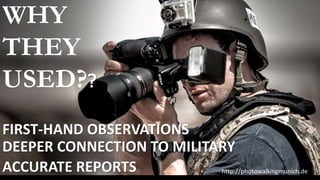
WHY
THEY
USED??
FIRST-HAND OBSERVATIONS
DEEPER CONNECTION TO MILITARY
ACCURATE REPORTS
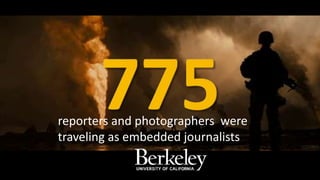
reporters and photographers were
traveling as embedded journalists
had died in less than 3 month
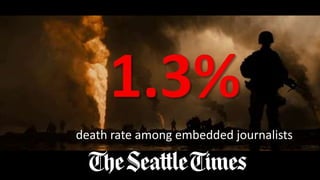
death rate among embedded journalists
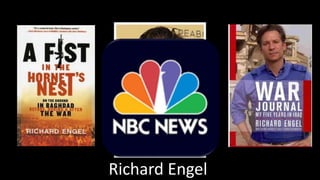
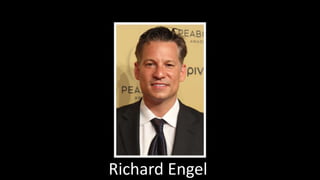
Richard Engel
Richard Engel
I’m invincible This is dangerous
I’m going to get hurt I’m going to die
I’m invincible This is dangerous
I’m going to get hurt I’m going to die
I’m invincible This is dangerous
I’m going to get hurt I’m going to die
I’m invincible This is dangerous
I’m going to get hurt I’m going to die
DANGERS
RISK
BIASED
BAD NAME
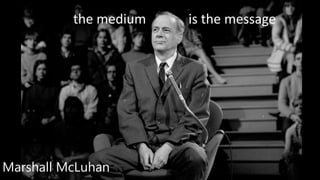
the medium is the message
Marshall McLuhan
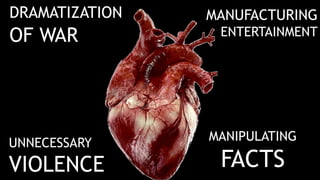
MANUFACTURING
ENTERTAINMENT
MANIPULATING
FACTS
DRAMATIZATION
OF WAR
UNNECESSARY
VIOLENCE
THANK YOU
FOR
WATCHING
REFERENCES:
• Engel, R. (2004). A Fist In the Hornet's Nest: On the Ground In Baghdad Before, During & After the
War. New York, NY: Hyperion.
• Engel, R. (2008). War Journal: My Five Years in Iraq. New York, NY: SIMON & SCHUSTER.
• MANNING, C. (2014, June 14). The Fog Machine of War. © 2015 The New York Times Company.
• Powell, B. A. (n.d.). Reporters, commentators visit Berkeley to conduct in-depth postmortem of Iraq
war coverage. Retrieved November 5, 2015, from UC Berkeley News website:
www.berkeley.edu/news/media/releases/2004/03/15_mediatwar.shtml
• RT America. (2012, February 27). Embedded Journalists in War and Politics [Video file]. Retrieved
from https://www.youtube.com/watch?v=zZ6fqV2jdMM
Autonomous Nonprofit Organization “TV-Novosti”, 2005–2015.
• Thorn, A. (n.d.). Fifteen journalists die while covering war in Iraq. Retrieved from © Reporters
Committee for Freedom of the Press website: https://www.rcfp.org/browse-media-law-
resources/news-media-law/news-media-and-law-spring-2003/fifteen-journalists-die-whi
IMAGES:
http://giphy.com/
http://alsumaria.tv/
http://photowalkingmunich.de/
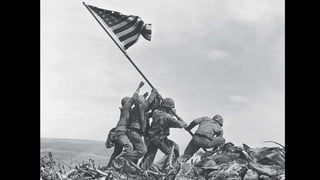
1945 Raising the Flag on Iwo Jima, photo: Joseph John Rosenthal
1968 Saigon execution. Photographer Eddie Adams
1972 Napalm Girl Photo, Photographer Nick Ut
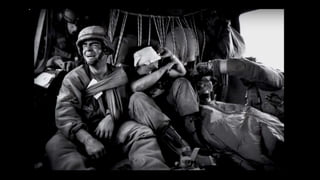
1991 Gulf War. Photo David Turnley, World Press Photo of the Year

Embedded journalism

Editor's Notes

  • #2 This presentation contains graphic elements and scenes some viewers may find disturbing.
  • #4 Refers to news reporters been attached to military units involved in armed conflicts. First used in the media coverage of…?
  • #5 First used in the media coverage of the 2003 invasion of Iraq. According to NYT Reporters who succeeded in obtaining embed status in Iraq were then required to sign contracts with the military promising not to report information that could compromise unit position, future missions, classified weapons, and information they might find…. Army public affairs officials said this was to protect operational security, but it also allowed them to terminate a reporter’s embed without appeal.
  • #6 Why Embedded Journalism is used? Embedded journalism allows the writer to receive first-hand observations of conflicts that most typically do not see. It allows them to have a deeper connection to those in the military and therefore creating, though one-sided, accurate reports of the lives of the men and women overseas. This provides the public with stories they can sympathize with and connect with. But what is the cost???
  • #7 According to (BERKELEY NEWS MEDIA RELEASE)at the BEGINING of the war in March 2003, 775 reporters and photographers were traveling as embedded journalists.
  • #8 As of early May, of the same year, (so…less then for 3 month) 15 journalists had died
  • #9 According to The Seattle Times, the death rate among journalists was 1.3 %
  • #10 NBC News Middle East Correspondent Richard Engel, wrote the BOOK A Fist in the Hornet's Nest, published in 2004, about his experience covering the Iraq War from Baghdad. His newest BOOK, War Journal: My Five Years in Iraq, published in June 2008, picks up where his last book left off. He speaks and reads Arabic fluently and is also fluent in Italian and Spanish.
  • #11 …known for having covered the Iraq War, the Arab Spring and the Syrian civil war.[3] He BELIEVED the war would HARDEN him. And, in a way, it did. According to Engel, he went through four stages during the embedding process: Stage 1:
  • #12 I’m invincible. I’m ready. I’m excited. I’m living on adrenaline. Then, as the war begins, …Stage 2: You know what,
  • #13 this is dangerous, I could get hurt over here. And that starts to sink in. Then the war continues and friends start to get kidnapped or killed and you see bodies on the streets. Stage 3: I’ve been over here so long,…I’m probably ….
  • #14 going to get hurt. And then at a certain stage, you hit rock bottom and you feel, I’ve used up my time. Stage 4: ….
  • #15 I’m going to die in this conflict. And that’s a dark place to go into.
  • #18 Embedded journalism is not worth the DANGERS to both the credibility of the story and the safety of the journalist. Accurate and fair reporting can be done away from the frontline and these stories are not worth THE RISK they pose. Embedded journalism has been criticized as a BIASED form of reporting and earned itself a BAD NAME in Iraq and Afghanistan. What should be done?
  • #19 Marshall McLuhan, Canadian philosopher of communication theory and a public intellectual, said those wise words: “The old journalism ..used to try to give an objective picture of a situation by giving the pro and the con... Objective journalism meant giving BOTH SIDES AT ONCE. Strangely, everyone assumed there were two sides to every case. It never occurred to anyone that there might be forty sides or a thousand sides. No, just two sides, pro and con...And…Suddenly this form of journalism disappeared, and the new journalism popped in. The new journalism doesn’t give you any side: It just immerses you in the feeling of the whole situation. …It plunges us into the feeling of being at the convention or being at the fire, being somewhere. and that’s began with that famous phrase, “Something funny happened on the way to the forum.” A happening is not a point of view. A happening is all sides at once with everybody involved in it. Mardi Gras is a happening. We cannot have objective journalism about a Mardi Gras: we just have to immerse….SO The new journalism quite frankly regards itself as a form of fiction,(PAUSE) with NO OBJECTIVITY AT ALL. (46 sec)
  • #21 Raising the Flag on Iwo Jima, Joseph John Rosenthal …was an American photographer who received the Pulitzer Prize for his iconic World War II photograph
  • #22 Saigon execution: Murder of a Vietcong by Saigon Police Chief, 1968. The photographer, Eddie Adams also noted for portraits of celebrities and politicians and for coverage of 13 wars. He won a Pulitzer Prize in 1969.
  • #23 1972 Napalm Girl Photo, Photographer Nick Ut On June 8, 1972, Nick Ut captured what would become a Pulitzer Prize winning photo illustrating children fleeing from a Napalm bombing during the Vietnam War. In the center of the frame running towards the camera was a naked 9-year-old girl, Phan Thị Kim Phúc, also known as 'Napalm Girl.' In 1973, AP Photographer Nick Ut won the Pulitzer Prize for Spot News Photography for "The Terror of War"
  • #24 Photographer David Turnley. Gulf War. 1991
  • #25 In conclusion I would like to say…. America’s desire to spread democracy, and Glorify the American soldier, the media and military have teamed up to create a Dramatization of War, transforming reports on combat from facts presentation to a show. They are Manufacturing entertainment by showing Unnecessary violence rather than offering information. Embedded reporting sometimes produces useful media, but often they not getting the full story and manipulating facts .(33 sec)