Elements
+
Principles
of Design
By Weifang Gong
09-03-2018
Part I: Design
Elements
Color
Light
Line
• Horizontal
• Vertical
• Curved
• angled
Shape
Form
Space
Texture
Pattern
Mass
Color
is the aspect of things that is created
by pigment paint and lights. It is the
most emotional & personal of all
elements in interior design.
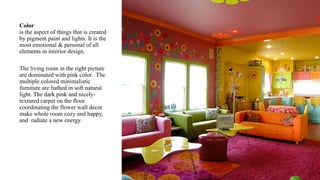
The living room in the right picture
are dominated with pink color. The
multiple colored minimalistic
furniture are bathed in soft natural
light. The dark pink and nicely-
textured carpet on the floor
coordinating the flower wall decor
make whole room cozy and happy,
and radiate a new energy.
Light
is the essential element that helps
people seeing interior design. Light
includes two sources: natural(sun
rays) & artificial(electricity).
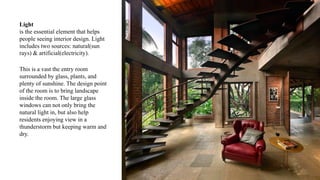
This is a vast the entry room
surrounded by glass, plants, and
plenty of sunshine. The design point
of the room is to bring landscape
inside the room. The large glass
windows can not only bring the
natural light in, but also help
residents enjoying view in a
thunderstorm but keeping warm and
dry.
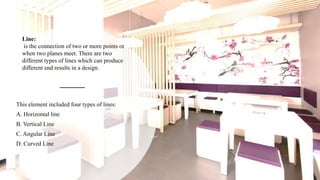
Line:
is the connection of two or more points or
when two planes meet. There are two
different types of lines which can produce
different end results in a design.
This element included four types of lines:
A. Horizontal line
B. Vertical Line
C. Angular Line
D. Curved Line
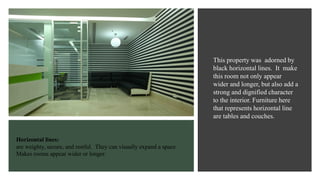
Horizontal lines:
are weighty, secure, and restful. They can visually expand a space.
Makes rooms appear wider or longer.
This property was adorned by
black horizontal lines. It make
this room not only appear
wider and longer, but also add a
strong and dignified character
to the interior. Furniture here
that represents horizontal line
are tables and couches.
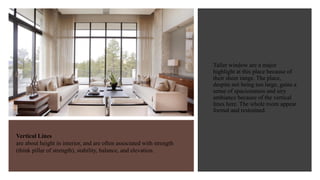
Vertical Lines
are about height in interior, and are often associated with strength
(think pillar of strength), stability, balance, and elevation.
Taller window are a major
highlight at this place because of
their sheer range. The place,
despite not being too large, gains a
sense of spaciousness and airy
ambiance because of the vertical
lines here. The whole room appear
formal and restrained.
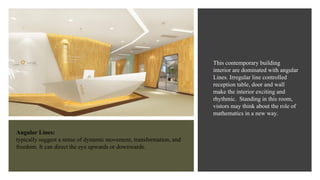
Angular Lines:
typically suggest a sense of dynamic movement, transformation, and
freedom. It can direct the eye upwards or downwards.
This contemporary building
interior are dominated with angular
Lines. Irregular line controlled
reception table, door and wall
make the interior exciting and
rhythmic. Standing in this room,
vistors may think about the role of
mathematics in a new way.
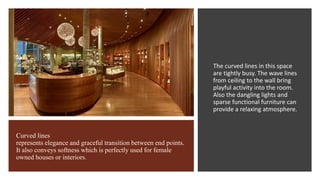
Curved lines
represents elegance and graceful transition between end points.
It also conveys softness which is perfectly used for female
owned houses or interiors.
The curved lines in this space
are tightly busy. The wave lines
from ceiling to the wall bring
playful activity into the room.
Also the dangling lights and
sparse functional furniture can
provide a relaxing atmosphere.
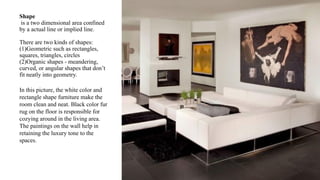
Shape
is a two dimensional area confined
by a actual line or implied line.
There are two kinds of shapes:
(1)Geometric such as rectangles,
squares, triangles, circles
(2)Organic shapes - meandering,
curved, or angular shapes that don’t
fit neatly into geometry.
In this picture, the white color and
rectangle shape furniture make the
room clean and neat. Black color fur
rug on the floor is responsible for
cozying around in the living area.
The paintings on the wall help in
retaining the luxury tone to the
spaces.
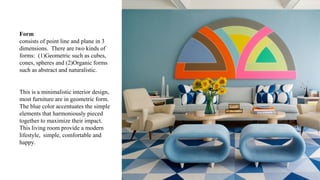
Form
consists of point line and plane in 3
dimensions. There are two kinds of
forms: (1)Geometric such as cubes,
cones, spheres and (2)Organic forms
such as abstract and naturalistic.
This is a minimalistic interior design,
most furniture are in geometric form.
The blue color accentuates the simple
elements that harmoniously pieced
together to maximize their impact.
This living room provide a modern
lifestyle, simple, comfortable and
happy.
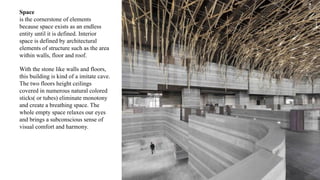
Space
is the cornerstone of elements
because space exists as an endless
entity until it is defined. Interior
space is defined by architectural
elements of structure such as the area
within walls, floor and roof.
With the stone like walls and floors,
this building is kind of a imitate cave.
The two floors height ceilings
covered in numerous natural colored
sticks( or tubes) eliminate monotony
and create a breathing space. The
whole empty space relaxes our eyes
and brings a subconscious sense of
visual comfort and harmony.
Texture
is surface characteristics and
appearance inherent in every element
and component of interior design.
Texture is determined by either
touching or by visually reading the
surface.
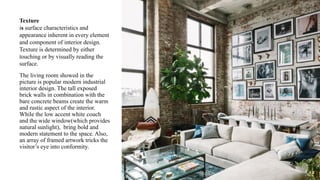
The living room showed in the
picture is popular modern industrial
interior design. The tall exposed
brick walls in combination with the
bare concrete beams create the warm
and rustic aspect of the interior.
While the low accent white couch
and the wide window(which provides
natural sunlight), bring bold and
modern statement to the space. Also,
an array of framed artwork tricks the
visitor’s eye into conformity.
Pattern
is created by a repeating arrangement
of a motif.
It can be structural(such as bricks) or
surface design(such as wallpaper or
upholstery).
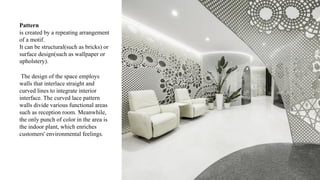
The design of the space employs
walls that interlace straight and
curved lines to integrate interior
interface. The curved lace pattern
walls divide various functional areas
such as reception room. Meanwhile,
the only punch of color in the area is
the indoor plant, which enriches
customers' environmental feelings.
Mass: Mass is an object’s density,
whether actual or perceived.
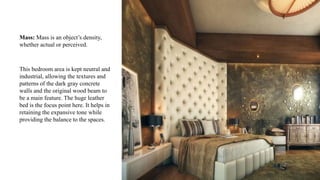
This bedroom area is kept neutral and
industrial, allowing the textures and
patterns of the dark gray concrete
walls and the original wood beam to
be a main feature. The huge leather
bed is the focus point here. It helps in
retaining the expansive tone while
providing the balance to the spaces.
Part II:
Design
Principles
Balance
• Symmetrical
• Asymmetrical
• Radial
Unity
Harmony
Rhythm
Proportion
Variety
Emphasis
Scale
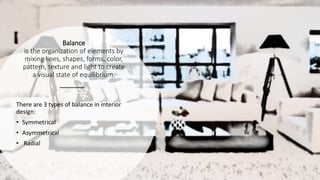
Balance
is the organization of elements by
mixing lines, shapes, forms, color,
pattern, texture and light to create
a visual state of equilibrium.
There are 3 types of balance in interior
design:
• Symmetrical
• Asymmetrical
• Radial
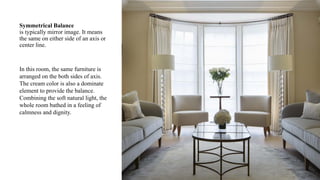
Symmetrical Balance
is typically mirror image. It means
the same on either side of an axis or
center line.
In this room, the same furniture is
arranged on the both sides of axis.
The cream color is also a dominate
element to provide the balance.
Combining the soft natural light, the
whole room bathed in a feeling of
calmness and dignity.
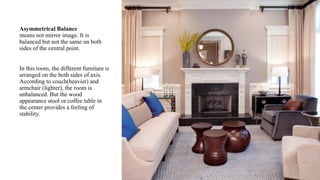
Asymmetrical Balance
means not mirror image. It is
balanced but not the same on both
sides of the central point.
In this room, the different furniture is
arranged on the both sides of axis.
According to couch(heavier) and
armchair (lighter), the room is
unbalanced. But the wood
appearance stool or coffee table in
the center provides a feeling of
stability.
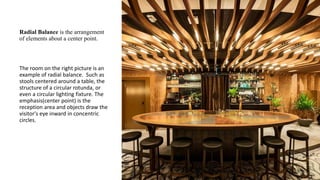
Radial Balance is the arrangement
of elements about a center point.
The room on the right picture is an
example of radial balance. Such as
stools centered around a table, the
structure of a circular rotunda, or
even a circular lighting fixture. The
emphasis(center point) is the
reception area and objects draw the
visitor's eye inward in concentric
circles.
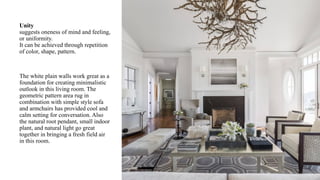
Unity
suggests oneness of mind and feeling,
or uniformity.
It can be achieved through repetition
of color, shape, pattern.
The white plain walls work great as a
foundation for creating minimalistic
outlook in this living room. The
geometric pattern area rug in
combination with simple style sofa
and armchairs has provided cool and
calm setting for conversation. Also
the natural root pendant, small indoor
plant, and natural light go great
together in bringing a fresh field air
in this room.
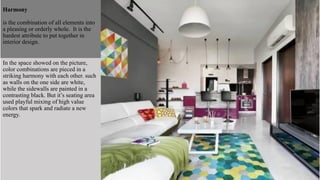
In the space showed on the picture,
color combinations are pieced in a
striking harmony with each other. such
as walls on the one side are white,
while the sidewalls are painted in a
contrasting black. But it’s seating area
used playful mixing of high value
colors that spark and radiate a new
energy.
Harmony
is the combination of all elements into
a pleasing or orderly whole. It is the
hardest attribute to put together in
interior design.
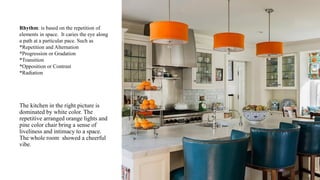
Rhythm: is based on the repetition of
elements in space. It caries the eye along
a path at a particular pace. Such as
*Repetition and Alternation
*Progression or Gradation
*Transition
*Opposition or Contrast
*Radiation
The kitchen in the right picture is
dominated by white color. The
repetitive arranged orange lights and
pine color chair bring a sense of
liveliness and intimacy to a space.
The whole room showed a cheerful
vibe.
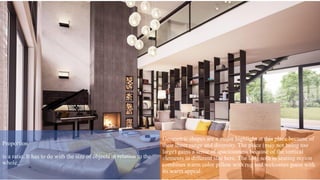
Proportion
is a ratio. It has to do with the size of objects in relation to the
whole.
Geometric shapes are a major highlight at this place because of
their sheer range and diversity. The place (may not being too
large) gains a sense of spaciousness because of the vertical
elements in different size here. The long sofa in seating region
combines warm color pillow with rug and welcomes guest with
its warm appeal.
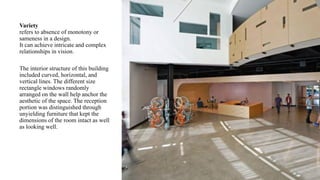
Variety
refers to absence of monotony or
sameness in a design.
It can achieve intricate and complex
relationships in vision.
The interior structure of this building
included curved, horizontal, and
vertical lines. The different size
rectangle windows randomly
arranged on the wall help anchor the
aesthetic of the space. The reception
portion was distinguished through
unyielding furniture that kept the
dimensions of the room intact as well
as looking well.
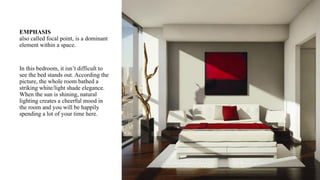
EMPHASIS
also called focal point, is a dominant
element within a space.
In this bedroom, it isn’t difficult to
see the bed stands out. According the
picture, the whole room bathed a
striking white/light shade elegance.
When the sun is shining, natural
lighting creates a cheerful mood in
the room and you will be happily
spending a lot of your time here.
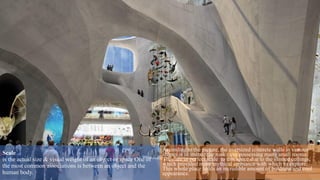
Scale
is the actual size & visual weight of an object or space One of
the most common associations is between an object and the
human body.
According to the picture, the oversized concrete walls in various
shapes is to imitate the rock cave possessing many small rooms.
They are in perfect scale to this space due to the slanted ceilings,
which provided more mythical ambiance with which to explore.
This whole place holds an incredible amount of boldness and cool
appearance.
The End
Thanks Google search for All photos!

Elements + principlesl

  • 1.
  • 2.
    Part I: Design Elements Color Light Line •Horizontal • Vertical • Curved • angled Shape Form Space Texture Pattern Mass
  • 3.
    Color is the aspectof things that is created by pigment paint and lights. It is the most emotional & personal of all elements in interior design. The living room in the right picture are dominated with pink color. The multiple colored minimalistic furniture are bathed in soft natural light. The dark pink and nicely- textured carpet on the floor coordinating the flower wall decor make whole room cozy and happy, and radiate a new energy.
  • 4.
    Light is the essentialelement that helps people seeing interior design. Light includes two sources: natural(sun rays) & artificial(electricity). This is a vast the entry room surrounded by glass, plants, and plenty of sunshine. The design point of the room is to bring landscape inside the room. The large glass windows can not only bring the natural light in, but also help residents enjoying view in a thunderstorm but keeping warm and dry.
  • 5.
    Line: is the connectionof two or more points or when two planes meet. There are two different types of lines which can produce different end results in a design. This element included four types of lines: A. Horizontal line B. Vertical Line C. Angular Line D. Curved Line
  • 6.
    Horizontal lines: are weighty,secure, and restful. They can visually expand a space. Makes rooms appear wider or longer. This property was adorned by black horizontal lines. It make this room not only appear wider and longer, but also add a strong and dignified character to the interior. Furniture here that represents horizontal line are tables and couches.
  • 7.
    Vertical Lines are aboutheight in interior, and are often associated with strength (think pillar of strength), stability, balance, and elevation. Taller window are a major highlight at this place because of their sheer range. The place, despite not being too large, gains a sense of spaciousness and airy ambiance because of the vertical lines here. The whole room appear formal and restrained.
  • 8.
    Angular Lines: typically suggesta sense of dynamic movement, transformation, and freedom. It can direct the eye upwards or downwards. This contemporary building interior are dominated with angular Lines. Irregular line controlled reception table, door and wall make the interior exciting and rhythmic. Standing in this room, vistors may think about the role of mathematics in a new way.
  • 9.
    Curved lines represents eleganceand graceful transition between end points. It also conveys softness which is perfectly used for female owned houses or interiors. The curved lines in this space are tightly busy. The wave lines from ceiling to the wall bring playful activity into the room. Also the dangling lights and sparse functional furniture can provide a relaxing atmosphere.
  • 10.
    Shape is a twodimensional area confined by a actual line or implied line. There are two kinds of shapes: (1)Geometric such as rectangles, squares, triangles, circles (2)Organic shapes - meandering, curved, or angular shapes that don’t fit neatly into geometry. In this picture, the white color and rectangle shape furniture make the room clean and neat. Black color fur rug on the floor is responsible for cozying around in the living area. The paintings on the wall help in retaining the luxury tone to the spaces.
  • 11.
    Form consists of pointline and plane in 3 dimensions. There are two kinds of forms: (1)Geometric such as cubes, cones, spheres and (2)Organic forms such as abstract and naturalistic. This is a minimalistic interior design, most furniture are in geometric form. The blue color accentuates the simple elements that harmoniously pieced together to maximize their impact. This living room provide a modern lifestyle, simple, comfortable and happy.
  • 12.
    Space is the cornerstoneof elements because space exists as an endless entity until it is defined. Interior space is defined by architectural elements of structure such as the area within walls, floor and roof. With the stone like walls and floors, this building is kind of a imitate cave. The two floors height ceilings covered in numerous natural colored sticks( or tubes) eliminate monotony and create a breathing space. The whole empty space relaxes our eyes and brings a subconscious sense of visual comfort and harmony.
  • 13.
    Texture is surface characteristicsand appearance inherent in every element and component of interior design. Texture is determined by either touching or by visually reading the surface. The living room showed in the picture is popular modern industrial interior design. The tall exposed brick walls in combination with the bare concrete beams create the warm and rustic aspect of the interior. While the low accent white couch and the wide window(which provides natural sunlight), bring bold and modern statement to the space. Also, an array of framed artwork tricks the visitor’s eye into conformity.
  • 14.
    Pattern is created bya repeating arrangement of a motif. It can be structural(such as bricks) or surface design(such as wallpaper or upholstery). The design of the space employs walls that interlace straight and curved lines to integrate interior interface. The curved lace pattern walls divide various functional areas such as reception room. Meanwhile, the only punch of color in the area is the indoor plant, which enriches customers' environmental feelings.
  • 15.
    Mass: Mass isan object’s density, whether actual or perceived. This bedroom area is kept neutral and industrial, allowing the textures and patterns of the dark gray concrete walls and the original wood beam to be a main feature. The huge leather bed is the focus point here. It helps in retaining the expansive tone while providing the balance to the spaces.
  • 16.
    Part II: Design Principles Balance • Symmetrical •Asymmetrical • Radial Unity Harmony Rhythm Proportion Variety Emphasis Scale
  • 17.
    Balance is the organizationof elements by mixing lines, shapes, forms, color, pattern, texture and light to create a visual state of equilibrium. There are 3 types of balance in interior design: • Symmetrical • Asymmetrical • Radial
  • 18.
    Symmetrical Balance is typicallymirror image. It means the same on either side of an axis or center line. In this room, the same furniture is arranged on the both sides of axis. The cream color is also a dominate element to provide the balance. Combining the soft natural light, the whole room bathed in a feeling of calmness and dignity.
  • 19.
    Asymmetrical Balance means notmirror image. It is balanced but not the same on both sides of the central point. In this room, the different furniture is arranged on the both sides of axis. According to couch(heavier) and armchair (lighter), the room is unbalanced. But the wood appearance stool or coffee table in the center provides a feeling of stability.
  • 20.
    Radial Balance isthe arrangement of elements about a center point. The room on the right picture is an example of radial balance. Such as stools centered around a table, the structure of a circular rotunda, or even a circular lighting fixture. The emphasis(center point) is the reception area and objects draw the visitor's eye inward in concentric circles.
  • 21.
    Unity suggests oneness ofmind and feeling, or uniformity. It can be achieved through repetition of color, shape, pattern. The white plain walls work great as a foundation for creating minimalistic outlook in this living room. The geometric pattern area rug in combination with simple style sofa and armchairs has provided cool and calm setting for conversation. Also the natural root pendant, small indoor plant, and natural light go great together in bringing a fresh field air in this room.
  • 22.
    In the spaceshowed on the picture, color combinations are pieced in a striking harmony with each other. such as walls on the one side are white, while the sidewalls are painted in a contrasting black. But it’s seating area used playful mixing of high value colors that spark and radiate a new energy. Harmony is the combination of all elements into a pleasing or orderly whole. It is the hardest attribute to put together in interior design.
  • 23.
    Rhythm: is basedon the repetition of elements in space. It caries the eye along a path at a particular pace. Such as *Repetition and Alternation *Progression or Gradation *Transition *Opposition or Contrast *Radiation The kitchen in the right picture is dominated by white color. The repetitive arranged orange lights and pine color chair bring a sense of liveliness and intimacy to a space. The whole room showed a cheerful vibe.
  • 24.
    Proportion is a ratio.It has to do with the size of objects in relation to the whole. Geometric shapes are a major highlight at this place because of their sheer range and diversity. The place (may not being too large) gains a sense of spaciousness because of the vertical elements in different size here. The long sofa in seating region combines warm color pillow with rug and welcomes guest with its warm appeal.
  • 25.
    Variety refers to absenceof monotony or sameness in a design. It can achieve intricate and complex relationships in vision. The interior structure of this building included curved, horizontal, and vertical lines. The different size rectangle windows randomly arranged on the wall help anchor the aesthetic of the space. The reception portion was distinguished through unyielding furniture that kept the dimensions of the room intact as well as looking well.
  • 26.
    EMPHASIS also called focalpoint, is a dominant element within a space. In this bedroom, it isn’t difficult to see the bed stands out. According the picture, the whole room bathed a striking white/light shade elegance. When the sun is shining, natural lighting creates a cheerful mood in the room and you will be happily spending a lot of your time here.
  • 27.
    Scale is the actualsize & visual weight of an object or space One of the most common associations is between an object and the human body. According to the picture, the oversized concrete walls in various shapes is to imitate the rock cave possessing many small rooms. They are in perfect scale to this space due to the slanted ceilings, which provided more mythical ambiance with which to explore. This whole place holds an incredible amount of boldness and cool appearance.
  • 28.
    The End Thanks Googlesearch for All photos!