The Elements of Drama
Arranged by:
Annisa Nur Fitria
Ghea Hafiiza Nazmi
Mardiatun Nisa
Maya Putri Amelia
Zahrah Fawziah
5C
The Elements of Drama
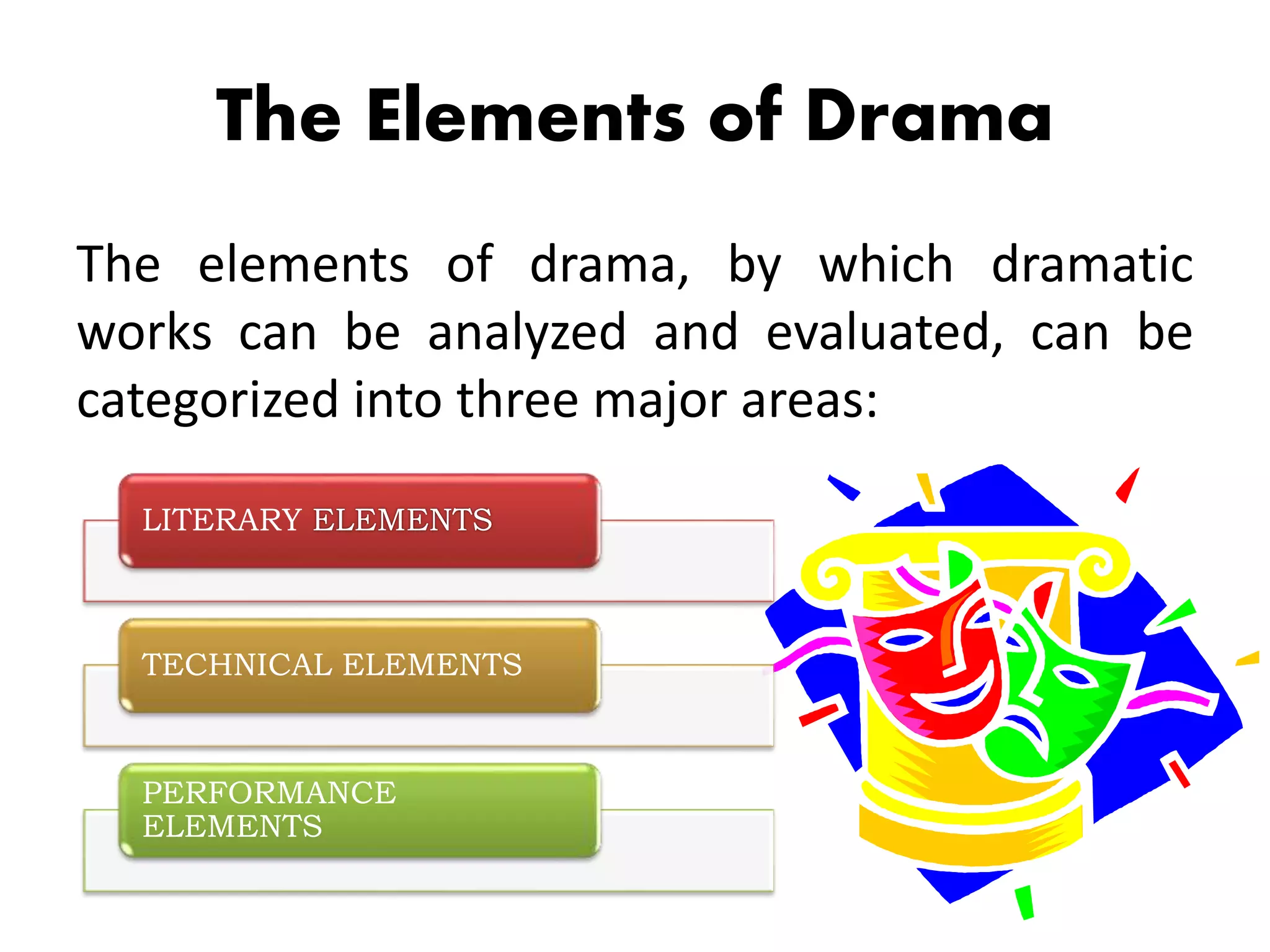
The elements of drama, by which dramatic
works can be analyzed and evaluated, can be
categorized into three major areas:
LITERARY ELEMENTS
TECHNICAL ELEMENTS
PERFORMANCE
ELEMENTS
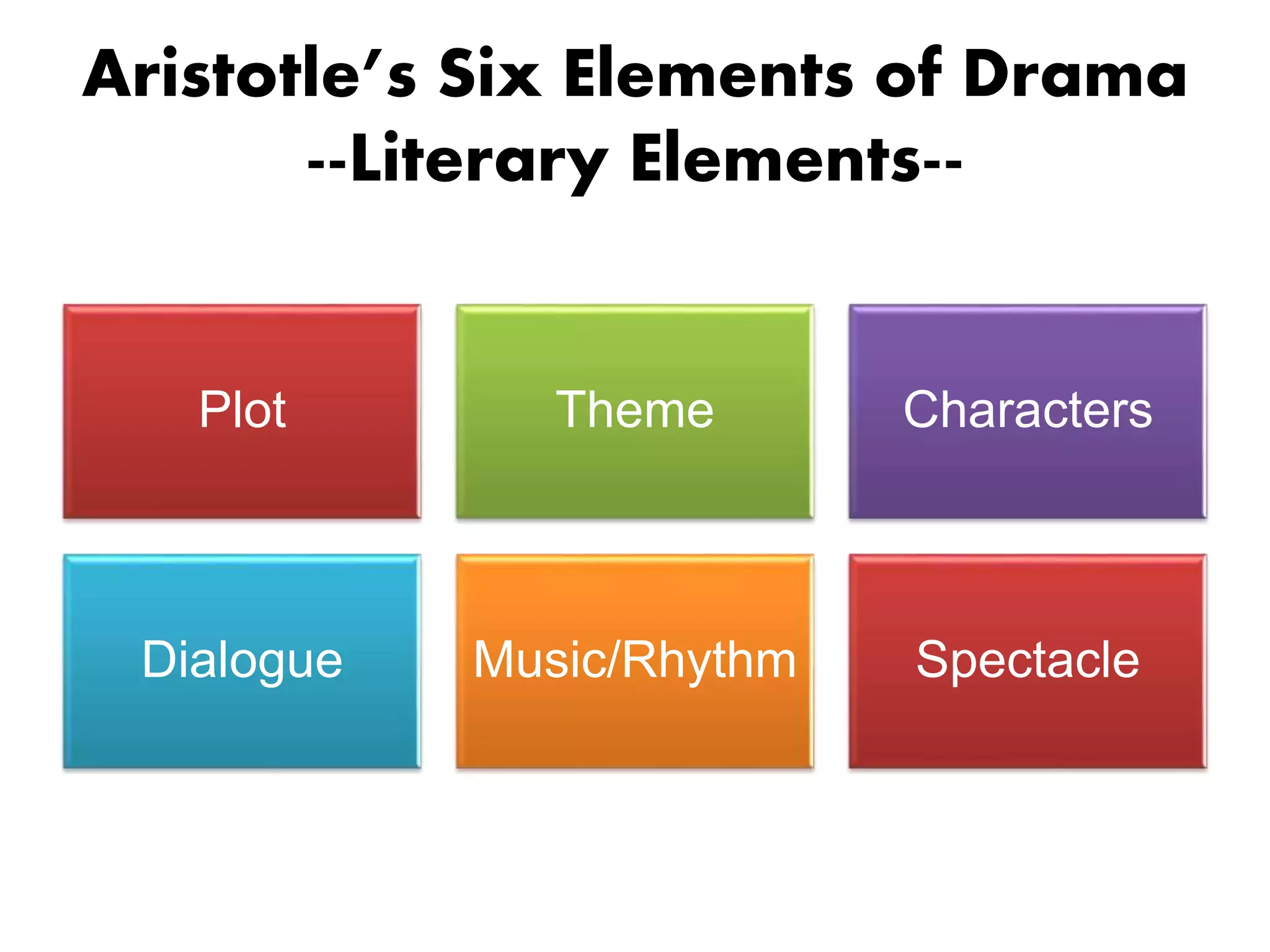
Aristotle’s Six Elements of Drama
--Literary Elements--
Plot Theme Characters
Dialogue Music/Rhythm Spectacle
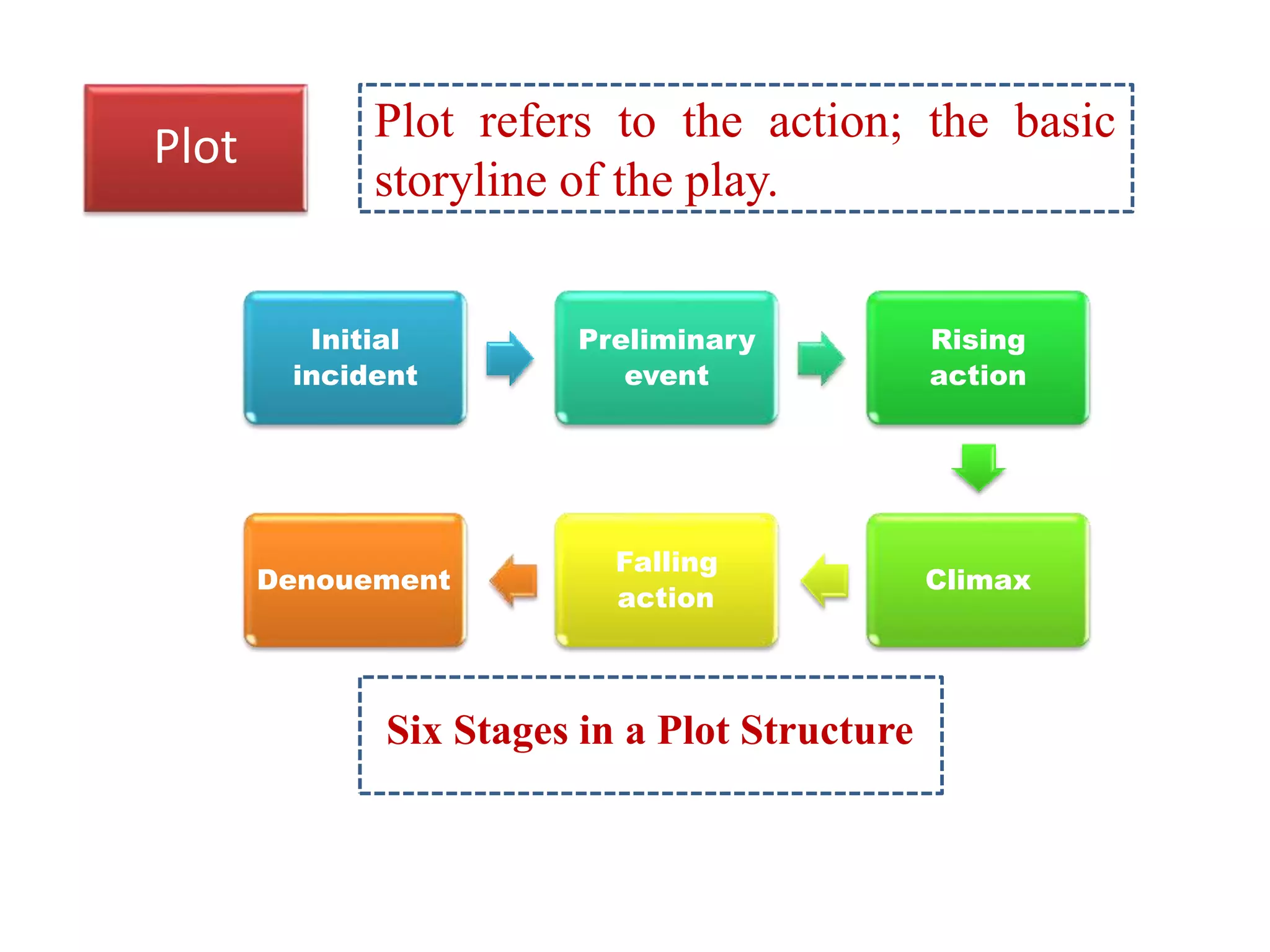
Plot Plot refers to the action; the basic
storyline of the play.
Initial
incident
Preliminary
event
Rising
action
Climax
Falling
action
Denouement
Six Stages in a Plot Structure
Theme refers to the meaning of the play.
Theme is the main idea or lesson to be
learned from the play. In some cases, the
theme of a play is obvious; other times it is
quite subtle.
Some General Themes
Theme
Conflict--
between two
individuals
Conflict between
man and a
supernatural
power
Conflict between
the man and
himself
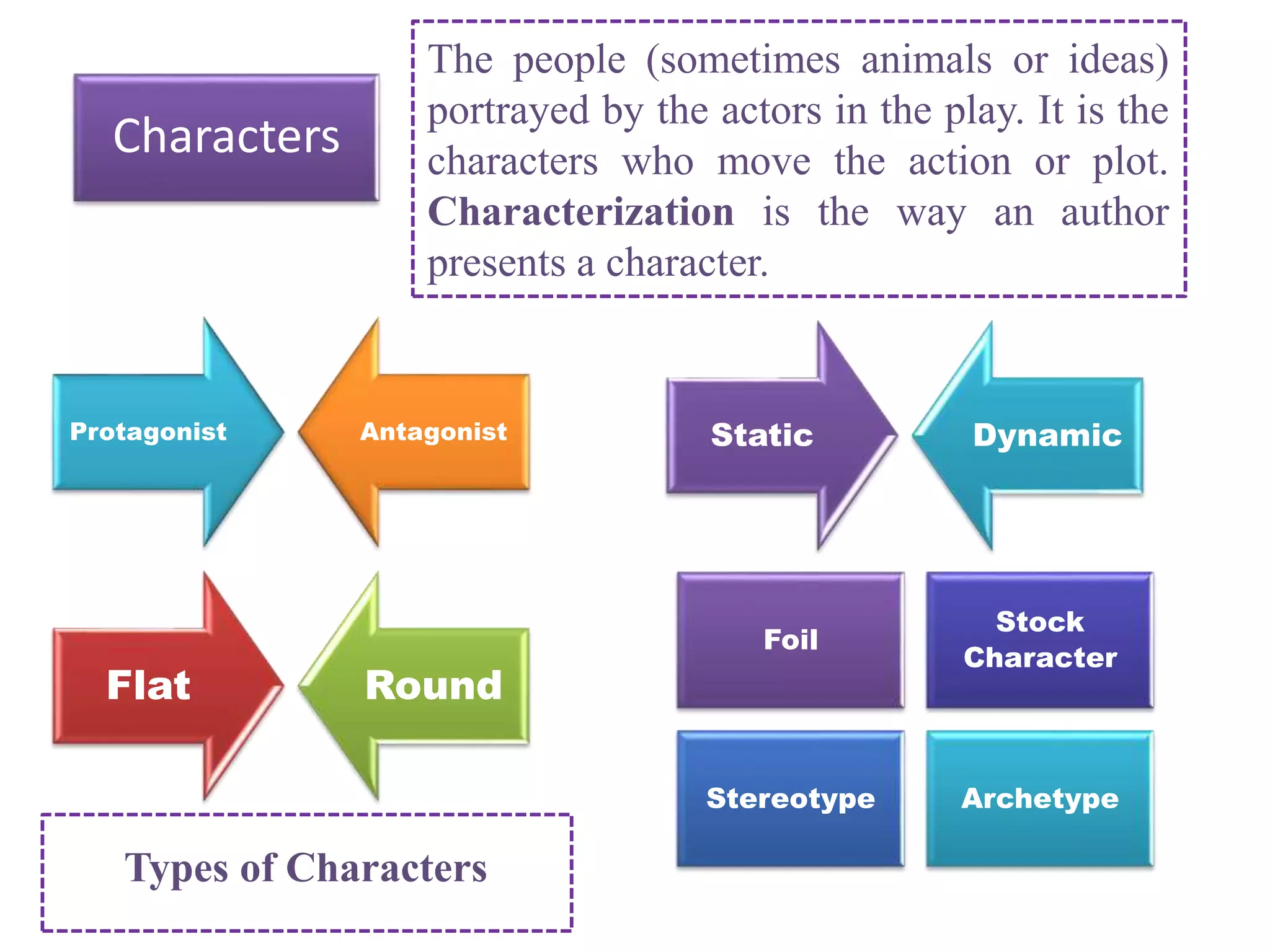
ThemeCharacters
Foil
Stock
Character
Stereotype Archetype
Protagonist Antagonist
Flat Round
Static Dynamic
The people (sometimes animals or ideas)
portrayed by the actors in the play. It is the
characters who move the action or plot.
Characterization is the way an author
presents a character.
Types of Characters
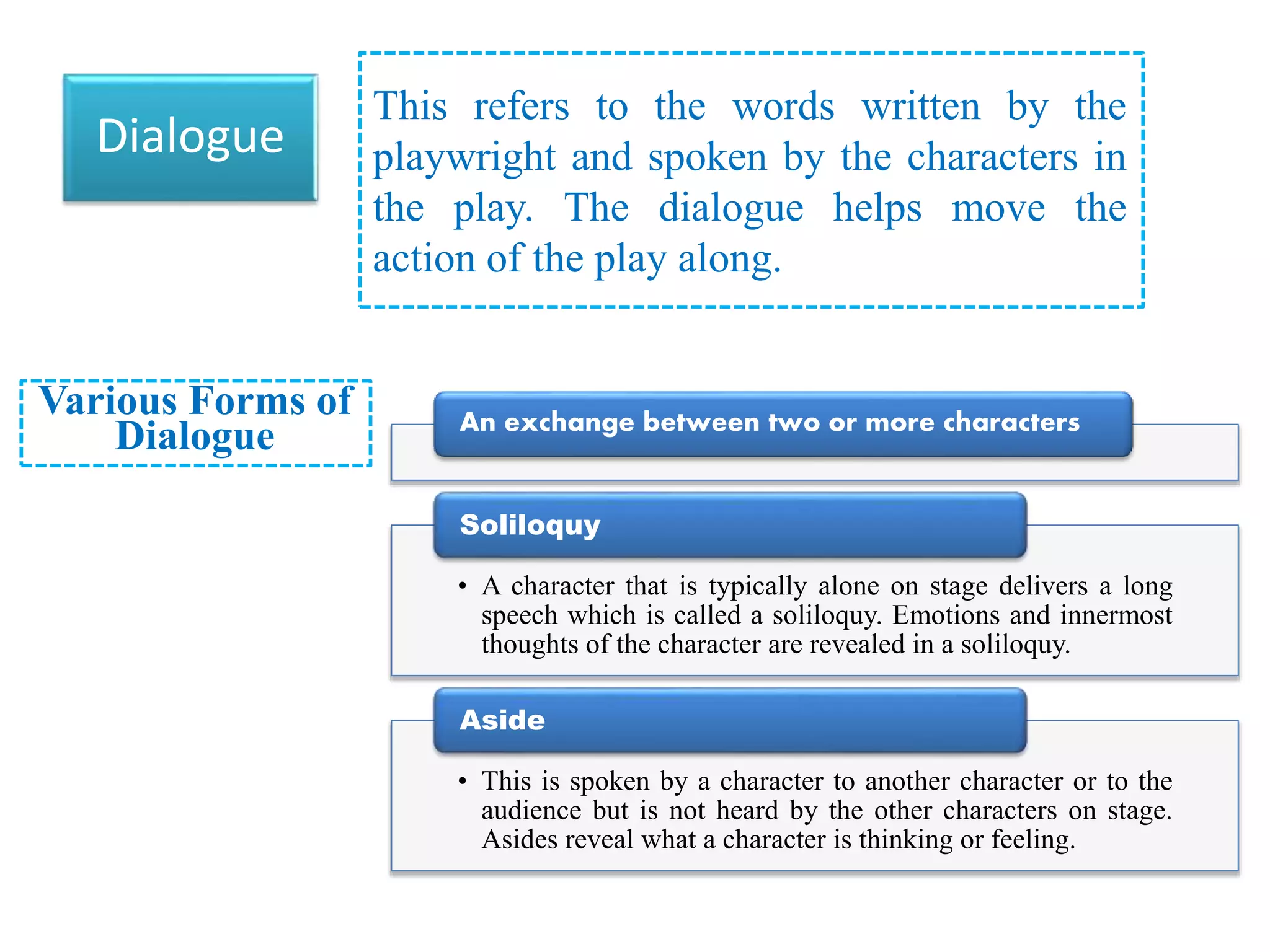
Various Forms of
Dialogue
Dialogue
This refers to the words written by the
playwright and spoken by the characters in
the play. The dialogue helps move the
action of the play along.
An exchange between two or more characters
• A character that is typically alone on stage delivers a long
speech which is called a soliloquy. Emotions and innermost
thoughts of the character are revealed in a soliloquy.
Soliloquy
• This is spoken by a character to another character or to the
audience but is not heard by the other characters on stage.
Asides reveal what a character is thinking or feeling.
Aside
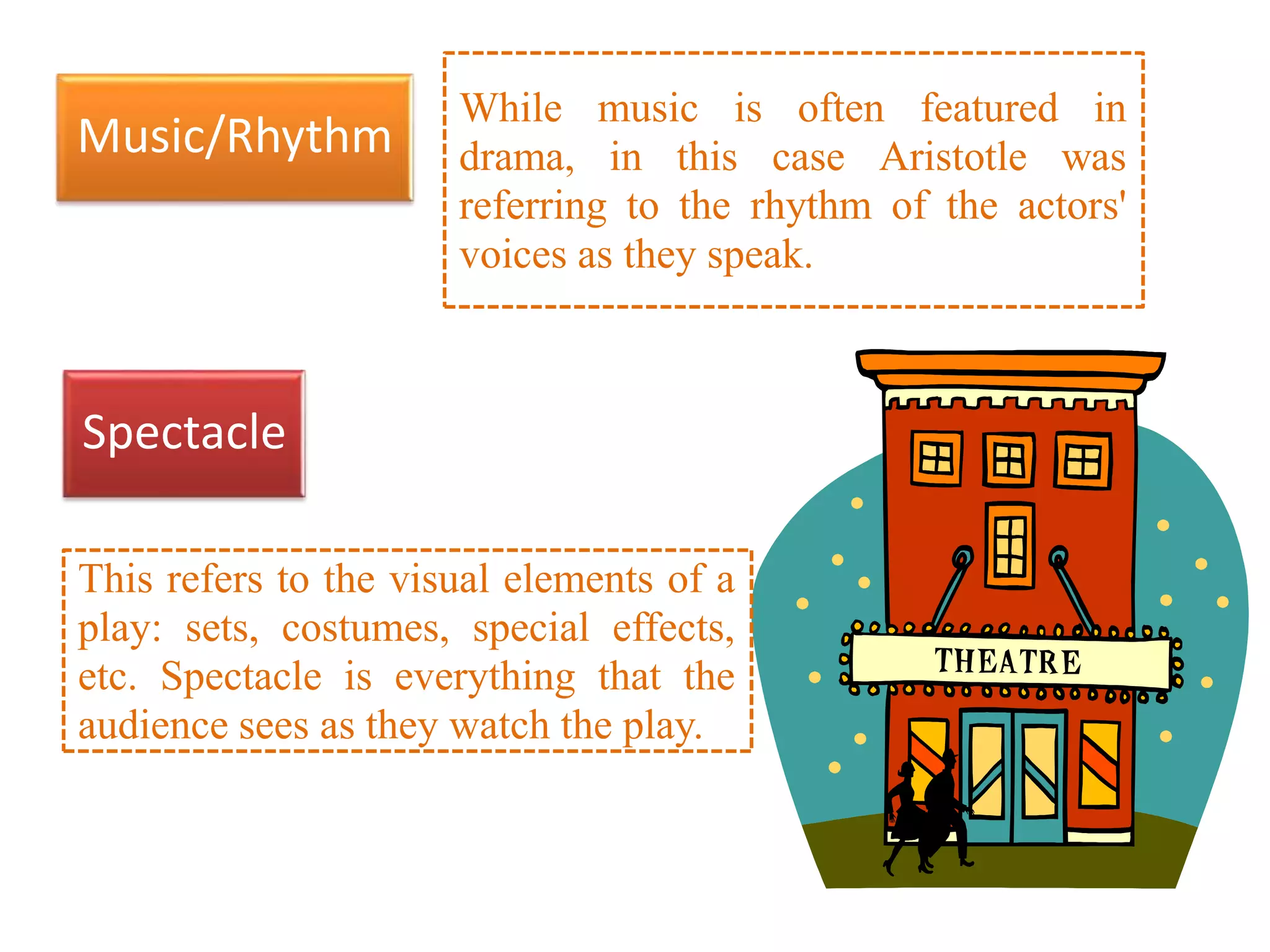
This refers to the visual elements of a
play: sets, costumes, special effects,
etc. Spectacle is everything that the
audience sees as they watch the play.
While music is often featured in
drama, in this case Aristotle was
referring to the rhythm of the actors'
voices as they speak.
Music/Rhythm
Spectacle
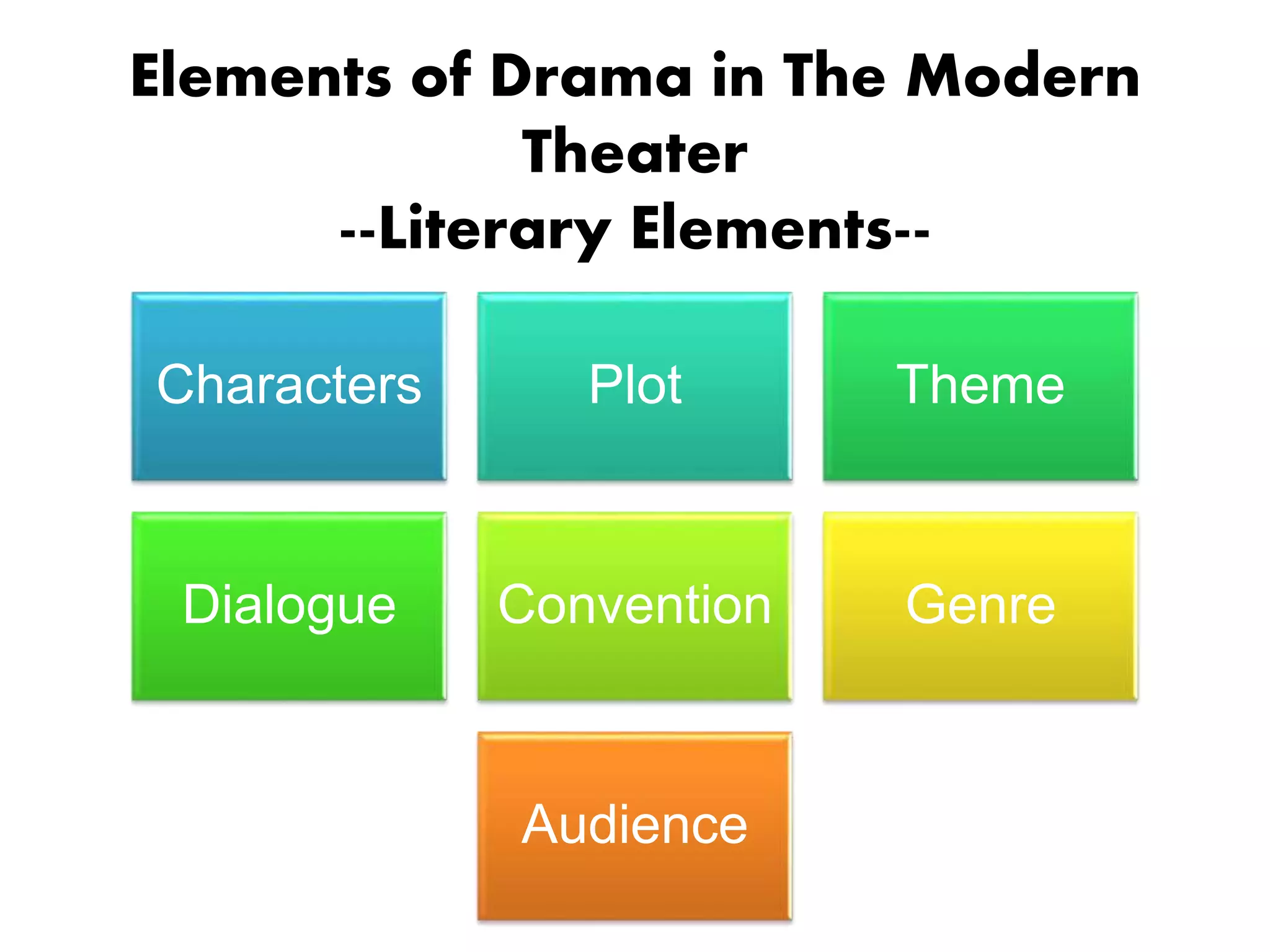
Elements of Drama in The Modern
Theater
--Literary Elements--
Characters Plot Theme
Dialogue Convention Genre
Audience
Genre refers to the type of play. Some
examples of different genres include
comedy, tragedy, mystery and
historical play.
These are the techniques and
methods used by the playwright and
director to create the desired stylistic
effect.
Convention
Genre
Audience
This is the group of people who watch the
play. Many playwrights and actors
consider the audience to be the most
important element of drama, as all of the
effort put in to writing and producing a
play is for the enjoyment of the audience.
--Technical Elements--
Scenery
(set)
Costumes
Properties Lights
Sound Makeup
Clothing and accessories are worn by
actors to portray character and period.
The theatrical equipment, such as
curtains, flats, backdrops, or platforms,
used in a dramatic production to
communicate environment.
Properties are any article, except costume
or scenery, used as part of a dramatic
production; any moveable object that
appears on stage during a performance,
from a telephone to a train
Scenery
(set)
Costumes
Properties
The effects an audience hears during
performance to communicate
character, context, or environment.
Light elements means that every
placement, intensity, and color of
lights have to be set as needed to help
communicate environment, mood, or
feeling.
Makeup includes costumes, wigs, and
body paint used to transform an actor into
a character.
Lights
Sound
Makeup
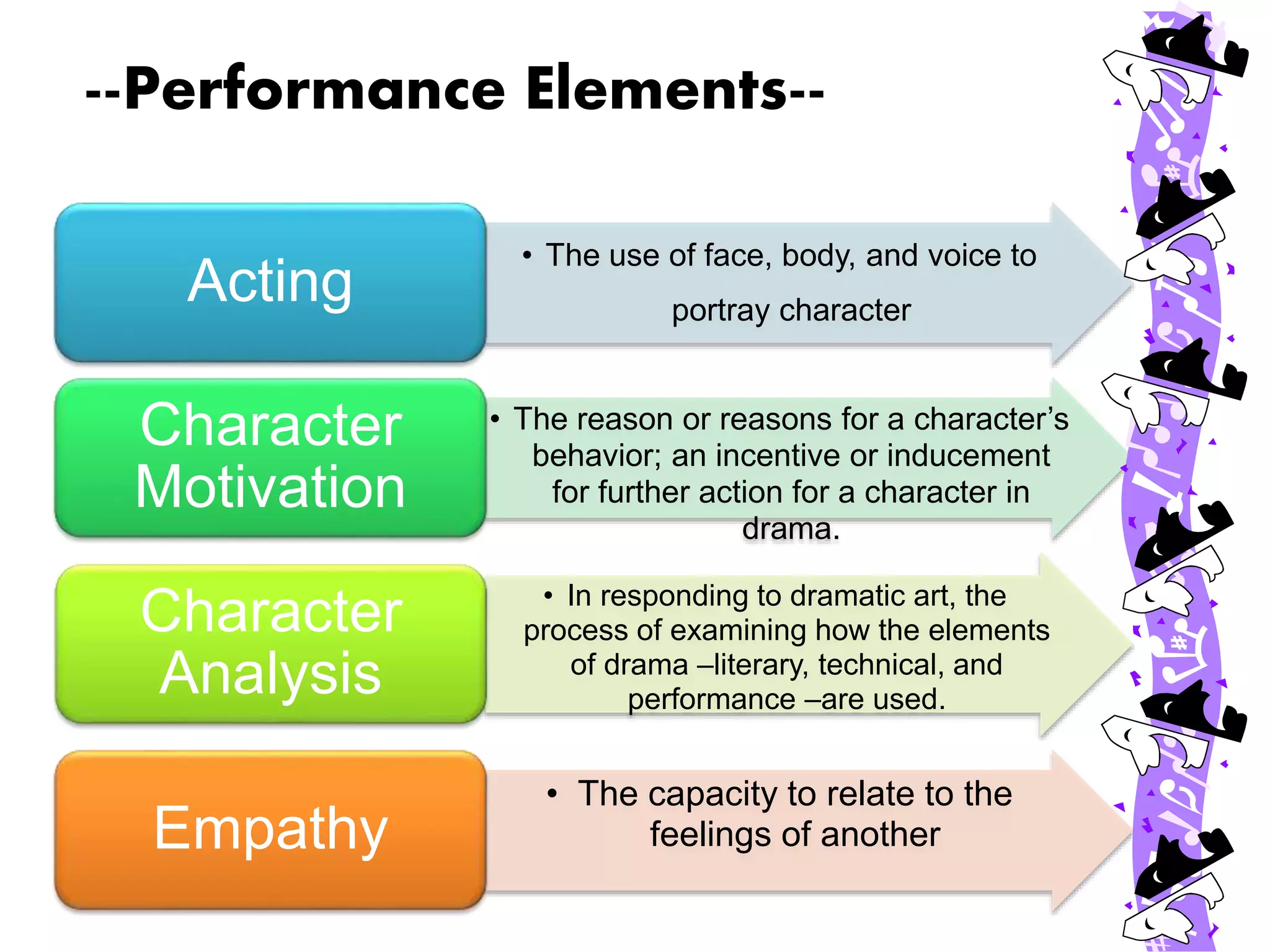
--Performance Elements--
• The use of face, body, and voice to
portray character
Acting
• The reason or reasons for a character’s
behavior; an incentive or inducement
for further action for a character in
drama.
Character
Motivation
• In responding to dramatic art, the
process of examining how the elements
of drama –literary, technical, and
performance –are used.
Character
Analysis
• The capacity to relate to the
feelings of anotherEmpathy
Conclusion
In drama, there are 3 major elements which are literary,
technical, and performance elements. Literary
elements consist of plot, theme, characters, dialogue,
music, spectacle, convention, genre, and audience.
Technical elements consist of scenery (set), costumes,
properties, lights, sound, and makeup. And the last,
performance elements consist of acting, character
motivation, character analysis, and empathy. For each
element hold specific role in ensuring the success of a
drama, we have to pay attention to each element that
constructs it.
Thank You

Elements of drama

  • 1.
    The Elements ofDrama Arranged by: Annisa Nur Fitria Ghea Hafiiza Nazmi Mardiatun Nisa Maya Putri Amelia Zahrah Fawziah 5C
  • 2.
    The Elements ofDrama The elements of drama, by which dramatic works can be analyzed and evaluated, can be categorized into three major areas: LITERARY ELEMENTS TECHNICAL ELEMENTS PERFORMANCE ELEMENTS
  • 3.
    Aristotle’s Six Elementsof Drama --Literary Elements-- Plot Theme Characters Dialogue Music/Rhythm Spectacle
  • 4.
    Plot Plot refersto the action; the basic storyline of the play. Initial incident Preliminary event Rising action Climax Falling action Denouement Six Stages in a Plot Structure
  • 5.
    Theme refers tothe meaning of the play. Theme is the main idea or lesson to be learned from the play. In some cases, the theme of a play is obvious; other times it is quite subtle. Some General Themes Theme Conflict-- between two individuals Conflict between man and a supernatural power Conflict between the man and himself
  • 6.
    ThemeCharacters Foil Stock Character Stereotype Archetype Protagonist Antagonist FlatRound Static Dynamic The people (sometimes animals or ideas) portrayed by the actors in the play. It is the characters who move the action or plot. Characterization is the way an author presents a character. Types of Characters
  • 7.
    Various Forms of Dialogue Dialogue Thisrefers to the words written by the playwright and spoken by the characters in the play. The dialogue helps move the action of the play along. An exchange between two or more characters • A character that is typically alone on stage delivers a long speech which is called a soliloquy. Emotions and innermost thoughts of the character are revealed in a soliloquy. Soliloquy • This is spoken by a character to another character or to the audience but is not heard by the other characters on stage. Asides reveal what a character is thinking or feeling. Aside
  • 8.
    This refers tothe visual elements of a play: sets, costumes, special effects, etc. Spectacle is everything that the audience sees as they watch the play. While music is often featured in drama, in this case Aristotle was referring to the rhythm of the actors' voices as they speak. Music/Rhythm Spectacle
  • 9.
    Elements of Dramain The Modern Theater --Literary Elements-- Characters Plot Theme Dialogue Convention Genre Audience
  • 10.
    Genre refers tothe type of play. Some examples of different genres include comedy, tragedy, mystery and historical play. These are the techniques and methods used by the playwright and director to create the desired stylistic effect. Convention Genre Audience This is the group of people who watch the play. Many playwrights and actors consider the audience to be the most important element of drama, as all of the effort put in to writing and producing a play is for the enjoyment of the audience.
  • 11.
  • 12.
    Clothing and accessoriesare worn by actors to portray character and period. The theatrical equipment, such as curtains, flats, backdrops, or platforms, used in a dramatic production to communicate environment. Properties are any article, except costume or scenery, used as part of a dramatic production; any moveable object that appears on stage during a performance, from a telephone to a train Scenery (set) Costumes Properties
  • 13.
    The effects anaudience hears during performance to communicate character, context, or environment. Light elements means that every placement, intensity, and color of lights have to be set as needed to help communicate environment, mood, or feeling. Makeup includes costumes, wigs, and body paint used to transform an actor into a character. Lights Sound Makeup
  • 14.
    --Performance Elements-- • Theuse of face, body, and voice to portray character Acting • The reason or reasons for a character’s behavior; an incentive or inducement for further action for a character in drama. Character Motivation • In responding to dramatic art, the process of examining how the elements of drama –literary, technical, and performance –are used. Character Analysis • The capacity to relate to the feelings of anotherEmpathy
  • 15.
    Conclusion In drama, thereare 3 major elements which are literary, technical, and performance elements. Literary elements consist of plot, theme, characters, dialogue, music, spectacle, convention, genre, and audience. Technical elements consist of scenery (set), costumes, properties, lights, sound, and makeup. And the last, performance elements consist of acting, character motivation, character analysis, and empathy. For each element hold specific role in ensuring the success of a drama, we have to pay attention to each element that constructs it.
  • 16.