Electronic Information Resource (EIR) Optimization
Leveraging Information Resources
Maximize efficiency and lower costs by
evaluating spend, usage and content
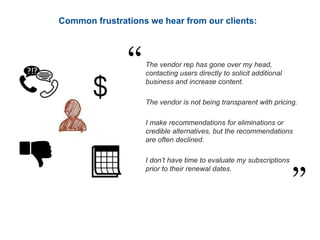
Common frustrations we hear from our clients:
The vendor rep has gone over my head,
contacting users directly to solicit additional
business and increase content.
The vendor is not being transparent with pricing.
I make recommendations for eliminations or
credible alternatives, but the recommendations
are often declined.
I don’t have time to evaluate my subscriptions
prior to their renewal dates.
“
“
Questions that serve as a catalyst
Do you allow enough time before contract end-dates
to evaluate resources and examine other options?
Who or what drives the information procurement
initiatives and projects within your organization?
Do you review usage through ERM- or vendor-
provided statistics to influence your renewal
strategy?
How often do you benchmark your vendor
pricing and how are you sourcing reliable
data?
What tools are you using to evaluate
subscription upgrades and products?
Are you aware of the ways your vendors grow
their margin during the term of your client
relationship?
Questions that serve as a catalyst
Pre-negotiation analysis of information resources
• Benchmark contract performance,
understanding vendor motivations and
key performance indicators (KPIs).
• Build a case to lower the cost of a
service if traffic decreases or is limited
to a small user base.
• Downgrade the service to a lower cost
option.
• Bundle resources to promote further
savings opportunities, if applicable.
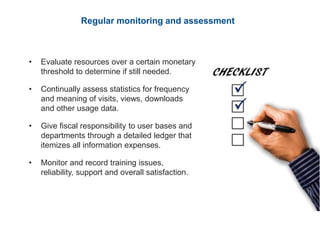
Regular monitoring and assessment
• Evaluate resources over a certain monetary
threshold to determine if still needed.
• Continually assess statistics for frequency
and meaning of visits, views, downloads
and other usage data.
• Give fiscal responsibility to user bases and
departments through a detailed ledger that
itemizes all information expenses.
• Monitor and record training issues,
reliability, support and overall satisfaction.
Key contract negotiation strategies
• Bundle and term all resources under the
same publisher / vendor, if applicable.
• Create a business case for considering a
switch from one provider to another.
• Eliminate the resource if a comparable product is sufficient and already
supported within the organization.
• Propose multi-year renewals to lower year-over-year price increases, if
applicable.
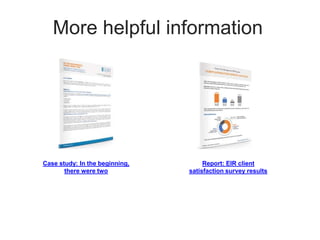
More helpful information
Report: EIR client
satisfaction survey results
Case study: In the beginning,
there were two
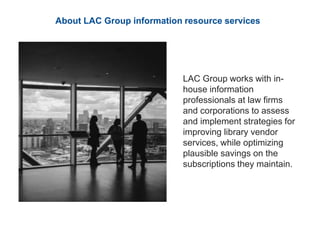
About LAC Group information resource services
LAC Group works with in-
house information
professionals at law firms
and corporations to assess
and implement strategies for
improving library vendor
services, while optimizing
plausible savings on the
subscriptions they maintain.
Contact us
https://lac-group.com/contact-us/

Electronic Information Resource (EIR) Optimization

  • 1.
  • 2.
    Leveraging Information Resources Maximizeefficiency and lower costs by evaluating spend, usage and content
  • 3.
    Common frustrations wehear from our clients: The vendor rep has gone over my head, contacting users directly to solicit additional business and increase content. The vendor is not being transparent with pricing. I make recommendations for eliminations or credible alternatives, but the recommendations are often declined. I don’t have time to evaluate my subscriptions prior to their renewal dates. “ “
  • 4.
    Questions that serveas a catalyst Do you allow enough time before contract end-dates to evaluate resources and examine other options? Who or what drives the information procurement initiatives and projects within your organization? Do you review usage through ERM- or vendor- provided statistics to influence your renewal strategy?
  • 5.
    How often doyou benchmark your vendor pricing and how are you sourcing reliable data? What tools are you using to evaluate subscription upgrades and products? Are you aware of the ways your vendors grow their margin during the term of your client relationship? Questions that serve as a catalyst
  • 6.
    Pre-negotiation analysis ofinformation resources • Benchmark contract performance, understanding vendor motivations and key performance indicators (KPIs). • Build a case to lower the cost of a service if traffic decreases or is limited to a small user base. • Downgrade the service to a lower cost option. • Bundle resources to promote further savings opportunities, if applicable.
  • 7.
    Regular monitoring andassessment • Evaluate resources over a certain monetary threshold to determine if still needed. • Continually assess statistics for frequency and meaning of visits, views, downloads and other usage data. • Give fiscal responsibility to user bases and departments through a detailed ledger that itemizes all information expenses. • Monitor and record training issues, reliability, support and overall satisfaction.
  • 8.
    Key contract negotiationstrategies • Bundle and term all resources under the same publisher / vendor, if applicable. • Create a business case for considering a switch from one provider to another. • Eliminate the resource if a comparable product is sufficient and already supported within the organization. • Propose multi-year renewals to lower year-over-year price increases, if applicable.
  • 9.
    More helpful information Report:EIR client satisfaction survey results Case study: In the beginning, there were two
  • 10.
    About LAC Groupinformation resource services LAC Group works with in- house information professionals at law firms and corporations to assess and implement strategies for improving library vendor services, while optimizing plausible savings on the subscriptions they maintain.
  • 11.