By
Md Riaz Bappy
Information and communication
engineering
Noakhali Science and technology
university
Presentation on :
Electrical Circuit
What is an Electrical circuit?
• An electrical circuit is a path or line through which an electrical current
flows. The path may be closed (joined at both ends), making it a loop. A
closed circuit makes electrical current flow possible. An open circuit does
not allow electrical current to flow.
Here are basic
symbols that
we may find on
circuit
diagrams.
A simple circuit has conductors, a load and a
power source ,a switch. Here are the functions
of each part:
Conductors:
These are usually copper wires with no insulation.
They make the path through which the electricity
flows. One piece of the wire connects the current from
the power source (cell) to the load. The other piece
connects the load back to the power source.
The Load:
The load is a small light bulb or buzzer that
lights when the circuit is turned on. The load is
also known as a resistor.
Cell:
The power source is a cell. (Note that more
than one cell put together is known as a
battery)
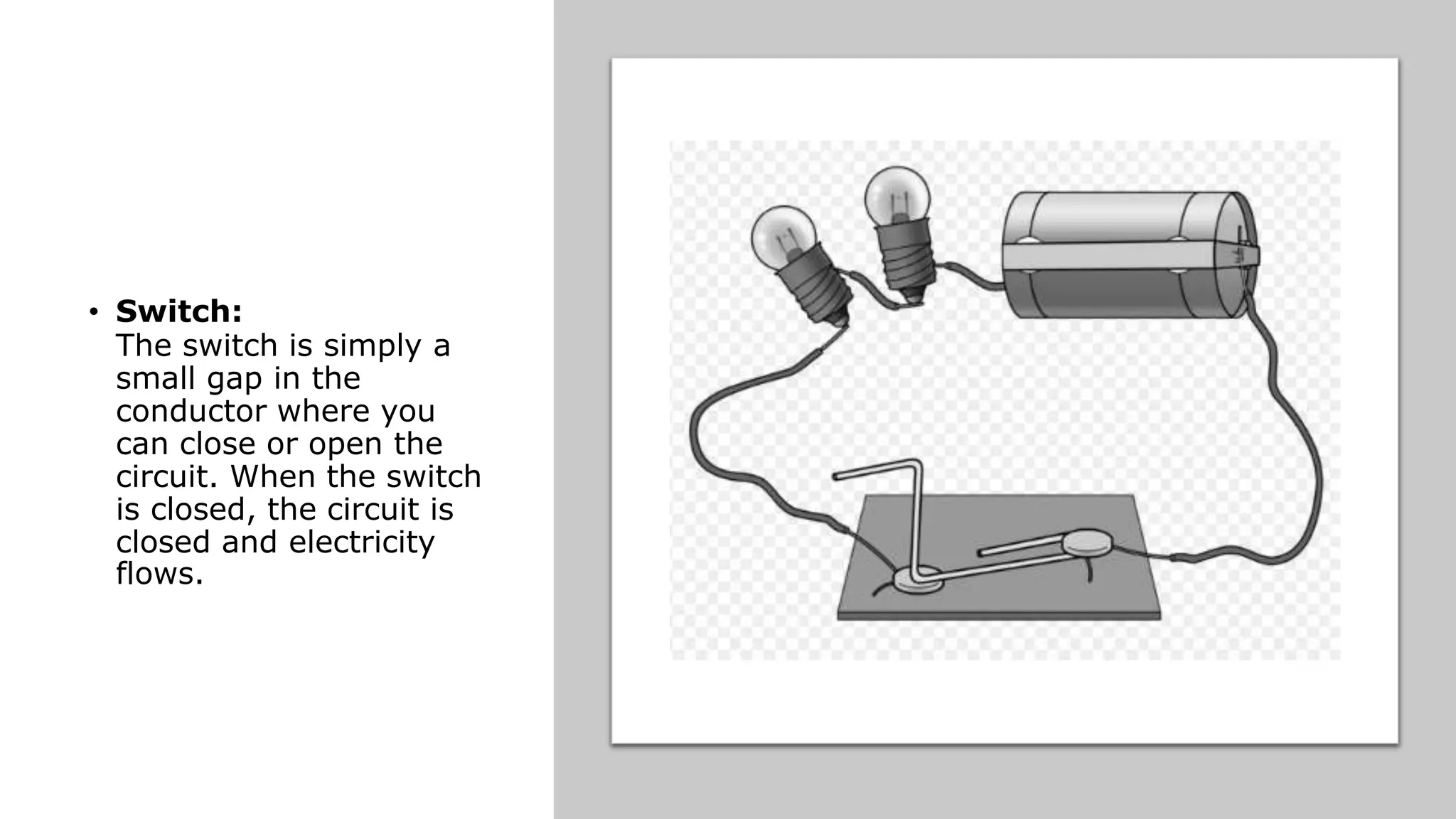
• Switch:
The switch is simply a
small gap in the
conductor where you
can close or open the
circuit. When the switch
is closed, the circuit is
closed and electricity
flows.
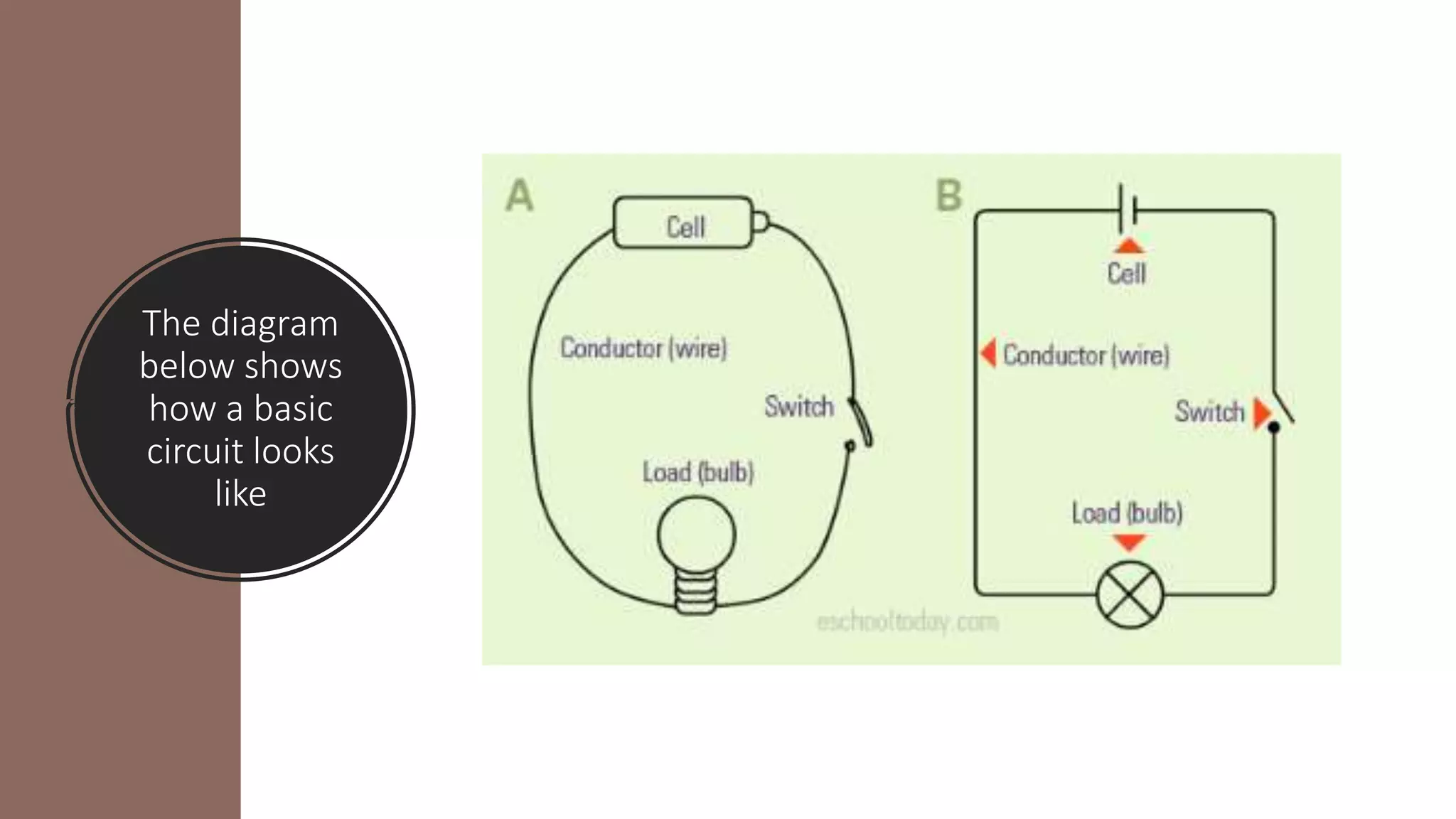
The diagram
below shows
how a basic
circuit looks
like
There are two types of circuits
namely Series circuit and Parallel
Circuit.
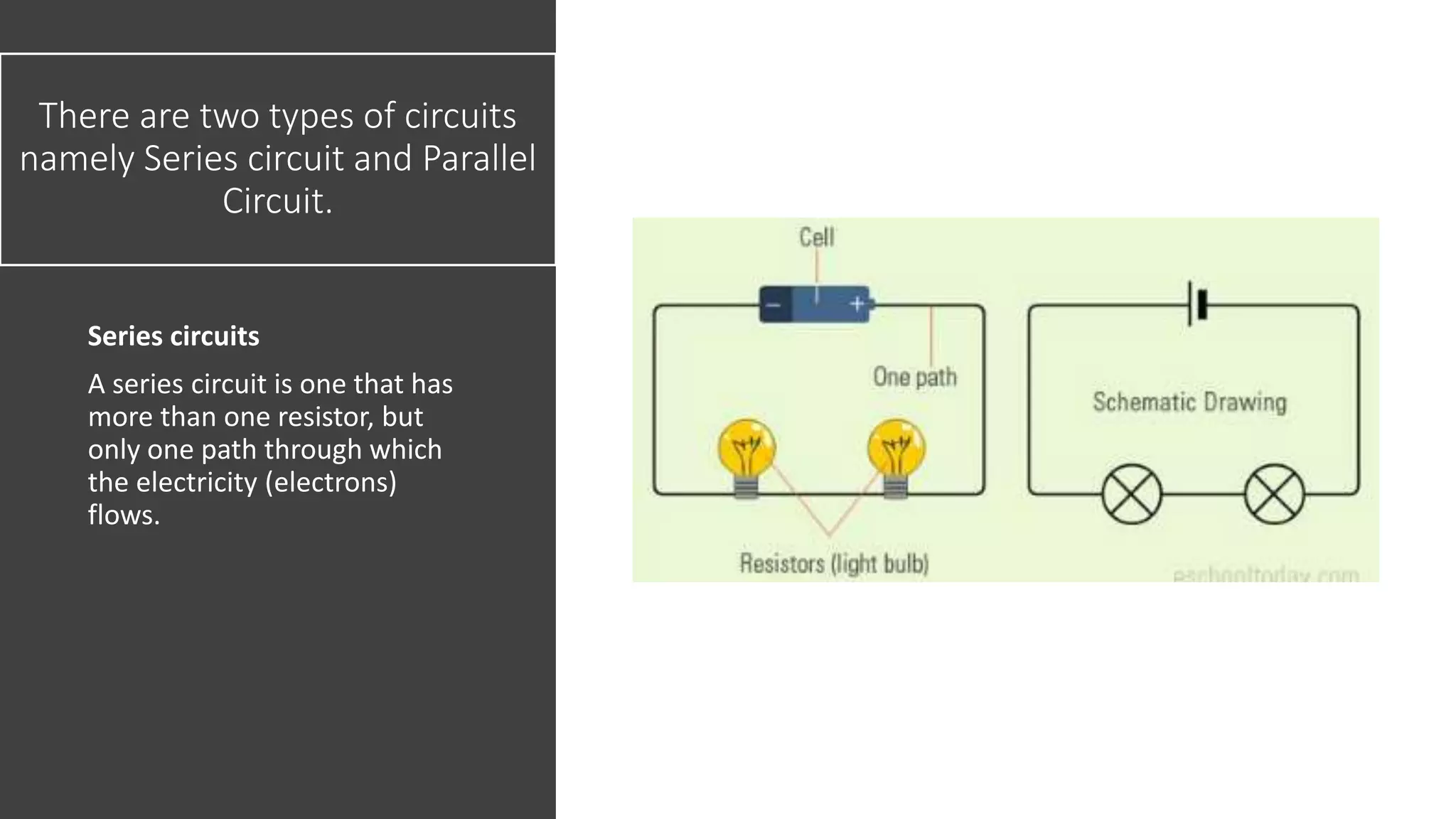
Series circuits
A series circuit is one that has
more than one resistor, but
only one path through which
the electricity (electrons)
flows.
• Parallel circuits
In a parallel circuit, there
is more than one
resistor (bulb) and they are
arranged on many paths. This
means electricity (electrons)
can travel from one end of the
cell through many branches to
the other end of the cell.
What is a short
circuit?
• In a short circuit, there is no
load. For many reasons, the
wires in a circuit can find a
short-cut, bypassing the
load (and other
components). This causes
the same voltage from the
cell to flow to the other end
of the cell. When this
happens the high voltage
causes the wires to heat up
and catch fire.
why there could be a short circuit?
Here are a few:
 Wires may loose their insulation and touch each
other in the circuit.
 There could be a fault (improper wiring) in a device
 Intentionally connecting both ends of a cell /
battery with wires. This causes a massive drain of
electricity and the battery looses its power in a very
short time.
Circuit
protection
It is very important that electrical devices in
homes, cars, aeroplanes and other complex
machines are protected from higher voltage than
the wires are designed to take — otherwise, the
devices can break and even catch fire.
In real life electrical circuits, it is possible that
wires (conductors) loose their insulation and
come into contact with the ground or other
conductors. If that happens, the voltage in the
wire will have no resistor (load) and the same
high voltage will be returned to the source of
power.
Circuit protection
This can result in overheating, as there is way too much voltage than the wires can
take. Overheating will then cause melting and eventually a break (open) in the circuit.
One way to protect a circuit is to add a fuse, circuit breaker or thermal breaker to the
circuit.
Thanks to all
for being
with me ….

Electrical circuit

  • 1.
    By Md Riaz Bappy Informationand communication engineering Noakhali Science and technology university Presentation on : Electrical Circuit
  • 2.
    What is anElectrical circuit? • An electrical circuit is a path or line through which an electrical current flows. The path may be closed (joined at both ends), making it a loop. A closed circuit makes electrical current flow possible. An open circuit does not allow electrical current to flow.
  • 3.
    Here are basic symbolsthat we may find on circuit diagrams.
  • 4.
    A simple circuithas conductors, a load and a power source ,a switch. Here are the functions of each part: Conductors: These are usually copper wires with no insulation. They make the path through which the electricity flows. One piece of the wire connects the current from the power source (cell) to the load. The other piece connects the load back to the power source.
  • 5.
    The Load: The loadis a small light bulb or buzzer that lights when the circuit is turned on. The load is also known as a resistor. Cell: The power source is a cell. (Note that more than one cell put together is known as a battery)
  • 6.
    • Switch: The switchis simply a small gap in the conductor where you can close or open the circuit. When the switch is closed, the circuit is closed and electricity flows.
  • 7.
    The diagram below shows howa basic circuit looks like
  • 8.
    There are twotypes of circuits namely Series circuit and Parallel Circuit. Series circuits A series circuit is one that has more than one resistor, but only one path through which the electricity (electrons) flows.
  • 9.
    • Parallel circuits Ina parallel circuit, there is more than one resistor (bulb) and they are arranged on many paths. This means electricity (electrons) can travel from one end of the cell through many branches to the other end of the cell.
  • 10.
    What is ashort circuit? • In a short circuit, there is no load. For many reasons, the wires in a circuit can find a short-cut, bypassing the load (and other components). This causes the same voltage from the cell to flow to the other end of the cell. When this happens the high voltage causes the wires to heat up and catch fire.
  • 11.
    why there couldbe a short circuit? Here are a few:  Wires may loose their insulation and touch each other in the circuit.  There could be a fault (improper wiring) in a device  Intentionally connecting both ends of a cell / battery with wires. This causes a massive drain of electricity and the battery looses its power in a very short time.
  • 12.
    Circuit protection It is veryimportant that electrical devices in homes, cars, aeroplanes and other complex machines are protected from higher voltage than the wires are designed to take — otherwise, the devices can break and even catch fire. In real life electrical circuits, it is possible that wires (conductors) loose their insulation and come into contact with the ground or other conductors. If that happens, the voltage in the wire will have no resistor (load) and the same high voltage will be returned to the source of power.
  • 13.
    Circuit protection This canresult in overheating, as there is way too much voltage than the wires can take. Overheating will then cause melting and eventually a break (open) in the circuit. One way to protect a circuit is to add a fuse, circuit breaker or thermal breaker to the circuit.
  • 14.
    Thanks to all forbeing with me ….