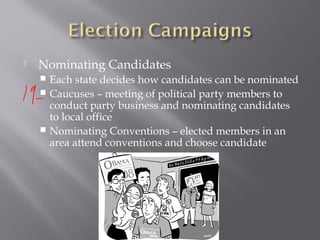
 Nominating Candidates
 Each state decides how candidates can be nominated
 Caucuses – meeting of political party members to
conduct party business and nominating candidates
to local office
 Nominating Conventions – elected members in an
area attend conventions and choose candidate
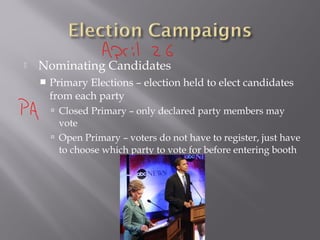
 Nominating Candidates
 Primary Elections – election held to elect candidates
from each party
 Closed Primary – only declared party members may
vote
 Open Primary – voters do not have to register, just have
to choose which party to vote for before entering booth
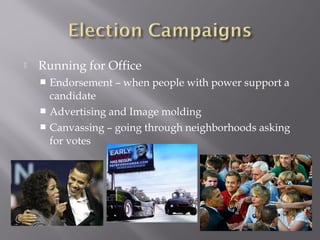
 Running for Office
 Endorsement – when people with power support a
candidate
 Advertising and Image molding
 Canvassing – going through neighborhoods asking
for votes
How can money make the political
systems less honest?
Candidate need money to run and win
campaigns!!
Lots of It!!!!
Where is the money spent?
-
-
-
 Financing Election Campaigns
 Private funding – less than 10% from individuals
 Political party contributions
 PACs – Political Action Committees – political
fundraising organizations who want to help a
candidate
Campaign Finance Reform and the Citizens United Supreme Court Decision - YouT
How campaign finance works - YouTube
 Public Funding – Taxpayers can contribute money
from their tax refund to Presidential Campaign fund
which is then divided up between the candidates
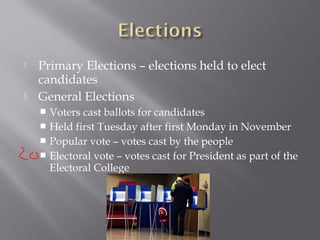
 Primary Elections – elections held to elect
candidates
 General Elections
 Voters cast ballots for candidates
 Held first Tuesday after first Monday in November
 Popular vote – votes cast by the people
 Electoral vote – votes cast for President as part of the
Electoral College
 Special Elections
 Run-off Elections – when there is a “tie” a run off
must be held to determine a winner
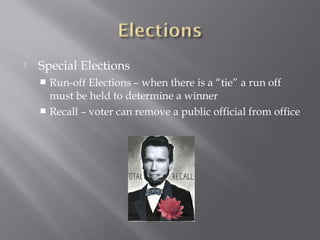
 Recall – voter can remove a public official from office
 Absentee voting – voting earlier than the
election day
 Those too ill or disabled
 Those who will be away from their county
 Those serving in the military
 Straight Ticket/Party Voting – voting only for
one political party
 Split Ticket Voting – voting for different parties
for different offices in the same election
 Ballots – device by which a voter registers a
choice in an election
 Paper Ballots – first used in our history
 Australian Ballot
 Four essential features of the Australian Ballot
 It is printed at the public expense
 It lists the names of ALL candidates in an election
 It is given out ONLY at the polls, one per qualified
voter
 It is marked in secret
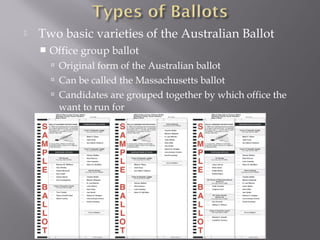
 Two basic varieties of the Australian Ballot
 Office group ballot
 Original form of the Australian ballot
 Can be called the Massachusetts ballot
 Candidates are grouped together by which office the
want to run for
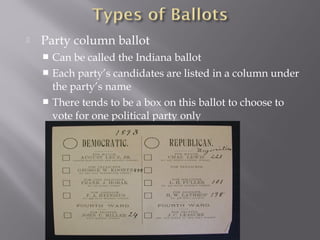
 Party column ballot
 Can be called the Indiana ballot
 Each party’s candidates are listed in a column under
the party’s name
 There tends to be a box on this ballot to choose to
vote for one political party only

Elections and voting

  • 2.
     Nominating Candidates Each state decides how candidates can be nominated  Caucuses – meeting of political party members to conduct party business and nominating candidates to local office  Nominating Conventions – elected members in an area attend conventions and choose candidate
  • 3.
     Nominating Candidates Primary Elections – election held to elect candidates from each party  Closed Primary – only declared party members may vote  Open Primary – voters do not have to register, just have to choose which party to vote for before entering booth
  • 4.
     Running forOffice  Endorsement – when people with power support a candidate  Advertising and Image molding  Canvassing – going through neighborhoods asking for votes
  • 5.
    How can moneymake the political systems less honest? Candidate need money to run and win campaigns!! Lots of It!!!! Where is the money spent? - - -
  • 6.
     Financing ElectionCampaigns  Private funding – less than 10% from individuals  Political party contributions  PACs – Political Action Committees – political fundraising organizations who want to help a candidate Campaign Finance Reform and the Citizens United Supreme Court Decision - YouT How campaign finance works - YouTube
  • 7.
     Public Funding– Taxpayers can contribute money from their tax refund to Presidential Campaign fund which is then divided up between the candidates
  • 8.
     Primary Elections– elections held to elect candidates  General Elections  Voters cast ballots for candidates  Held first Tuesday after first Monday in November  Popular vote – votes cast by the people  Electoral vote – votes cast for President as part of the Electoral College
  • 9.
     Special Elections Run-off Elections – when there is a “tie” a run off must be held to determine a winner  Recall – voter can remove a public official from office
  • 10.
     Absentee voting– voting earlier than the election day  Those too ill or disabled  Those who will be away from their county  Those serving in the military  Straight Ticket/Party Voting – voting only for one political party  Split Ticket Voting – voting for different parties for different offices in the same election
  • 11.
     Ballots –device by which a voter registers a choice in an election  Paper Ballots – first used in our history  Australian Ballot  Four essential features of the Australian Ballot  It is printed at the public expense  It lists the names of ALL candidates in an election  It is given out ONLY at the polls, one per qualified voter  It is marked in secret
  • 12.
     Two basicvarieties of the Australian Ballot  Office group ballot  Original form of the Australian ballot  Can be called the Massachusetts ballot  Candidates are grouped together by which office the want to run for
  • 13.
     Party columnballot  Can be called the Indiana ballot  Each party’s candidates are listed in a column under the party’s name  There tends to be a box on this ballot to choose to vote for one political party only