MEWAR UNIVERSITY
Topic :-
Submitted to:-
Dr.Gaurav kr Sharma
Department of pharmacy
Submitted by:-
Ekramul Haque
B Pharma (Final year)
MUR1800849
Tablet Coating
TABLET COATING
Contents:
Types of tablet coating
Ideal properties of coating materials
Introduction of tablet coating
Tablet Coating defects
TABLET COATING
It is a process in which the tablet surface is
covered by layer to improve the appearance and
to mask the unpleasant taste and odour.
Causes/Reasonsfor Coating:
Protection of ingredients from the
environment,Light and moisture.
To mask unpleasant taste and odour.
To Provide Physical /Chemical protection to drugs.
To improve the appearance of tablets.
To produce the sustained released drug.
To produce enteric coated tablets.
Types of Tablet Coating
Sugar coating
Film coating
Enteric Coating
Sugar coating
These types of coating is used to mask the
unpleasant taste of tablets and enhance
acceptability of tablet.
Deposit sugar layer on the surface of tablet.
The various steps involved in sugar coating.
1) Sealing (water proofing)
2) Subcoating
3) Smoothing
4) Colouring
Polishing
5)
1) Sealing (water proofing):
It is a seal coating over the tablets which prevents
tablets from water penetration or moisture.
Increase stability and safety of drugs.
eg- Shellac,Zein(a corn protein
derivatives),cellulose acetate phathalate
(CAP),Polyvinyl acetate phthalate etc used as
sealants polymer (general water insoluble) for this
2) Sub-coating:
The Sub-coating is applied to round the edges
and build up the tablet size.
This step can increase the tablet weight by 50-
100%.
Material used for Sub-coatingeg-acacia and
gelatin.
Also apply dusting powder to prevent sticking eg-
calcium carbonate,titanium dioxide and powder
sucrose etc.
3) Smoothing:
This step is applied to smooth out subcoated
rough surface and increase tablet bulk to desired
size.
Several coat of simple syrup solution (60-70%)
are applied
Now,this syrup contain sugar and acacia,gelatin,
pigments,starch etc
4) Colouring:
It gives the color and thickness size to the
tablets.
Sugar coating solution consists of 70% syrup and
other colouring pigments.
Water soluble dyes and water insoluble
pigments may be used.
5) Polishing:
Generally sugar coated tablets are dull in
appearance, so the polishing give the surface
shine and tablet elegance.
eg-acacia beeswax ,carnaubaand candelila wax
are used for polishing.
Film coating:
It is more favoured over sugar coating.
Film coating is deposition of a thin film of a
polymer surrounding the tablet core.
The film formed is very thin and it gives the
tablet a less weight and small size.
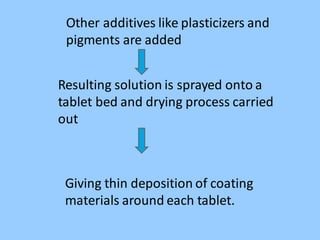
The polymer is solublized in to
Other additives like plasticizers and
pigments are added
Resulting solution is sprayed onto a
tablet bed and drying process carried
out
Giving thin deposition of coating
materials around each tablet.
Ideal properties of film coating materials
Capacity to produce on elegant product.
Solubility in solvent of choice for Coating
preparation.
Capacity in presence of heat,light,moisture,air
and substrate being coated.
Essentially no color,taste or order.
Non toxicity with no pharmacological activity.
Film former:
Hydroxypropyl methylcellulose USP
Methyl Hydroxyethyl cellulose
Ethyl cellulose
Hydroxypropyl cells
Povidone USP
Acrylate polymer
Enteric Coating:
Enteric Coating is used to protect tablet core
from disintegration
In the acid environment of the stomach
Reason for this:
To prevent degradation of acid sensitive API.
eg. Enzyme and few antibiotics
To prevent irritation of stomach by certain drug
like sodium salicylate.
Delivery of API into intestine.
eg.intestinal antiseptic
To Provide a delay release component for prolong
action.
Ideal properties of enteric coating materials
Resistance to gastric fluids.
Susceptible and permeable to intestinal fluid.
Compatibility with most coating solution and
drug substrate.
Non toxicity.
Enteric Coating materials
Cellulose Acetate phthalate(CAP).
Acrylate polymers.
Polyvinyl Acetate phthalate.
Hydroxypropyl methylcellulose phthalate.
EQUIPMENTS FOR TABLET COATING
1)Standard coating pan
eg-Pellegrino pan system
Immersion sword system
Immersion tube system
2)Perforated pan system
e.g. Accela cota system
Hi-coater system
Glattcoater system
3)Fluidized bed coater
Three general types of equipments are available
Tablet Coating Defects:
Picking and sticking:
This occurs when the coating removes a
piece of the tablet from the core. It is caused by
over-wetting the tablets, by under-drying, or by
poor tablet quality.
Cracking:
This occurs if internal stresses in the
film exceeds the tensile strength of the film.
The tensile strength of the film can be
increased by using high molecular weight
polymers or polymer blends.
Roughness:
This is observed when coating is applied by
spray. Some of the tablets may dry too rapidly
before reaching the tablet bed and deposits on
tablet
surface.Surface roughness also increases with
pigment concentrationand polymer
concentrationin
the coating solution.
Orange peel effect:
Inadequate spreading of coating
solution before drying causes a bumpy or
orange peel effect on the tablet.
Ekramul Haque AnsariMUR1800849.pdf

Ekramul Haque AnsariMUR1800849.pdf

  • 1.
    MEWAR UNIVERSITY Topic :- Submittedto:- Dr.Gaurav kr Sharma Department of pharmacy Submitted by:- Ekramul Haque B Pharma (Final year) MUR1800849 Tablet Coating
  • 2.
    TABLET COATING Contents: Types oftablet coating Ideal properties of coating materials Introduction of tablet coating Tablet Coating defects
  • 3.
    TABLET COATING It isa process in which the tablet surface is covered by layer to improve the appearance and to mask the unpleasant taste and odour. Causes/Reasonsfor Coating: Protection of ingredients from the environment,Light and moisture. To mask unpleasant taste and odour. To Provide Physical /Chemical protection to drugs.
  • 4.
    To improve theappearance of tablets. To produce the sustained released drug. To produce enteric coated tablets. Types of Tablet Coating Sugar coating Film coating Enteric Coating
  • 5.
    Sugar coating These typesof coating is used to mask the unpleasant taste of tablets and enhance acceptability of tablet. Deposit sugar layer on the surface of tablet. The various steps involved in sugar coating. 1) Sealing (water proofing) 2) Subcoating
  • 6.
    3) Smoothing 4) Colouring Polishing 5) 1)Sealing (water proofing): It is a seal coating over the tablets which prevents tablets from water penetration or moisture. Increase stability and safety of drugs.
  • 7.
    eg- Shellac,Zein(a cornprotein derivatives),cellulose acetate phathalate (CAP),Polyvinyl acetate phthalate etc used as sealants polymer (general water insoluble) for this 2) Sub-coating: The Sub-coating is applied to round the edges and build up the tablet size. This step can increase the tablet weight by 50- 100%.
  • 8.
    Material used forSub-coatingeg-acacia and gelatin. Also apply dusting powder to prevent sticking eg- calcium carbonate,titanium dioxide and powder sucrose etc. 3) Smoothing: This step is applied to smooth out subcoated rough surface and increase tablet bulk to desired size.
  • 9.
    Several coat ofsimple syrup solution (60-70%) are applied Now,this syrup contain sugar and acacia,gelatin, pigments,starch etc 4) Colouring: It gives the color and thickness size to the tablets. Sugar coating solution consists of 70% syrup and other colouring pigments.
  • 10.
    Water soluble dyesand water insoluble pigments may be used. 5) Polishing: Generally sugar coated tablets are dull in appearance, so the polishing give the surface shine and tablet elegance. eg-acacia beeswax ,carnaubaand candelila wax are used for polishing.
  • 11.
    Film coating: It ismore favoured over sugar coating. Film coating is deposition of a thin film of a polymer surrounding the tablet core. The film formed is very thin and it gives the tablet a less weight and small size. The polymer is solublized in to
  • 12.
    Other additives likeplasticizers and pigments are added Resulting solution is sprayed onto a tablet bed and drying process carried out Giving thin deposition of coating materials around each tablet.
  • 13.
    Ideal properties offilm coating materials Capacity to produce on elegant product. Solubility in solvent of choice for Coating preparation. Capacity in presence of heat,light,moisture,air and substrate being coated. Essentially no color,taste or order. Non toxicity with no pharmacological activity.
  • 14.
    Film former: Hydroxypropyl methylcelluloseUSP Methyl Hydroxyethyl cellulose Ethyl cellulose Hydroxypropyl cells Povidone USP Acrylate polymer
  • 15.
    Enteric Coating: Enteric Coatingis used to protect tablet core from disintegration In the acid environment of the stomach Reason for this: To prevent degradation of acid sensitive API. eg. Enzyme and few antibiotics
  • 16.
    To prevent irritationof stomach by certain drug like sodium salicylate. Delivery of API into intestine. eg.intestinal antiseptic To Provide a delay release component for prolong action.
  • 17.
    Ideal properties ofenteric coating materials Resistance to gastric fluids. Susceptible and permeable to intestinal fluid. Compatibility with most coating solution and drug substrate. Non toxicity.
  • 18.
    Enteric Coating materials CelluloseAcetate phthalate(CAP). Acrylate polymers. Polyvinyl Acetate phthalate. Hydroxypropyl methylcellulose phthalate.
  • 19.
    EQUIPMENTS FOR TABLETCOATING 1)Standard coating pan eg-Pellegrino pan system Immersion sword system Immersion tube system 2)Perforated pan system e.g. Accela cota system Hi-coater system Glattcoater system 3)Fluidized bed coater Three general types of equipments are available
  • 20.
    Tablet Coating Defects: Pickingand sticking: This occurs when the coating removes a piece of the tablet from the core. It is caused by over-wetting the tablets, by under-drying, or by poor tablet quality. Cracking: This occurs if internal stresses in the film exceeds the tensile strength of the film. The tensile strength of the film can be increased by using high molecular weight polymers or polymer blends.
  • 21.
    Roughness: This is observedwhen coating is applied by spray. Some of the tablets may dry too rapidly before reaching the tablet bed and deposits on tablet surface.Surface roughness also increases with pigment concentrationand polymer concentrationin the coating solution. Orange peel effect: Inadequate spreading of coating solution before drying causes a bumpy or orange peel effect on the tablet.