


Presentation & Public Speaking
            Part 1
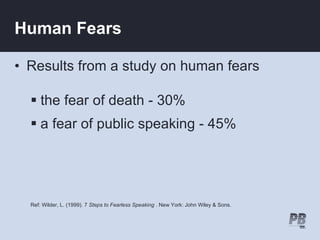
Human Fears

• Results from a study on human fears

   the fear of death - 30%
   a fear of public speaking - 45%


  Ref: Wilder, L. (1999). 7 Steps to Fearless Speaking . New York: John Wiley & Sons.
Rationale


• “The way you talk is as important in the
  business world as the way you look. It is
  how you communicate with the outside
  world that determines your position within
  it.”
Dr Lillian Glass (Prof. UCLA)
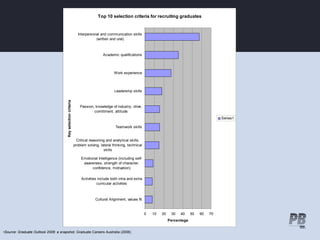
Top 10 selection criteria for recruiting graduates


                                                                 Interpersonal and communication skills
                                                                            (written and oral)


                                                                                 Academic qualifications


                                                                                         Work experience


                                                                                         Leadership skills
                                      Key selection criteria


                                                                   Passion, knowledge of industry, drive,
                                                                           comittment, attitude
                                                                                                                                                        Series1

                                                                                          Teamwork skills


                                                                 Critical reasoning and analytical skills,
                                                               problem solving, lateral thinking, technical
                                                                                  skills

                                                                   Emotional Intelligence (including self-
                                                                    awareness, strength of character,
                                                                         confidence, motivation)

                                                                    Activities include both intra and extra
                                                                              curricular activities


                                                                             Cultural Alignment, values fit


                                                                                                              0   10   20    30   40     50   60   70
                                                                                                                            Percentage


•Source: Graduate Outlook 2006: a snapshot, Graduate Careers Australia (2006)
Objectives

1. Recognise the importance of effective
   presentation skill practice
2. Outline techniques to improving your
   presentations
Topics covered

•   Content
•   Audience
•   First Impressions
•   Environment
•   Technology
•   PowerPoint
•   Session Plan
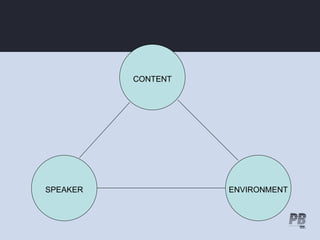
CONTENT


SPEAKER             ENVIRONMENT
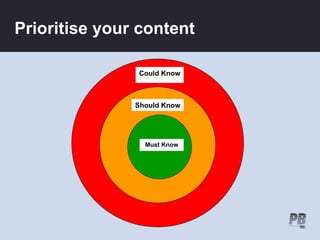
Prioritise your content

               Could Know


               Should Know


                 Must Know
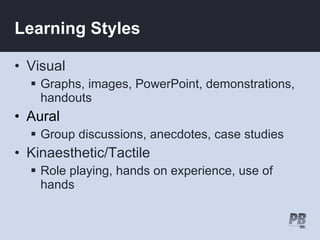
Learning Styles

• Visual
   Graphs, images, PowerPoint, demonstrations,
    handouts
• Aural
   Group discussions, anecdotes, case studies
• Kinaesthetic/Tactile
   Role playing, hands on experience, use of
    hands
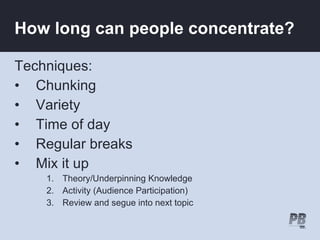
How long can people concentrate?

Techniques:
• Chunking
• Variety
• Time of day
• Regular breaks
• Mix it up
    1. Theory/Underpinning Knowledge
    2. Activity (Audience Participation)
    3. Review and segue into next topic
Session Plan?

• Your roadmap to success
• Provide clear linear structure
• Help you break down tasks and assess
  what needs to be done
The ‘Three R’s’

• Relationship

• Reasons

• Resistance
First Impressions

• “When someone makes a negative
  impression on us, we're less likely to seek
  out that person again, making it difficult to
  gather additional information that could
  change our first impression.”
Jerker Denrell, Assistant Professor of Organizational Behaviour at the Stanford Graduate School of Business


• Research suggests that it takes as little as
  3 seconds to form an impression
Environment

•   Room size & shape
•   Temperature
•   Lighting/Glare
•   Safety
•   Room Layout/Furniture
•   Voice projection (Mic?)
•   Catering!
Technology

•   Plan for failure
•   Laptop
•   Internet access
•   Content saved to hard drive/memory stick
•   Room
•   A/V equipment
•   Leads, cables!!
•   Setup the room ahead of time
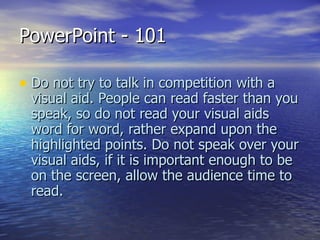
PowerPoint - 101

• Do not try to talk in competition with a
 visual aid. People can read faster than you
 speak, so do not read your visual aids
 word for word, rather expand upon the
 highlighted points. Do not speak over your
 visual aids, if it is important enough to be
 on the screen, allow the audience time to
 read.
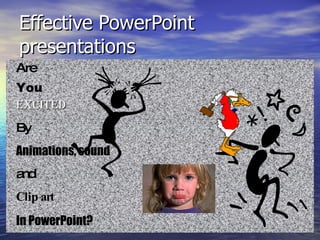
Effective PowerPoint
presentations
Are
You
ExcitEd
By
Animations, sound
and
Clip art
In PowerPoint?
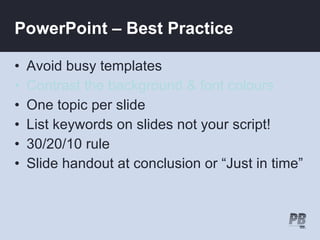
PowerPoint – Best Practice

•   Avoid busy templates
•   Contrast the background & font colours
•   One topic per slide
•   List keywords on slides not your script!
•   30/20/10 rule
•   Slide handout at conclusion or “Just in time”
Part Time Workers Survey

• A survey was conducted in Sydney,
  Melbourne and Brisbane recently. The
  survey covered 200,000 workers in over
  1000 companies, covering the
  manufacturing, construction, hospitality and
  medical industries. It found that 79% of part
  time jobs were filled by women. A further
  7% were filled by university students.
Part Time Workers Survey


   79%

    7%
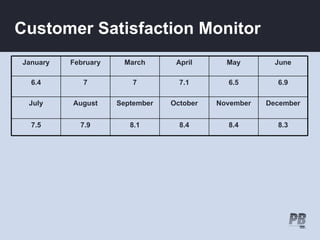
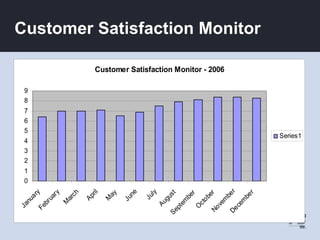
Customer Satisfaction Monitor
January   February    March       April      May        June

  6.4        7           7         7.1       6.5        6.9

 July     August     September   October   November   December


  7.5       7.9         8.1        8.4       8.4        8.3
Customer Satisfaction Monitor

                Customer Satisfaction Monitor - 2006

 9
 8
 7
 6
 5
                                                       Series1
 4
 3
 2
 1
 0


                                                 r
                            ne


                                   ly
        ry
         y


       ch


               ril


                                                r
                     ay


                                              st


                                              er
                                               r


                                             be

                                             be
      ar


                                             be
                                 Ju
             Ap
     ua


                                            gu


                                           ob
                          Ju
     ar


                     M


                                           m
   nu


                                          m
                                         em
   M


                                        Au
  br


                                         ct

                                        ve

                                       ce
 Ja

Fe


                                       O
                                      pt


                                     No

                                    De
                                    Se
Review
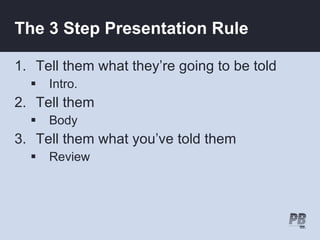
The 3 Step Presentation Rule

1. Tell them what they’re going to be told
     Intro.
2. Tell them
     Body
3. Tell them what you’ve told them
     Review
Further information

• Planning Programs for Adult Learners
  (Rosemary S Caffarella)
• Basic Training for Trainers (Gary
  Kroenhert)
• How to Teach Adults in a Fun and Exciting
  Way (Doug Malouf)
Parting word of encouragement


• All the great speakers were bad speakers
  at first.
     Ralph Waldo Emerson

Effective Presentations

  • 1.
    Presentation & PublicSpeaking Part 1
  • 2.
    Human Fears • Resultsfrom a study on human fears  the fear of death - 30%  a fear of public speaking - 45% Ref: Wilder, L. (1999). 7 Steps to Fearless Speaking . New York: John Wiley & Sons.
  • 3.
    Rationale • “The wayyou talk is as important in the business world as the way you look. It is how you communicate with the outside world that determines your position within it.” Dr Lillian Glass (Prof. UCLA)
  • 4.
    Top 10 selectioncriteria for recruiting graduates Interpersonal and communication skills (written and oral) Academic qualifications Work experience Leadership skills Key selection criteria Passion, knowledge of industry, drive, comittment, attitude Series1 Teamwork skills Critical reasoning and analytical skills, problem solving, lateral thinking, technical skills Emotional Intelligence (including self- awareness, strength of character, confidence, motivation) Activities include both intra and extra curricular activities Cultural Alignment, values fit 0 10 20 30 40 50 60 70 Percentage •Source: Graduate Outlook 2006: a snapshot, Graduate Careers Australia (2006)
  • 5.
    Objectives 1. Recognise theimportance of effective presentation skill practice 2. Outline techniques to improving your presentations
  • 6.
    Topics covered • Content • Audience • First Impressions • Environment • Technology • PowerPoint • Session Plan
  • 7.
    CONTENT SPEAKER ENVIRONMENT
  • 8.
    Prioritise your content Could Know Should Know Must Know
  • 9.
    Learning Styles • Visual  Graphs, images, PowerPoint, demonstrations, handouts • Aural  Group discussions, anecdotes, case studies • Kinaesthetic/Tactile  Role playing, hands on experience, use of hands
  • 10.
    How long canpeople concentrate? Techniques: • Chunking • Variety • Time of day • Regular breaks • Mix it up 1. Theory/Underpinning Knowledge 2. Activity (Audience Participation) 3. Review and segue into next topic
  • 11.
    Session Plan? • Yourroadmap to success • Provide clear linear structure • Help you break down tasks and assess what needs to be done
  • 12.
    The ‘Three R’s’ •Relationship • Reasons • Resistance
  • 13.
    First Impressions • “Whensomeone makes a negative impression on us, we're less likely to seek out that person again, making it difficult to gather additional information that could change our first impression.” Jerker Denrell, Assistant Professor of Organizational Behaviour at the Stanford Graduate School of Business • Research suggests that it takes as little as 3 seconds to form an impression
  • 14.
    Environment • Room size & shape • Temperature • Lighting/Glare • Safety • Room Layout/Furniture • Voice projection (Mic?) • Catering!
  • 15.
    Technology • Plan for failure • Laptop • Internet access • Content saved to hard drive/memory stick • Room • A/V equipment • Leads, cables!! • Setup the room ahead of time
  • 16.
    PowerPoint - 101 •Do not try to talk in competition with a visual aid. People can read faster than you speak, so do not read your visual aids word for word, rather expand upon the highlighted points. Do not speak over your visual aids, if it is important enough to be on the screen, allow the audience time to read.
  • 17.
  • 18.
    PowerPoint – BestPractice • Avoid busy templates • Contrast the background & font colours • One topic per slide • List keywords on slides not your script! • 30/20/10 rule • Slide handout at conclusion or “Just in time”
  • 19.
    Part Time WorkersSurvey • A survey was conducted in Sydney, Melbourne and Brisbane recently. The survey covered 200,000 workers in over 1000 companies, covering the manufacturing, construction, hospitality and medical industries. It found that 79% of part time jobs were filled by women. A further 7% were filled by university students.
  • 20.
    Part Time WorkersSurvey 79% 7%
  • 21.
    Customer Satisfaction Monitor January February March April May June 6.4 7 7 7.1 6.5 6.9 July August September October November December 7.5 7.9 8.1 8.4 8.4 8.3
  • 22.
    Customer Satisfaction Monitor Customer Satisfaction Monitor - 2006 9 8 7 6 5 Series1 4 3 2 1 0 r ne ly ry y ch ril r ay st er r be be ar be Ju Ap ua gu ob Ju ar M m nu m em M Au br ct ve ce Ja Fe O pt No De Se
  • 23.
  • 24.
    The 3 StepPresentation Rule 1. Tell them what they’re going to be told  Intro. 2. Tell them  Body 3. Tell them what you’ve told them  Review
  • 25.
    Further information • PlanningPrograms for Adult Learners (Rosemary S Caffarella) • Basic Training for Trainers (Gary Kroenhert) • How to Teach Adults in a Fun and Exciting Way (Doug Malouf)
  • 26.
    Parting word ofencouragement • All the great speakers were bad speakers at first.  Ralph Waldo Emerson