Effective Librarianship @ Work
Reference and Information Services
Use of Tools and Technologies
October 13 - 14, 2016 1.30PM - 4.30PM
Southville International School
Las Pinas City, Philippines
Zarah C. Gagatiga
Teacher Librarian, The Beacon Academy
Board Member representing Librarians, Philippine Board on Books for Young People
http://lovealibrarian.blogspot.com
Objective of the Session
To learn techniques, tools, and technologies used in
delivering reference and information services, either
print or web-based environments.
Let’s Play!
The Evolution Game
Ipis
Isda
Ibon
Unggoy
Tao
The Evolution of Technology
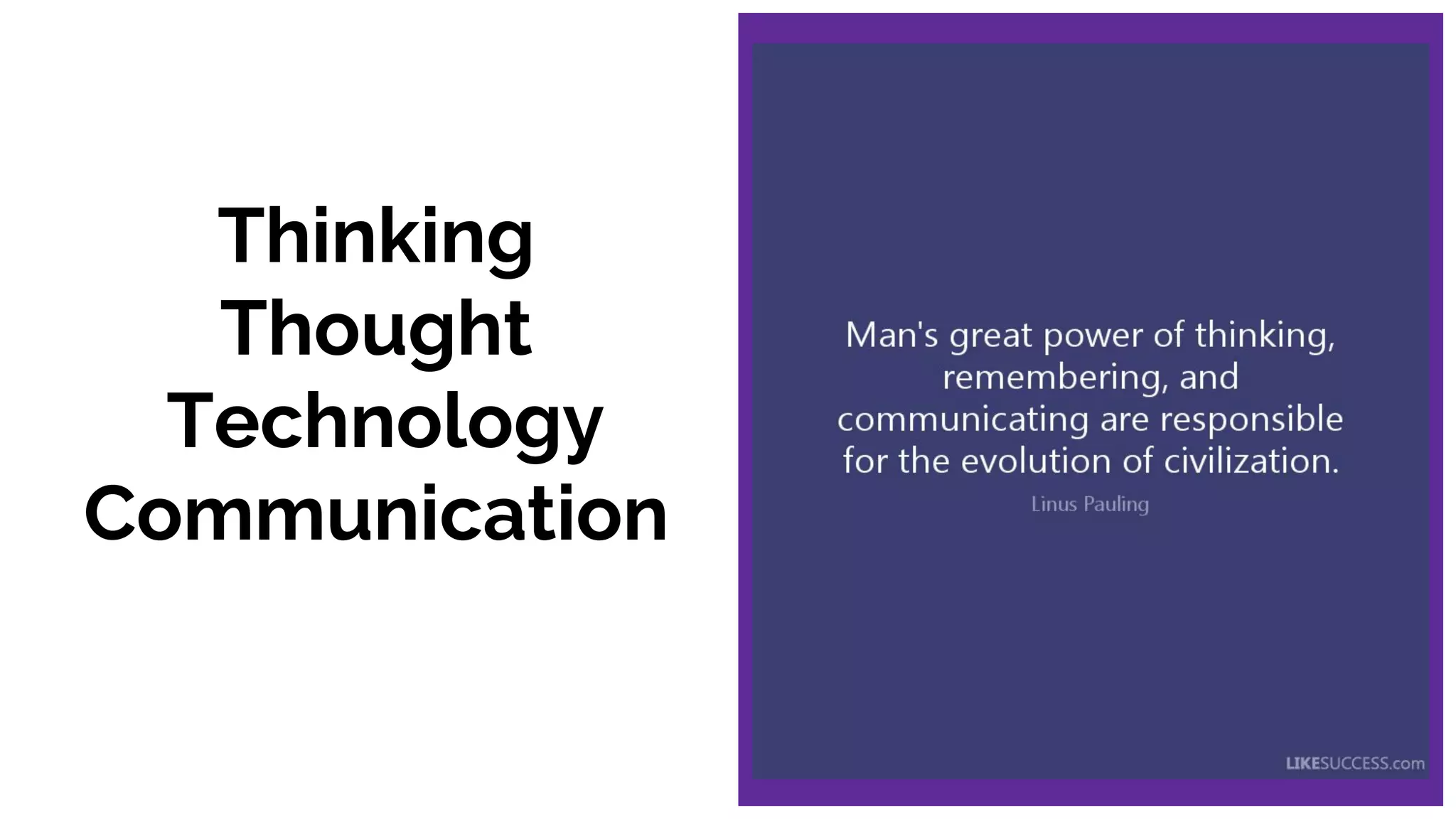
Thinking
Thought
Technology
Communication
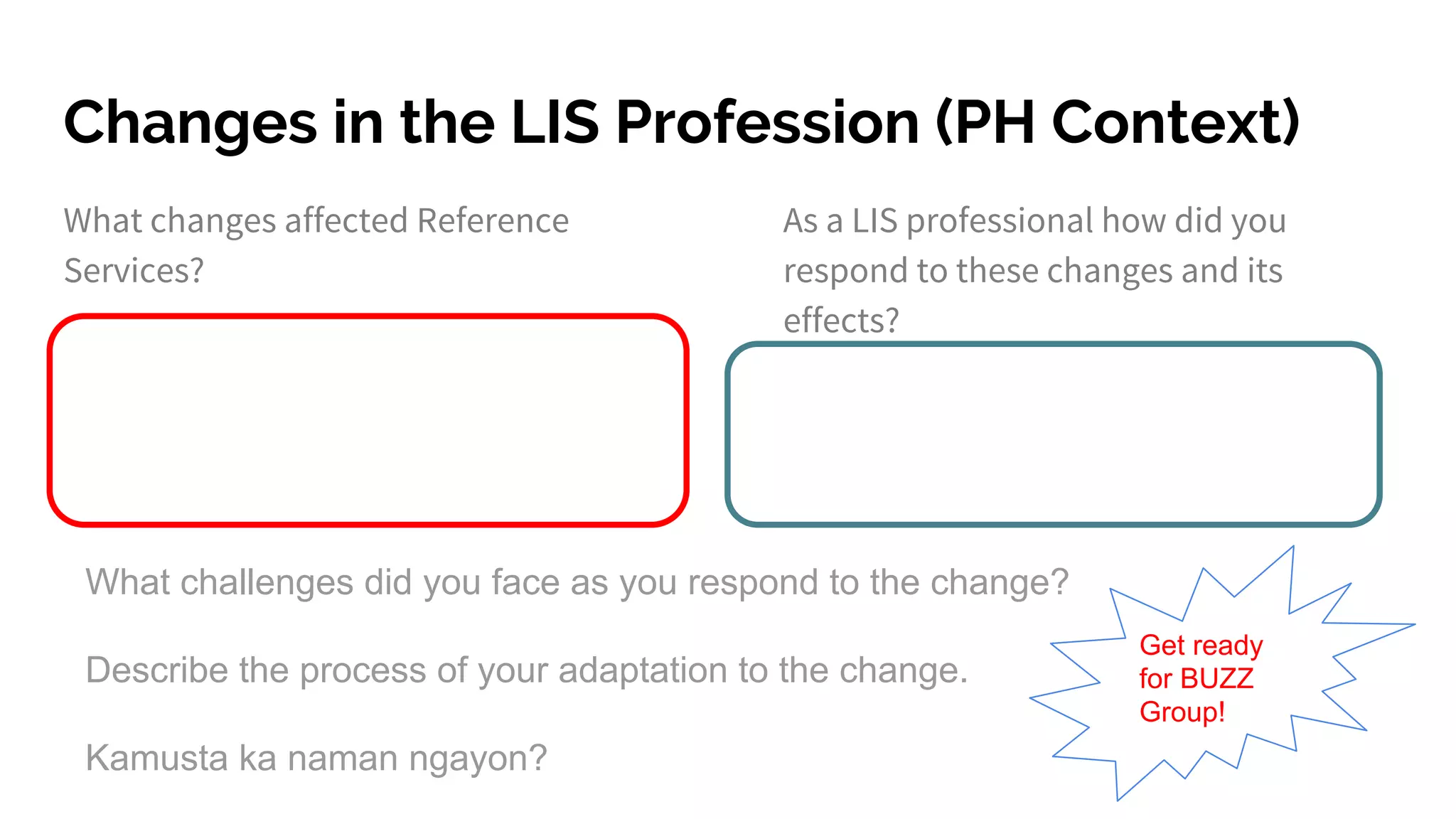
Changes in the LIS Profession (PH Context)
What changes affected Reference
Services?
As a LIS professional how did you
respond to these changes and its
effects?
What challenges did you face as you respond to the change?
Describe the process of your adaptation to the change.
Kamusta ka naman ngayon?
Get ready
for BUZZ
Group!
Revisiting Library Concepts
Ranganathan’s Law of Library Science
(1931)
● Books are for use.
● Every reader his or her book.
● Every book its reader.
● Save the time of the User (reader).
● The library is a growing organism.
Crawford and Gorman (1995)
● Libraries serve humanity.
● Respect all forms by which
knowledge is communicated.
● Use technology intelligently to
enhance service.
● Protect free access to knowledge.
● Honor the past and create the
future.
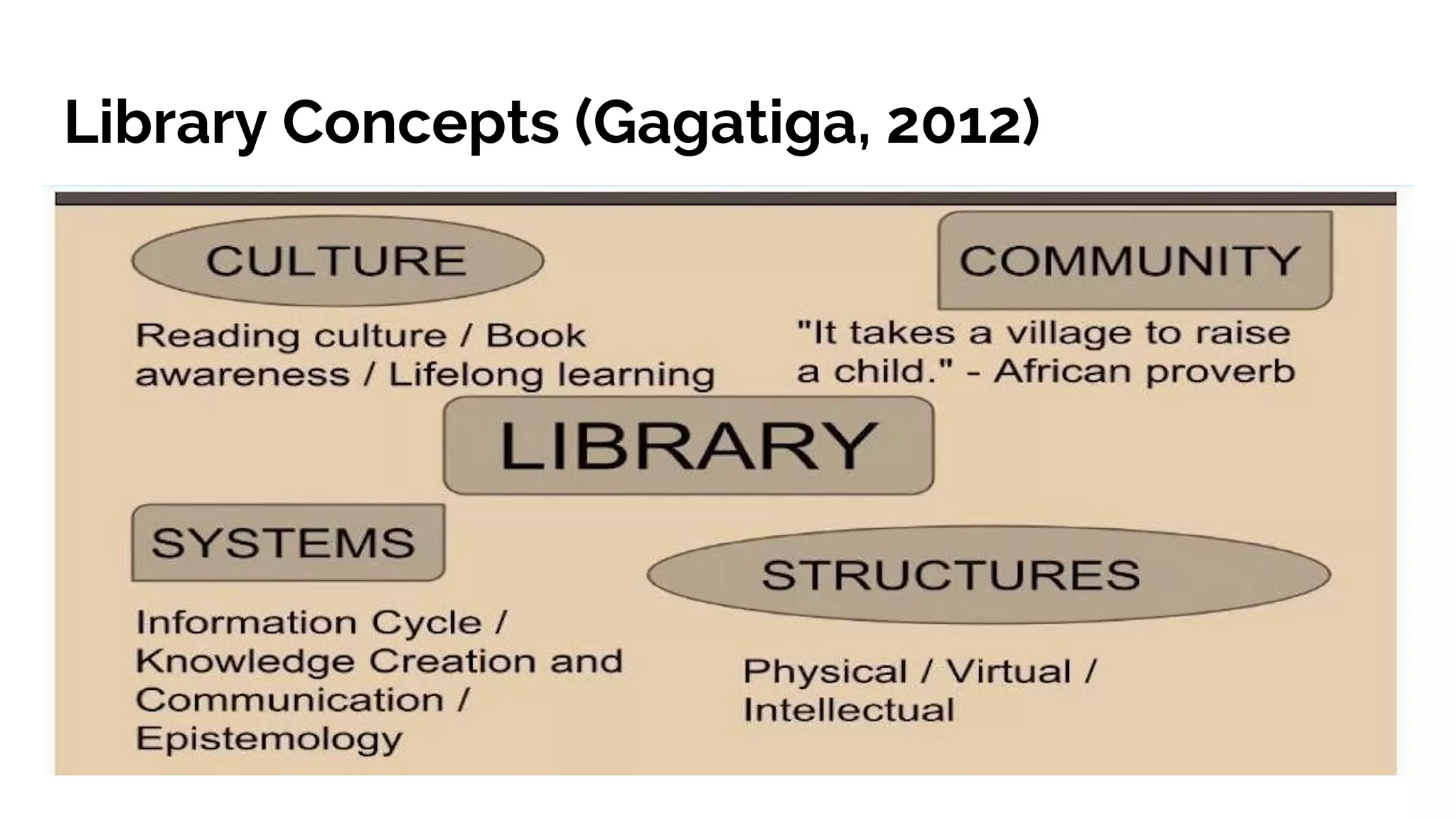
Library Concepts (Gagatiga, 2012)
Reference Service Defined
● Personal service to each reader in helping him (her) to find
the documents answering his interest at the moment pin
pointedly, exhaustively and expeditiously (Ranganathan,
1961).
● Personal relationship between librarians and readers
(Green, 1876)
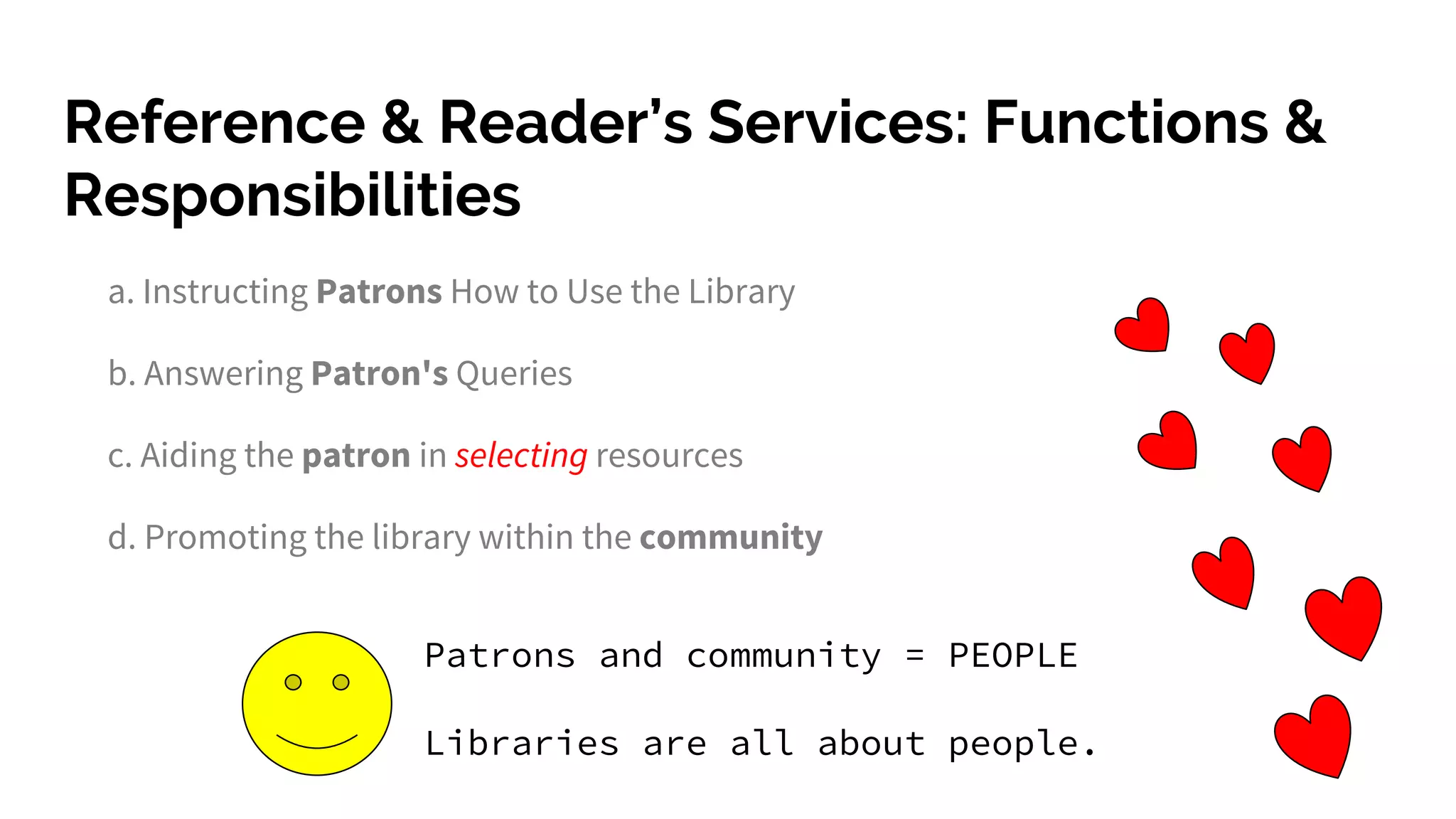
Reference & Reader’s Services: Functions &
Responsibilities
a. Instructing Patrons How to Use the Library
b. Answering Patron's Queries
c. Aiding the patron in selecting resources
d. Promoting the library within the community
Patrons and community = PEOPLE
Libraries are all about people.
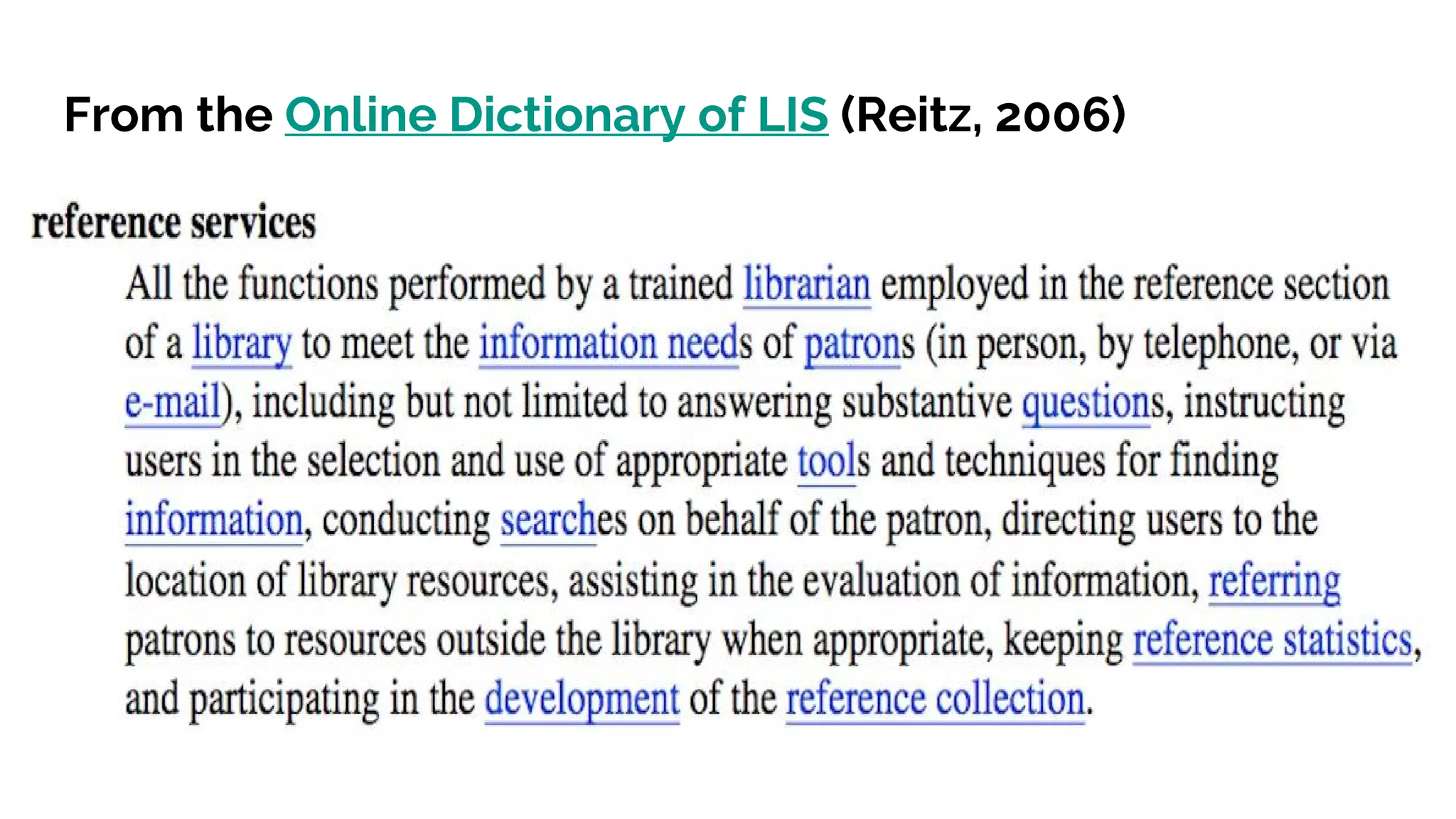
From the Online Dictionary of LIS (Reitz, 2006)
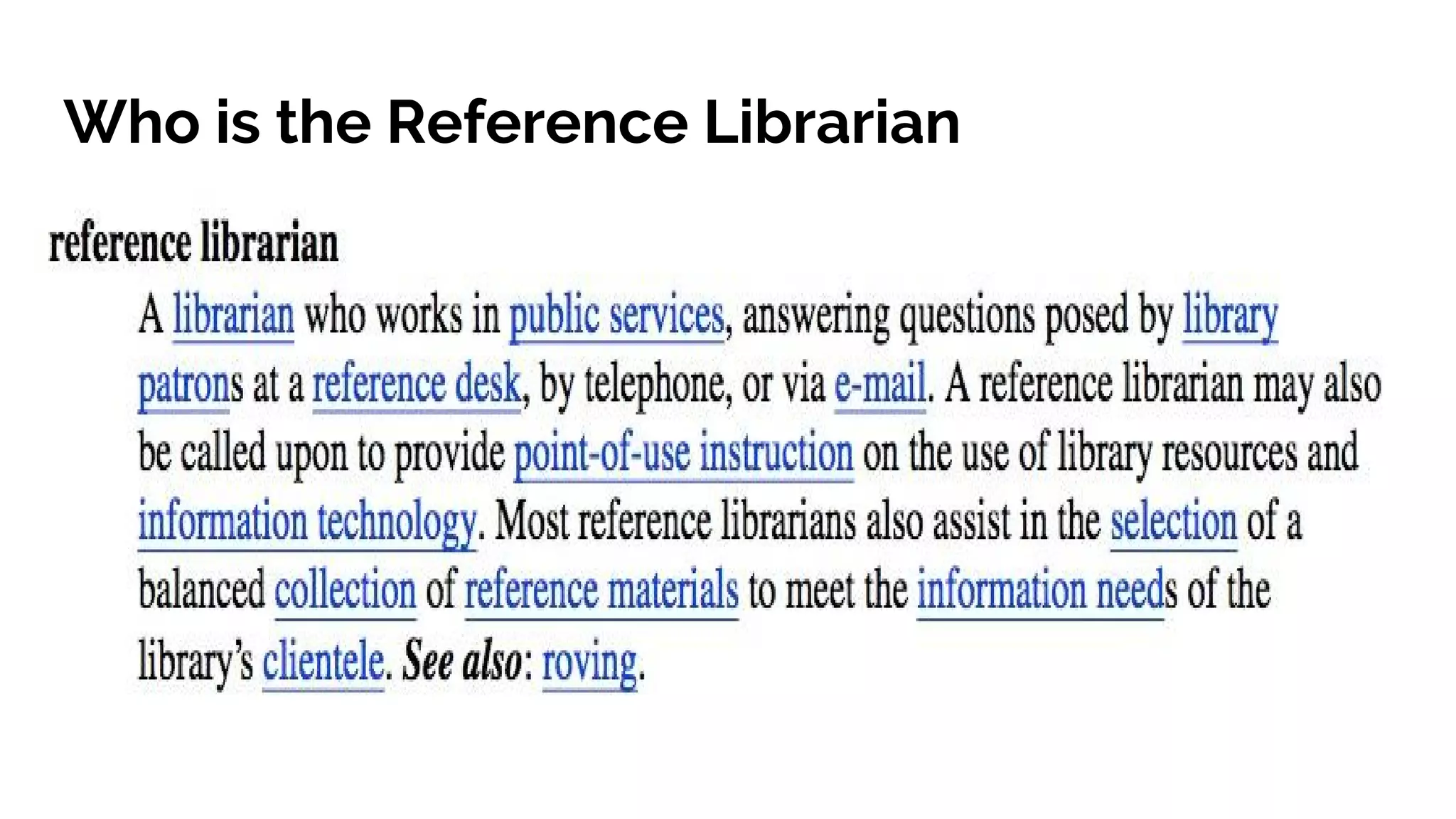
Who is the Reference Librarian
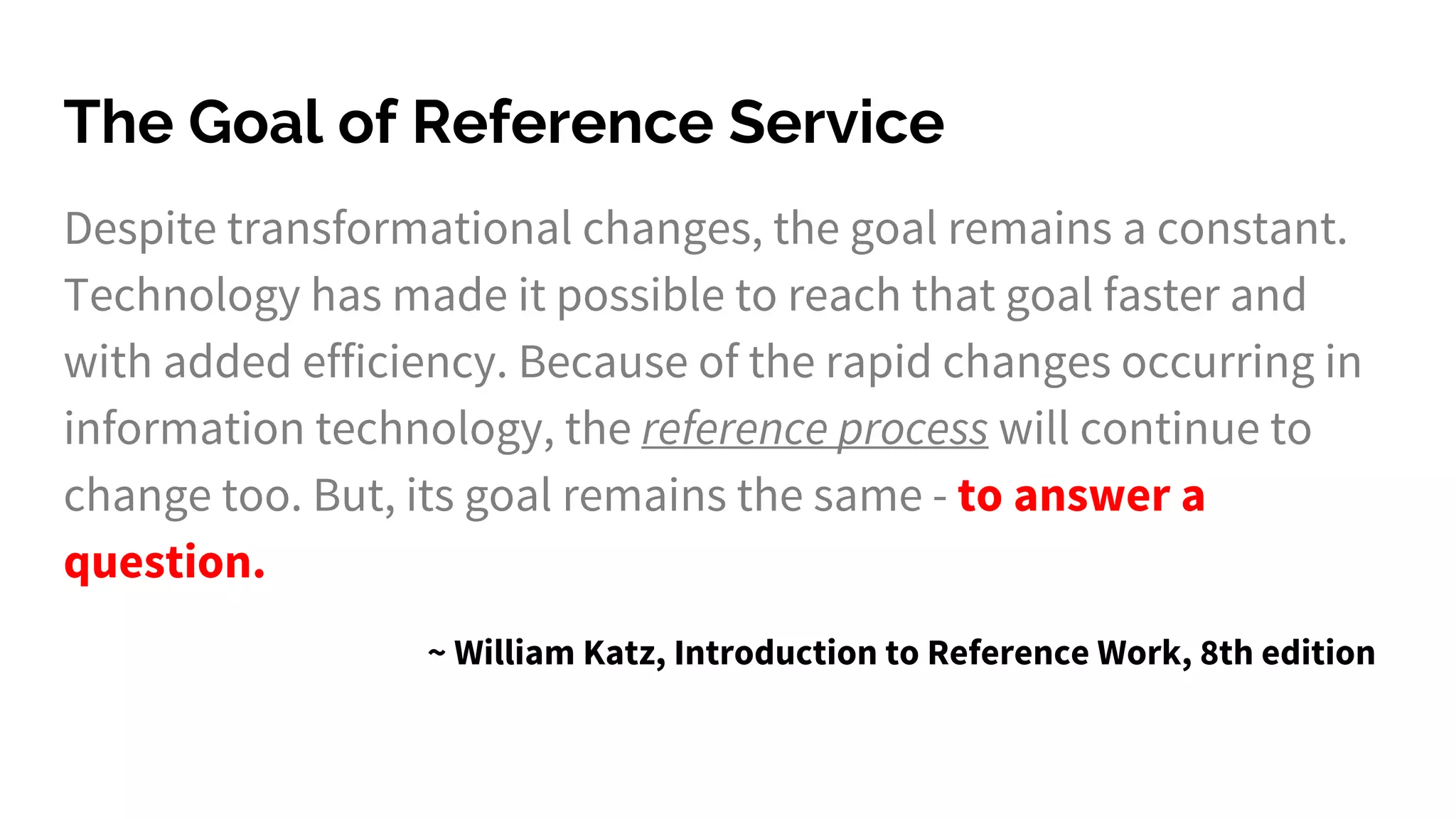
The Goal of Reference Service
Despite transformational changes, the goal remains a constant.
Technology has made it possible to reach that goal faster and
with added efficiency. Because of the rapid changes occurring in
information technology, the reference process will continue to
change too. But, its goal remains the same - to answer a
question.
~ William Katz, Introduction to Reference Work, 8th edition
Building Positive
Relationships
with People
Interpersonal Communication in
Reference Service
● Content Oriented
● Relational Dimension
The Relational Dimension of IPR
Verbal and non-verbal
dimensions of relational
communication
● Rapport building
● Impression management
● Non-verbal
approachability
● Empathy
It begins with active listening!
video
Role Play:
Reference
Communication
Process
STUDENT approaches the reference
LIBRARIAN.
Question: Miss, I am looking for
academic journals on Psychology.
How will Ms. Reference Librarian
respond?
Role Play:
Reference
Communication
Process
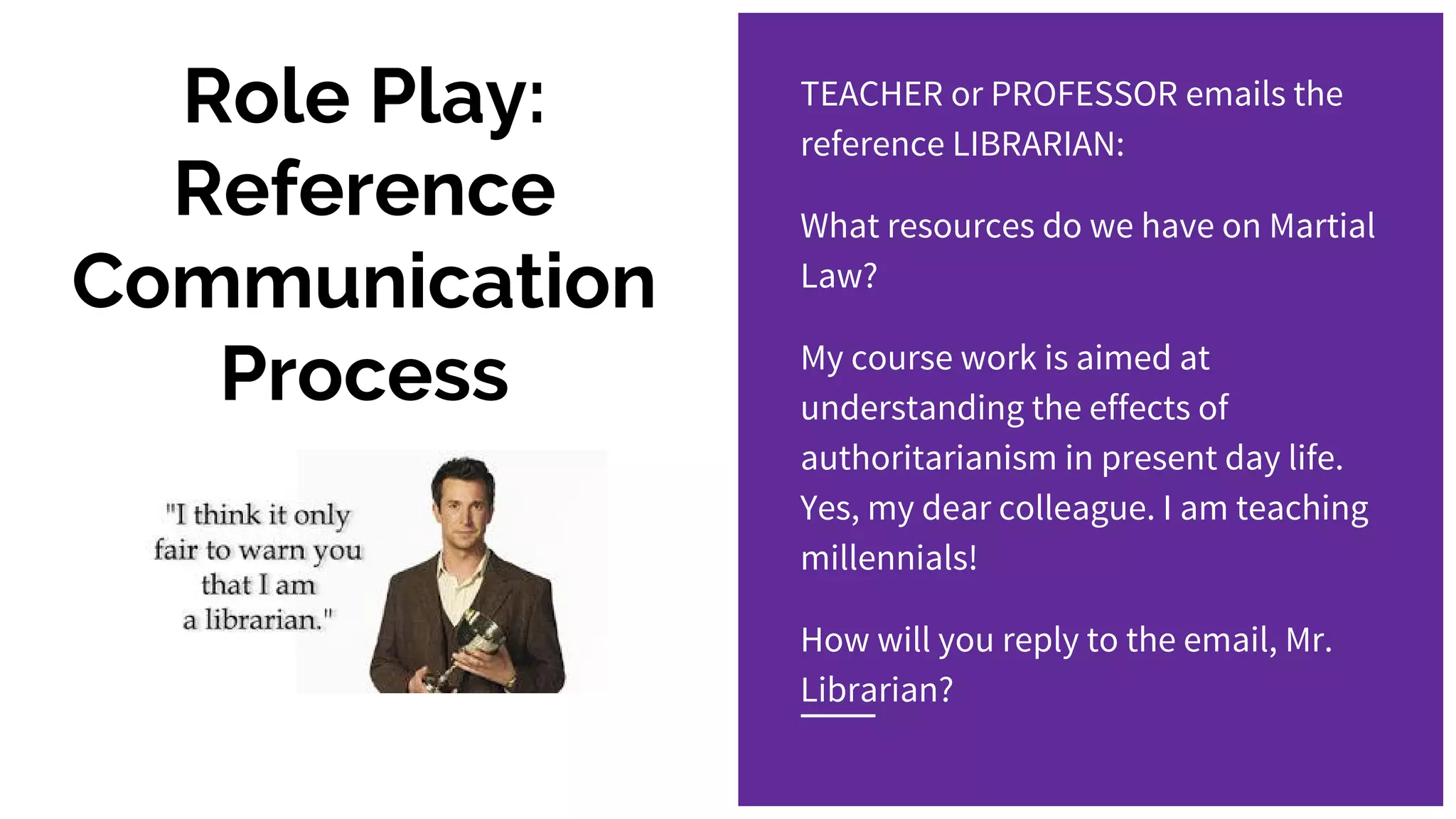
TEACHER or PROFESSOR emails the
reference LIBRARIAN:
What resources do we have on Martial
Law?
My course work is aimed at
understanding the effects of
authoritarianism in present day life.
Yes, my dear colleague. I am teaching
millennials!
How will you reply to the email, Mr.
Librarian?
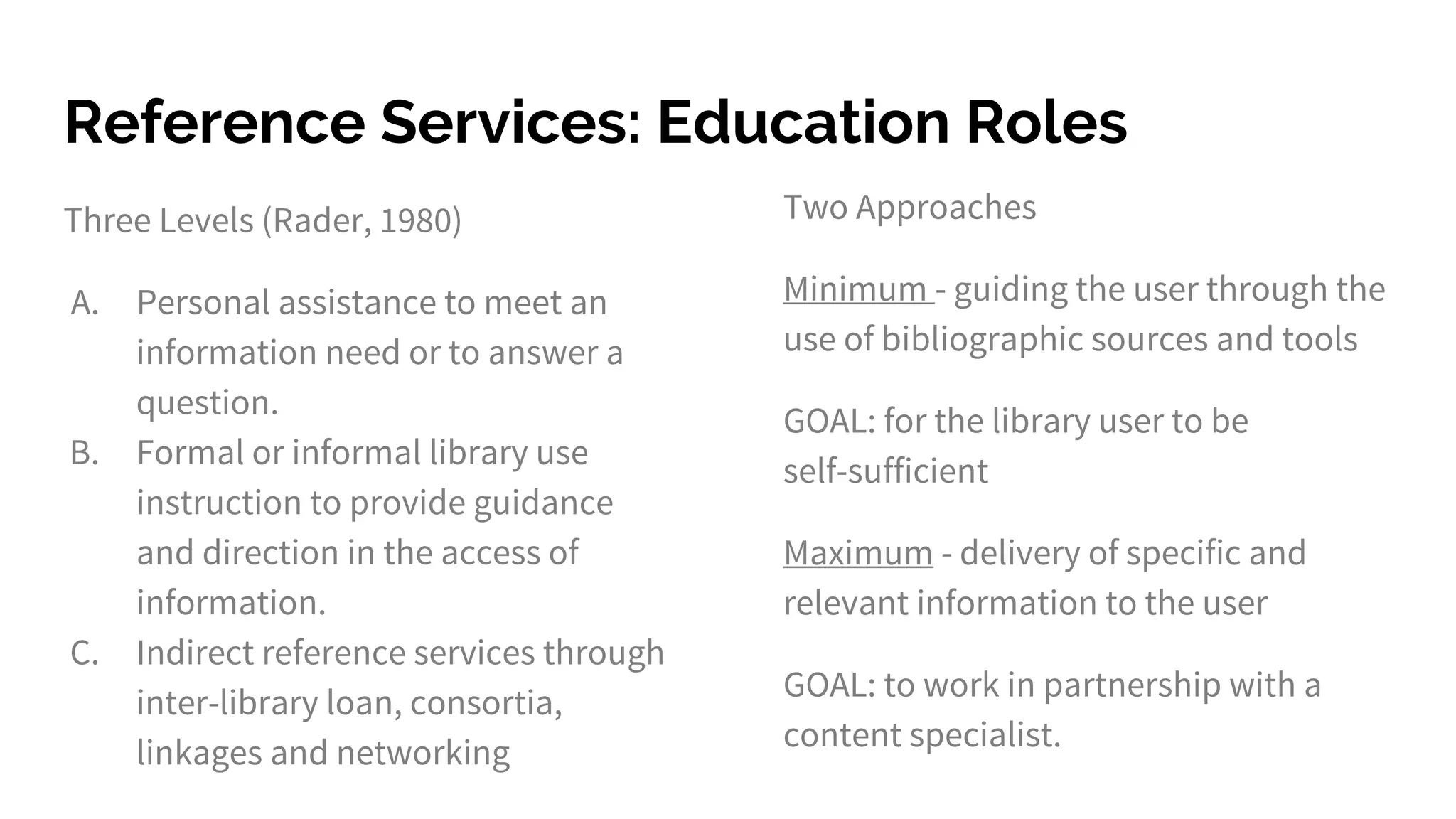
Reference Services: Education Roles
Three Levels (Rader, 1980)
A. Personal assistance to meet an
information need or to answer a
question.
B. Formal or informal library use
instruction to provide guidance
and direction in the access of
information.
C. Indirect reference services through
inter-library loan, consortia,
linkages and networking
Two Approaches
Minimum - guiding the user through the
use of bibliographic sources and tools
GOAL: for the library user to be
self-sufficient
Maximum - delivery of specific and
relevant information to the user
GOAL: to work in partnership with a
content specialist.
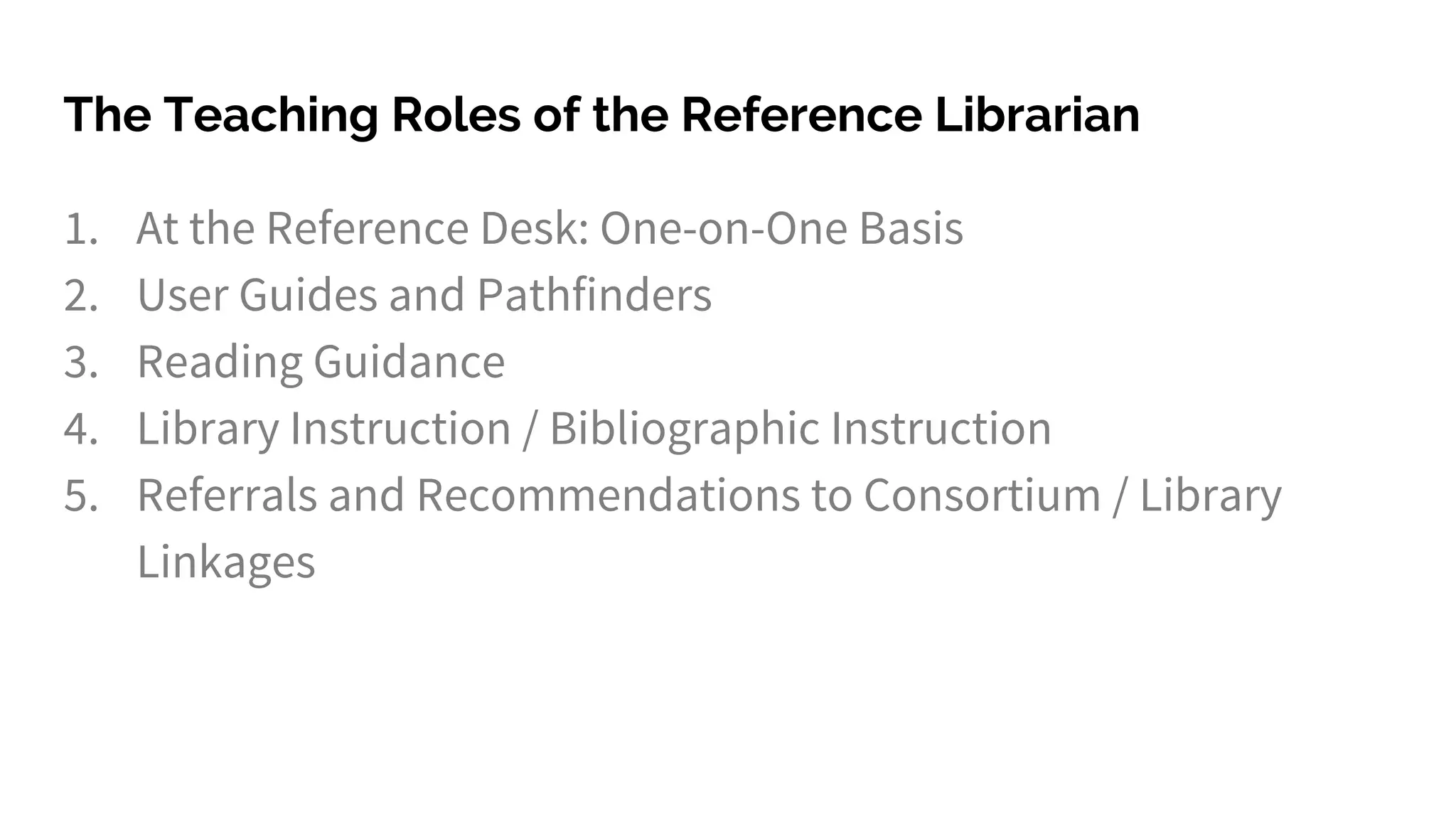
The Teaching Roles of the Reference Librarian
1. At the Reference Desk: One-on-One Basis
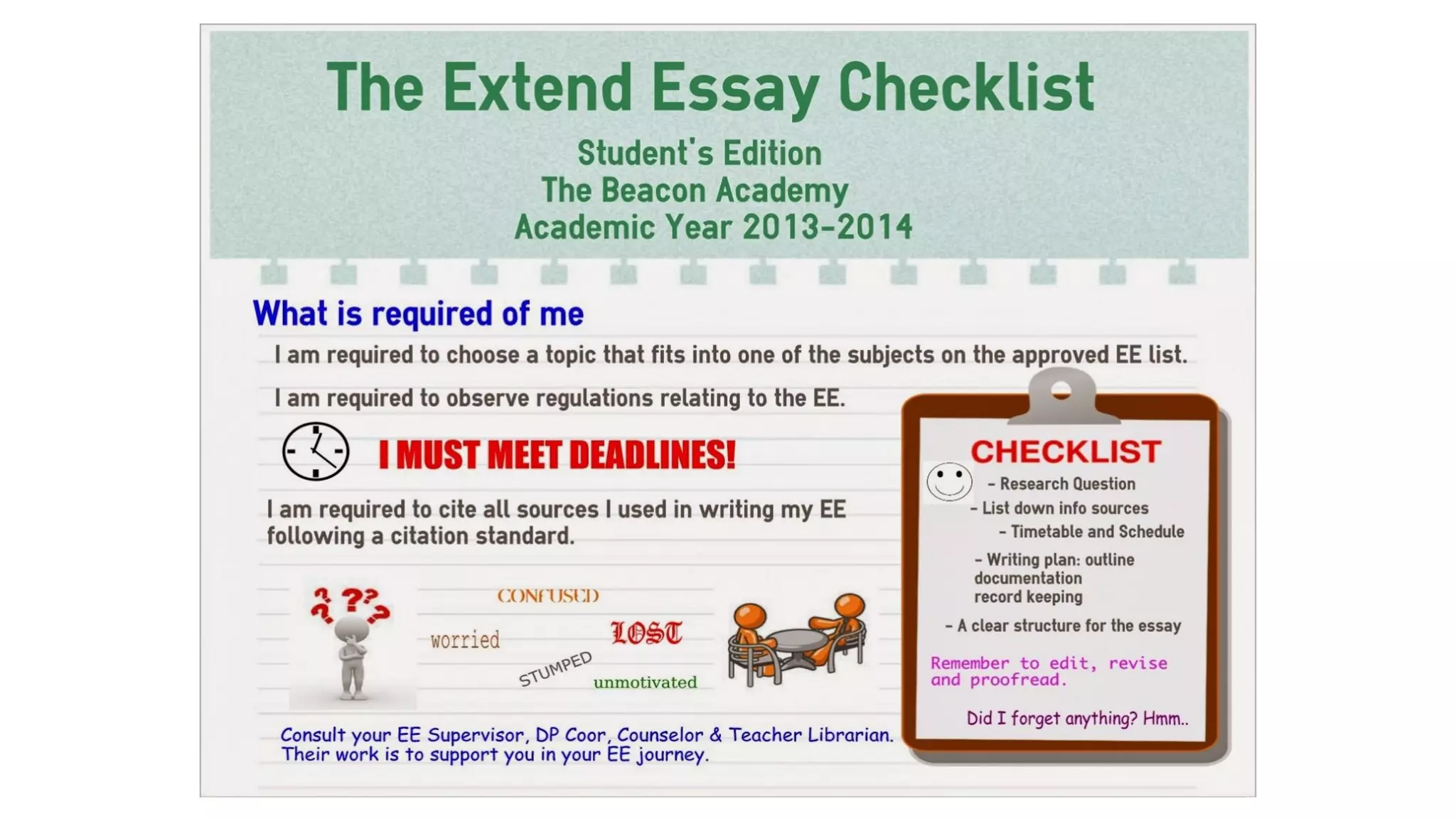
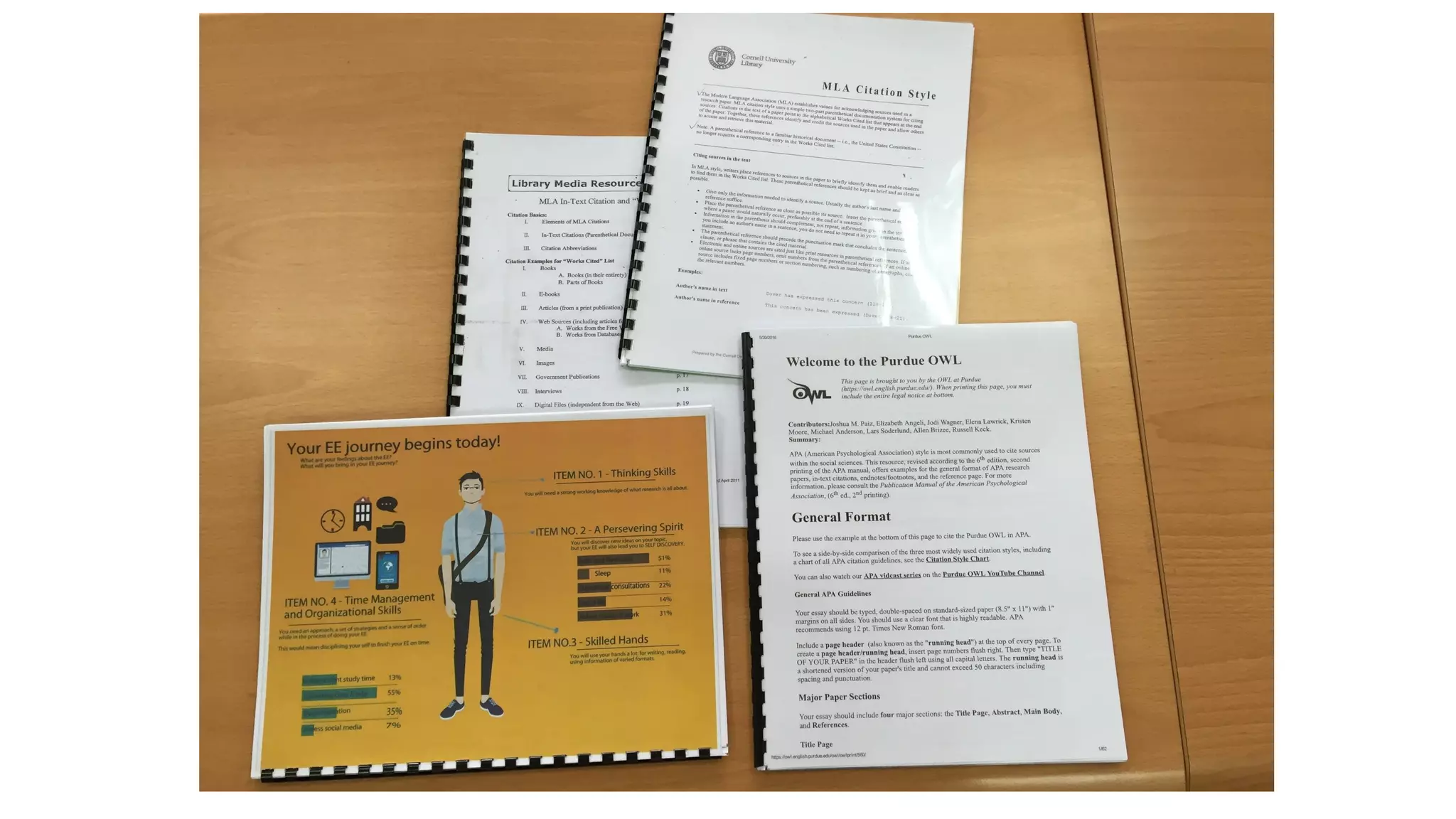
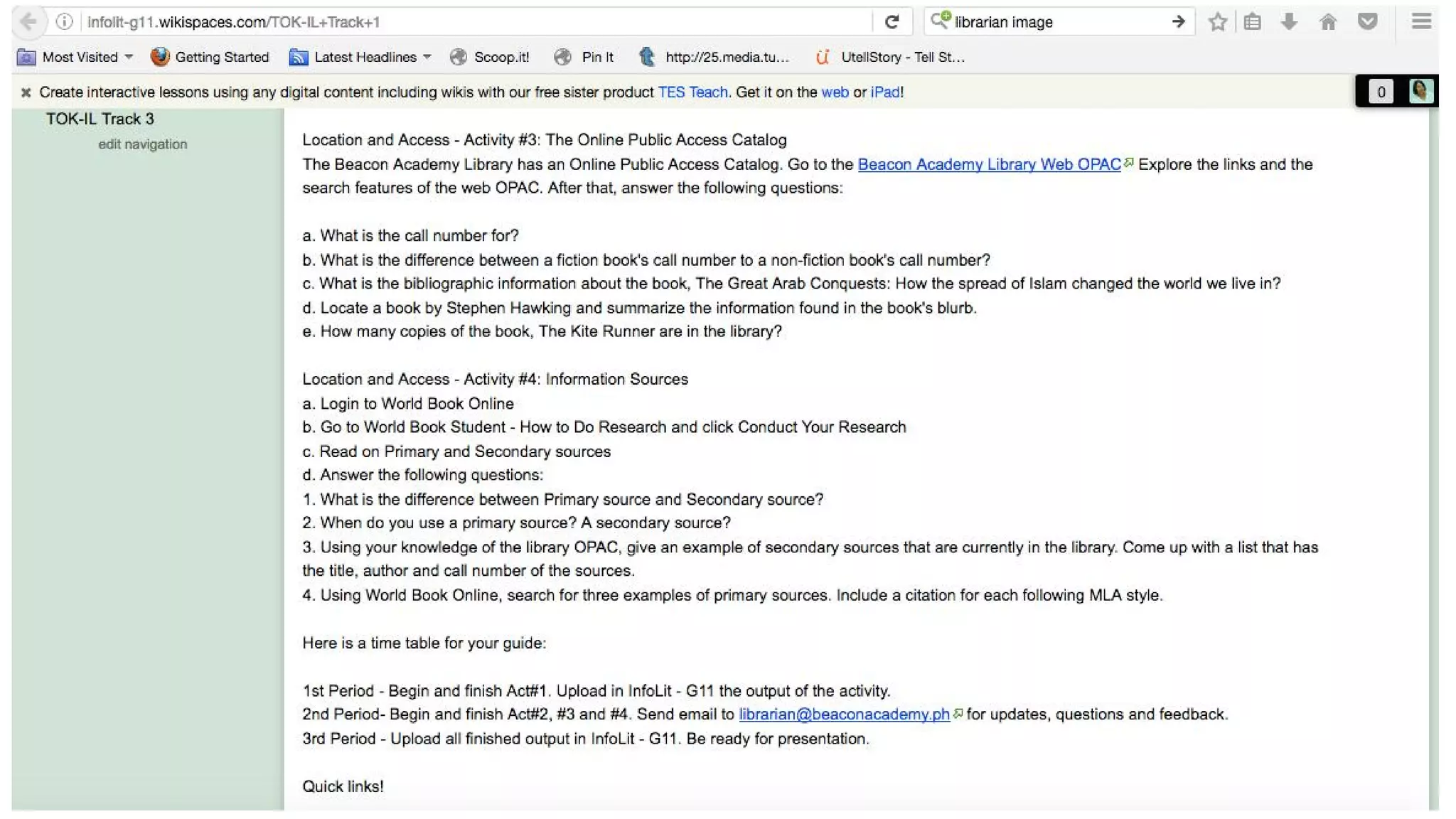
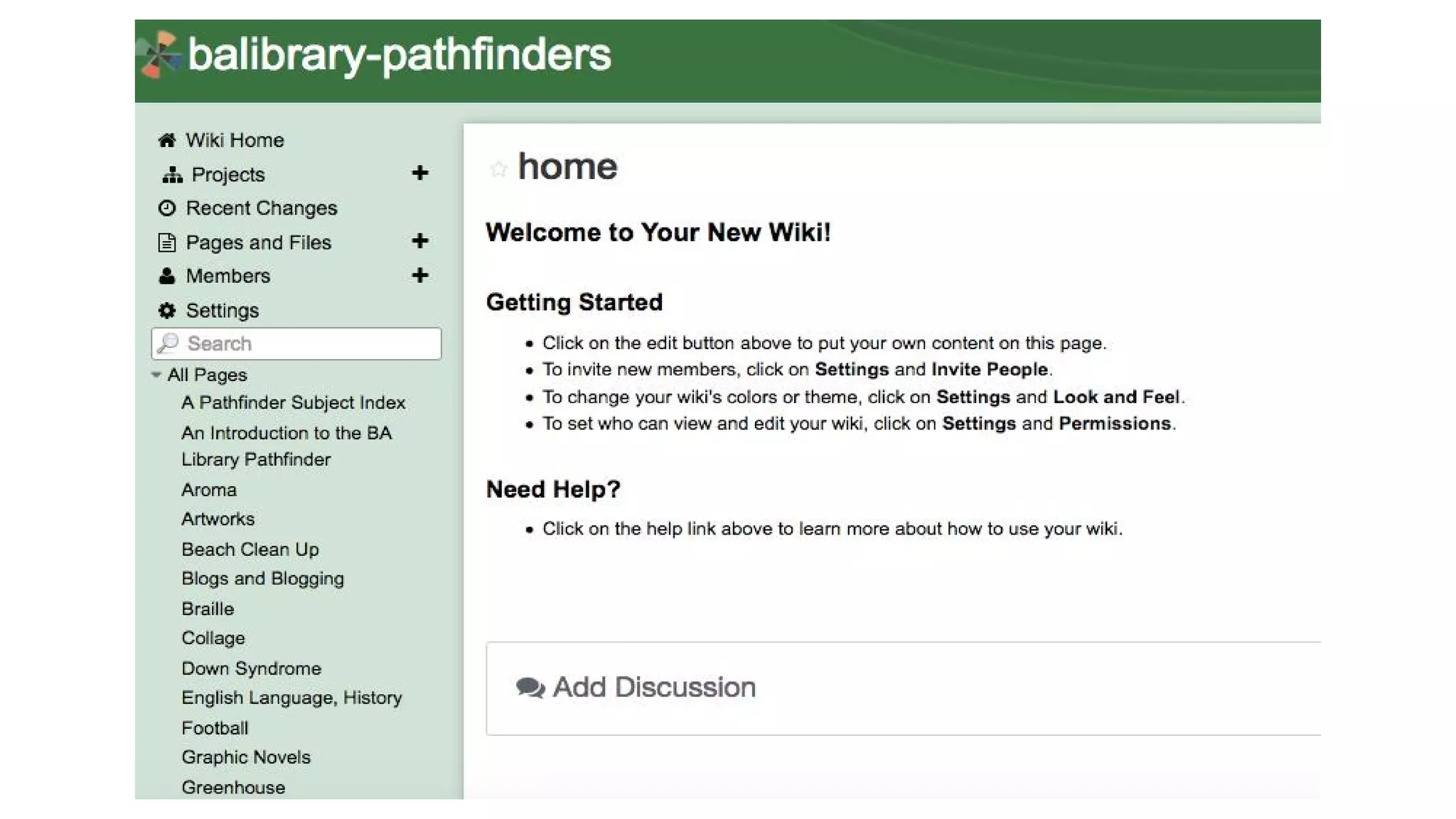
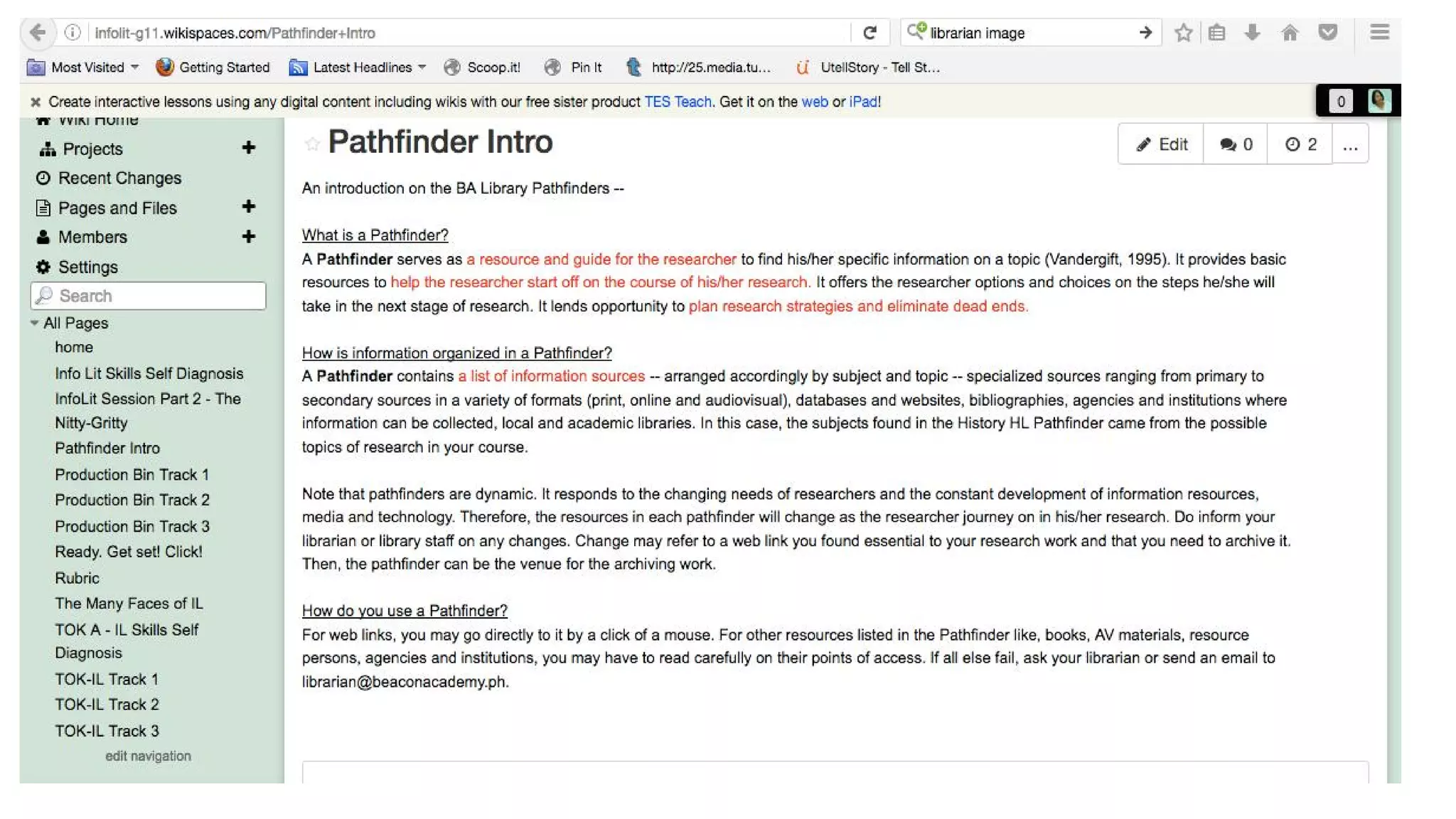
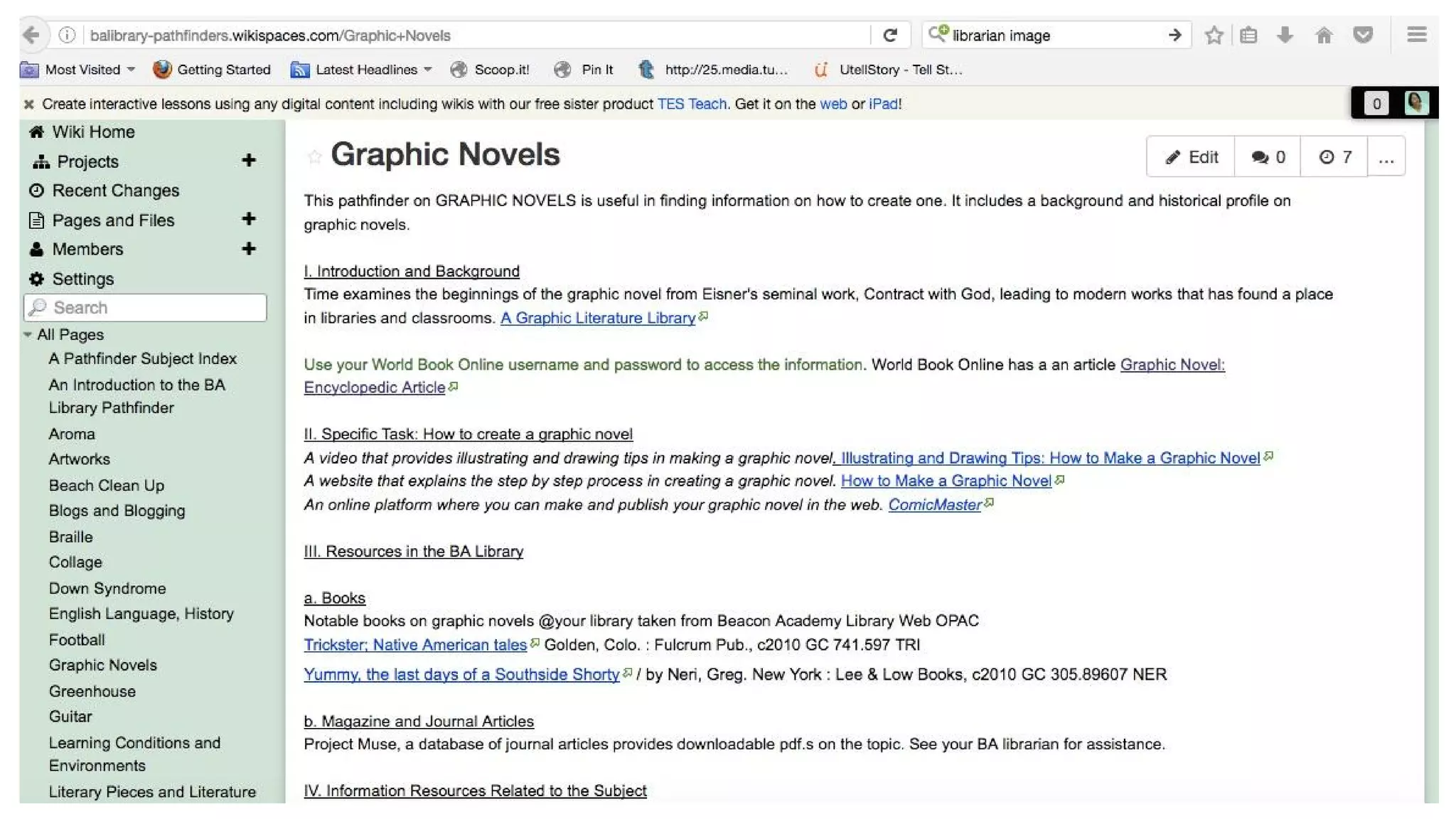
2. User Guides and Pathfinders
3. Reading Guidance
4. Library Instruction / Bibliographic Instruction
5. Referrals and Recommendations to Consortium / Library
Linkages
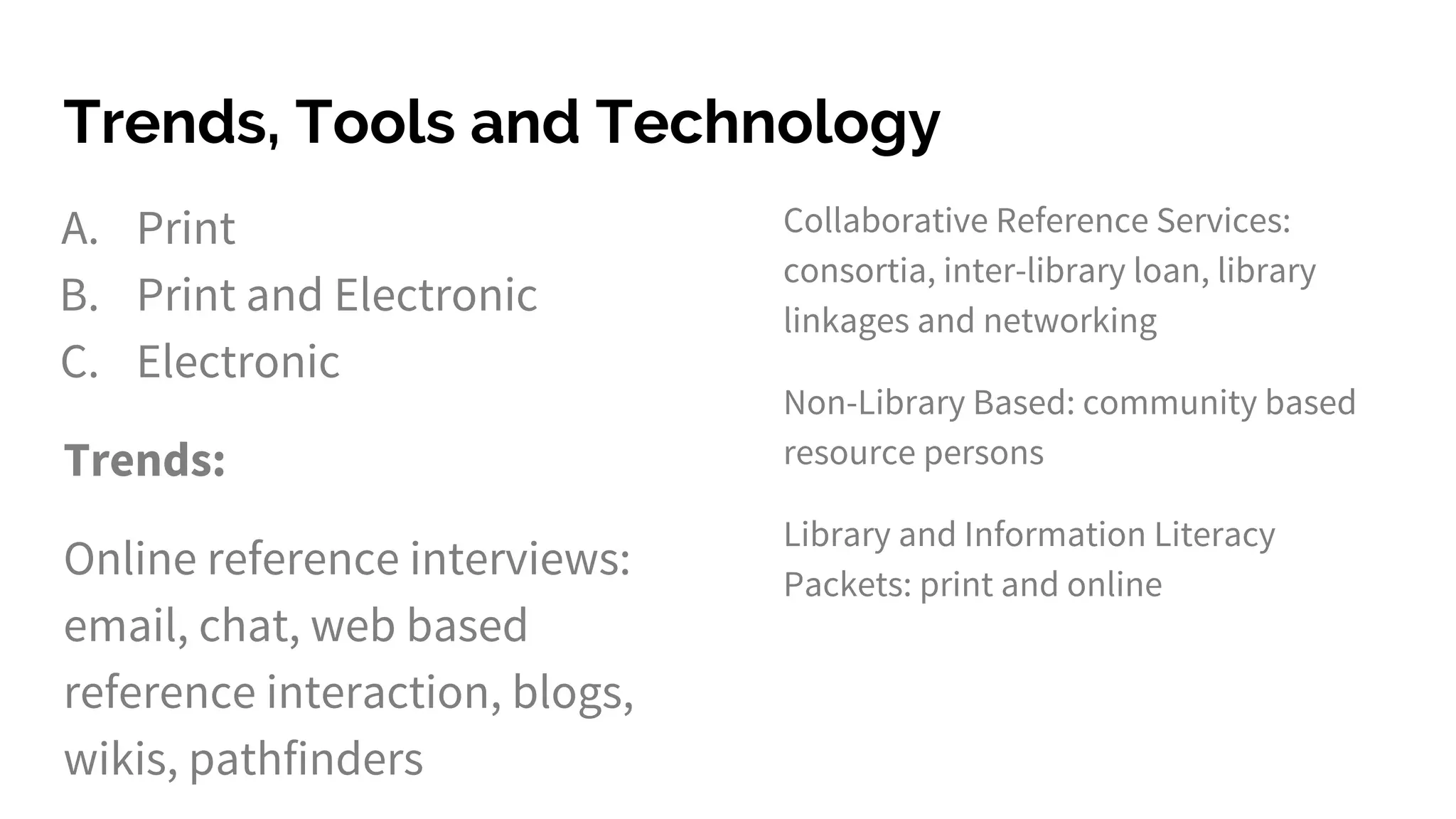
Trends, Tools and Technology
A. Print
B. Print and Electronic
C. Electronic
Trends:
Online reference interviews:
email, chat, web based
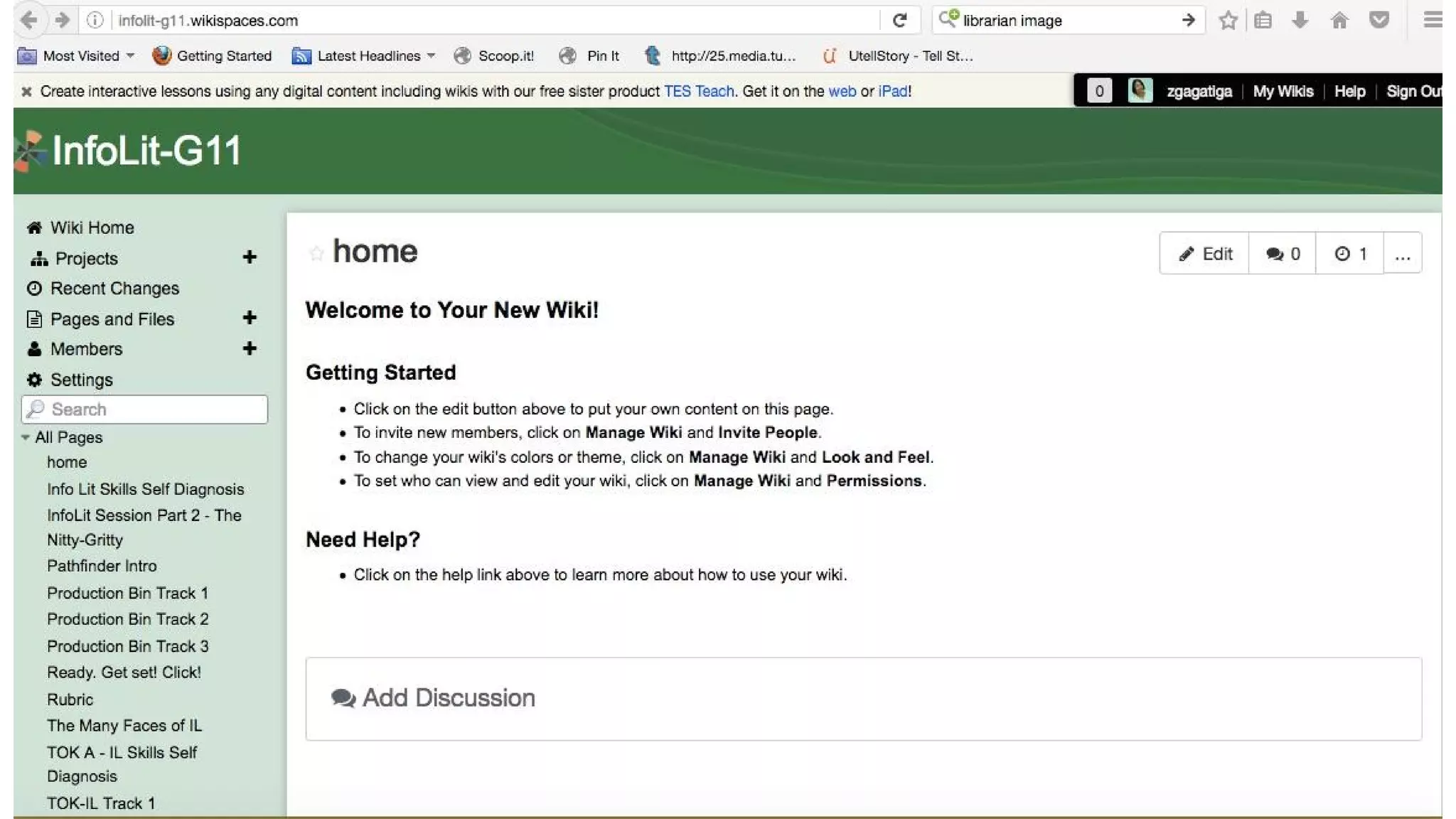
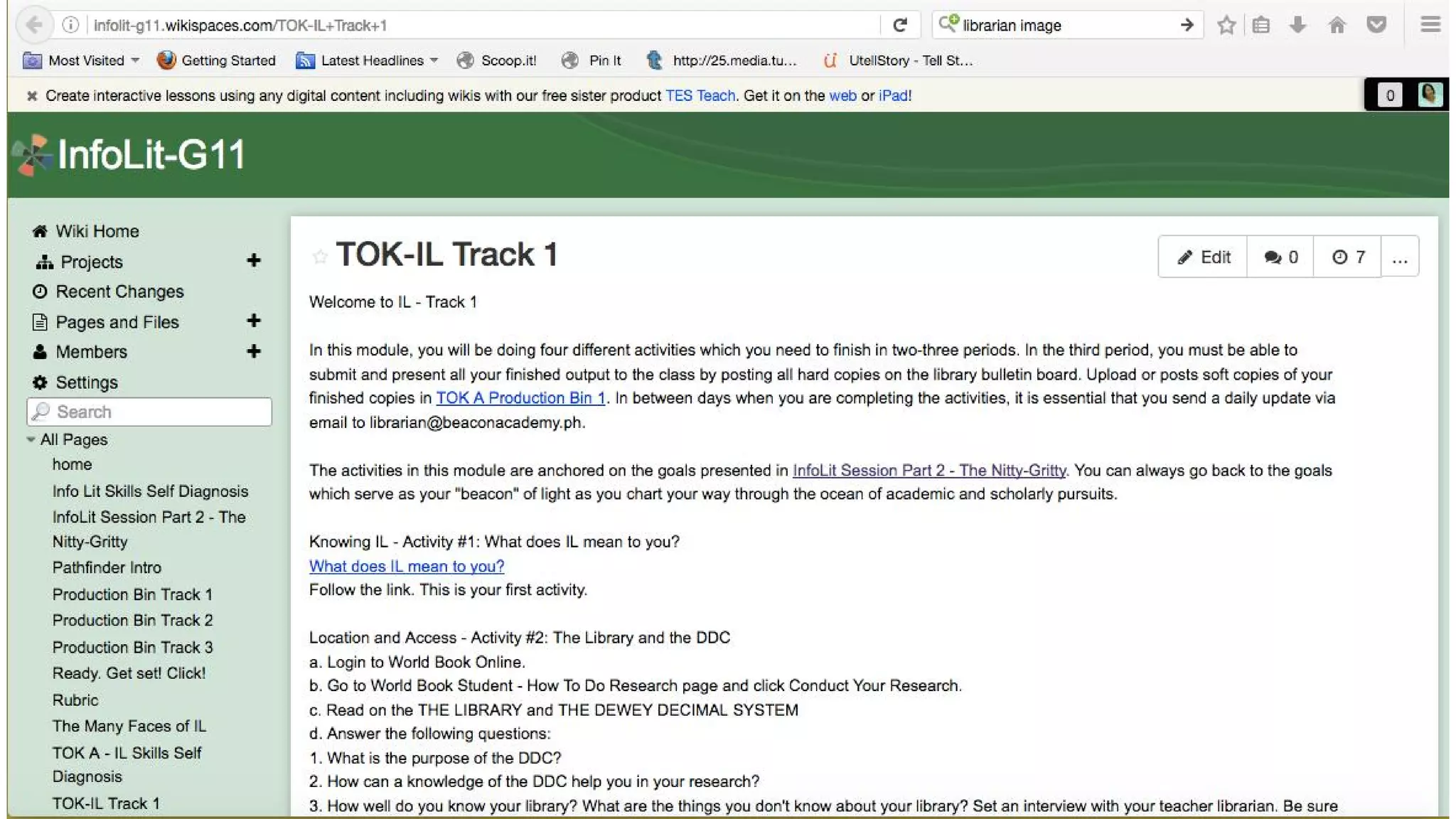
reference interaction, blogs,
wikis, pathfinders
Collaborative Reference Services:
consortia, inter-library loan, library
linkages and networking
Non-Library Based: community based
resource persons
Library and Information Literacy
Packets: print and online
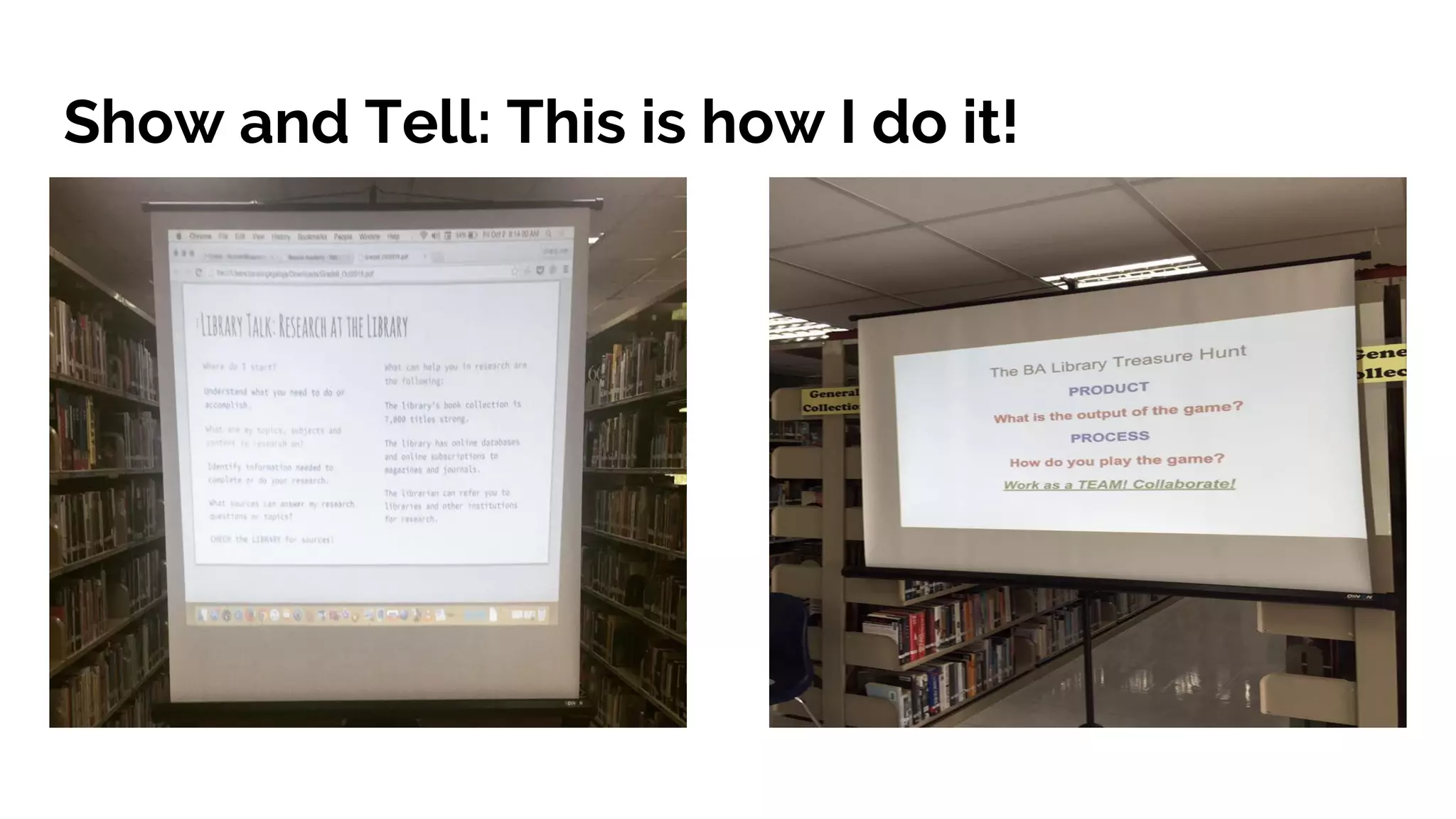
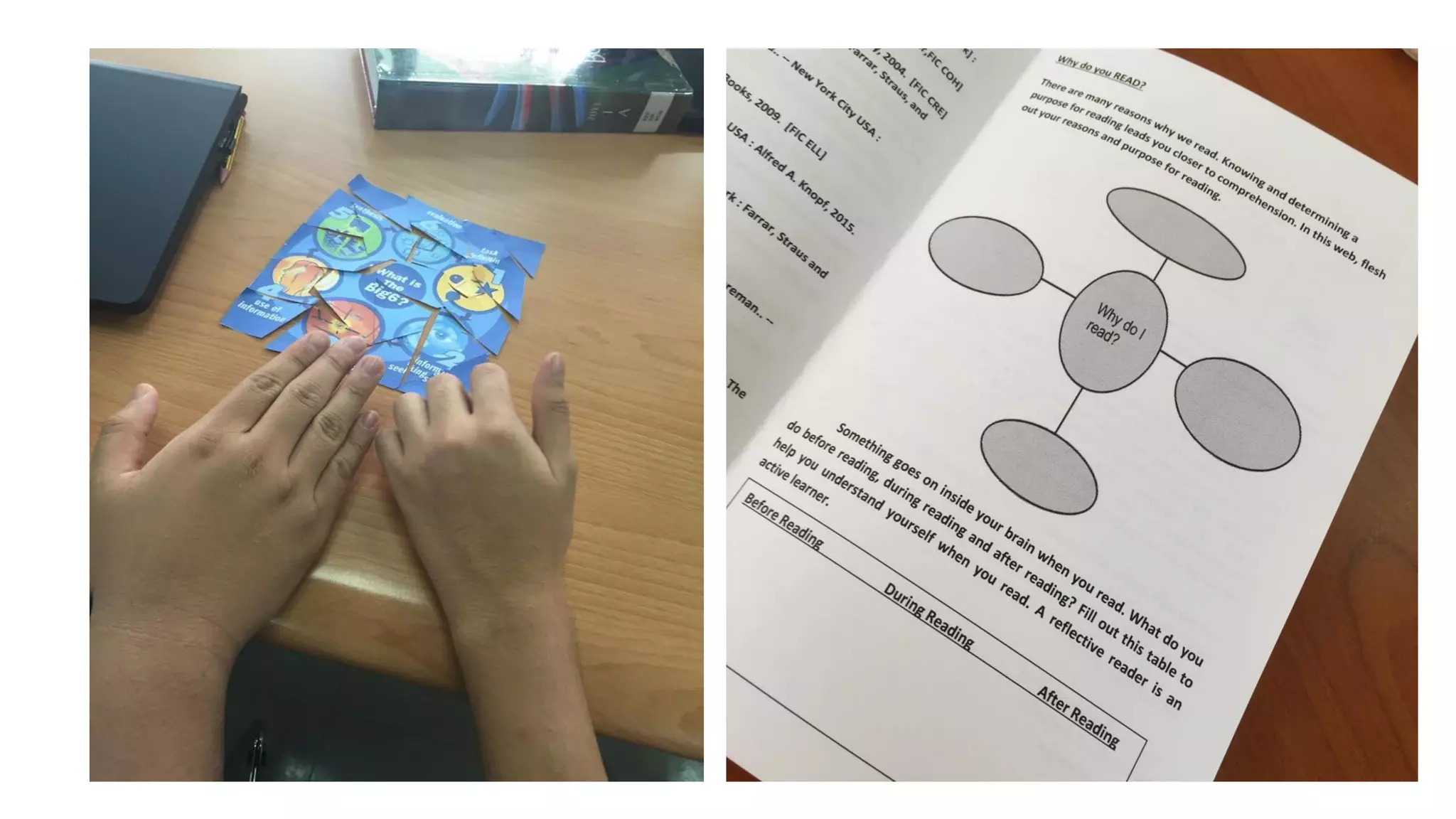
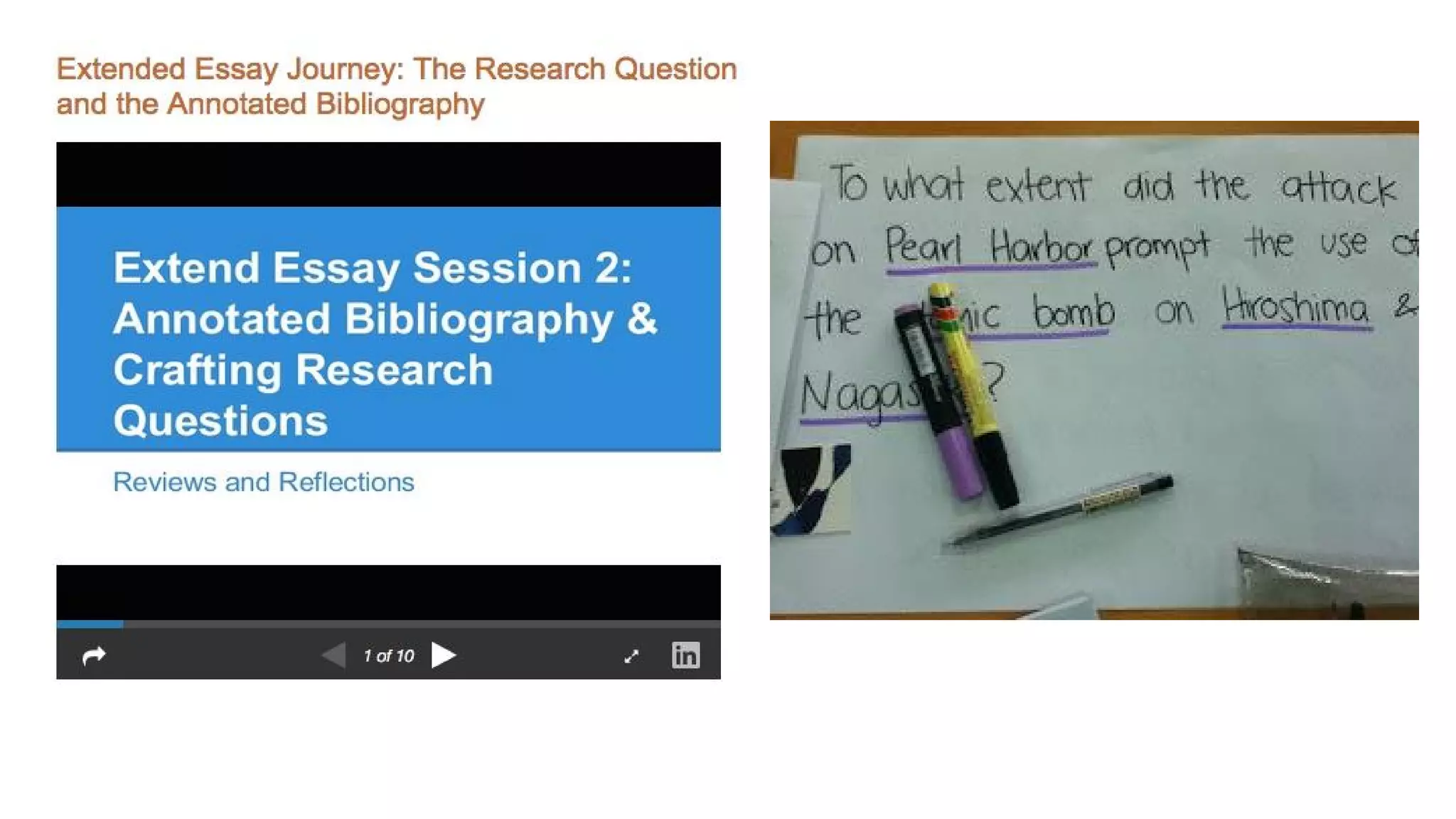
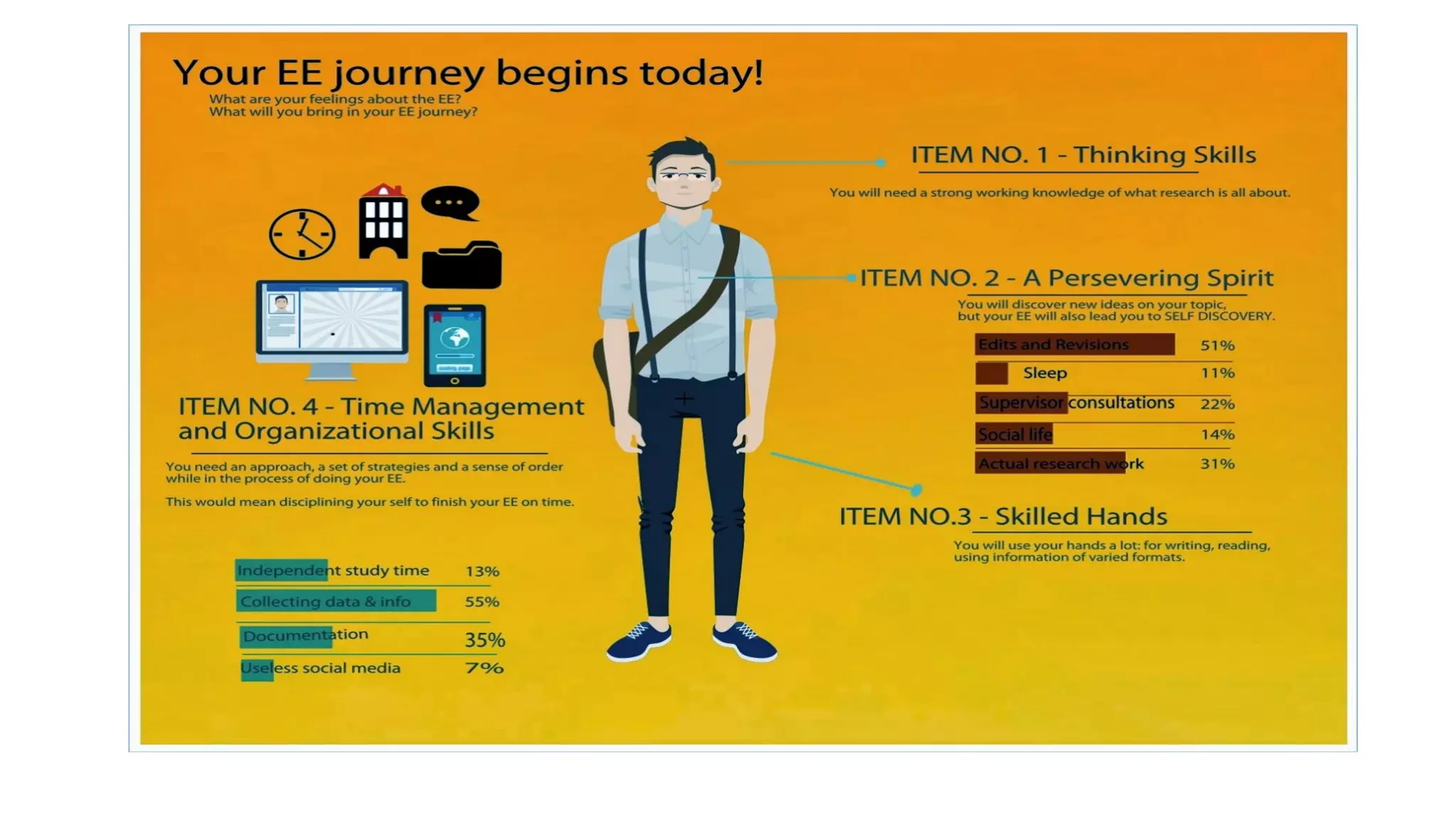
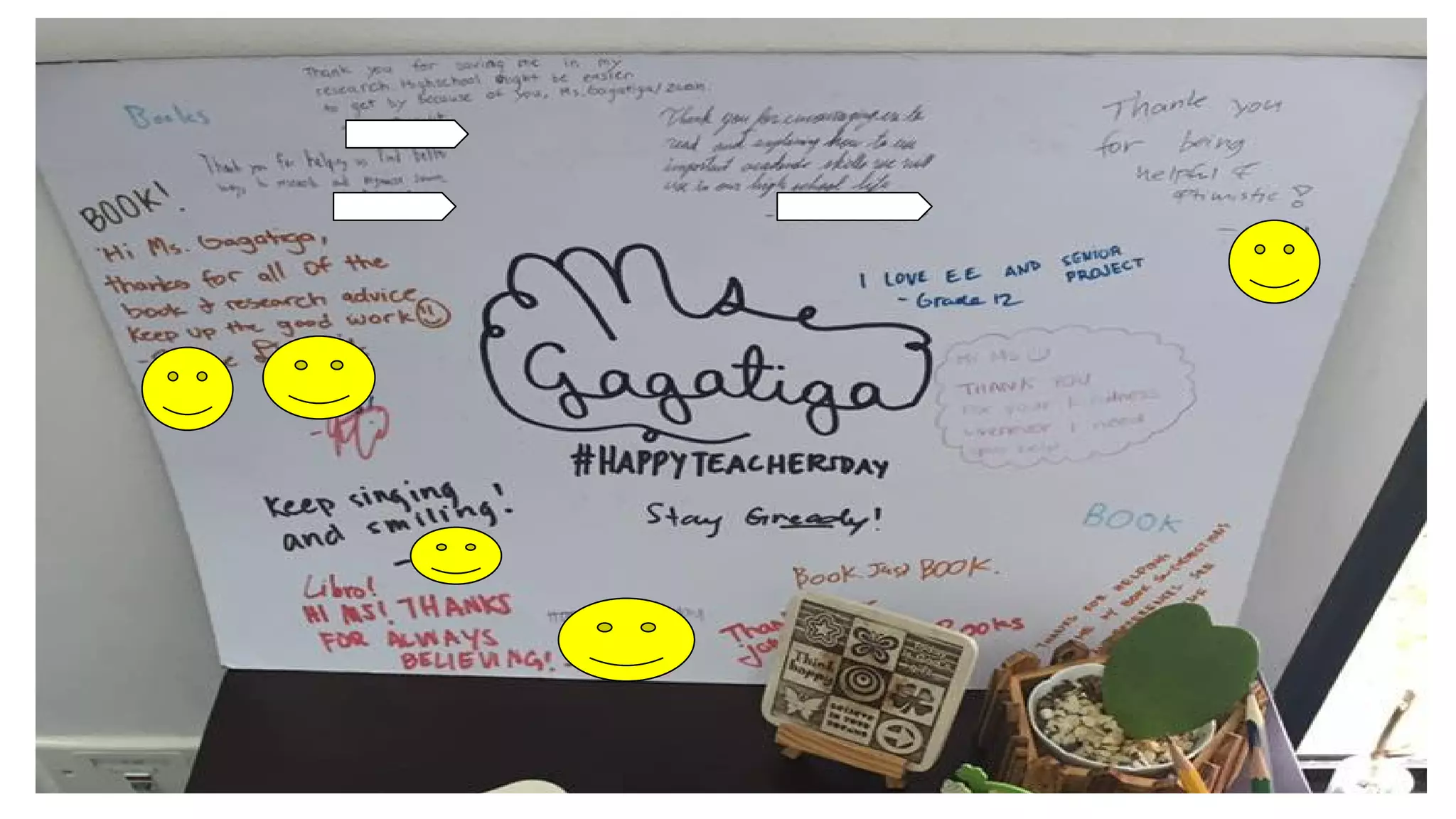
Show and Tell: This is how I do it!
Breakout into
song!
You changed my life in a moment!
What’s happening in your library?
A. Group yourselves according to library: school library, academic and research
library, public library, special library
B. Take turns in sharing “best” practices. Limit your sharing to 5 minutes per group
member.
C. Include in your sharing: What worked and What did not work
D. Get ready for BUZZ GROUP (presentation and plenary)
What is your take-away from the group sharing?
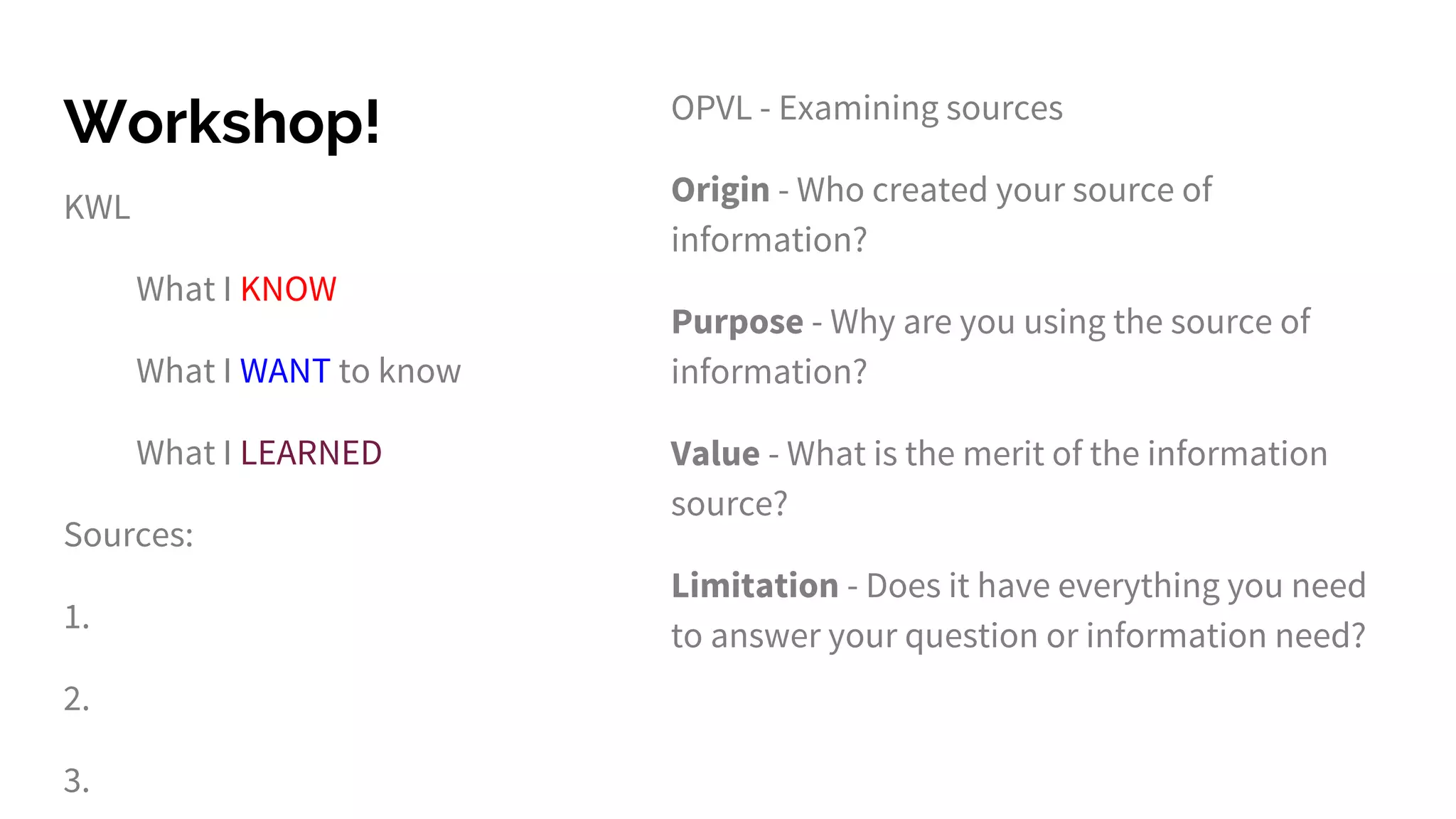
Workshop!
KWL
What I KNOW
What I WANT to know
What I LEARNED
Sources:
1.
2.
3.
OPVL - Examining sources
Origin - Who created your source of
information?
Purpose - Why are you using the source of
information?
Value - What is the merit of the information
source?
Limitation - Does it have everything you need
to answer your question or information need?
Sources
Videos
Understanding Interpersonal Communication - https://www.youtube.com/watch?v=QyHGggA2yb4
Active Listening - https://www.youtube.com/watch?v=oWe_ogA5YCU
Content
Introduction to Reference Work -
http://www.ala.org/acrl/sites/ala.org.acrl/files/content/publications/booksanddigitalresources/booksmonographs/pil/pil52/ch1.p
df
New Trends of Library Reference Service. Ranasinghe, 2012- http://eprints.rclis.org/28672/
ODLIS, Reitz, J, 2002 - http://vlado.fmf.uni-lj.si/pub/networks/data/dic/odlis/odlis.pdf
Reference Service as Teaching Function, Rader, H. 1980 -
https://www.ideals.illinois.edu/bitstream/handle/2142/7126/librarytrendsv29i1i_opt.pdf
Sources
Librarian - https://s-media-cache-ak0.pinimg.com/564x/f1/5c/7e/f15c7e3596e9dd284be04441514e0c0e.jpg
The Librarians - http://www.themarysue.com/why-watch-the-librarians/
Concerned Librarian of British Columbia - http://concernedlibrarians.blogspot.com/
Ask a Librarian: Decks and Drinks Books -
http://persephonemagazine.com/2013/05/ask-a-librarian-decks-and-drinks-books/

Effective lib@work

  • 1.
    Effective Librarianship @Work Reference and Information Services Use of Tools and Technologies October 13 - 14, 2016 1.30PM - 4.30PM Southville International School Las Pinas City, Philippines Zarah C. Gagatiga Teacher Librarian, The Beacon Academy Board Member representing Librarians, Philippine Board on Books for Young People http://lovealibrarian.blogspot.com
  • 2.
    Objective of theSession To learn techniques, tools, and technologies used in delivering reference and information services, either print or web-based environments.
  • 3.
    Let’s Play! The EvolutionGame Ipis Isda Ibon Unggoy Tao
  • 4.
    The Evolution ofTechnology
  • 5.
  • 6.
    Changes in theLIS Profession (PH Context) What changes affected Reference Services? As a LIS professional how did you respond to these changes and its effects? What challenges did you face as you respond to the change? Describe the process of your adaptation to the change. Kamusta ka naman ngayon? Get ready for BUZZ Group!
  • 7.
    Revisiting Library Concepts Ranganathan’sLaw of Library Science (1931) ● Books are for use. ● Every reader his or her book. ● Every book its reader. ● Save the time of the User (reader). ● The library is a growing organism. Crawford and Gorman (1995) ● Libraries serve humanity. ● Respect all forms by which knowledge is communicated. ● Use technology intelligently to enhance service. ● Protect free access to knowledge. ● Honor the past and create the future.
  • 8.
  • 9.
    Reference Service Defined ●Personal service to each reader in helping him (her) to find the documents answering his interest at the moment pin pointedly, exhaustively and expeditiously (Ranganathan, 1961). ● Personal relationship between librarians and readers (Green, 1876)
  • 10.
    Reference & Reader’sServices: Functions & Responsibilities a. Instructing Patrons How to Use the Library b. Answering Patron's Queries c. Aiding the patron in selecting resources d. Promoting the library within the community Patrons and community = PEOPLE Libraries are all about people.
  • 11.
    From the OnlineDictionary of LIS (Reitz, 2006)
  • 12.
    Who is theReference Librarian
  • 13.
    The Goal ofReference Service Despite transformational changes, the goal remains a constant. Technology has made it possible to reach that goal faster and with added efficiency. Because of the rapid changes occurring in information technology, the reference process will continue to change too. But, its goal remains the same - to answer a question. ~ William Katz, Introduction to Reference Work, 8th edition
  • 14.
    Building Positive Relationships with People InterpersonalCommunication in Reference Service ● Content Oriented ● Relational Dimension
  • 15.
    The Relational Dimensionof IPR Verbal and non-verbal dimensions of relational communication ● Rapport building ● Impression management ● Non-verbal approachability ● Empathy
  • 16.
    It begins withactive listening! video
  • 17.
    Role Play: Reference Communication Process STUDENT approachesthe reference LIBRARIAN. Question: Miss, I am looking for academic journals on Psychology. How will Ms. Reference Librarian respond?
  • 18.
    Role Play: Reference Communication Process TEACHER orPROFESSOR emails the reference LIBRARIAN: What resources do we have on Martial Law? My course work is aimed at understanding the effects of authoritarianism in present day life. Yes, my dear colleague. I am teaching millennials! How will you reply to the email, Mr. Librarian?
  • 19.
    Reference Services: EducationRoles Three Levels (Rader, 1980) A. Personal assistance to meet an information need or to answer a question. B. Formal or informal library use instruction to provide guidance and direction in the access of information. C. Indirect reference services through inter-library loan, consortia, linkages and networking Two Approaches Minimum - guiding the user through the use of bibliographic sources and tools GOAL: for the library user to be self-sufficient Maximum - delivery of specific and relevant information to the user GOAL: to work in partnership with a content specialist.
  • 20.
    The Teaching Rolesof the Reference Librarian 1. At the Reference Desk: One-on-One Basis 2. User Guides and Pathfinders 3. Reading Guidance 4. Library Instruction / Bibliographic Instruction 5. Referrals and Recommendations to Consortium / Library Linkages
  • 21.
    Trends, Tools andTechnology A. Print B. Print and Electronic C. Electronic Trends: Online reference interviews: email, chat, web based reference interaction, blogs, wikis, pathfinders Collaborative Reference Services: consortia, inter-library loan, library linkages and networking Non-Library Based: community based resource persons Library and Information Literacy Packets: print and online
  • 22.
    Show and Tell:This is how I do it!
  • 36.
    Breakout into song! You changedmy life in a moment!
  • 37.
    What’s happening inyour library? A. Group yourselves according to library: school library, academic and research library, public library, special library B. Take turns in sharing “best” practices. Limit your sharing to 5 minutes per group member. C. Include in your sharing: What worked and What did not work D. Get ready for BUZZ GROUP (presentation and plenary) What is your take-away from the group sharing?
  • 38.
    Workshop! KWL What I KNOW WhatI WANT to know What I LEARNED Sources: 1. 2. 3. OPVL - Examining sources Origin - Who created your source of information? Purpose - Why are you using the source of information? Value - What is the merit of the information source? Limitation - Does it have everything you need to answer your question or information need?
  • 39.
    Sources Videos Understanding Interpersonal Communication- https://www.youtube.com/watch?v=QyHGggA2yb4 Active Listening - https://www.youtube.com/watch?v=oWe_ogA5YCU Content Introduction to Reference Work - http://www.ala.org/acrl/sites/ala.org.acrl/files/content/publications/booksanddigitalresources/booksmonographs/pil/pil52/ch1.p df New Trends of Library Reference Service. Ranasinghe, 2012- http://eprints.rclis.org/28672/ ODLIS, Reitz, J, 2002 - http://vlado.fmf.uni-lj.si/pub/networks/data/dic/odlis/odlis.pdf Reference Service as Teaching Function, Rader, H. 1980 - https://www.ideals.illinois.edu/bitstream/handle/2142/7126/librarytrendsv29i1i_opt.pdf
  • 40.
    Sources Librarian - https://s-media-cache-ak0.pinimg.com/564x/f1/5c/7e/f15c7e3596e9dd284be04441514e0c0e.jpg TheLibrarians - http://www.themarysue.com/why-watch-the-librarians/ Concerned Librarian of British Columbia - http://concernedlibrarians.blogspot.com/ Ask a Librarian: Decks and Drinks Books - http://persephonemagazine.com/2013/05/ask-a-librarian-decks-and-drinks-books/