A seminar on:
EFFECT OF SOUND POLLLUTION ON FISH
Submitted to-
Prof. G. DASH
Dept. of AAH
WEST BENGAL UNIVERSITY OF ANIMALANDFISHERY SCIENCES
Submitted by-
Sailesh Mahapatra
Roll no. – F/2016/21
Regd. No. – 5864 of 2016 – ’17
1
INTRODUCTI
ON:
 Some anthropogenic (man-made) noise, such as that arising from
traffic, resource extraction and construction, is now recognized as
noise pollution both in air and underwater.
 From individual behaviour and physiology up to community
structure, a wide variety of species are affected by noise.
 Since the anthropogenic noise has changed the soundscape of
many aquatic ecosystems, International legislation recognizes the
need to assess and manage the biological impacts of noise-
generating human activities.
2
Fish can sense sound through their lateral lines and
their otolith (ears).
Some fish don’t have lateral lines, but do have cilia that serve as
mechanoreceptors translating acoustically induced particle motion
and pressure gradients into the sensory system of the fish.
Some fishes, such as some species of carp and herrings, hear
through their swim bladders, which function rather like a hearing
aid.
Hearing is well-developed in carp, which have the Weberian organ,
three specialized vertebral processes that transfer vibrations in the
swim bladder to the inner ear.
For shell fishes hearing organ is statocyst.
3
Mechanism of
lateral line
4
SOUND FROM
FISH:
Many species of fish are known to use sound for communication
and produce sound incident to other behaviours, such as
swimming and feeding.
Some marine life, like sharks have been shown to respond to
sounds from potential prey.
Fish generally produce sounds by striking two bony structures
together or regulating air within a swim-bladder. Therefore, the
sounds they produce are usually pulsed signals below 1,000 Hz.
These fish choruses have been known to increase ambient noise
levels by 20 dB or more (in the 50 - 5,000 Hz band).
5
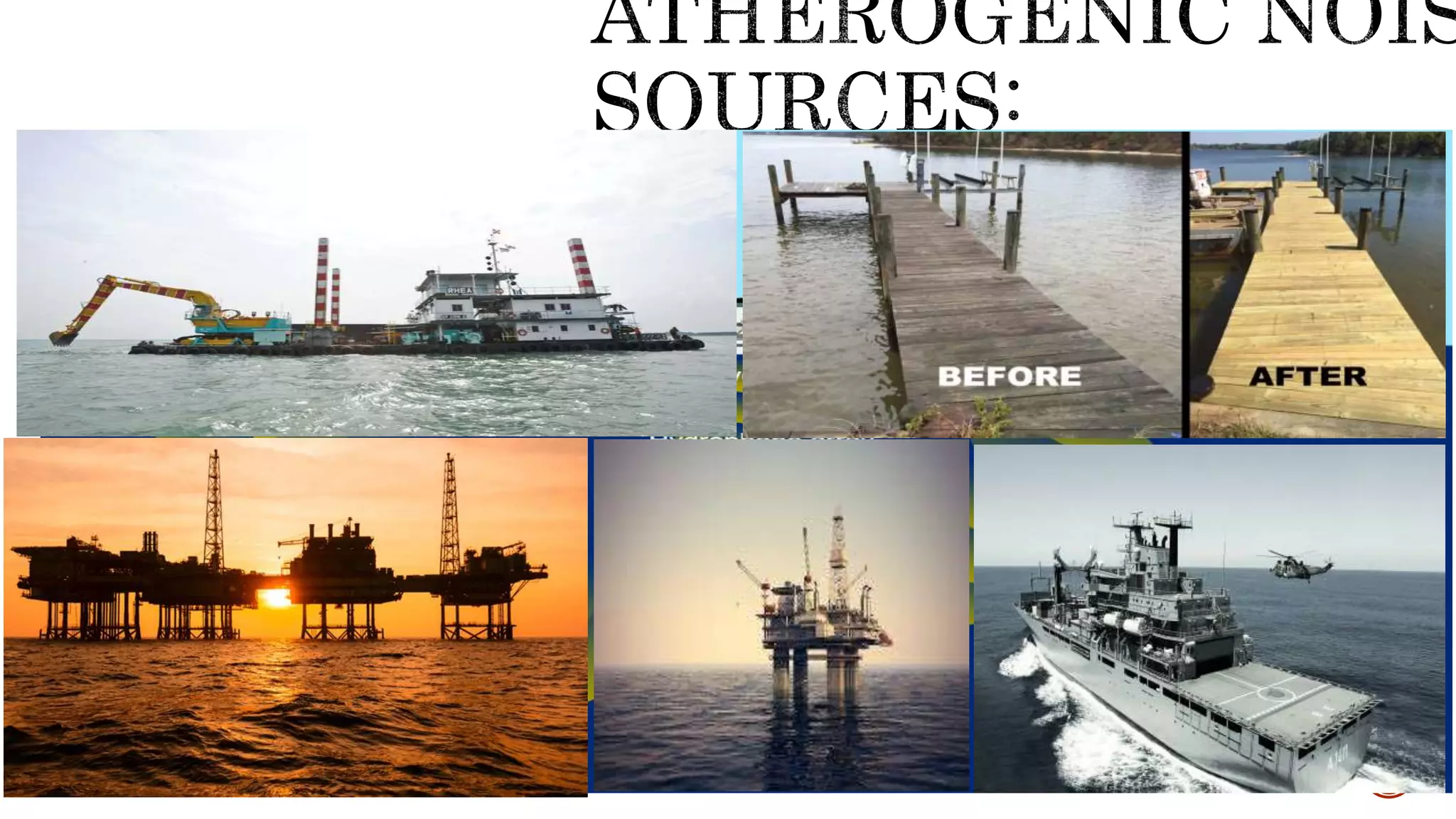
Noise from marine dredging, tunnel boring, smaller explosives, pile-
driving and pier construction, offshore drilling and mineral
extraction, Several technologies (airguns, sleeve exploders, and gas
guns) can exceed ambient noise for considerable distances.
Naval vessels also create considerable sound through their power
plants, propellers, and hulls.
Other sources of anthropogenic noise that can affect marine
mammals include airplanes and helicopters.
6
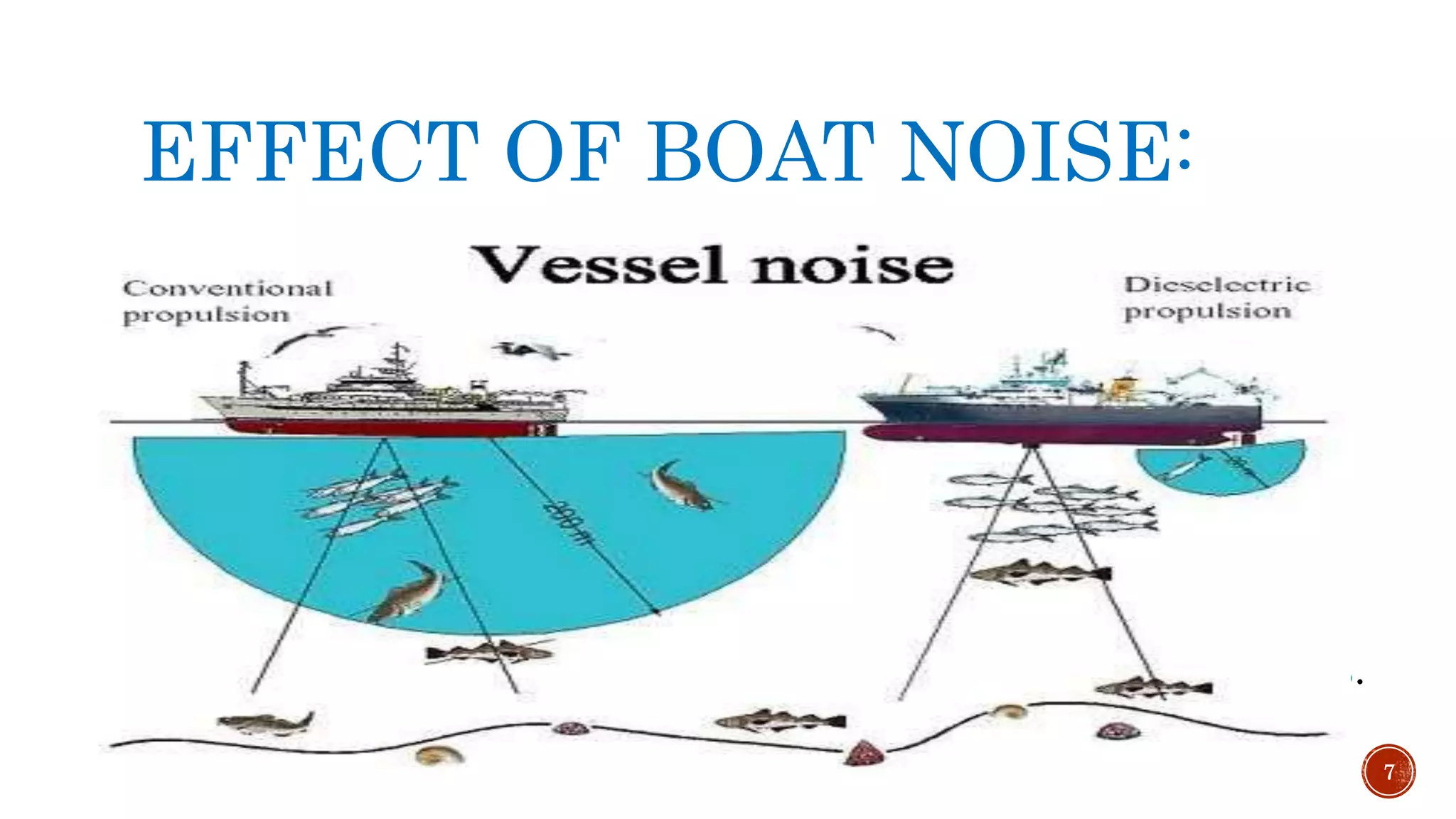
EFFECT OF BOAT NOISE:
Tuna changed swimming direction and increased their vertical
movement toward surface or bottom.
 The school behaviour of tuna exhibited an unconcentrated
structure and uncoordinated swimming behaviour.
Agonistic behaviour was more evident when exposed to sounds
from outboard motors of small boats.
An alteration in schooling behaviour due to boat noise can affect
the accuracy of their migration to spawning and feeding grounds.
7
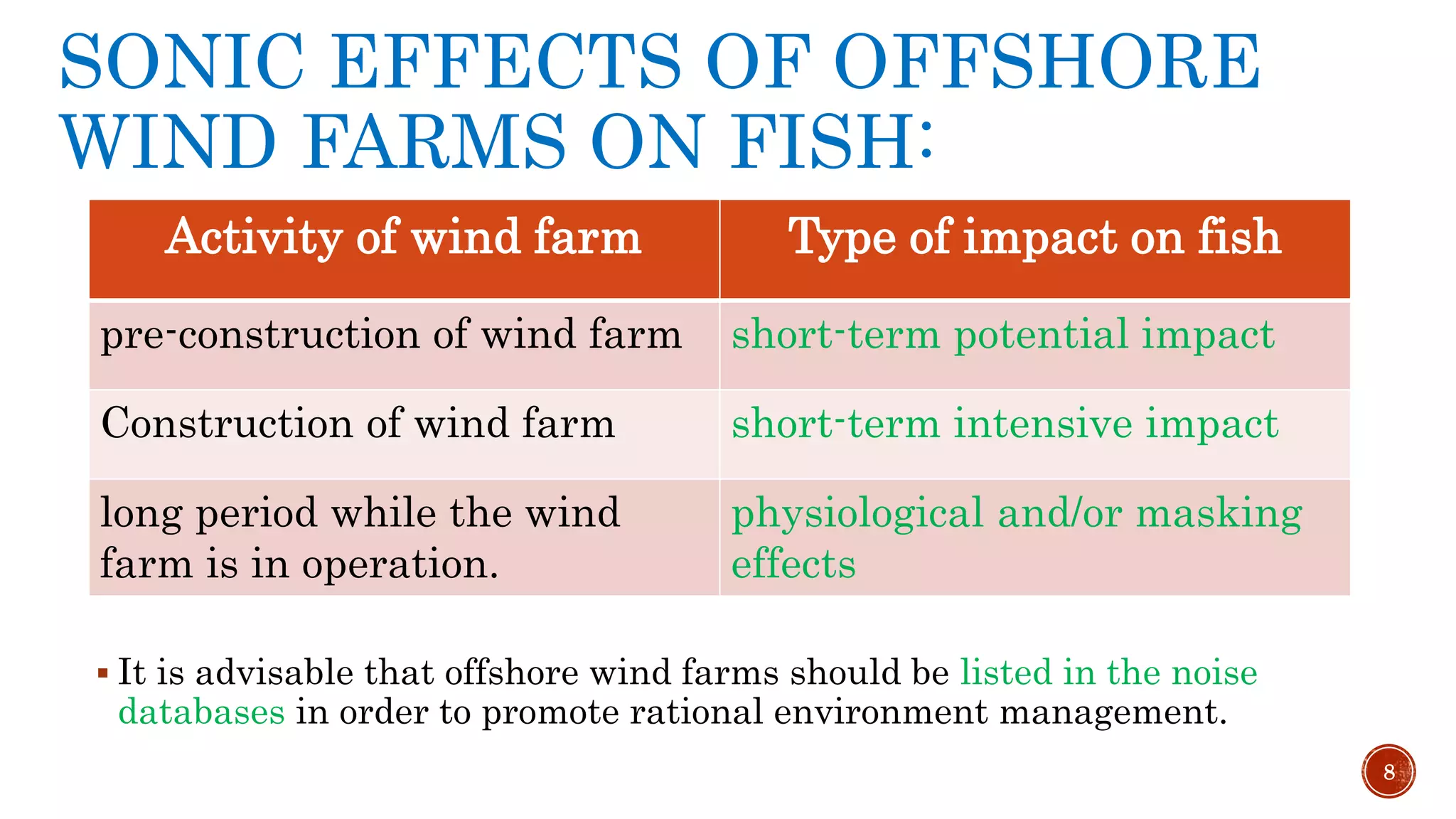
SONIC EFFECTS OF OFFSHORE
WIND FARMS ON FISH:
 It is advisable that offshore wind farms should be listed in the noise
databases in order to promote rational environment management.
Activity of wind farm Type of impact on fish
pre-construction of wind farm short-term potential impact
Construction of wind farm short-term intensive impact
long period while the wind
farm is in operation.
physiological and/or masking
effects
8
IMPACT OF NOISE ON
DEVELOPMENT OF LARVA:
Noise has been shown to cause body malformations and delay
development in scallop embryos.
Exposure to additional noise during rearing would reduce growth,
increase yolk sac use and reduce body width–length ratio
(condition indicator).
Scallop larvae exposed to playbacks of seismic pulses showed
significant developmental delays and 46% developed body
abnormalities.
Malformations appeared in the D-veliger larval phase.
9
Stunted
growth of
scallop
larvae –
10
 scallop larvae – The
Marine Scene
• scallop larvae – The
microscopic view
11
EFFECTS OF NOISE ON EGGS AND
LARVAE OF ESTUARINE FISHES:
Lethal effects of high noise levels were initially suspected during
attempts to rear larvae of bluegill sunfish (Lepomis macrochirus).
Viability of eggs and resulting Cyprinodon variegatus larvae was
significantly reduced in the noisier tank.
Growth rates of C. variegatus and Fundulus similis larvae were
significantly lower in the noisier tank.
12
 Deformity in the larvae of Cyprinodon
variegatus
• Deformity in the larvae of
Fundulus similis
13
NOISE DISRUPTS ORIENTATION
BEHAVIOUR
IN FISH:
Coral reef fish larvae use sound to find suitable habitat during
their vital settlement stage.
Anthropogenic noise could have a disruptive effect on the
settlement and population dynamics in coral reef habitats
disturbed by boat traffic.
14
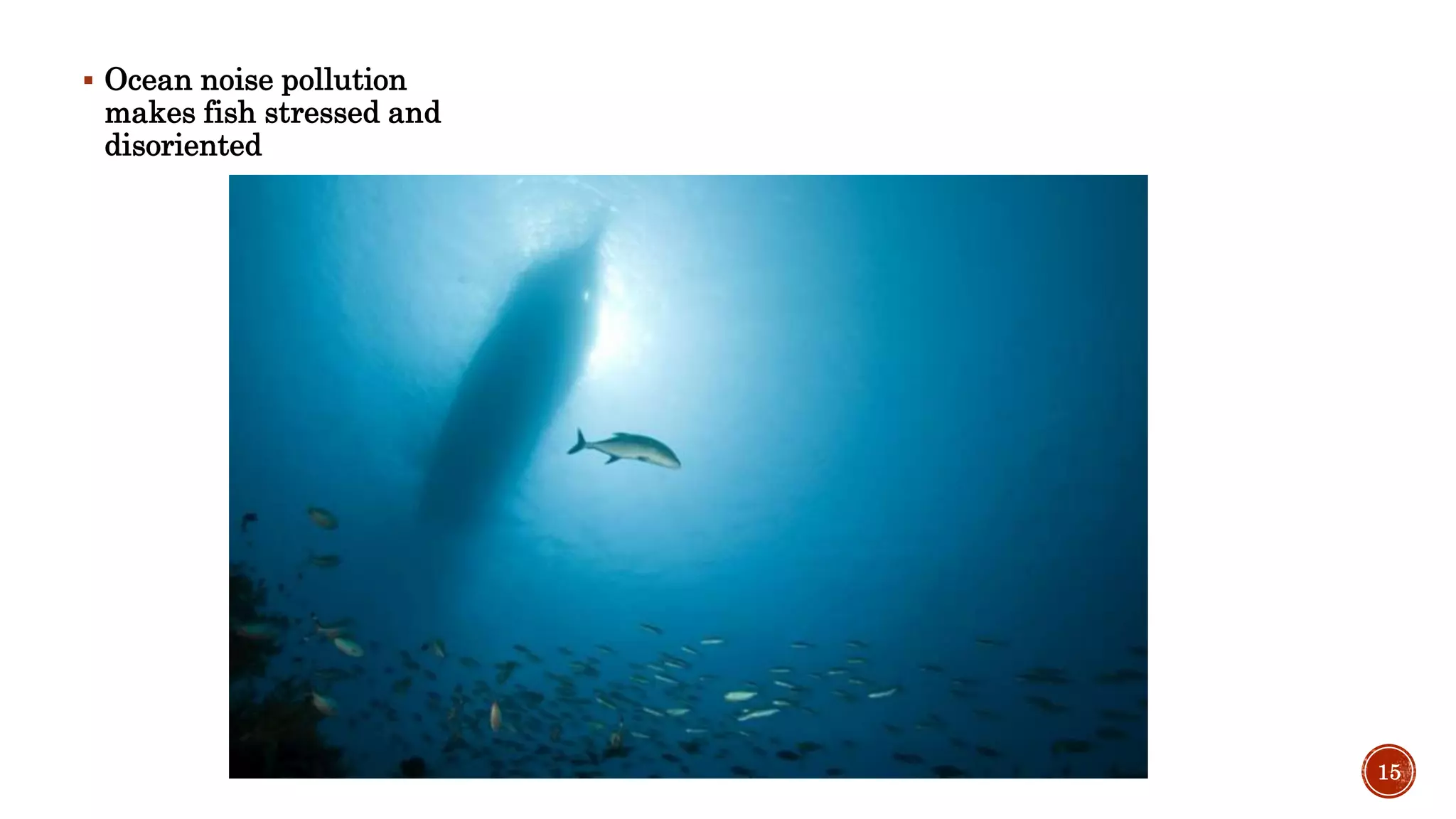
 Ocean noise pollution
makes fish stressed and
disoriented
15
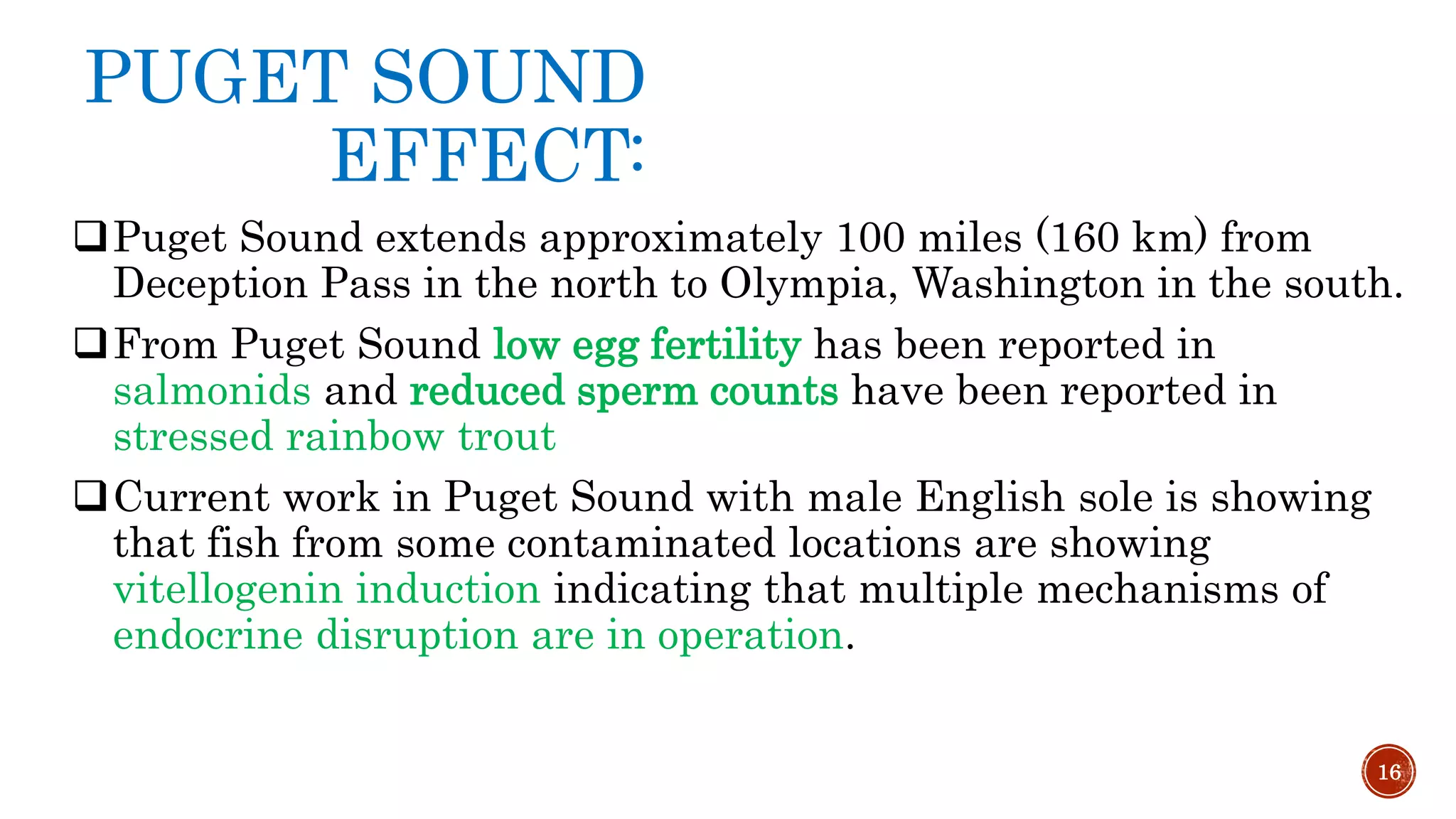
PUGET SOUND
EFFECT:
Puget Sound extends approximately 100 miles (160 km) from
Deception Pass in the north to Olympia, Washington in the south.
From Puget Sound low egg fertility has been reported in
salmonids and reduced sperm counts have been reported in
stressed rainbow trout
Current work in Puget Sound with male English sole is showing
that fish from some contaminated locations are showing
vitellogenin induction indicating that multiple mechanisms of
endocrine disruption are in operation.
16
 Infertile eggs of
salmon–
Delay
development of
eggs in salmon
17
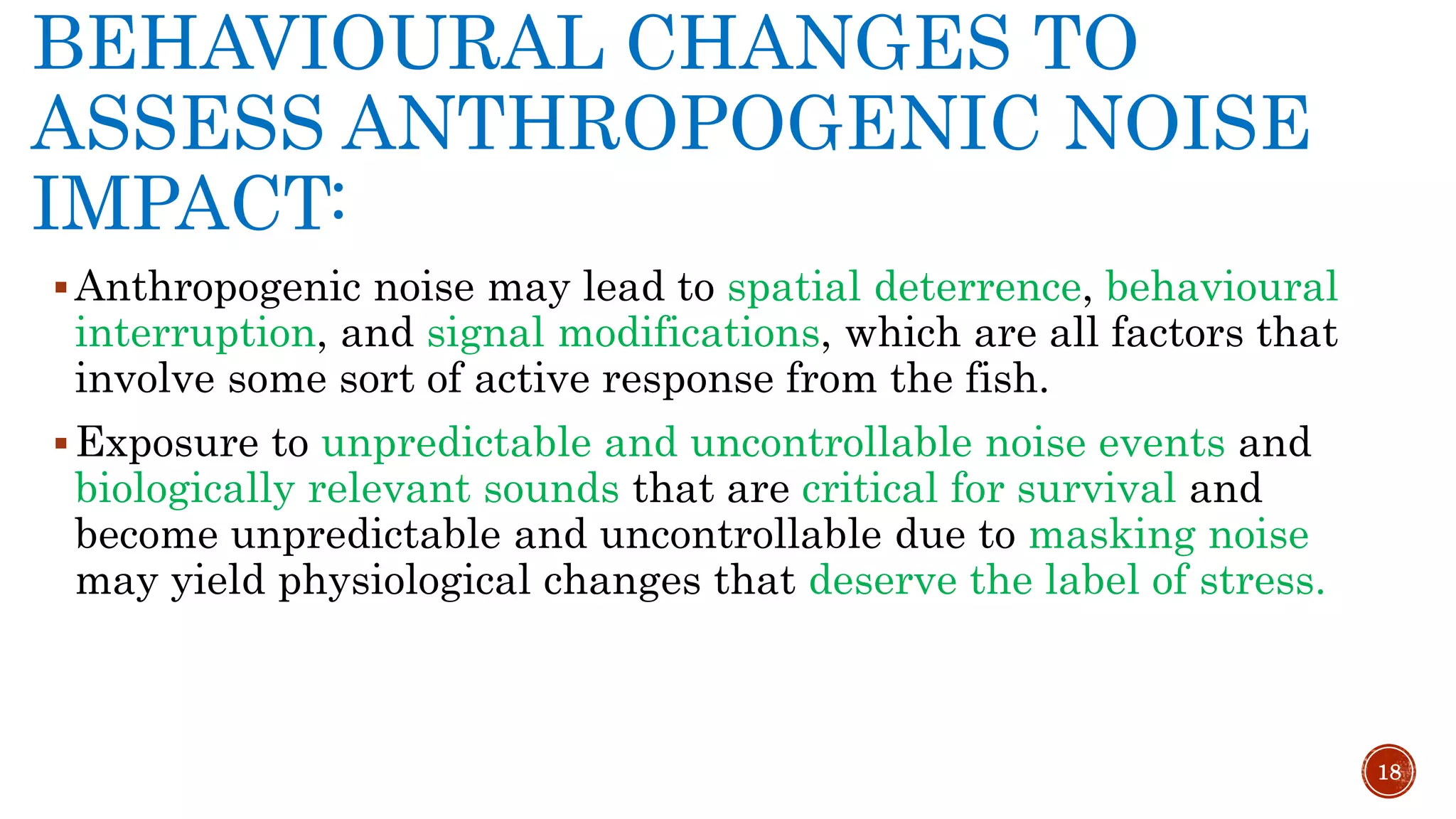
BEHAVIOURAL CHANGES TO
ASSESS ANTHROPOGENIC NOISE
IMPACT:
Anthropogenic noise may lead to spatial deterrence, behavioural
interruption, and signal modifications, which are all factors that
involve some sort of active response from the fish.
Exposure to unpredictable and uncontrollable noise events and
biologically relevant sounds that are critical for survival and
become unpredictable and uncontrollable due to masking noise
may yield physiological changes that deserve the label of stress.
18
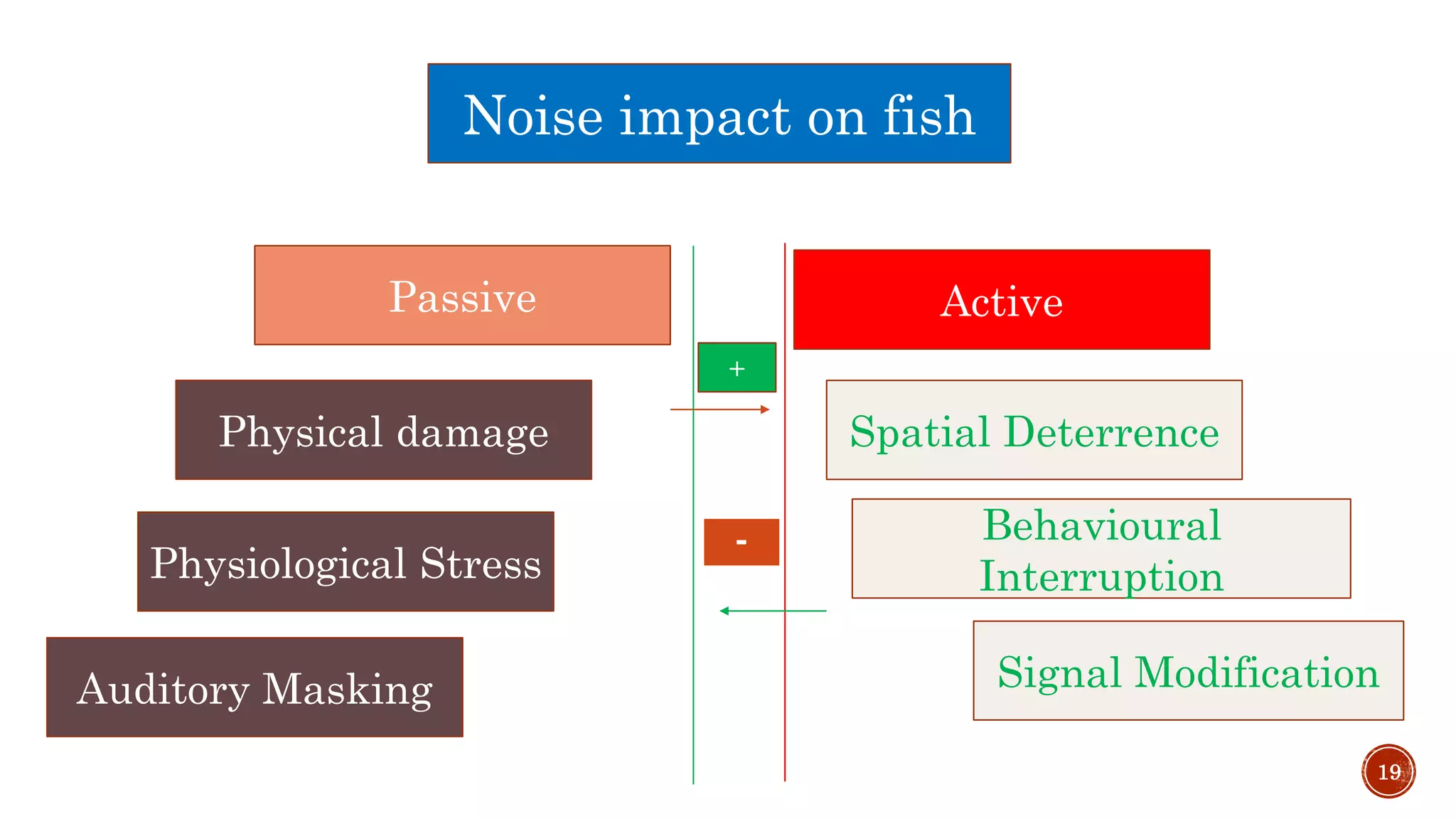
Noise impact on fish
Physical damage
Physiological Stress
Auditory Masking
Spatial Deterrence
Behavioural
Interruption
Signal Modification
Passive Active
+
-
19
IMPACT ON
REPRODUCTION OF FISH:
Noise can change fishes’ activity, force them to live in bad
habitats and affects reproduction.
Masking effect caused a decrease in overall aggressiveness and
territoriality during spawning which can negatively impact
reproductive success. (Sebastianutto et al. 2011).
Reduced hearing for vocalizing species can have reproductive
and evolutionary implications. (Vasconcelos et al. 2007).
20
REPRODUCTIVE FAILURE DUE TO
STRESS:
Atretic eggs,
Agglutinated sperm
Spawning impairment
Changes in hormones level
Timing of reproduction
Differences in egg volume
Fertilization rate
21
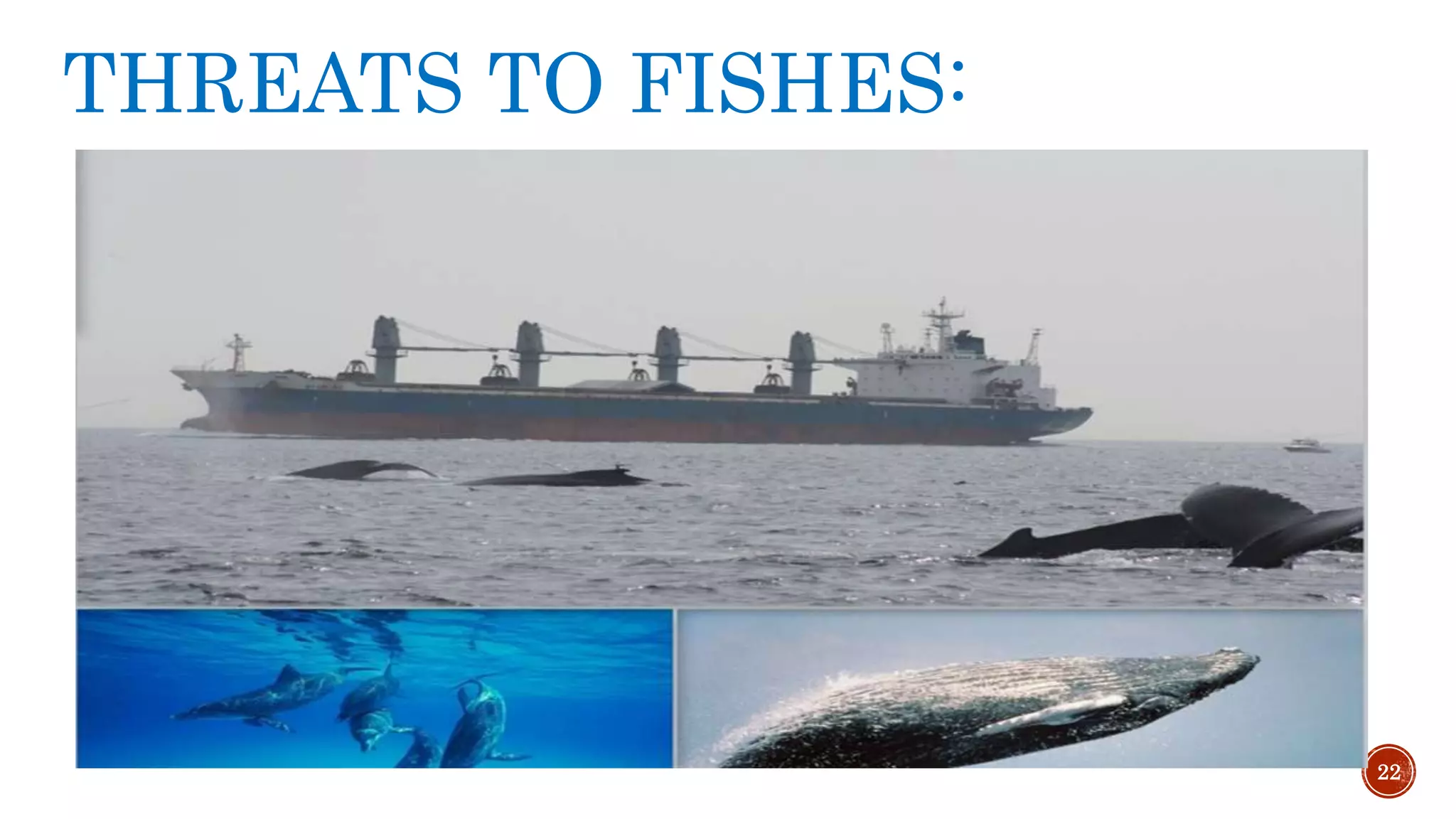
THREATS TO FISHES:
If noise affects the reproduction or viability of a prey species,
every species above it on the food chain could be affected.
Noise can be considered not only a discrete threat to whales,
but a source of overall habitat degradation.
Shrimp exposed to noise exhibited reduced reproduction and
growth rates and increased aggression and mortality.
Noise causes fish to move from an area for an extended period
of time and return later when the noise ceases.
22
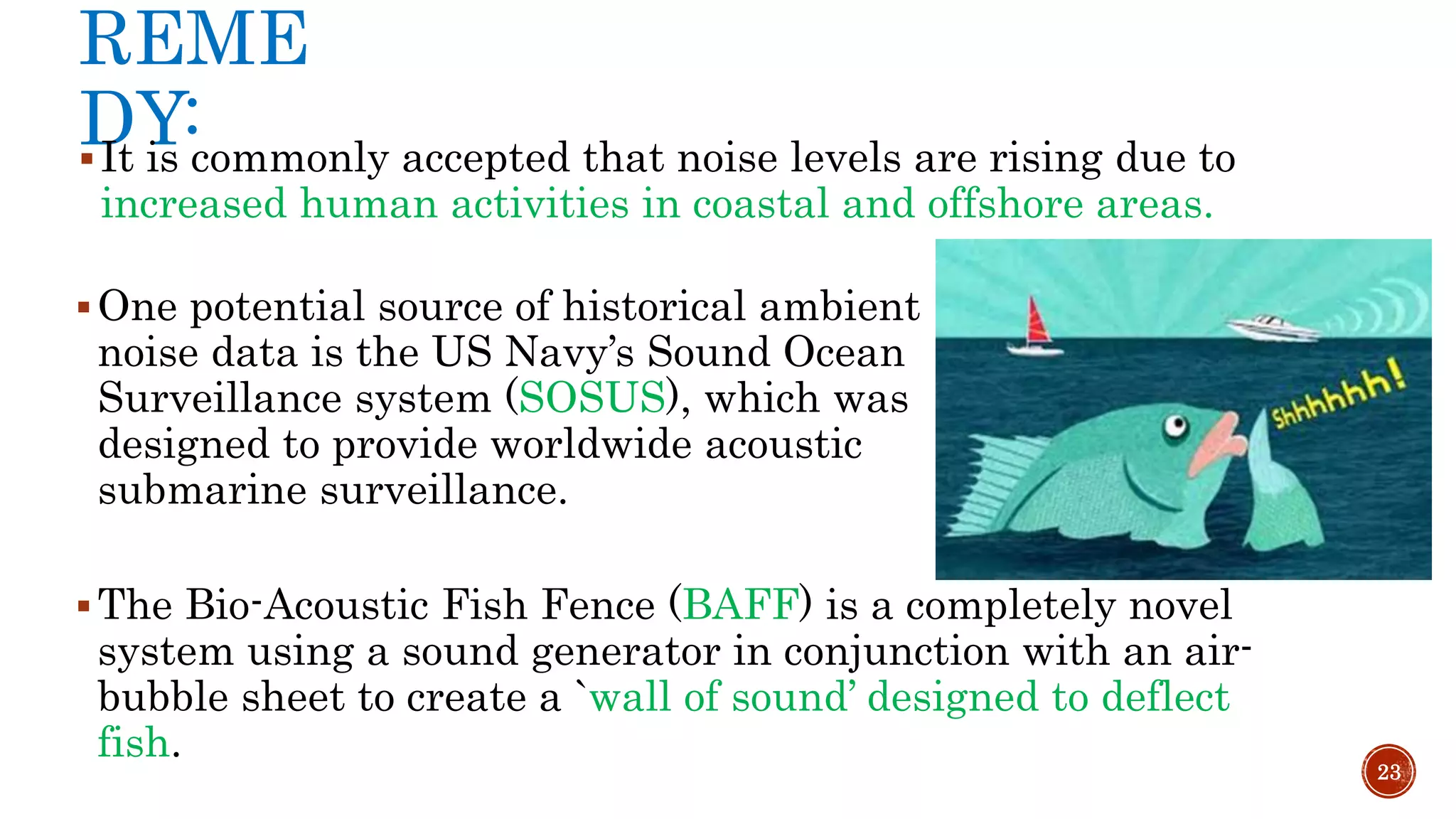
REME
DY:It is commonly accepted that noise levels are rising due to
increased human activities in coastal and offshore areas.
23
One potential source of historical ambient
noise data is the US Navy’s Sound Ocean
Surveillance system (SOSUS), which was
designed to provide worldwide acoustic
submarine surveillance.
The Bio-Acoustic Fish Fence (BAFF) is a completely novel
system using a sound generator in conjunction with an air-
bubble sheet to create a `wall of sound’ designed to deflect
fish.
BAFF
24
CONCLUS
ION:
Internationally, more than 200 agreements address ocean issues
such as biodiversity, sustainable use of ocean resources,
fisheries, and pollution.
Natural Resources Defence Council (NRDC), National Marine
Fisheries Service (NMFS), National Environmental Policy Act
(NEPA), Surveillance Towed Array Sensor System (SURTASS),
Fish and Wildlife Service (U.S.) (FWS), Intergovernmental
Oceanographic Commission (IOC) are working on prevention of
under-water sound pollution.
The Silent Oceans Project that focused on the issue of ocean
noise pollution that celebrated a “Silent Oceans Day” in
September 1999.
25
 INTERNATIONAL REGULATION OF UNDERWATER SOUND (Establishing Rules and Standards
to Address Ocean Noise Pollution) By Elena McCarthy, Marine Policy Center; Woods Hole
Oceanographic Institution
 Effects of Pollution on Fish (Molecular Effects and Population Responses Edited by Andrew
Lawrence, Department of Biological Sciences, University of Hull, UK And Krystal Hemingway
Institute of Estuarine & Coastal Studies, University of Hull, UK
 Measuring Behavioural Changes to Assess Anthropogenic Noise Impact in Adult Zebrafish (Danio
rerio) by H. Slabbekoorn, Institute of Biology, Leiden University, Leiden, The Netherlands.
H.W.Slabbekoorn@Biology.LeidenUniv.nl
 Boat noise disrupts orientation behaviour in a coral reef fish by Sophie Holles1, Stephen D. Simpson,
Andrew N. Radford1, Laetitia Berten,David Lecchini
 Risk formulation for the sonic effects of offshore wind farms on fish in the EU region by Ryunosuke
Kikuchi, Departamento de Ciências Exactas e do Ambiente (CERNAS)
 https://www.ncbi.nlm.nih.gov/pmc/articles/PMC4633878/
 https://www.nature.com/articles/ncomms10544
 http://ocr.org/learn/how-fish-hear/
 Anthropogenic noise causes body malformations and delays development in marine larvae by
Natacha Aguilar de Soto1, Natali Delorme, John Atkins, Sunkita Howard, James Williams & Mark
Johnson
26
27
THANK
YOU

EFFECT OF SOUND POLLUTION ON FISHES

  • 1.
    A seminar on: EFFECTOF SOUND POLLLUTION ON FISH Submitted to- Prof. G. DASH Dept. of AAH WEST BENGAL UNIVERSITY OF ANIMALANDFISHERY SCIENCES Submitted by- Sailesh Mahapatra Roll no. – F/2016/21 Regd. No. – 5864 of 2016 – ’17 1
  • 2.
    INTRODUCTI ON:  Some anthropogenic(man-made) noise, such as that arising from traffic, resource extraction and construction, is now recognized as noise pollution both in air and underwater.  From individual behaviour and physiology up to community structure, a wide variety of species are affected by noise.  Since the anthropogenic noise has changed the soundscape of many aquatic ecosystems, International legislation recognizes the need to assess and manage the biological impacts of noise- generating human activities. 2
  • 3.
    Fish can sensesound through their lateral lines and their otolith (ears). Some fish don’t have lateral lines, but do have cilia that serve as mechanoreceptors translating acoustically induced particle motion and pressure gradients into the sensory system of the fish. Some fishes, such as some species of carp and herrings, hear through their swim bladders, which function rather like a hearing aid. Hearing is well-developed in carp, which have the Weberian organ, three specialized vertebral processes that transfer vibrations in the swim bladder to the inner ear. For shell fishes hearing organ is statocyst. 3
  • 4.
  • 5.
    SOUND FROM FISH: Many speciesof fish are known to use sound for communication and produce sound incident to other behaviours, such as swimming and feeding. Some marine life, like sharks have been shown to respond to sounds from potential prey. Fish generally produce sounds by striking two bony structures together or regulating air within a swim-bladder. Therefore, the sounds they produce are usually pulsed signals below 1,000 Hz. These fish choruses have been known to increase ambient noise levels by 20 dB or more (in the 50 - 5,000 Hz band). 5
  • 6.
    Noise from marinedredging, tunnel boring, smaller explosives, pile- driving and pier construction, offshore drilling and mineral extraction, Several technologies (airguns, sleeve exploders, and gas guns) can exceed ambient noise for considerable distances. Naval vessels also create considerable sound through their power plants, propellers, and hulls. Other sources of anthropogenic noise that can affect marine mammals include airplanes and helicopters. 6
  • 7.
    EFFECT OF BOATNOISE: Tuna changed swimming direction and increased their vertical movement toward surface or bottom.  The school behaviour of tuna exhibited an unconcentrated structure and uncoordinated swimming behaviour. Agonistic behaviour was more evident when exposed to sounds from outboard motors of small boats. An alteration in schooling behaviour due to boat noise can affect the accuracy of their migration to spawning and feeding grounds. 7
  • 8.
    SONIC EFFECTS OFOFFSHORE WIND FARMS ON FISH:  It is advisable that offshore wind farms should be listed in the noise databases in order to promote rational environment management. Activity of wind farm Type of impact on fish pre-construction of wind farm short-term potential impact Construction of wind farm short-term intensive impact long period while the wind farm is in operation. physiological and/or masking effects 8
  • 9.
    IMPACT OF NOISEON DEVELOPMENT OF LARVA: Noise has been shown to cause body malformations and delay development in scallop embryos. Exposure to additional noise during rearing would reduce growth, increase yolk sac use and reduce body width–length ratio (condition indicator). Scallop larvae exposed to playbacks of seismic pulses showed significant developmental delays and 46% developed body abnormalities. Malformations appeared in the D-veliger larval phase. 9
  • 10.
  • 11.
     scallop larvae– The Marine Scene • scallop larvae – The microscopic view 11
  • 12.
    EFFECTS OF NOISEON EGGS AND LARVAE OF ESTUARINE FISHES: Lethal effects of high noise levels were initially suspected during attempts to rear larvae of bluegill sunfish (Lepomis macrochirus). Viability of eggs and resulting Cyprinodon variegatus larvae was significantly reduced in the noisier tank. Growth rates of C. variegatus and Fundulus similis larvae were significantly lower in the noisier tank. 12
  • 13.
     Deformity inthe larvae of Cyprinodon variegatus • Deformity in the larvae of Fundulus similis 13
  • 14.
    NOISE DISRUPTS ORIENTATION BEHAVIOUR INFISH: Coral reef fish larvae use sound to find suitable habitat during their vital settlement stage. Anthropogenic noise could have a disruptive effect on the settlement and population dynamics in coral reef habitats disturbed by boat traffic. 14
  • 15.
     Ocean noisepollution makes fish stressed and disoriented 15
  • 16.
    PUGET SOUND EFFECT: Puget Soundextends approximately 100 miles (160 km) from Deception Pass in the north to Olympia, Washington in the south. From Puget Sound low egg fertility has been reported in salmonids and reduced sperm counts have been reported in stressed rainbow trout Current work in Puget Sound with male English sole is showing that fish from some contaminated locations are showing vitellogenin induction indicating that multiple mechanisms of endocrine disruption are in operation. 16
  • 17.
     Infertile eggsof salmon– Delay development of eggs in salmon 17
  • 18.
    BEHAVIOURAL CHANGES TO ASSESSANTHROPOGENIC NOISE IMPACT: Anthropogenic noise may lead to spatial deterrence, behavioural interruption, and signal modifications, which are all factors that involve some sort of active response from the fish. Exposure to unpredictable and uncontrollable noise events and biologically relevant sounds that are critical for survival and become unpredictable and uncontrollable due to masking noise may yield physiological changes that deserve the label of stress. 18
  • 19.
    Noise impact onfish Physical damage Physiological Stress Auditory Masking Spatial Deterrence Behavioural Interruption Signal Modification Passive Active + - 19
  • 20.
    IMPACT ON REPRODUCTION OFFISH: Noise can change fishes’ activity, force them to live in bad habitats and affects reproduction. Masking effect caused a decrease in overall aggressiveness and territoriality during spawning which can negatively impact reproductive success. (Sebastianutto et al. 2011). Reduced hearing for vocalizing species can have reproductive and evolutionary implications. (Vasconcelos et al. 2007). 20
  • 21.
    REPRODUCTIVE FAILURE DUETO STRESS: Atretic eggs, Agglutinated sperm Spawning impairment Changes in hormones level Timing of reproduction Differences in egg volume Fertilization rate 21
  • 22.
    THREATS TO FISHES: Ifnoise affects the reproduction or viability of a prey species, every species above it on the food chain could be affected. Noise can be considered not only a discrete threat to whales, but a source of overall habitat degradation. Shrimp exposed to noise exhibited reduced reproduction and growth rates and increased aggression and mortality. Noise causes fish to move from an area for an extended period of time and return later when the noise ceases. 22
  • 23.
    REME DY:It is commonlyaccepted that noise levels are rising due to increased human activities in coastal and offshore areas. 23 One potential source of historical ambient noise data is the US Navy’s Sound Ocean Surveillance system (SOSUS), which was designed to provide worldwide acoustic submarine surveillance. The Bio-Acoustic Fish Fence (BAFF) is a completely novel system using a sound generator in conjunction with an air- bubble sheet to create a `wall of sound’ designed to deflect fish.
  • 24.
  • 25.
    CONCLUS ION: Internationally, more than200 agreements address ocean issues such as biodiversity, sustainable use of ocean resources, fisheries, and pollution. Natural Resources Defence Council (NRDC), National Marine Fisheries Service (NMFS), National Environmental Policy Act (NEPA), Surveillance Towed Array Sensor System (SURTASS), Fish and Wildlife Service (U.S.) (FWS), Intergovernmental Oceanographic Commission (IOC) are working on prevention of under-water sound pollution. The Silent Oceans Project that focused on the issue of ocean noise pollution that celebrated a “Silent Oceans Day” in September 1999. 25
  • 26.
     INTERNATIONAL REGULATIONOF UNDERWATER SOUND (Establishing Rules and Standards to Address Ocean Noise Pollution) By Elena McCarthy, Marine Policy Center; Woods Hole Oceanographic Institution  Effects of Pollution on Fish (Molecular Effects and Population Responses Edited by Andrew Lawrence, Department of Biological Sciences, University of Hull, UK And Krystal Hemingway Institute of Estuarine & Coastal Studies, University of Hull, UK  Measuring Behavioural Changes to Assess Anthropogenic Noise Impact in Adult Zebrafish (Danio rerio) by H. Slabbekoorn, Institute of Biology, Leiden University, Leiden, The Netherlands. H.W.Slabbekoorn@Biology.LeidenUniv.nl  Boat noise disrupts orientation behaviour in a coral reef fish by Sophie Holles1, Stephen D. Simpson, Andrew N. Radford1, Laetitia Berten,David Lecchini  Risk formulation for the sonic effects of offshore wind farms on fish in the EU region by Ryunosuke Kikuchi, Departamento de Ciências Exactas e do Ambiente (CERNAS)  https://www.ncbi.nlm.nih.gov/pmc/articles/PMC4633878/  https://www.nature.com/articles/ncomms10544  http://ocr.org/learn/how-fish-hear/  Anthropogenic noise causes body malformations and delays development in marine larvae by Natacha Aguilar de Soto1, Natali Delorme, John Atkins, Sunkita Howard, James Williams & Mark Johnson 26
  • 27.

Editor's Notes

  • #3 Aristotle is thought to have been the first who noted that sound could be heard in the water. Their calculation of the speed of sound (1435 m/s), Industrial Revolution such as the US National Environment Policy Act and the European Commission Marine Strategy Framework Directive, the presence in or introduction into the environment of a substance which has harmful or poisonous effects.
  • #4 Nuromast cells in lateral line
  • #7 Dredging, boring-They are a significant source of continuous noise in coastal regions.
  • #9 Non-conventional energy, Auditory masking occurs when the perception of one sound is affected by the presence of another sound.
  • #13 The Longnose killifish (Fundulus similis) IUCN Red List, The sheepshead minnow or sheepshead pupfish (Cyprinodon variegatus)
  • #15 2. response of fish larvae to natural reef sound, with implications for
  • #17 from the great lakes in Salmon 2. (Leatherland, 1993) , (Campbell et al., 1992). 3.(Lomax et al., 2001),
  • #19 Sound masking is the process of adding background sound to reduce noise distractions, protect speech privacy and increase office comfort.
  • #20 Auditory masking occurs when the perception of one sound is affected by the presence of another sound.
  • #21 One study showed that Gobius cruentatus, territoriality-moulting