NOISE POLLUTION
BY: RACHEL JACOB
ZOO-15-05-10
POLLUTION
The introduction into the
environment, by people, of
substances or energy liable to cause
harm to living creatures or
ecological systems.
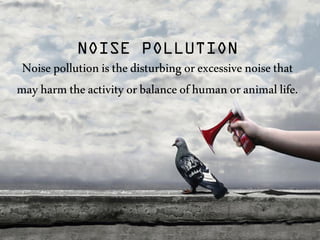
NOISE POLLUTION
Noise pollutionisthedisturbing orexcessivenoisethat
mayharmtheactivityorbalanceofhumanoranimallife.
• Sound that is unwanted or disrupts one’s quality of life is called as
noise. When there is lot of noise in the environment, it is termed as
noise pollution.
• Sound becomes undesirable when it disturbs the normal activities such
as working, sleeping, and during conversations.
• It is an underrated environmental problem because of the fact that we
can’t see, smell, or taste it.
• World Health Organization stated that “Noise must be recognized as a
major threat to human well-being”
Classifications
• There are two major classes of noise pollution
–Community noise or environmental noise
• Non industrial noise pollution
– Air craft noise
– Roadway noise pollution
– Under water noise pollution
–Occupational noise or industrial noise pollution
COMMUNITY NOISE
Community noise (also called environmental noise, residential noise or
domestic noise) is defined as noise emitted from all sources, except at
the industrial workplace.
Main sources of community noise include road, rail and air traffic,
construction and public work, and the neighborhood.
Typical neighborhood noise comes from live or recorded music; from
sporting events including motor sports; from playgrounds and car
parks; and from domestic animals such as barking dogs.
AIR CRAFT NOISE
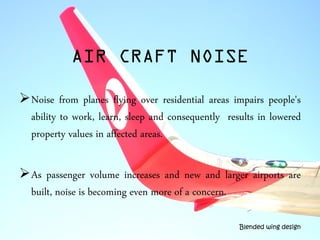
Noise from planes flying over residential areas impairs people's
ability to work, learn, sleep and consequently results in lowered
property values in affected areas.
As passenger volume increases and new and larger airports are
built, noise is becoming even more of a concern.
Blended wing design
ROAD WAY NOISE
 Roadway noise is the collective sound energy emanating from motor
vehicles.
 It contributes more to environmental noise exposure than any other noise
source, and is constituted chiefly of engine, tire, aerodynamic and
braking elements.
 In other Western countries as well as lesser developed countries, roadway
noise is expected to contribute a proportionately large share of the total
societal noise pollution.
Under water Noise Pollution(UNP)
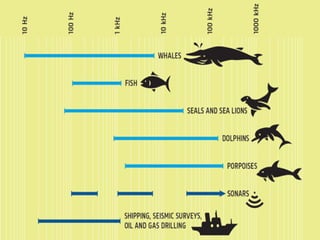
 UNP is intense human-generated noise in the marine
environment.
 It is caused by use of explosives, oceanographic experiments,
geophysical research, underwater construction, ship traffic, intense
active sonars and air guns used for seismic surveys for oil and
related activities.
Occupational Noise
 The many and varied sources of noise is industrial machinery and
processes include: rotors, gears, turbulent fluid flow, impact
processes, electrical machines, internal combustion engines,
pneumatic equipment, drilling, crushing, blasting, pumps and
compressors.
 Furthermore, the emitted sounds are reflected from floors, ceiling
and equipment
EFFECTS OF NOISE POLLUTION
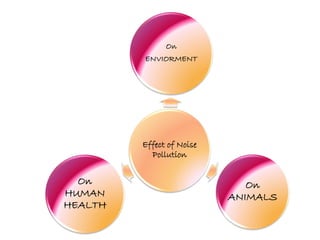
Effect of Noise
Pollution
On
ENVIORMENT
On
ANIMALS
On
HUMAN
HEALTH
EFFECTS ON HUMANS
• Hearing Impairment
• Interference with Spoken Communication
• Decrease in Efficiency
• Lack of Concentration
• Fatigue
• Sleep Disturbances
• Cardiovascular Disturbances
• Disturbance in Mental Health
• Impaired Task Performance
• Negative Social Behavior and Annoyance reactions
• Abortion
• Abnormal Fetus
• Temporary or Permanent Deafness
Diseases Caused by Noise
Pollution
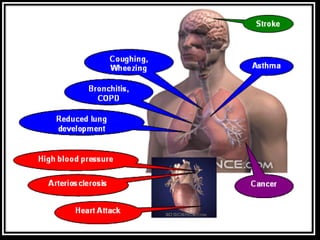
• High Blood Pressure
• Heart Attack
• Cancer
• Asthma
• Coughing, wheezing
• Deafness
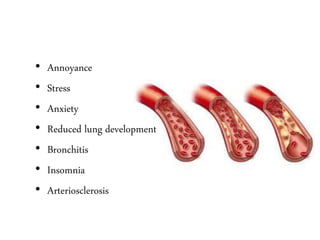
• Annoyance
• Stress
• Anxiety
• Reduced lung development
• Bronchitis
• Insomnia
• Arteriosclerosis
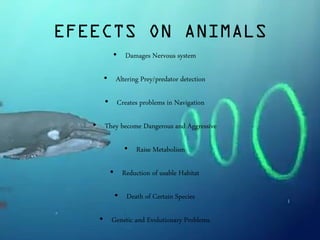
EFEECTS ON ANIMALS
• Damages Nervous system
• Altering Prey/predator detection
• Creates problems in Navigation
• They become Dangerous and Aggressive
• Raise Metabolism
• Reduction of usable Habitat
• Death of Certain Species
• Genetic and Evolutionary Problems
• Hormone imbalance
• Chronic Stress
• Panic and Escape Behavior
• Abandonment of Offspring
• Injury
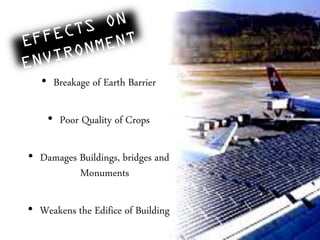
• Breakage of Earth Barrier
• Poor Quality of Crops
• Damages Buildings, bridges and
Monuments
• Weakens the Edifice of Building
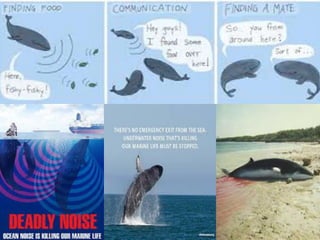
• Noise pollution from ship engines and sonar systems make it
difficult for marine mammals like whales and dolphins, and
prevent it from communicating, finding food, and avoiding
hazards.
• If construction sites, freeways, or outdoor concerts are near, it will
also interrupt the natural habitat.
• Animals may become afraid of noise over time and flee in terror if
a loud sound happens. In the process, they may get trampled.
• Excessive noise has the ability to raise an animal’s heart beat
speed, and even harms an animal’s metabolism.
• Animals rely on sound for prey detection and communication, so
if noise is present, animals will not be able to find food or
communicate because when they emit sound to prey, the only
thing they hear in return is human-made noise.
SOLUTIONS
CONTROL OF NOISE POLLUTION
• Control at Source
• Control in the Transmission Path
• Using Protective Equipment
CONTROL AT THE SOURCE
• Reducing the Noise Levels from Domestic Sectors
• Maintenance of Automobiles
• Use of Economic instruments
• Control over Vibrations
• Low Voice Speaking
• Prohibition on Usage of loudspeakers
• Selection of Machinery
• Maintenance of Machines
Control in the
Transmission Path
• Installation of Barriers
• Installation of Panels and Enclosures
• Green Belt development
USING PROTECTION EQUIPMENT
• Job Rotation
• Exposure Reduction
• Hearing Protection
• Protection at the Receiver End
MORE STRATEGIES
• Sound insulation
• Sound Absorption
• Vibration Damping
• Vibration Isolation
• Urban Planning
• Public Education and Awareness
Rachel noise polln

Rachel noise polln

  • 1.
    NOISE POLLUTION BY: RACHELJACOB ZOO-15-05-10
  • 2.
    POLLUTION The introduction intothe environment, by people, of substances or energy liable to cause harm to living creatures or ecological systems.
  • 3.
    NOISE POLLUTION Noise pollutionisthedisturbingorexcessivenoisethat mayharmtheactivityorbalanceofhumanoranimallife.
  • 4.
    • Sound thatis unwanted or disrupts one’s quality of life is called as noise. When there is lot of noise in the environment, it is termed as noise pollution. • Sound becomes undesirable when it disturbs the normal activities such as working, sleeping, and during conversations. • It is an underrated environmental problem because of the fact that we can’t see, smell, or taste it. • World Health Organization stated that “Noise must be recognized as a major threat to human well-being”
  • 5.
    Classifications • There aretwo major classes of noise pollution –Community noise or environmental noise • Non industrial noise pollution – Air craft noise – Roadway noise pollution – Under water noise pollution –Occupational noise or industrial noise pollution
  • 6.
    COMMUNITY NOISE Community noise(also called environmental noise, residential noise or domestic noise) is defined as noise emitted from all sources, except at the industrial workplace. Main sources of community noise include road, rail and air traffic, construction and public work, and the neighborhood. Typical neighborhood noise comes from live or recorded music; from sporting events including motor sports; from playgrounds and car parks; and from domestic animals such as barking dogs.
  • 7.
    AIR CRAFT NOISE Noisefrom planes flying over residential areas impairs people's ability to work, learn, sleep and consequently results in lowered property values in affected areas. As passenger volume increases and new and larger airports are built, noise is becoming even more of a concern. Blended wing design
  • 8.
    ROAD WAY NOISE Roadway noise is the collective sound energy emanating from motor vehicles.  It contributes more to environmental noise exposure than any other noise source, and is constituted chiefly of engine, tire, aerodynamic and braking elements.  In other Western countries as well as lesser developed countries, roadway noise is expected to contribute a proportionately large share of the total societal noise pollution.
  • 9.
    Under water NoisePollution(UNP)  UNP is intense human-generated noise in the marine environment.  It is caused by use of explosives, oceanographic experiments, geophysical research, underwater construction, ship traffic, intense active sonars and air guns used for seismic surveys for oil and related activities.
  • 10.
    Occupational Noise  Themany and varied sources of noise is industrial machinery and processes include: rotors, gears, turbulent fluid flow, impact processes, electrical machines, internal combustion engines, pneumatic equipment, drilling, crushing, blasting, pumps and compressors.  Furthermore, the emitted sounds are reflected from floors, ceiling and equipment
  • 11.
  • 12.
  • 13.
    EFFECTS ON HUMANS •Hearing Impairment • Interference with Spoken Communication • Decrease in Efficiency • Lack of Concentration • Fatigue • Sleep Disturbances • Cardiovascular Disturbances
  • 14.
    • Disturbance inMental Health • Impaired Task Performance • Negative Social Behavior and Annoyance reactions • Abortion • Abnormal Fetus • Temporary or Permanent Deafness
  • 15.
    Diseases Caused byNoise Pollution • High Blood Pressure • Heart Attack • Cancer • Asthma • Coughing, wheezing • Deafness
  • 16.
    • Annoyance • Stress •Anxiety • Reduced lung development • Bronchitis • Insomnia • Arteriosclerosis
  • 18.
    EFEECTS ON ANIMALS •Damages Nervous system • Altering Prey/predator detection • Creates problems in Navigation • They become Dangerous and Aggressive • Raise Metabolism • Reduction of usable Habitat • Death of Certain Species • Genetic and Evolutionary Problems
  • 19.
    • Hormone imbalance •Chronic Stress • Panic and Escape Behavior • Abandonment of Offspring • Injury
  • 22.
    • Breakage ofEarth Barrier • Poor Quality of Crops • Damages Buildings, bridges and Monuments • Weakens the Edifice of Building
  • 23.
    • Noise pollutionfrom ship engines and sonar systems make it difficult for marine mammals like whales and dolphins, and prevent it from communicating, finding food, and avoiding hazards. • If construction sites, freeways, or outdoor concerts are near, it will also interrupt the natural habitat.
  • 24.
    • Animals maybecome afraid of noise over time and flee in terror if a loud sound happens. In the process, they may get trampled. • Excessive noise has the ability to raise an animal’s heart beat speed, and even harms an animal’s metabolism. • Animals rely on sound for prey detection and communication, so if noise is present, animals will not be able to find food or communicate because when they emit sound to prey, the only thing they hear in return is human-made noise.
  • 25.
  • 26.
    CONTROL OF NOISEPOLLUTION • Control at Source • Control in the Transmission Path • Using Protective Equipment
  • 27.
    CONTROL AT THESOURCE • Reducing the Noise Levels from Domestic Sectors • Maintenance of Automobiles • Use of Economic instruments • Control over Vibrations • Low Voice Speaking • Prohibition on Usage of loudspeakers • Selection of Machinery • Maintenance of Machines
  • 28.
    Control in the TransmissionPath • Installation of Barriers • Installation of Panels and Enclosures • Green Belt development
  • 29.
    USING PROTECTION EQUIPMENT •Job Rotation • Exposure Reduction • Hearing Protection • Protection at the Receiver End
  • 30.
    MORE STRATEGIES • Soundinsulation • Sound Absorption • Vibration Damping • Vibration Isolation • Urban Planning • Public Education and Awareness