English file Pre-
Intermediate
Unit 3A – Going to
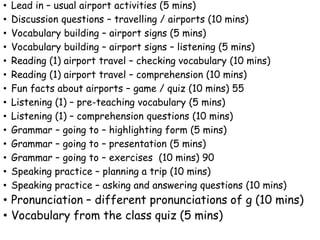
• Lead in – usual airport activities (5 mins)
• Discussion questions – travelling / airports (10 mins)
• Vocabulary building – airport signs (5 mins)
• Vocabulary building – airport signs – listening (5 mins)
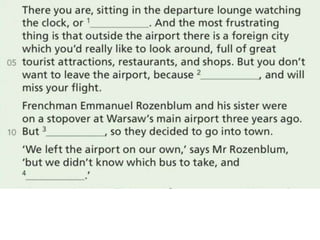
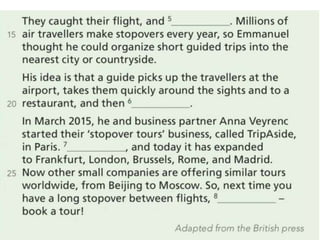
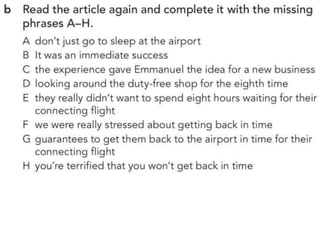
• Reading (1) airport travel – checking vocabulary (10 mins)
• Reading (1) airport travel – comprehension (10 mins)
• Fun facts about airports – game / quiz (10 mins) 55
• Listening (1) – pre-teaching vocabulary (5 mins)
• Listening (1) – comprehension questions (10 mins)
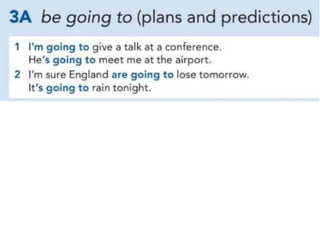
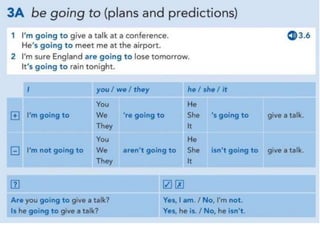
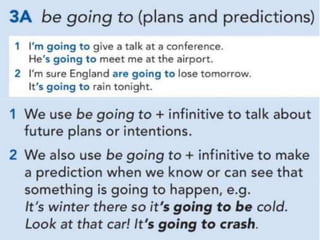
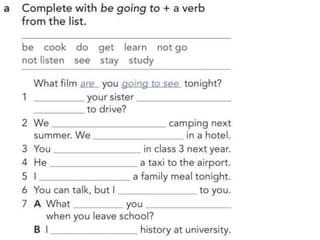
• Grammar – going to – highlighting form (5 mins)
• Grammar – going to – presentation (5 mins)
• Grammar – going to – exercises (10 mins) 90
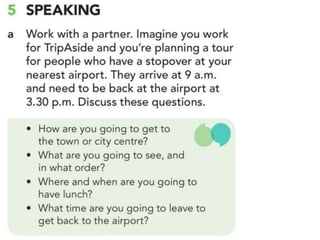
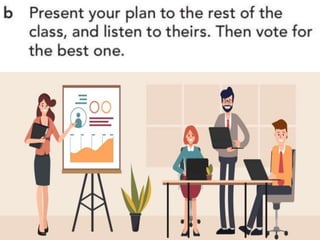
• Speaking practice – planning a trip (10 mins)
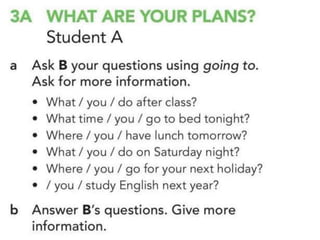
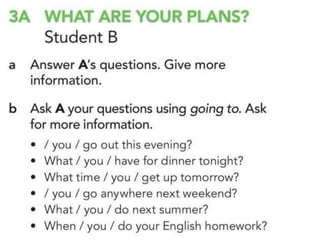
• Speaking practice – asking and answering questions (10 mins)
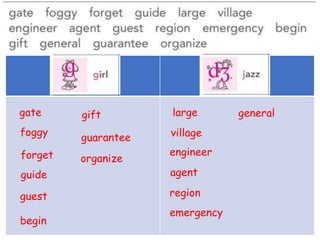
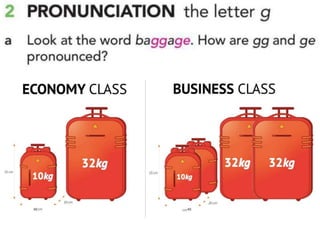
• Pronunciation – different pronunciations of g (10 mins)
• Vocabulary from the class quiz (5 mins)
Germany
Hong Kong
South
Korea
Amsterdam
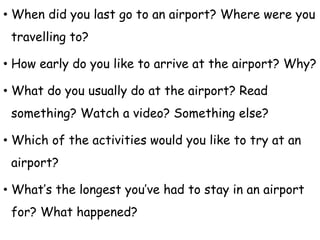
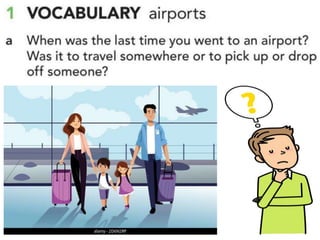
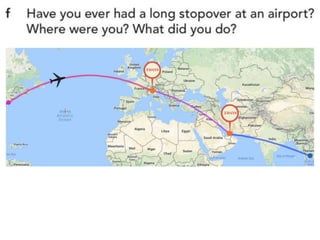
• When did you last go to an airport? Where were you
travelling to?
• How early do you like to arrive at the airport? Why?
• What do you usually do at the airport? Read
something? Watch a video? Something else?
• Which of the activities would you like to try at an
airport?
• What’s the longest you’ve had to stay in an airport
for? What happened?
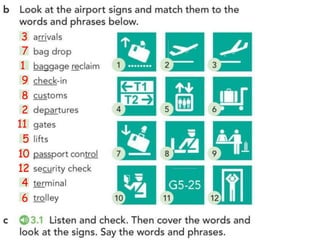
1
2
3
4
5
6
7
8
9
10
11
12
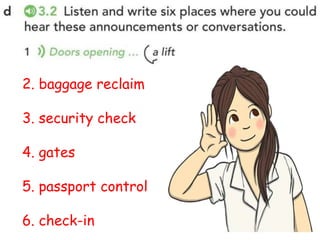
2. baggage reclaim
3. security check
4. gates
5. passport control
6. check-in
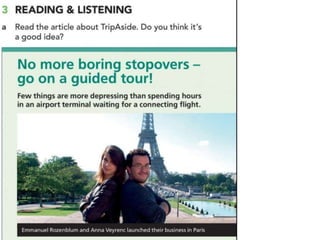
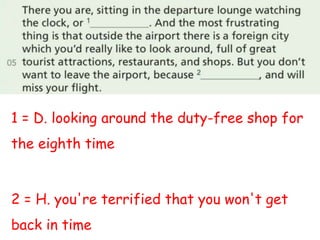
1 = D. looking around the duty-free shop for
the eighth time
2 = H. you're terrified that you won't get
back in time
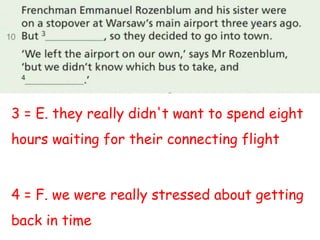
3 = E. they really didn't want to spend eight
hours waiting for their connecting flight
4 = F. we were really stressed about getting
back in time
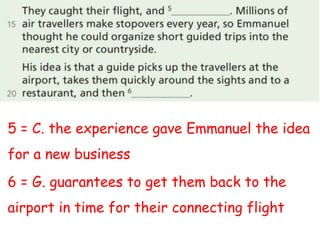
5 = C. the experience gave Emmanuel the idea
for a new business
6 = G. guarantees to get them back to the
airport in time for their connecting flight
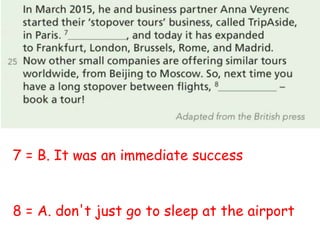
7 = B. It was an immediate success
8 = A. don't just go to sleep at the airport
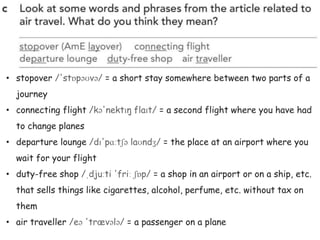
• stopover /'stɒpəʊvə/ = a short stay somewhere between two parts of a
journey
• connecting flight /kə'nektɪŋ flaɪt/ = a second flight where you have had
to change planes
• departure lounge /dɪ'pɑːtʃə laʊndʒ/ = the place at an airport where you
wait for your flight
• duty-free shop /ˌdjuːti 'friː ʃɒp/ = a shop in an airport or on a ship, etc.
that sells things like cigarettes, alcohol, perfume, etc. without tax on
them
• air traveller /eə 'trævələ/ = a passenger on a plane
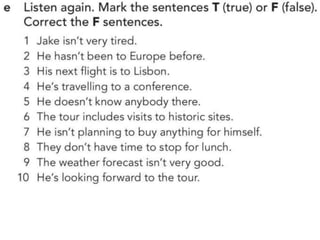
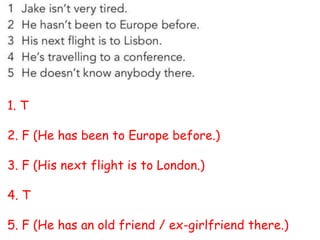
1. T
2. F (He has been to Europe before.)
3. F (His next flight is to London.)
4. T
5. F (He has an old friend / ex-girlfriend there.)
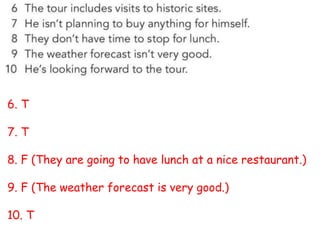
6. T
7. T
8. F (They are going to have lunch at a nice restaurant.)
9. F (The weather forecast is very good.)
10. T
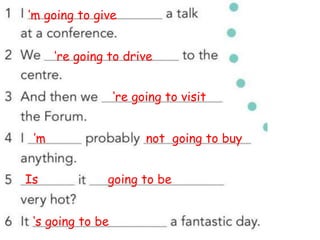
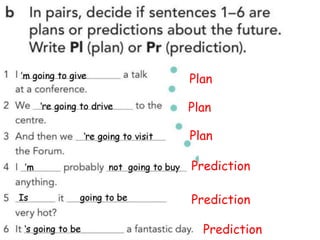
’m going to give
‘re going to drive
‘re going to visit
’m not going to buy
Is going to be
‘s going to be
Plan
Plan
Plan
Prediction
Prediction
Prediction
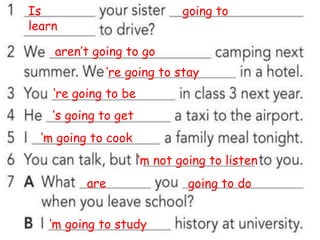
Is going to
learn
aren’t going to go
‘re going to stay
‘re going to be
‘s going to get
‘m going to cook
‘m not going to listen
are going to do
‘m going to study
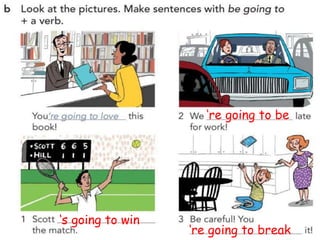
‘s going to win
‘re going to be
‘re going to break
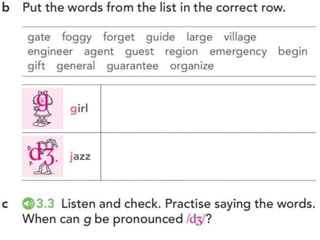
gate
foggy
forget
guide
large
village
engineer
agent
guest region
emergency
begin
gift general
guarantee
organize
• The letter g can be pronounced in two different ways, /g/ or /dʒ/.
• g before a, o, and u, and before a consonant, is pronounced /g/, e.g.
gas, go, gun, great.
• gu + vowel is also pronounced /g/, e.g. guard.
• g is also always pronounced /g/ when it comes after a
• vowel at the end of a word, e.g. bag, dog.
• ge and gi can be pronounced /g/ or /dʒ/, e.g. get, give, but
• also generous, page, giraffe.
• gg is usually pronounced /g/, e.g. bigger, but there are
• two exceptions where it is pronounced /dʒ/: suggest and
exaggerate.
• You could also tell Sts that the letter g is sometimes silent, e.g.
foreign, sign, etc.
EF4PI Unit 3A - be going to - Answers.pptx

EF4PI Unit 3A - be going to - Answers.pptx

  • 1.
  • 2.
    • Lead in– usual airport activities (5 mins) • Discussion questions – travelling / airports (10 mins) • Vocabulary building – airport signs (5 mins) • Vocabulary building – airport signs – listening (5 mins) • Reading (1) airport travel – checking vocabulary (10 mins) • Reading (1) airport travel – comprehension (10 mins) • Fun facts about airports – game / quiz (10 mins) 55 • Listening (1) – pre-teaching vocabulary (5 mins) • Listening (1) – comprehension questions (10 mins) • Grammar – going to – highlighting form (5 mins) • Grammar – going to – presentation (5 mins) • Grammar – going to – exercises (10 mins) 90 • Speaking practice – planning a trip (10 mins) • Speaking practice – asking and answering questions (10 mins) • Pronunciation – different pronunciations of g (10 mins) • Vocabulary from the class quiz (5 mins)
  • 3.
  • 4.
    • When didyou last go to an airport? Where were you travelling to? • How early do you like to arrive at the airport? Why? • What do you usually do at the airport? Read something? Watch a video? Something else? • Which of the activities would you like to try at an airport? • What’s the longest you’ve had to stay in an airport for? What happened?
  • 6.
  • 7.
    2. baggage reclaim 3.security check 4. gates 5. passport control 6. check-in
  • 12.
    1 = D.looking around the duty-free shop for the eighth time 2 = H. you're terrified that you won't get back in time
  • 13.
    3 = E.they really didn't want to spend eight hours waiting for their connecting flight 4 = F. we were really stressed about getting back in time
  • 14.
    5 = C.the experience gave Emmanuel the idea for a new business 6 = G. guarantees to get them back to the airport in time for their connecting flight
  • 15.
    7 = B.It was an immediate success 8 = A. don't just go to sleep at the airport
  • 16.
    • stopover /'stɒpəʊvə/= a short stay somewhere between two parts of a journey • connecting flight /kə'nektɪŋ flaɪt/ = a second flight where you have had to change planes • departure lounge /dɪ'pɑːtʃə laʊndʒ/ = the place at an airport where you wait for your flight • duty-free shop /ˌdjuːti 'friː ʃɒp/ = a shop in an airport or on a ship, etc. that sells things like cigarettes, alcohol, perfume, etc. without tax on them • air traveller /eə 'trævələ/ = a passenger on a plane
  • 19.
    1. T 2. F(He has been to Europe before.) 3. F (His next flight is to London.) 4. T 5. F (He has an old friend / ex-girlfriend there.)
  • 20.
    6. T 7. T 8.F (They are going to have lunch at a nice restaurant.) 9. F (The weather forecast is very good.) 10. T
  • 23.
    ’m going togive ‘re going to drive ‘re going to visit ’m not going to buy Is going to be ‘s going to be
  • 24.
  • 30.
    Is going to learn aren’tgoing to go ‘re going to stay ‘re going to be ‘s going to get ‘m going to cook ‘m not going to listen are going to do ‘m going to study
  • 31.
    ‘s going towin ‘re going to be ‘re going to break
  • 39.
  • 40.
    • The letterg can be pronounced in two different ways, /g/ or /dʒ/. • g before a, o, and u, and before a consonant, is pronounced /g/, e.g. gas, go, gun, great. • gu + vowel is also pronounced /g/, e.g. guard. • g is also always pronounced /g/ when it comes after a • vowel at the end of a word, e.g. bag, dog. • ge and gi can be pronounced /g/ or /dʒ/, e.g. get, give, but • also generous, page, giraffe. • gg is usually pronounced /g/, e.g. bigger, but there are • two exceptions where it is pronounced /dʒ/: suggest and exaggerate. • You could also tell Sts that the letter g is sometimes silent, e.g. foreign, sign, etc.
Editor's Notes

  • #4 Germany / Hong Kong / South Korea / Amsterdam https://blog.klm.com/8-unusual-airport-activities/