Educational
systems of
South Africa
Objectives of the report:
 Identify/ characterize/ distinguish the
different educational system of South
Africa, United kingdom, and USA
 Distinguish and compare it with the
educational system of our country,
specifically the BEC and k-12 curriculum,
and:
 Raise the awareness on the said matter
for the future purpose it may serve
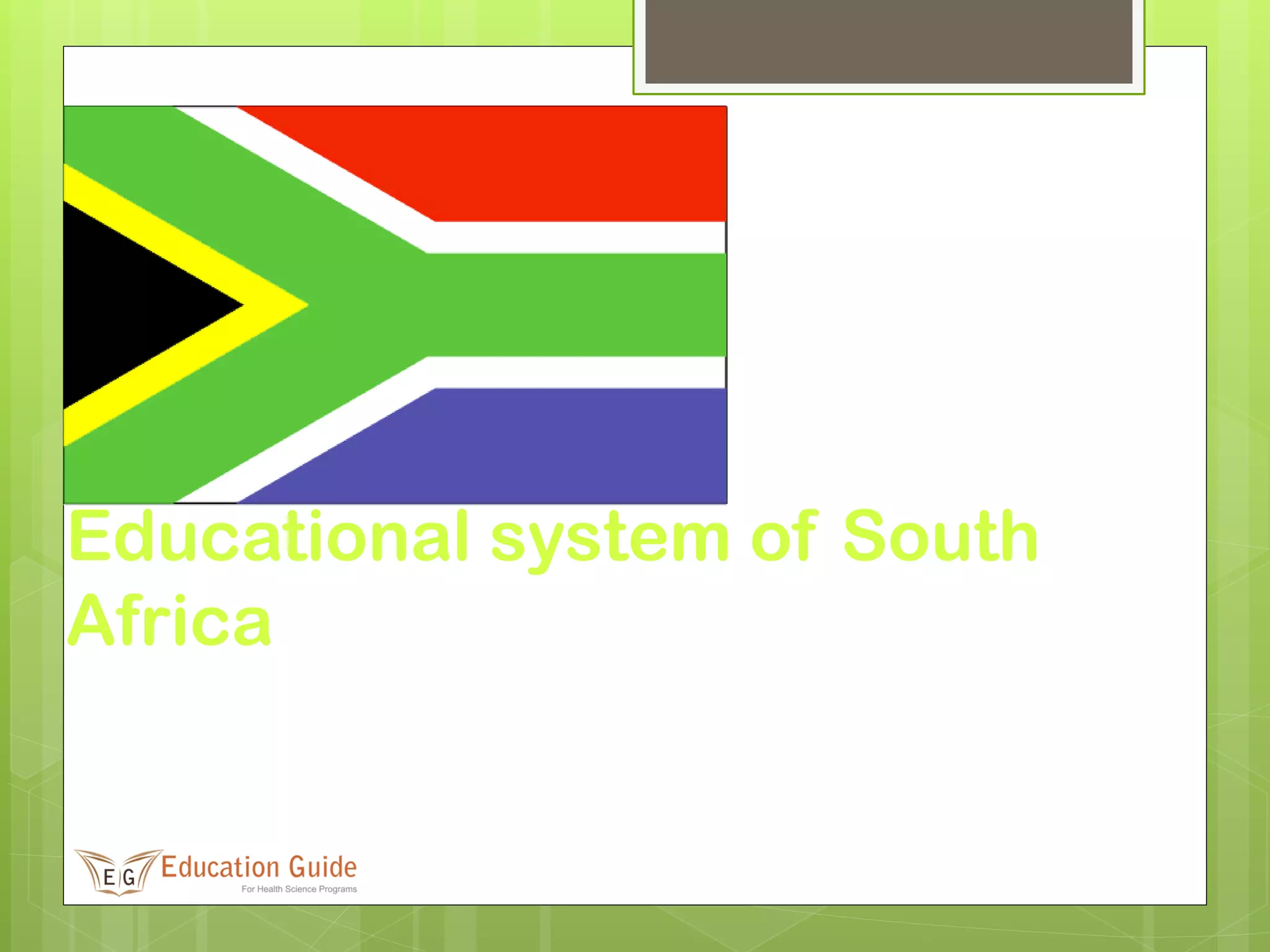
Educational system of South
Africa
 In South Africa, the constitution
guarantees equal access to basic
education.
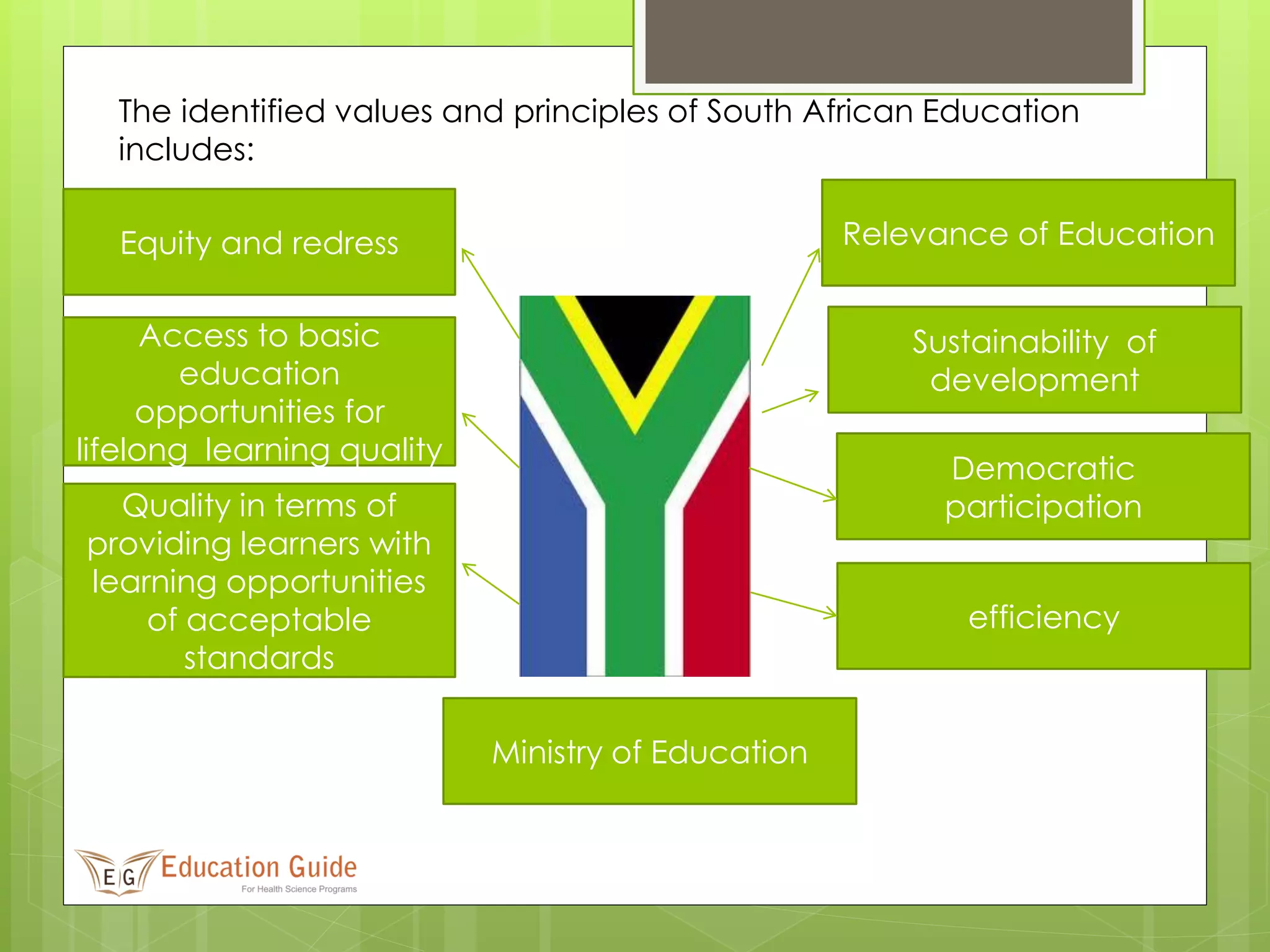
The identified values and principles of South African Education
includes:
Equity and redress
Ministry of Education
Access to basic
education
opportunities for
lifelong learning quality
Relevance of Education
Quality in terms of
providing learners with
learning opportunities
of acceptable
standards
efficiency
Democratic
participation
Sustainability of
development
Structure and organization in the
Basic Education System
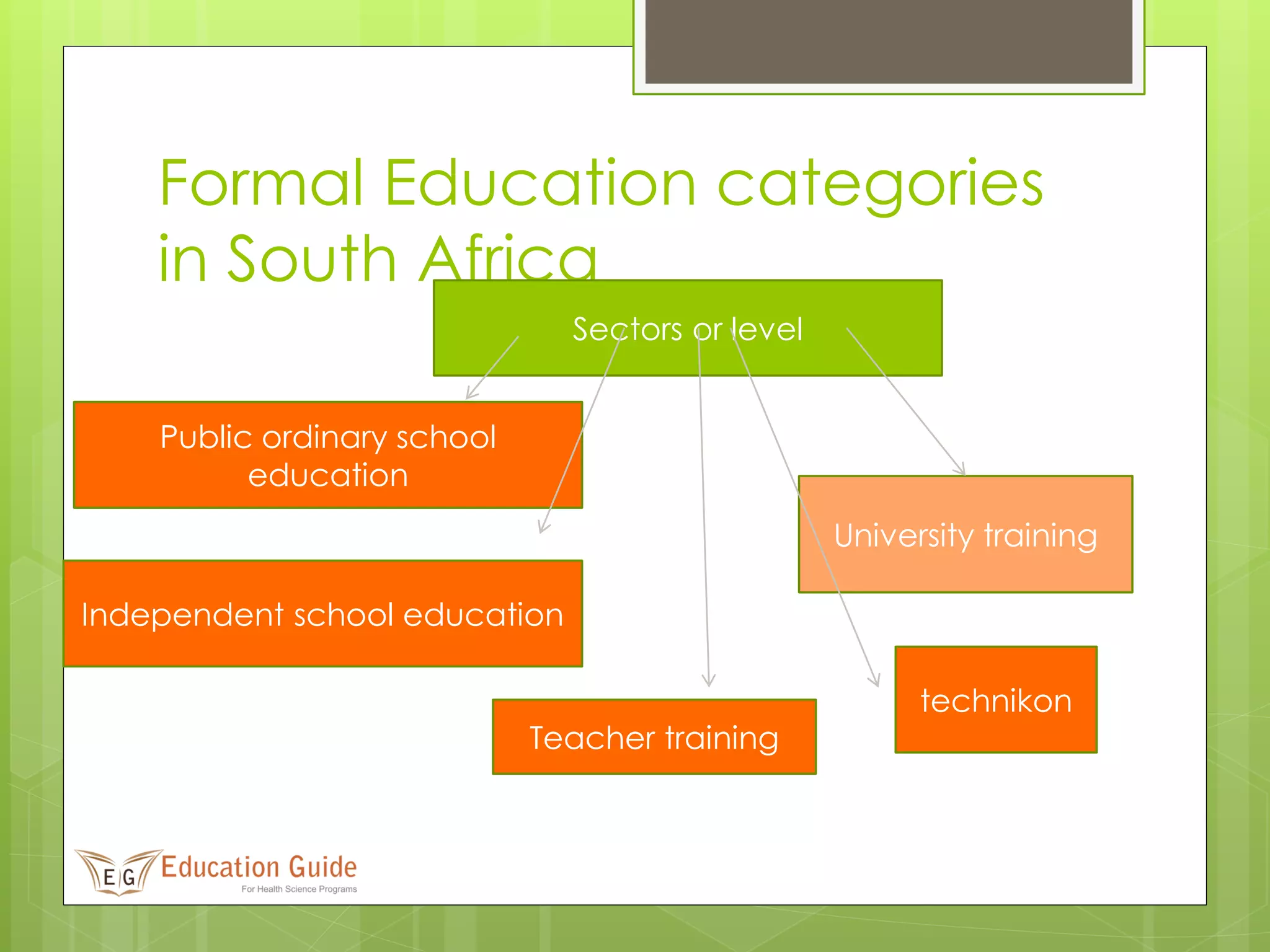
Formal Education categories
in South Africa
Sectors or level
Public ordinary school
education
Independent school education
Teacher training
technikon
University training
Public school
 Maybe an ordinary school or a public
school for learners with special education
needs.
 Levels are:
a. Pre-primary
b. Primary
c. Secondary
d. Higher education
Compulsory General
Education and Training
 Cover the reception years such as:
a. Grades R to Grades IX
The general education and Training
corresponds to the Level 1 of the
National qualifications fr
 Divided in three phases
1. Foundation phase (Grades R-III)
2. Intermediate (Grades IV-VI)
3. Senior Grades (Grades VII-IX)
Primary Education is divided
into categories
 Junior primary-(Grade I-III)
 Senior Primary (Grade IV-VI)
 Grade VII-IX is the last stage for
compulsory education and will lead to
General Education and Training
Certificate.
 Further Education And Training (FET) is not
compulsory (Grade X-XII). This will lead to
Senior Certificate.
 Technical schools offers technical
education which generally last for three
years are offered n technical centers,
high schools, and vocational schools.
8 leaning areas of FET
1. Language, Literacy and Communication
2. Mathematical literacy, Math and Math.
Sciences
3. Natural sciences
4. Technology
5. Human and Social Sciences
6. Economics And Management Science
7. Arts and Culture
8. Life Orientation
Higher Educational System
 Tertiary and higher education
corresponds to Level 5-8 of the National
Qualification Framework (NQF). Which is
more advance than Senior Certificate.
 Institutions of higher education includes
colleges, universities, and technikons.
 Most colleges of education offers 3 year
program leading to the Diploma in
Education (4 years or higher diploma).
 College of nursing and hospital schools
offers four year diploma courses for
nursing.
 Agricultural schools offer 1 year
certificate, 2 year for higher certificate
programs and 3 year diploma courses.
 Technikons offers bachelor and three
years of technical courses diploma in
technology.
 Master’s degrees (magister technologiae)
usually requires a minimum of 1 yr study, the
doctorate (Lauretus in Technology/ Doctor of
Technologiae) at least two years.
 A honours degree requires one additional
year of study.
 A master’s degree is obtained after one or
two year of study and the mininum time to
complete doctorate is two years.
 School year consist of 196 days (41 week)
 Other relevant sector of the educational
structure includes special education,
private education or independent
schools, adult and non-formal education
and HV/AIDS education.
Education system in south africa

Education system in south africa

  • 1.
  • 2.
    Objectives of thereport:  Identify/ characterize/ distinguish the different educational system of South Africa, United kingdom, and USA  Distinguish and compare it with the educational system of our country, specifically the BEC and k-12 curriculum, and:  Raise the awareness on the said matter for the future purpose it may serve
  • 3.
  • 4.
     In SouthAfrica, the constitution guarantees equal access to basic education.
  • 5.
    The identified valuesand principles of South African Education includes: Equity and redress Ministry of Education Access to basic education opportunities for lifelong learning quality Relevance of Education Quality in terms of providing learners with learning opportunities of acceptable standards efficiency Democratic participation Sustainability of development
  • 6.
    Structure and organizationin the Basic Education System
  • 7.
    Formal Education categories inSouth Africa Sectors or level Public ordinary school education Independent school education Teacher training technikon University training
  • 8.
    Public school  Maybean ordinary school or a public school for learners with special education needs.  Levels are: a. Pre-primary b. Primary c. Secondary d. Higher education
  • 9.
    Compulsory General Education andTraining  Cover the reception years such as: a. Grades R to Grades IX
  • 10.
    The general educationand Training corresponds to the Level 1 of the National qualifications fr  Divided in three phases 1. Foundation phase (Grades R-III) 2. Intermediate (Grades IV-VI) 3. Senior Grades (Grades VII-IX)
  • 11.
    Primary Education isdivided into categories  Junior primary-(Grade I-III)  Senior Primary (Grade IV-VI)  Grade VII-IX is the last stage for compulsory education and will lead to General Education and Training Certificate.  Further Education And Training (FET) is not compulsory (Grade X-XII). This will lead to Senior Certificate.
  • 12.
     Technical schoolsoffers technical education which generally last for three years are offered n technical centers, high schools, and vocational schools.
  • 13.
    8 leaning areasof FET 1. Language, Literacy and Communication 2. Mathematical literacy, Math and Math. Sciences 3. Natural sciences 4. Technology 5. Human and Social Sciences 6. Economics And Management Science 7. Arts and Culture 8. Life Orientation
  • 14.
    Higher Educational System Tertiary and higher education corresponds to Level 5-8 of the National Qualification Framework (NQF). Which is more advance than Senior Certificate.  Institutions of higher education includes colleges, universities, and technikons.  Most colleges of education offers 3 year program leading to the Diploma in Education (4 years or higher diploma).
  • 15.
     College ofnursing and hospital schools offers four year diploma courses for nursing.  Agricultural schools offer 1 year certificate, 2 year for higher certificate programs and 3 year diploma courses.  Technikons offers bachelor and three years of technical courses diploma in technology.
  • 16.
     Master’s degrees(magister technologiae) usually requires a minimum of 1 yr study, the doctorate (Lauretus in Technology/ Doctor of Technologiae) at least two years.  A honours degree requires one additional year of study.  A master’s degree is obtained after one or two year of study and the mininum time to complete doctorate is two years.
  • 17.
     School yearconsist of 196 days (41 week)  Other relevant sector of the educational structure includes special education, private education or independent schools, adult and non-formal education and HV/AIDS education.