EDUCATION IN THE
UNITED STATES
1. Nguyễn Việt Duy
2. Trần Thị Hồng Ngọc
3. Phan Thị Ỷ Lan
4. Lê Thuý Ngân
5. Võ Lê Như Ngọc
EDUCATION IN THE UNITED STATES
I. Public Schools

II. The Educational Ladder
III. Racial Equality and Education
IV. Attending an American University and
Educating the Individual
V. Multicultural Education in the US
I. Public School

Presenter: Nguyễn Việt Duy
I. Public School

Establishment

Responsibility
I. Public School
1.1 Establishment

Purpose:
to keep the basic
value: equality of
opportunity
I. Public School

Purpose:
Providing some tools for people to
improve their life
I. Public School
1.2 Responsibility

Children with divorced parents
I. Public School
1.2 Responsibility

Language
Immigrants
Differential in education
I. Public School

money
reduction
II. Educational Ladder
2.1 The educational system
2.2. Types of school
2.3 The inequality in the U.S. educational
system
2.4. Government’s solution

Presenter: Trần Thị Hồng Ngọc
II. Educational Ladder
2.1 The educational system
Elementary school

U.S. Educational
system

Middle school
High school
Post- secondary
education
Elementary school
Preschool

3-4

Pre-kindergarten

4-5

Kindergarten

5-6

1st Grade

6-7

2nd Grade

7-8

3rd Grade

8-9

4th Grade

9-10

5th Grade

10-11

Middle school
6th Grade

11-12

7th Grade

12-13

8th Grade

13-14

High School

9th Grade (Freshman)

14-15

10th Grade (Sophomore)

15-16

11th Grade (Junior)

16-17

12th Grade (Senior)

17-18
II. Educational Ladder
2.1 The educational system

Undergraduate
school

Two-year degree
(an associate
degree)

Four-year degree
(bachelor’s
degree)
II. Educational Ladder
2.1 The educational system


Students who have obtained a bachelor’s degree can
continue their education by pursuing the Master’s or
Doctoral degree.
II. Educational Ladder
2.2. Types of school
Public schools: getting their finance from local,
state, and federal government funds. (charter
school, magnet school, etc.)
 Private
schools: supported by a private
organization or private individuals rather than
by the government, getting their finance mostly
from tuition fee. (religious school, elite private
school, etc.)

II. Educational Ladder
2.2. Types of school
Public School
II. Educational Ladder
2.3. The inequality in the educational system
- The unequal distribution of wealth is directly
related to inequalities in education beginning at early
education.
II. Educational Ladder
2.3. The inequality in the educational system





Staff characteristics.
The education equipment.
The quality of education.
…
II. Educational Ladder
2.4. Government’s solution
It dramatically increases the role of
the
federal
government
in
guaranteeing the quality of public
education for all children in the United
States -- with an emphasis on
increased funding for poor school
districts, higher achievement for poor
and minority students, and new
measures to hold schools accountable
for their students' progress
III. Racial Equality and Education

Presenter: Phan Thị Ỷ Lan


III. Racial Equality and Education


After civil
war, blacks were
prevented from
attending white
schools according
to the social and
legal system in the
southern states.
III. Racial Equality and Education
• Despite of existance of non legal
segregated schools after 1954, it
worked effectively when the civil rights
Acts was in forced the mid -1960s
solutions

Black students were bused to majority white
schools and vice serva for the purpose of
balancing races in the school
Setting up a new type of school called “magnet”
in black neighborhood benefited students by
creating special programs.
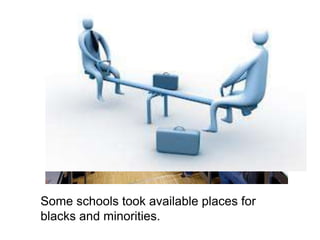
Some schools took available places for
blacks and minorities.
IV. Attending an American University
and Educating the Individual

 Presenter: Lê Thuý Ngân
IV. Attending an American University
and Educating the Individual
Yale University

Harvard University
University of Chicago

Princeton University
Attending an American University
Tuition &
buying book
expenses

Living
away
from
home

Financial
problems
for
students
Total cost (2010)


Public University
(4 years):
$27,967 (per year)



Private University
(4 years):
$40,476 (per year).
Part-time jobs
Financial aid programs
Distance learning
Educating the Individual


American schools tend to put more emphasis on
developing critical thinking skills.
 A large number of extracurricular activities
are added to daily life at school.
Athletics competitive
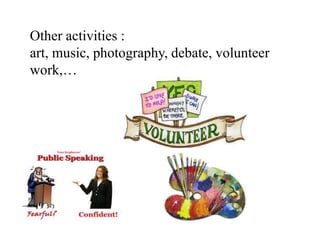
Other activities :
art, music, photography, debate, volunteer
work,…
V. Multicultural Education in the
U.S.

Presenter: Võ Lê Như Ngọc
V. Multicultural Education in the
U.S.
1

• Definition

2

• History

3

• Primary goals

4

• Teaching formula
V. Multicultural Education in the
U.S.
5.1. Definition
Multicultural education is the recognition of
the equality of all people regardless of their racial
ethnic or cultural background.

EQUALITY
racial ethnic
cultural background.
5.2. History




The
melting
pot
is
a
metaphor
for
a
heterogeneous
society
becoming
more homogeneous, the different elements "melting
together" into a harmonious whole with a common
culture. It is particularly used to describe
the assimilation of immigrants to the USA; the meltingtogether metaphor was in use by the 1780s.
After 1970 the desirability of assimilation and the
melting pot model was challenged by proponents
of multiculturalism, who assert that cultural differences
within society are valuable and should be
preserved, proposing the alternative metaphor of
the mosaic, salad bowl – different cultures mix, but
remain distinct.
5.2. History
What were schools like before multicultural education?
+ School curriculums were focused on white superiority.
+ Textbooks were about “white” history and all their
accomplishments.
+ Diversity was not part of the educational environment.
+There was a “policy of assimilating minority groups into
the melting pot of dominant American culture”
(Sobol, 1990).
+The educational system did not encourage and accept
the differences, similarities, and overall diversity that
many cultures bring to the United States.
5.2. History



Outgrowth in the 1960s during Civil Rights
Movement.



Curricula reform movement to reflect experiences,
histories, cultures and perspectives of African
Americans.
5.3. Primary Goals
Respect the
different
backgrounds of
others
Provide a fair
learning
environment

Recognize the
contributions of
all groups

Transform
educational
curriculum
5.3. Primary Goals
Fair learning
environment

transcend
cultural
border

get involved
in class

be free about
decision
making
5.4. Teaching Formula
Teachers should concentrate on the need of
including notions of:
+ Histories
+ Cultures
+Contributions of diverse groups while
teaching
=> Instill students with pride and confidence in
their unique and special backgrounds
5.4. Teaching Formula

=> Have positive effects on the
racial attitudes of students
5.4. Teaching Formula

equity
pedagogy
5.4. Teaching Formula

maintain its
diversity

retain its
fundamental
identity
THANKS FOR YOUR
ATTENTION!

Education in the US

  • 1.
    EDUCATION IN THE UNITEDSTATES 1. Nguyễn Việt Duy 2. Trần Thị Hồng Ngọc 3. Phan Thị Ỷ Lan 4. Lê Thuý Ngân 5. Võ Lê Như Ngọc
  • 2.
    EDUCATION IN THEUNITED STATES I. Public Schools II. The Educational Ladder III. Racial Equality and Education IV. Attending an American University and Educating the Individual V. Multicultural Education in the US
  • 3.
    I. Public School Presenter:Nguyễn Việt Duy
  • 4.
  • 5.
    I. Public School 1.1Establishment Purpose: to keep the basic value: equality of opportunity
  • 6.
    I. Public School Purpose: Providingsome tools for people to improve their life
  • 7.
    I. Public School 1.2Responsibility Children with divorced parents
  • 8.
    I. Public School 1.2Responsibility Language Immigrants Differential in education
  • 9.
  • 10.
    II. Educational Ladder 2.1The educational system 2.2. Types of school 2.3 The inequality in the U.S. educational system 2.4. Government’s solution Presenter: Trần Thị Hồng Ngọc
  • 11.
    II. Educational Ladder 2.1The educational system Elementary school U.S. Educational system Middle school High school Post- secondary education
  • 13.
    Elementary school Preschool 3-4 Pre-kindergarten 4-5 Kindergarten 5-6 1st Grade 6-7 2ndGrade 7-8 3rd Grade 8-9 4th Grade 9-10 5th Grade 10-11 Middle school 6th Grade 11-12 7th Grade 12-13 8th Grade 13-14 High School 9th Grade (Freshman) 14-15 10th Grade (Sophomore) 15-16 11th Grade (Junior) 16-17 12th Grade (Senior) 17-18
  • 14.
    II. Educational Ladder 2.1The educational system Undergraduate school Two-year degree (an associate degree) Four-year degree (bachelor’s degree)
  • 17.
    II. Educational Ladder 2.1The educational system  Students who have obtained a bachelor’s degree can continue their education by pursuing the Master’s or Doctoral degree.
  • 20.
    II. Educational Ladder 2.2.Types of school Public schools: getting their finance from local, state, and federal government funds. (charter school, magnet school, etc.)  Private schools: supported by a private organization or private individuals rather than by the government, getting their finance mostly from tuition fee. (religious school, elite private school, etc.) 
  • 21.
  • 22.
  • 24.
    II. Educational Ladder 2.3.The inequality in the educational system - The unequal distribution of wealth is directly related to inequalities in education beginning at early education.
  • 25.
    II. Educational Ladder 2.3.The inequality in the educational system     Staff characteristics. The education equipment. The quality of education. …
  • 26.
    II. Educational Ladder 2.4.Government’s solution It dramatically increases the role of the federal government in guaranteeing the quality of public education for all children in the United States -- with an emphasis on increased funding for poor school districts, higher achievement for poor and minority students, and new measures to hold schools accountable for their students' progress
  • 27.
    III. Racial Equalityand Education Presenter: Phan Thị Ỷ Lan 
  • 28.
    III. Racial Equalityand Education  After civil war, blacks were prevented from attending white schools according to the social and legal system in the southern states.
  • 29.
    III. Racial Equalityand Education • Despite of existance of non legal segregated schools after 1954, it worked effectively when the civil rights Acts was in forced the mid -1960s
  • 30.
    solutions Black students werebused to majority white schools and vice serva for the purpose of balancing races in the school
  • 31.
    Setting up anew type of school called “magnet” in black neighborhood benefited students by creating special programs.
  • 32.
    Some schools tookavailable places for blacks and minorities.
  • 34.
    IV. Attending anAmerican University and Educating the Individual  Presenter: Lê Thuý Ngân
  • 36.
    IV. Attending anAmerican University and Educating the Individual Yale University Harvard University
  • 37.
  • 38.
    Attending an AmericanUniversity Tuition & buying book expenses Living away from home Financial problems for students
  • 40.
    Total cost (2010)  PublicUniversity (4 years): $27,967 (per year)  Private University (4 years): $40,476 (per year).
  • 41.
  • 42.
  • 43.
  • 44.
    Educating the Individual  Americanschools tend to put more emphasis on developing critical thinking skills.
  • 45.
     A largenumber of extracurricular activities are added to daily life at school. Athletics competitive
  • 48.
    Other activities : art,music, photography, debate, volunteer work,…
  • 49.
    V. Multicultural Educationin the U.S. Presenter: Võ Lê Như Ngọc
  • 50.
    V. Multicultural Educationin the U.S. 1 • Definition 2 • History 3 • Primary goals 4 • Teaching formula
  • 51.
    V. Multicultural Educationin the U.S. 5.1. Definition Multicultural education is the recognition of the equality of all people regardless of their racial ethnic or cultural background. EQUALITY racial ethnic cultural background.
  • 52.
    5.2. History   The melting pot is a metaphor for a heterogeneous society becoming more homogeneous,the different elements "melting together" into a harmonious whole with a common culture. It is particularly used to describe the assimilation of immigrants to the USA; the meltingtogether metaphor was in use by the 1780s. After 1970 the desirability of assimilation and the melting pot model was challenged by proponents of multiculturalism, who assert that cultural differences within society are valuable and should be preserved, proposing the alternative metaphor of the mosaic, salad bowl – different cultures mix, but remain distinct.
  • 53.
    5.2. History What wereschools like before multicultural education? + School curriculums were focused on white superiority. + Textbooks were about “white” history and all their accomplishments. + Diversity was not part of the educational environment. +There was a “policy of assimilating minority groups into the melting pot of dominant American culture” (Sobol, 1990). +The educational system did not encourage and accept the differences, similarities, and overall diversity that many cultures bring to the United States.
  • 54.
    5.2. History  Outgrowth inthe 1960s during Civil Rights Movement.  Curricula reform movement to reflect experiences, histories, cultures and perspectives of African Americans.
  • 55.
    5.3. Primary Goals Respectthe different backgrounds of others Provide a fair learning environment Recognize the contributions of all groups Transform educational curriculum
  • 56.
    5.3. Primary Goals Fairlearning environment transcend cultural border get involved in class be free about decision making
  • 57.
    5.4. Teaching Formula Teachersshould concentrate on the need of including notions of: + Histories + Cultures +Contributions of diverse groups while teaching => Instill students with pride and confidence in their unique and special backgrounds
  • 58.
    5.4. Teaching Formula =>Have positive effects on the racial attitudes of students
  • 59.
  • 60.
    5.4. Teaching Formula maintainits diversity retain its fundamental identity
  • 62.