Use of Computer Simulations
  and Gaming to Enhance
         Learning

                     ED480 Educational Technology
                                    John Jenkins

                                                Alvin Borja

  Northern Marianas College - School of Education – SPRING 2012
Computer Simulation
• The technique of representing the
  real world by a computer program;
  "a simulation should imitate the
  internal processes and not merely
  the results of the thing being
  simulated“
• Simulation allows people to
  experience something without
  actually being there physically.
        http://www.thefreedictionary.com/computer+simulation
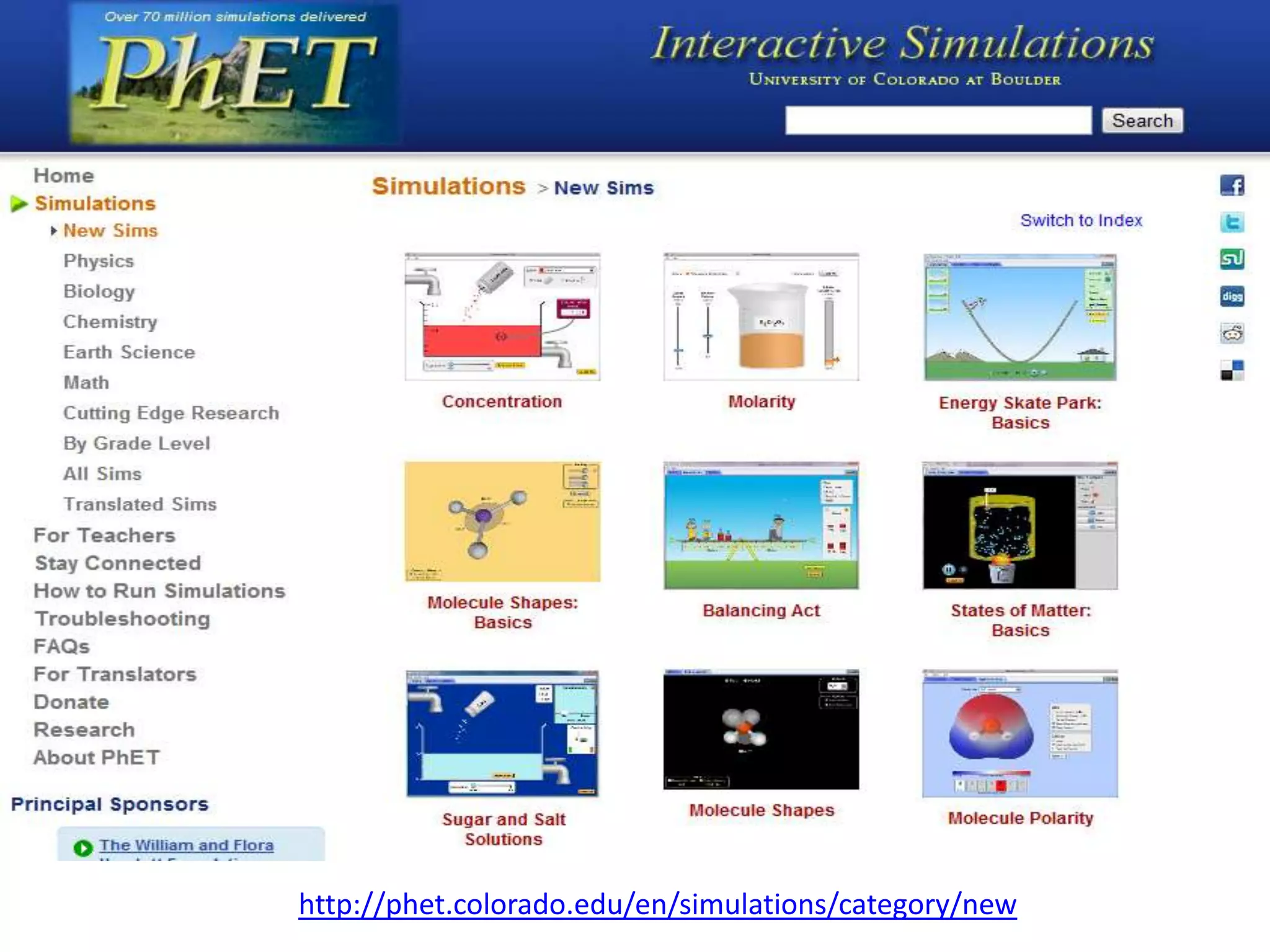
http://phet.colorado.edu/en/simulations/category/new
Interactive Games

• Activities that entertain and teaches
  the player a lesson or subject.

• Games can be used to teach a concept
  and assess what is being learned.

• Also stimulate users and encourages
  the development of social and
  cognitive skills.
Interactive Games
• Games have six key structural elements
  which strongly engage the play. These
  elements are:

  – Rules
  – Goals and objectives
  – Outcomes and feedback
  – Conflict/competition/challenge/opposition
  – Interaction
  – Representation or story
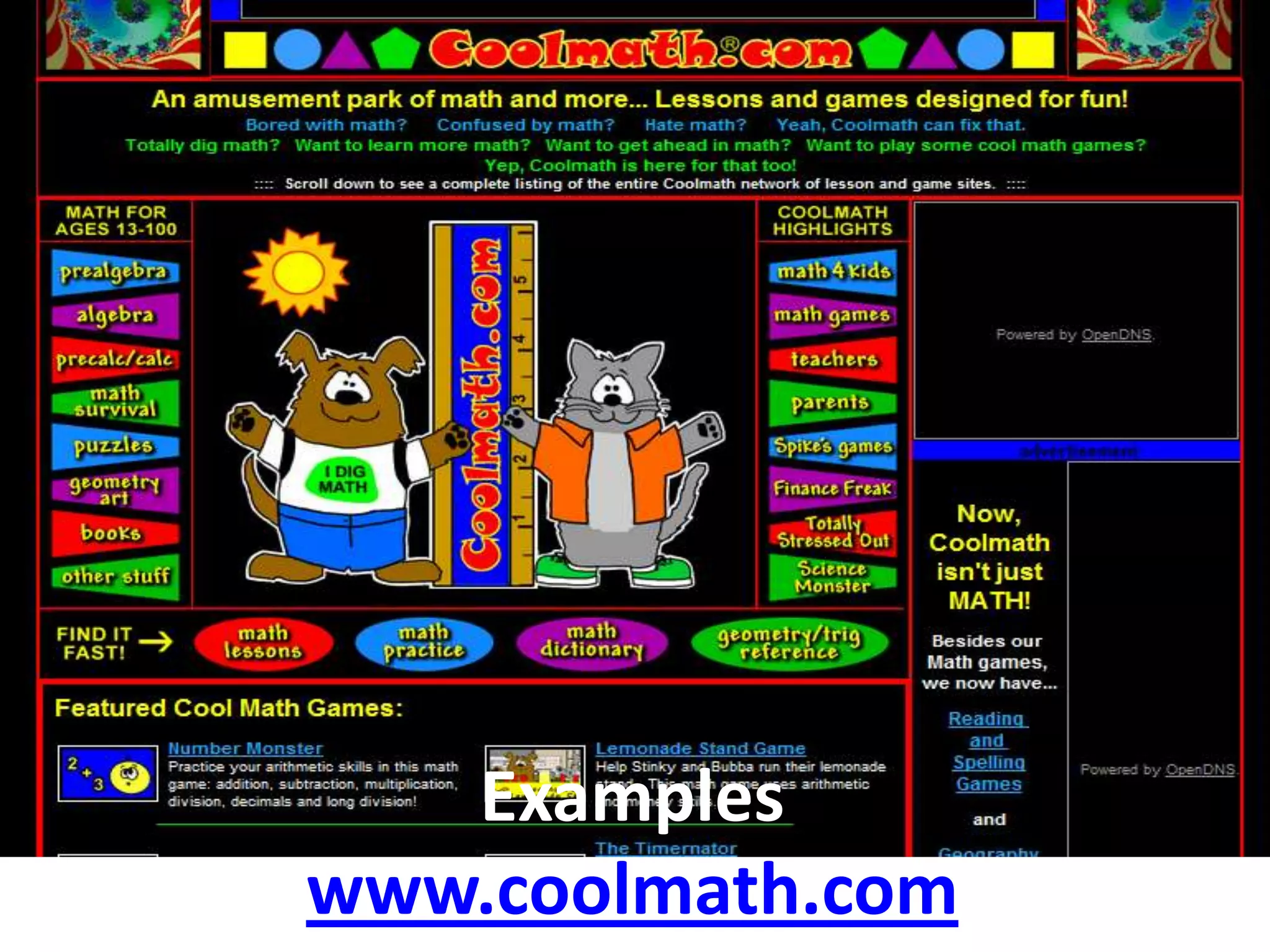
Examples
www.coolmath.com
Conclusion
• Some games and simulations allow
  students to explore and create materials
  that they could not work directly with in
  real life .

• Student become more engaged when they
  face a challenge that they feel they can
  meet. Students also benefit from computer
  simulations and games that become
  progressively more complex and difficult.
Reference:
• http://www.m-
  learning.org/docs/The%20use%20of%20c
  omputer%20and%20video%20games%20f
  or%20learning.pdf
• http://www.thefreedictionary.com/comp
  uter+simulation
• www.coolmath.com
• http://phet.colorado.edu/en/simulations/
  category/new

Ed480 use of computer simulations and gaming to enhance learning

  • 1.
    Use of ComputerSimulations and Gaming to Enhance Learning ED480 Educational Technology John Jenkins Alvin Borja Northern Marianas College - School of Education – SPRING 2012
  • 2.
    Computer Simulation • Thetechnique of representing the real world by a computer program; "a simulation should imitate the internal processes and not merely the results of the thing being simulated“ • Simulation allows people to experience something without actually being there physically. http://www.thefreedictionary.com/computer+simulation
  • 3.
  • 4.
    Interactive Games • Activitiesthat entertain and teaches the player a lesson or subject. • Games can be used to teach a concept and assess what is being learned. • Also stimulate users and encourages the development of social and cognitive skills.
  • 5.
    Interactive Games • Gameshave six key structural elements which strongly engage the play. These elements are: – Rules – Goals and objectives – Outcomes and feedback – Conflict/competition/challenge/opposition – Interaction – Representation or story
  • 6.
  • 7.
    Conclusion • Some gamesand simulations allow students to explore and create materials that they could not work directly with in real life . • Student become more engaged when they face a challenge that they feel they can meet. Students also benefit from computer simulations and games that become progressively more complex and difficult.
  • 8.
    Reference: • http://www.m- learning.org/docs/The%20use%20of%20c omputer%20and%20video%20games%20f or%20learning.pdf • http://www.thefreedictionary.com/comp uter+simulation • www.coolmath.com • http://phet.colorado.edu/en/simulations/ category/new

Editor's Notes

  • #3 http://www.m-learning.org/docs/The%20use%20of%20computer%20and%20video%20games%20for%20learning.pdf