The use of simulation and gaming to enhance learning Presented by: Soledad B. Camacho November 6, 2008 ED Tech-Mr. Jenkins
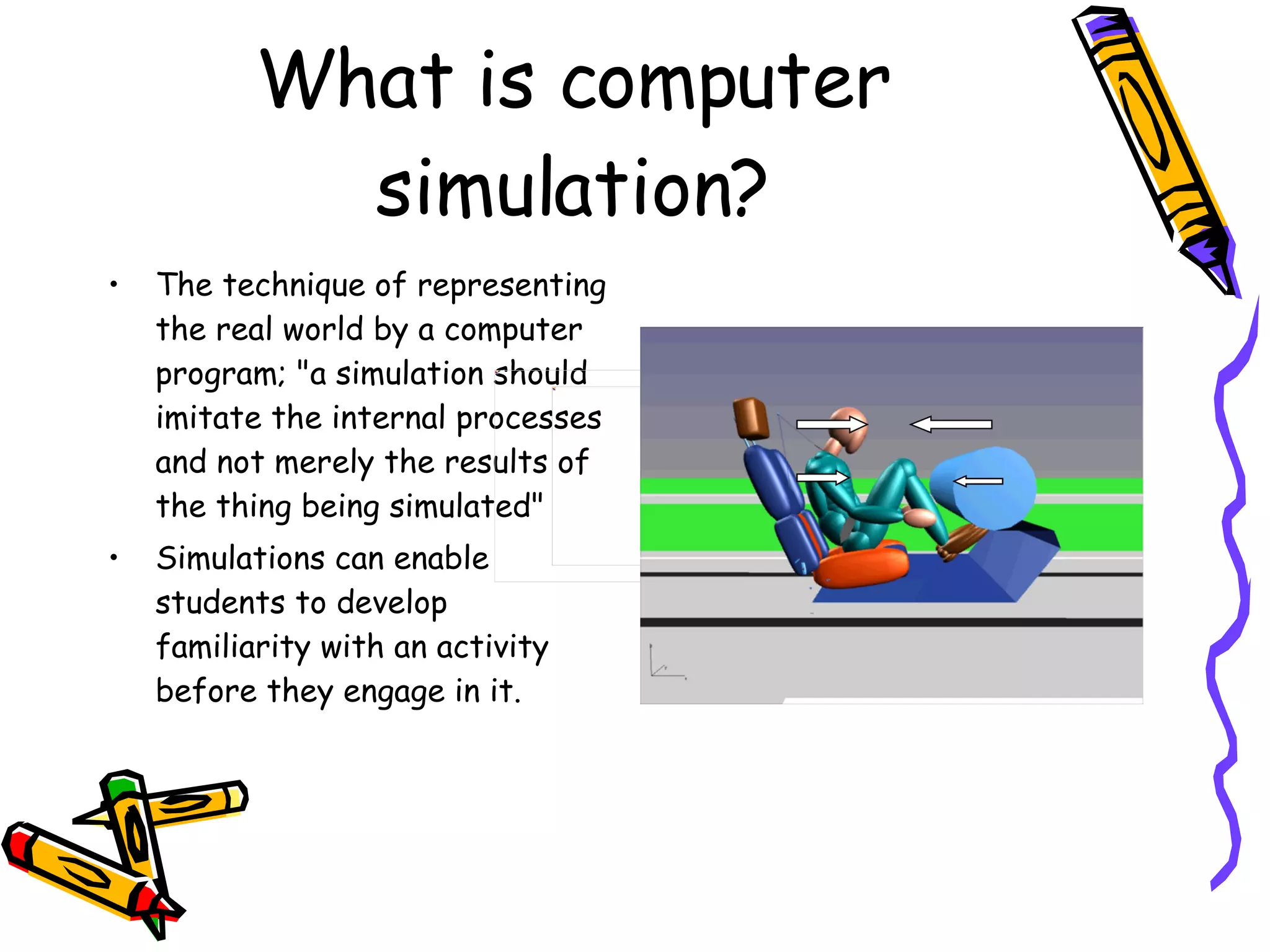
What is computer simulation? The technique of representing the real world by a computer program; "a simulation should imitate the internal processes and not merely the results of the thing being simulated"  Simulations can enable students to develop familiarity with an activity before they engage in it.
Characteristics of simulation: MindMeister http://www.mindmeister.com/11728941
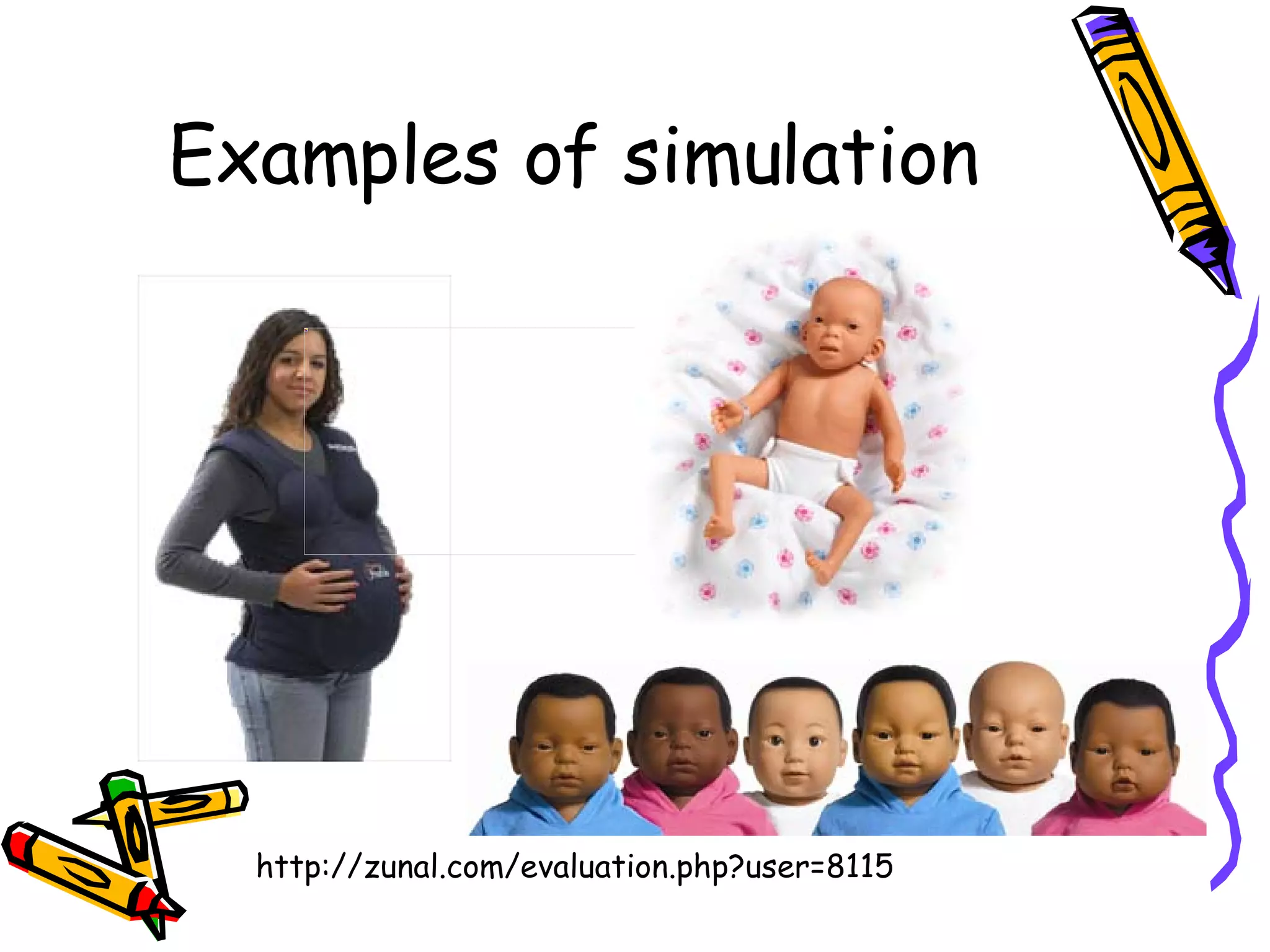
Examples of simulation http://zunal.com/evaluation.php?user=8115
Educational Games An activity that provides entertainment and teaches you a subject.  Apply subject matter
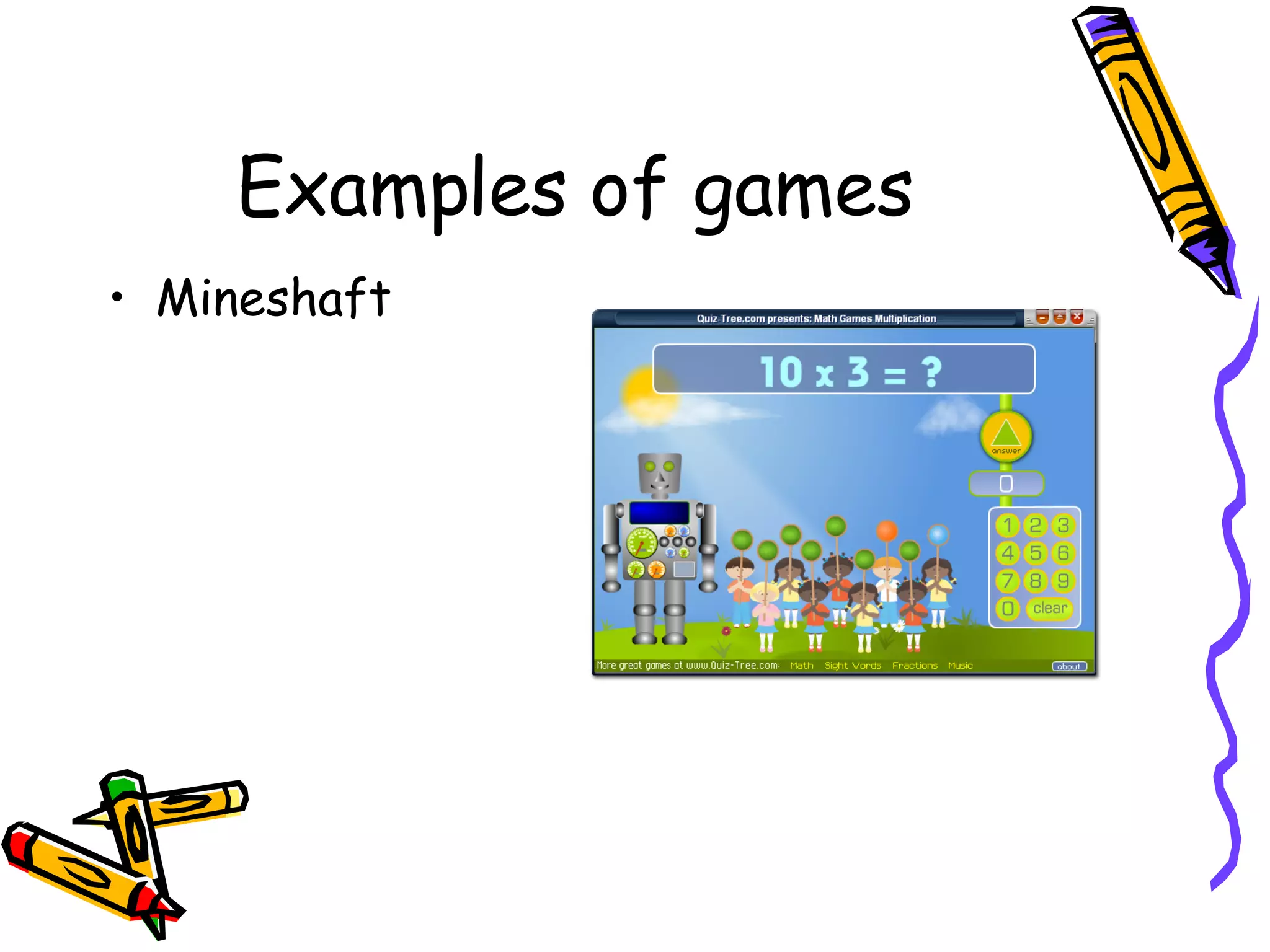
Examples of games Mineshaft
Essential design criteria for Educational Games 1.) Winning should be based on knowledge or skills, not randon factors 2.) The game should address important content, not trivia. 3.) The dynamics of the game should be easy to understand and interesting for the players but not obstruct or distort learning. 4.) Students should not lose points for wrong answers. 5.) Games should not be zero-sum exercises.
Brief history of games and simulation for education purposes: War Games Military planning of major world powers Political-military simulations Business and medical education **Timeline link: http://mnemograph.com/app/index_ie.php
Conclusion Some games and simulations allow students to explore and create materials that they could not work directly with in real life . View examples of how simulation and games enhance learning. http://www.froguts.com/flash_content/index.html#pins
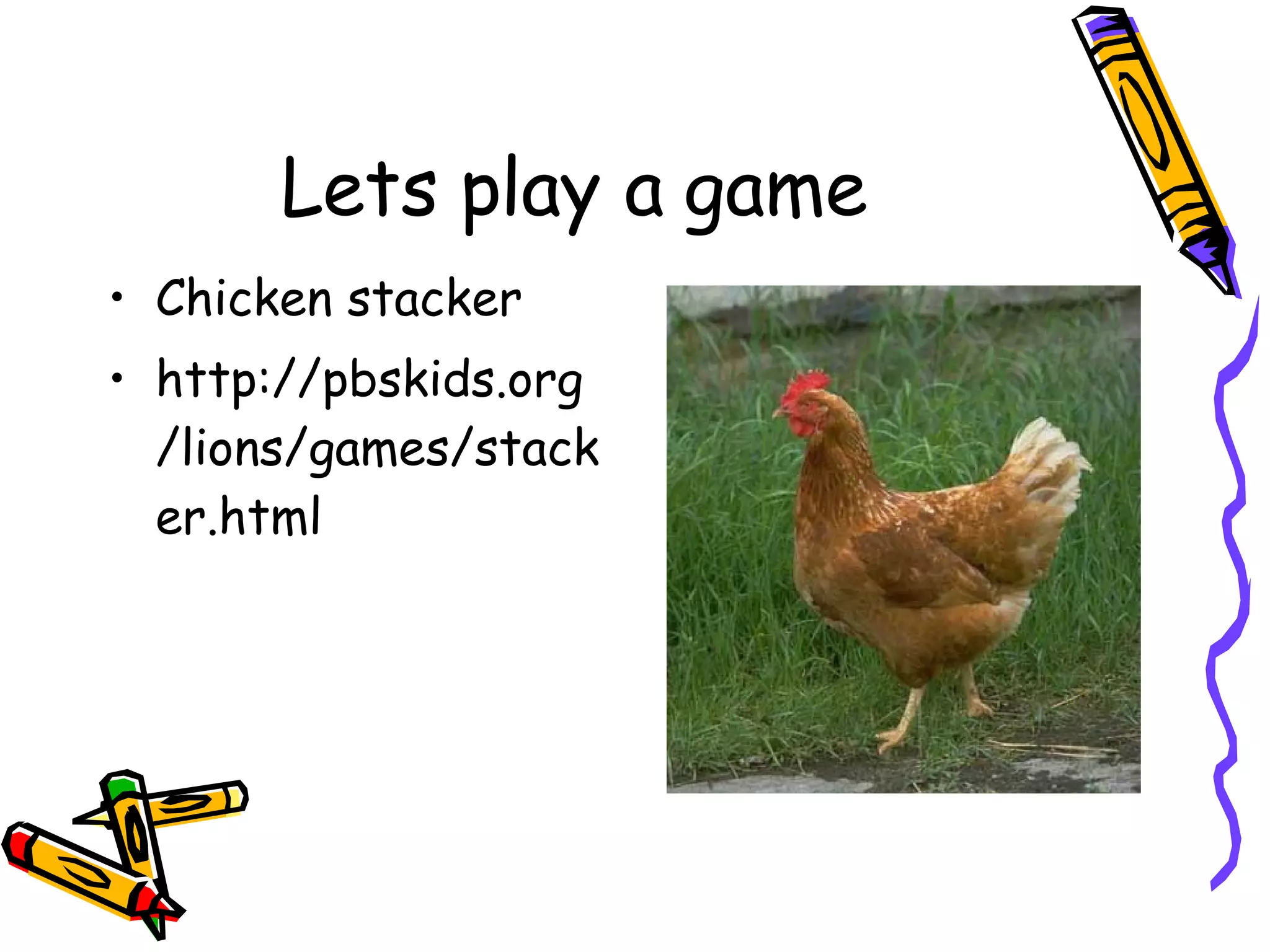
Lets see simulation http://www.froguts.com/flash_content/index.html#pins
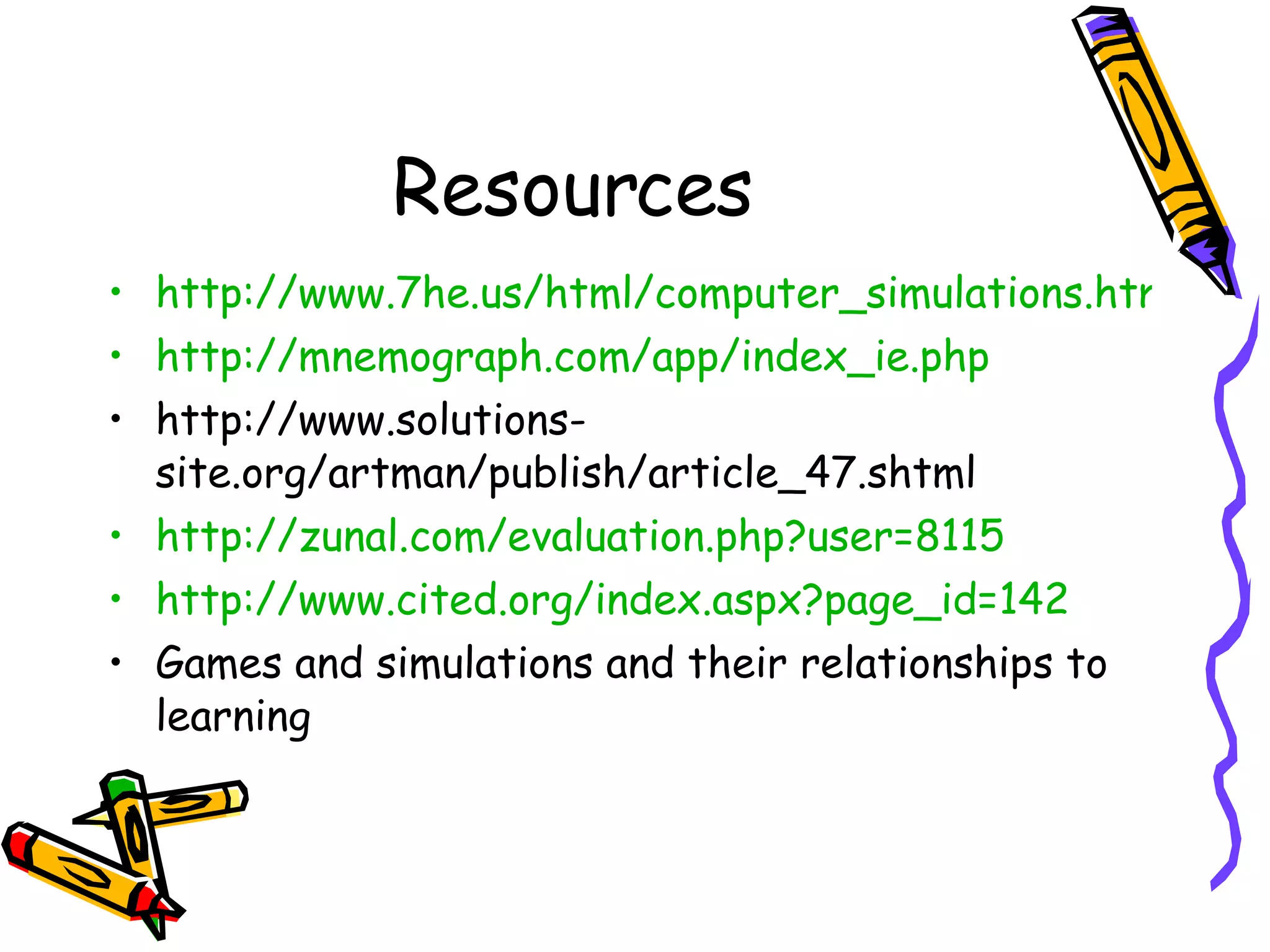
Lets play a game Chicken stacker http://pbskids.org/lions/games/stacker.html
Resources http://www.7he.us/html/computer_simulations.html http://mnemograph.com/app/index_ie.php http://www.solutions-site.org/artman/publish/article_47.shtml http://zunal.com/evaluation.php?user=8115 http://www.cited.org/index.aspx?page_id=142 Games and simulations and their relationships to learning

The Use Of Computer Simulation And Gaming To

  • 1.
    The use ofsimulation and gaming to enhance learning Presented by: Soledad B. Camacho November 6, 2008 ED Tech-Mr. Jenkins
  • 2.
    What is computersimulation? The technique of representing the real world by a computer program; "a simulation should imitate the internal processes and not merely the results of the thing being simulated" Simulations can enable students to develop familiarity with an activity before they engage in it.
  • 3.
    Characteristics of simulation:MindMeister http://www.mindmeister.com/11728941
  • 4.
    Examples of simulationhttp://zunal.com/evaluation.php?user=8115
  • 5.
    Educational Games Anactivity that provides entertainment and teaches you a subject. Apply subject matter
  • 6.
  • 7.
    Essential design criteriafor Educational Games 1.) Winning should be based on knowledge or skills, not randon factors 2.) The game should address important content, not trivia. 3.) The dynamics of the game should be easy to understand and interesting for the players but not obstruct or distort learning. 4.) Students should not lose points for wrong answers. 5.) Games should not be zero-sum exercises.
  • 8.
    Brief history ofgames and simulation for education purposes: War Games Military planning of major world powers Political-military simulations Business and medical education **Timeline link: http://mnemograph.com/app/index_ie.php
  • 9.
    Conclusion Some gamesand simulations allow students to explore and create materials that they could not work directly with in real life . View examples of how simulation and games enhance learning. http://www.froguts.com/flash_content/index.html#pins
  • 10.
    Lets see simulationhttp://www.froguts.com/flash_content/index.html#pins
  • 11.
    Lets play agame Chicken stacker http://pbskids.org/lions/games/stacker.html
  • 12.
    Resources http://www.7he.us/html/computer_simulations.html http://mnemograph.com/app/index_ie.phphttp://www.solutions-site.org/artman/publish/article_47.shtml http://zunal.com/evaluation.php?user=8115 http://www.cited.org/index.aspx?page_id=142 Games and simulations and their relationships to learning