ECZEMAS
“All eczemas are dermatitis, but not all dermatitis are eczemas.”
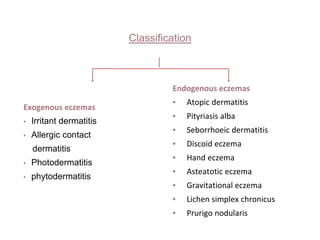
Classification
Exogenous eczemas
▪ Irritant dermatitis
▪ Allergic contact
dermatitis
▪ Photodermatitis
▪ phytodermatitis
Endogenous eczemas
▪ Atopic dermatitis
▪ Pityriasis alba
▪ Seborrhoeic dermatitis
▪ Discoid eczema
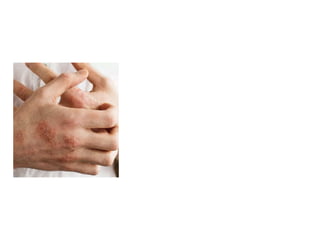
▪ Hand eczema
▪ Asteatotic eczema
▪ Gravitational eczema
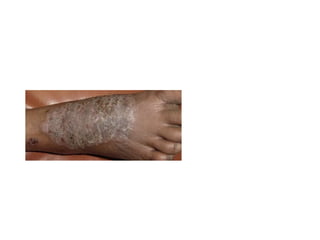
▪ Lichen simplex chronicus
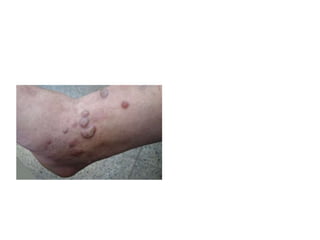
▪ Prurigo nodularis
Clinical stages
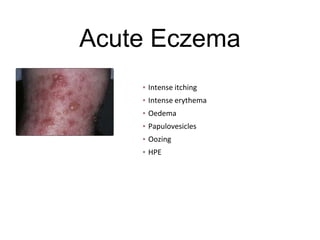
Acute Eczema
▪ Intense itching
▪ Intense erythema
▪ Oedema
▪ Papulovesicles
▪ Oozing
▪ HPE
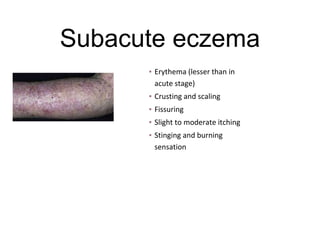
Subacute eczema
▪ Erythema (lesser than in
acute stage)
▪ Crusting and scaling
▪ Fissuring
▪ Slight to moderate itching
▪ Stinging and burning
sensation
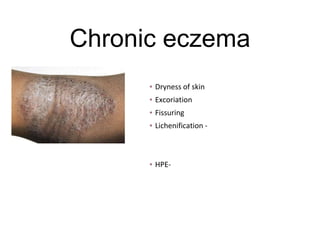
Chronic eczema
▪ Dryness of skin
▪ Excoriation
▪ Fissuring
▪ Lichenification -
▪ HPE-
Exogenous Eczemas
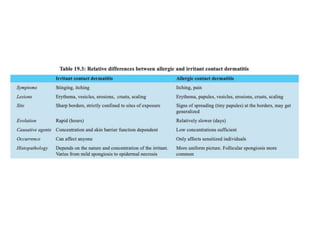
Irritant Contact Dermatitis
▪ Non-immunologic inflammatory reaction of the skin
▪ due to an external agent.
▪ non sensitized
• Types:
• Symptomatic responses:-chloroform, methanol
• Burns: Acid, Alkali
• ICD- acute/chronic
• Acute Irritant Dermatitis:
• nature of substance
• amount of substance
• acid, alkali, solvents
• erythema, edema, vesiculation, pruritus, tenderness
• occupational in nature
• Chronic Irritant Dermatitis:
• patient characteristics + nature of substance
• detergents- housewife dermatitis
• oil mechanics-cutting oil
Paedrous Dermatitis
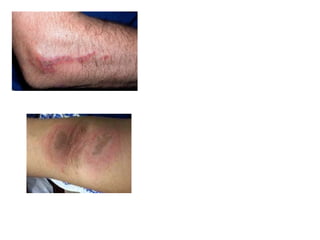
• Dermatitis linearise/ whiplash dermatitis
• organism:
• irritant:
• Season:
• overnight onset
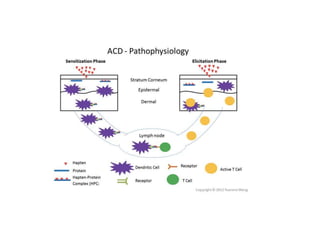
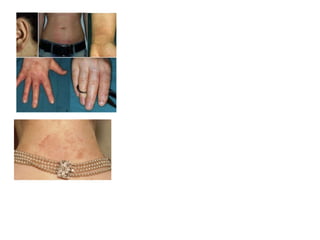
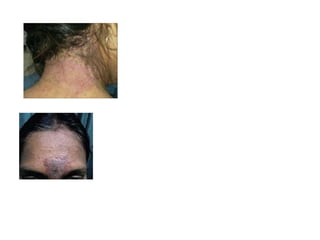
Allergic Contact Dermatitis
• immunological-type IV
• Clinical Features:
• Acute
• Chronic
• Allergens:
• metals
• cosmetics
• medicines
• clothings
• Cosmetics:
• fragrances and preservatives
• lipsticks
• hair gels
• nail polish
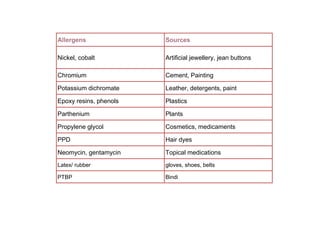
Allergens Sources
Nickel, cobalt Artificial jewellery, jean buttons
Chromium Cement, Painting
Potassium dichromate Leather, detergents, paint
Epoxy resins, phenols Plastics
Parthenium Plants
Propylene glycol Cosmetics, medicaments
PPD Hair dyes
Neomycin, gentamycin Topical medications
Latex/ rubber gloves, shoes, belts
PTBP Bindi
• MC metal allergen:
• MC allergen in India:
• MC topical medicine causing ACD:
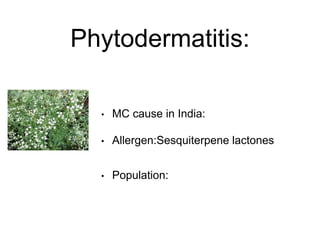
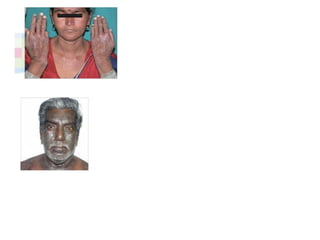
Phytodermatitis:
• MC cause in India:
• Allergen:Sesquiterpene lactones
• Population:
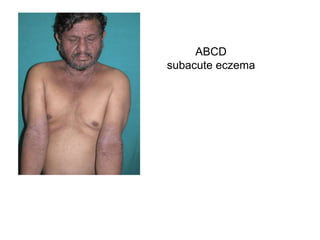
ABCD
subacute eczema
• Course:
• Chronic relapsing
• more in summers and monsoons
• Treatment:
• Occupation change, reduce exposure
• CS, AZA
Systemic contact dermatitis:
•PENICILLIN
•STREPTOMYCIN
•NEOMYCIN
•NICKEL
Photodermatitis:
• phytotoxic
• photoallergic
• PMLE
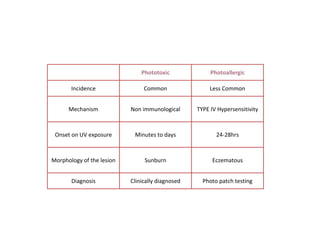
Phototoxic Photoallergic
Incidence Common Less Common
Mechanism Non immunological TYPE IV Hypersensitivity
Onset on UV exposure Minutes to days 24-28hrs
Morphology of the lesion Sunburn Eczematous
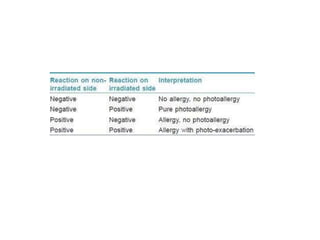
Diagnosis Clinically diagnosed Photo patch testing
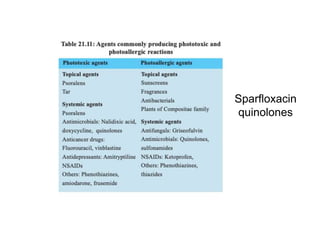
Sparfloxacin
quinolones
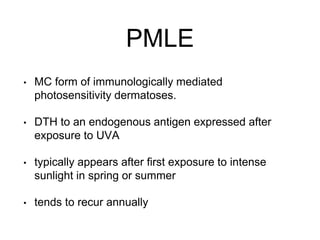
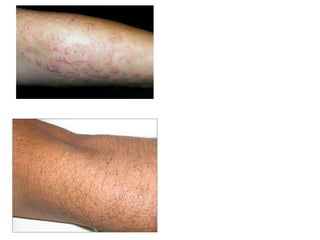
PMLE
• MC form of immunologically mediated
photosensitivity dermatoses.
• DTH to an endogenous antigen expressed after
exposure to UVA
• typically appears after first exposure to intense
sunlight in spring or summer
• tends to recur annually
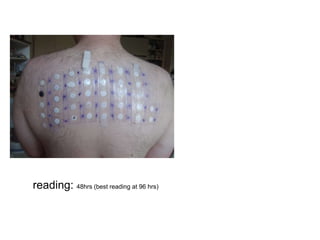
Patch Test:
• Principle:
• HS:
• Indications:
• site
reading: 48hrs (best reading at 96 hrs)
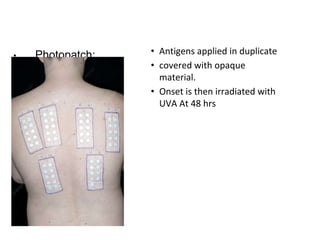
• Photopatch: • Antigens applied in duplicate
• covered with opaque
material.
• Onset is then irradiated with
UVA At 48 hrs
• Management:
• avoid irritants
• topical steroids
• oral steroids
• AZA , cyclosporine
• No retinoids
ENDOGENOUS
ECZEMA
Atopic Dermatitis
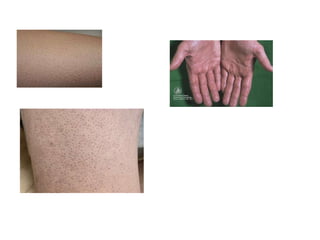
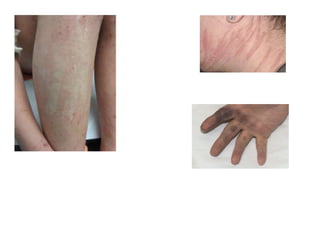
• Definition: itchy, chronic or chronically relapsing
inflammatory skin condition
• Itch That Rashes/ itch is a disease
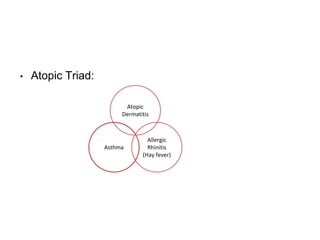
• Atopic Triad:
Asthma
Allergic
Rhinitis
(Hay fever)
Atopic
Dermatitis
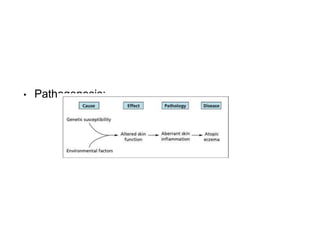
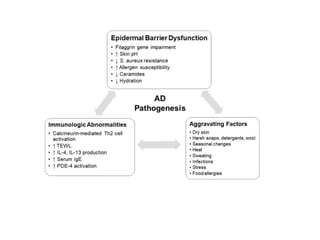
• Pathogenesis:
• Defective Barrier:
• defect in fillagrin and locirin
• decrease ceramides/lipids
• increased TEWL
• Genetic Factors:
• FLG gene
• immune genes- IL4, IL13
• Immunological Factors:
• TH2
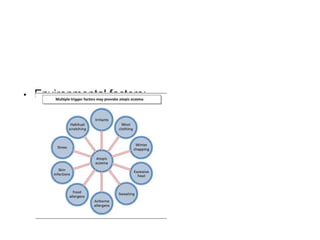
• Environmental factors:
• Hygiene Hypothesis:
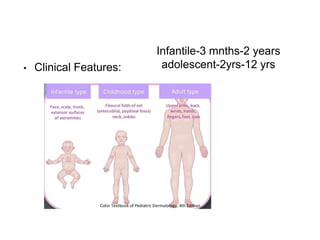
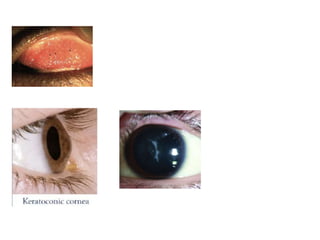
• Clinical Features:
Infantile-3 mnths-2 years
adolescent-2yrs-12 yrs
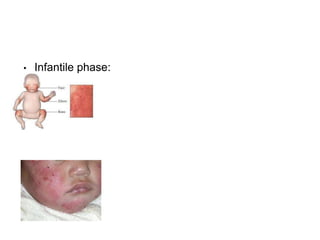
• Infantile phase:
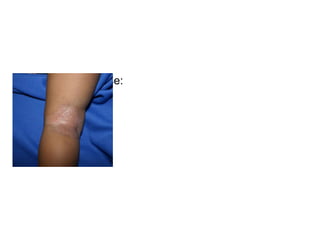
• Childhood Phase:
• Adult Phase:
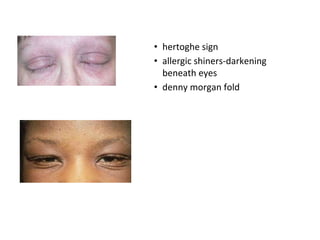
• hertoghe sign
• allergic shiners-darkening
beneath eyes
• denny morgan fold
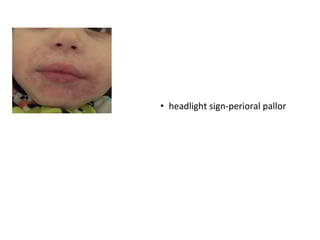
• headlight sign-perioral pallor
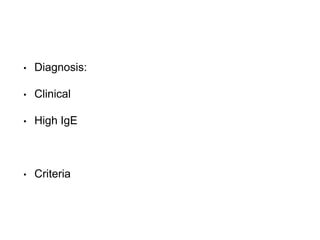
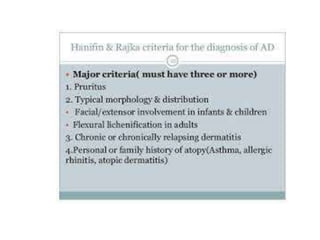
• Diagnosis:
• Clinical
• High IgE
• Criteria
• Management:
• Remove triggers
• Hydration
• Pharmacological treatment
• 1st line:
• Control of flare factors
• Topicals
• systemic
• Second line:I
• Intensive topical therapy- step up to potent steroid
▪ Wet wrap technique
▪ Allergy management
• Third line:
▪ Phototherapy
▪ Oral immunosuppresants
• Cyclosporine
• Azathriopine
• Thymopentine
• α- Interferon
▪ Desensitization
• Newer agents:
• CRISABOLE-PDE 4 INHIBITOR-TOPICAL
• DUPILUMAB: interleukin-4 (IL-4) receptor alpha
antagonist- Systemic
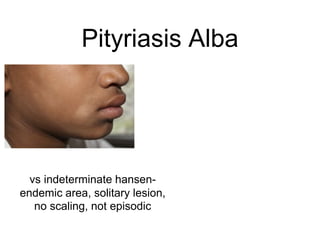
Pityriasis Alba
vs indeterminate hansen-
endemic area, solitary lesion,
no scaling, not episodic
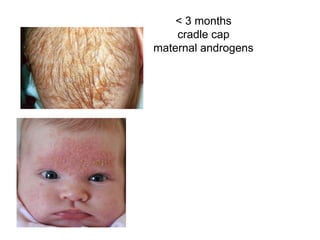
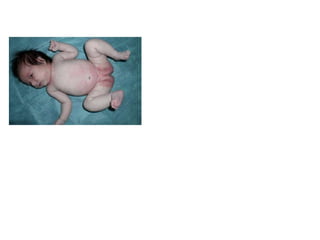
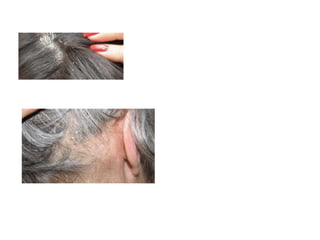
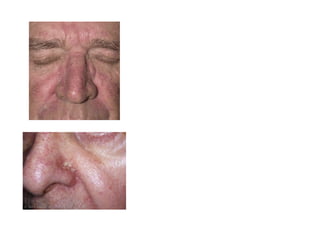
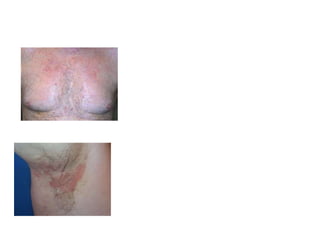
Seborrheic Dermatitis
• chronic, inflammatory papulosquamous disease
• Organism:malassezia
• Age: infants, adolescents, adults
• Pathogenesis: increased sebum
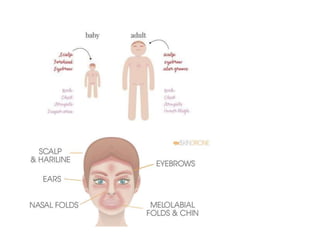
• Other Associated Disorders: Parkinson’s , HIV
• Sites:
< 3 months
cradle cap
maternal androgens
• Management:
• no oil
• Medicated shampoos : selenium sulphide or ketaconazole,
ciclopirox olamine, tar and salicylic lotions.
• Mild topical steroid or antifungals
• antifungals
• antihistamines
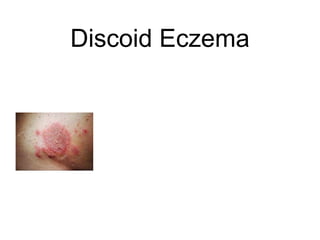
Discoid Eczema
Hand Eczema
• endogenous or exogenous
• ACD
• ICD
• focal peeling
• hyperkeratotic
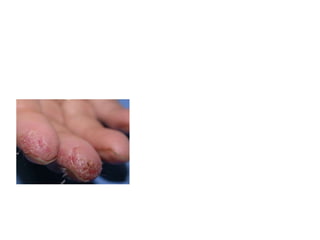
• pompholyx
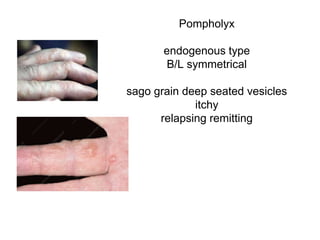
Pompholyx
endogenous type
B/L symmetrical
sago grain deep seated vesicles
itchy
relapsing remitting
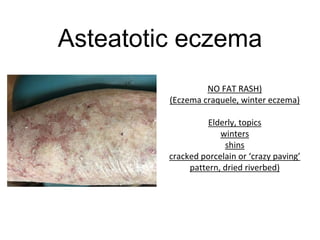
Asteatotic eczema
NO FAT RASH)
(Eczema craquele, winter eczema)
Elderly, topics
winters
shins
cracked porcelain or ‘crazy paving’
pattern, dried riverbed)
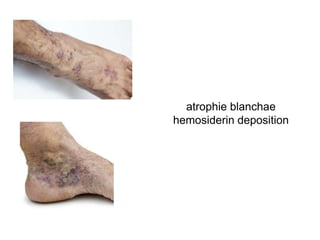
Venous Eczema
• Gravitational/ stasis eczema
• varicose veins
• medial end of limbs
atrophie blanchae
hemosiderin deposition
Neurodermatitis
eczema.pptx
eczema.pptx
eczema.pptx

eczema.pptx