A Science Presentation
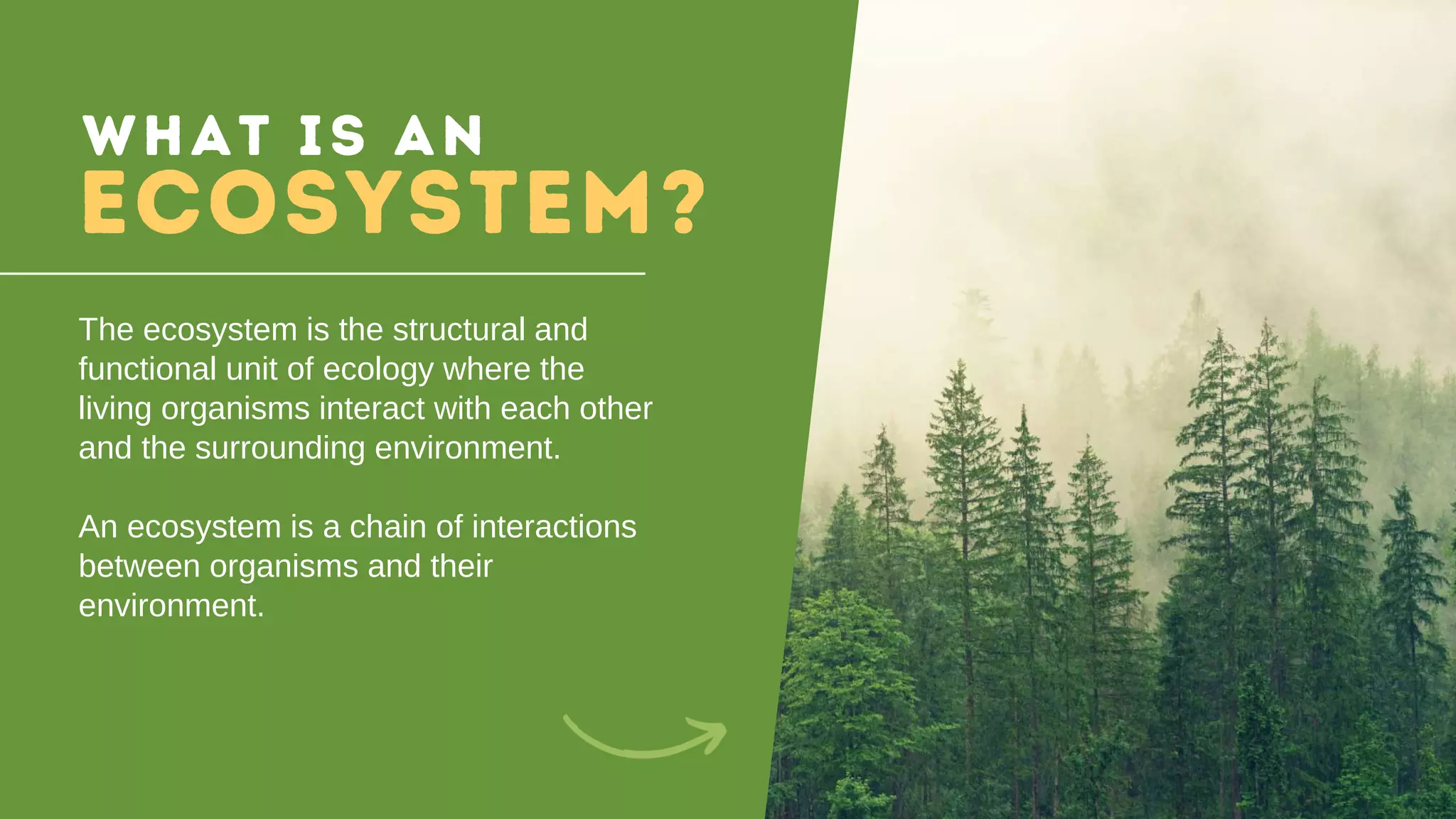
The ecosystem is the structural and
functional unit of ecology where the
living organisms interact with each other
and the surrounding environment.
An ecosystem is a chain of interactions
between organisms and their
environment.
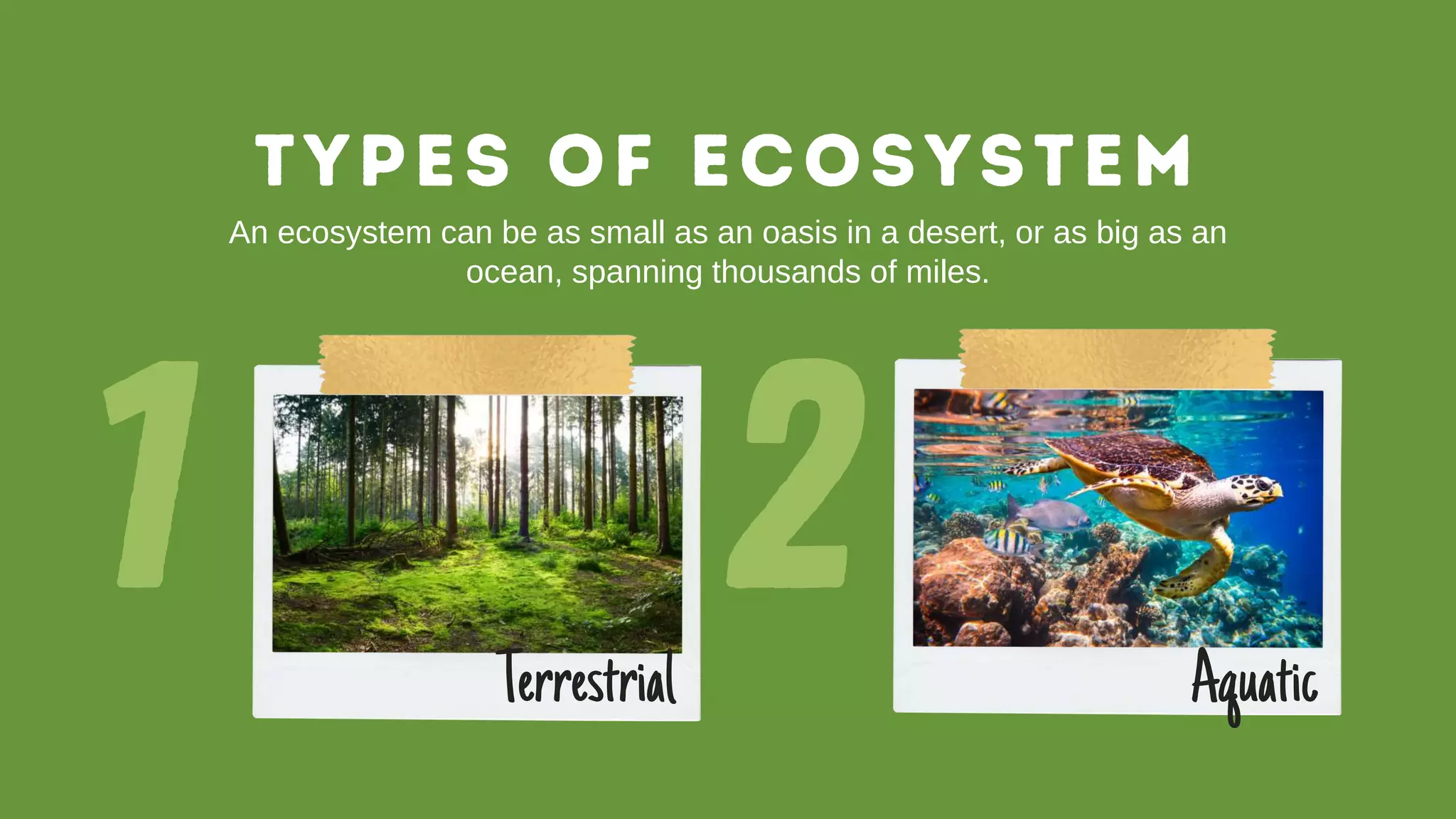
Terrestrial Aquatic
An ecosystem can be as small as an oasis in a desert, or as big as an
ocean, spanning thousands of miles.
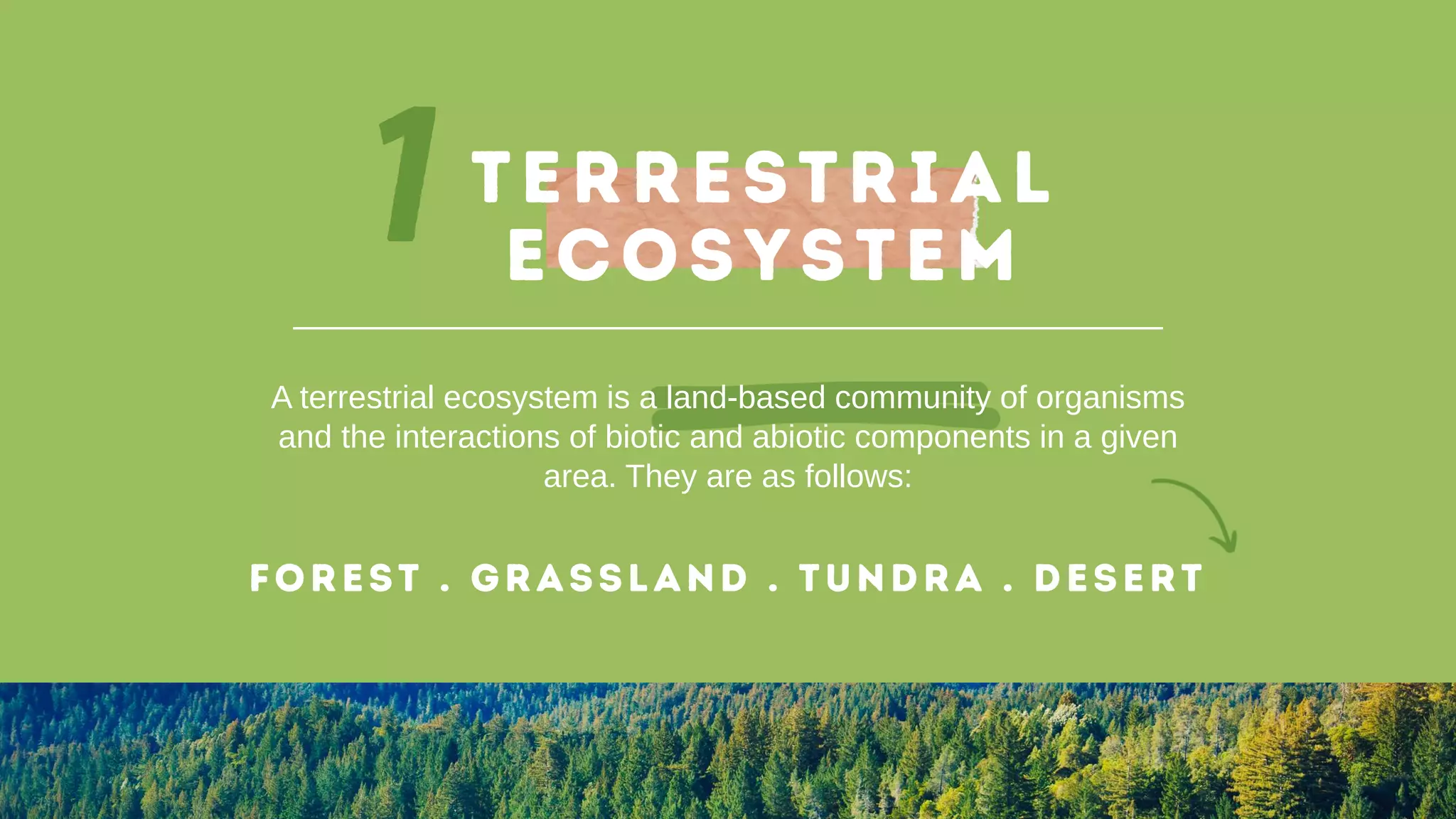
A terrestrial ecosystem is a land-based community of organisms
and the interactions of biotic and abiotic components in a given
area. They are as follows:
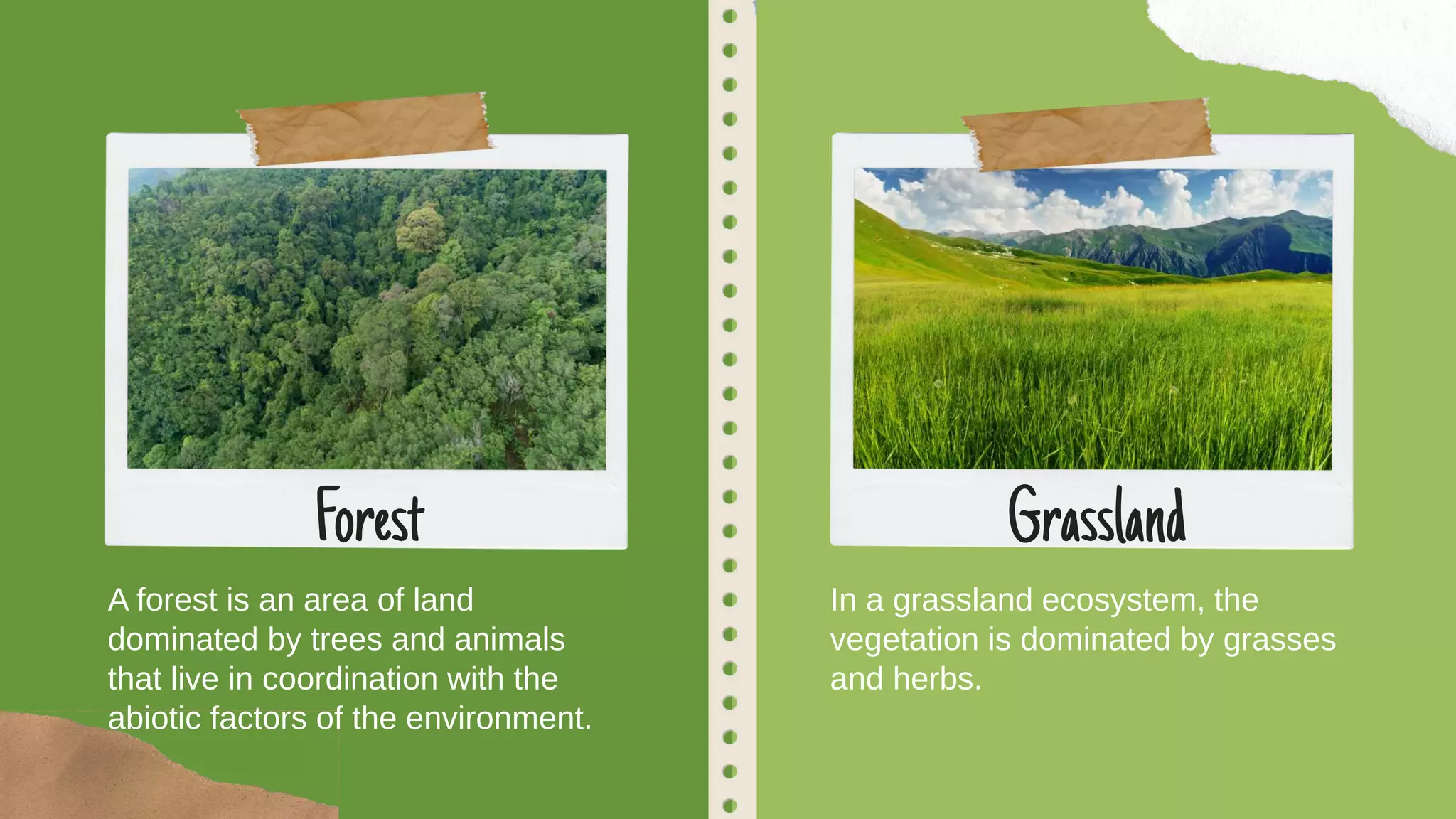
A forest is an area of land
dominated by trees and animals
that live in coordination with the
abiotic factors of the environment.
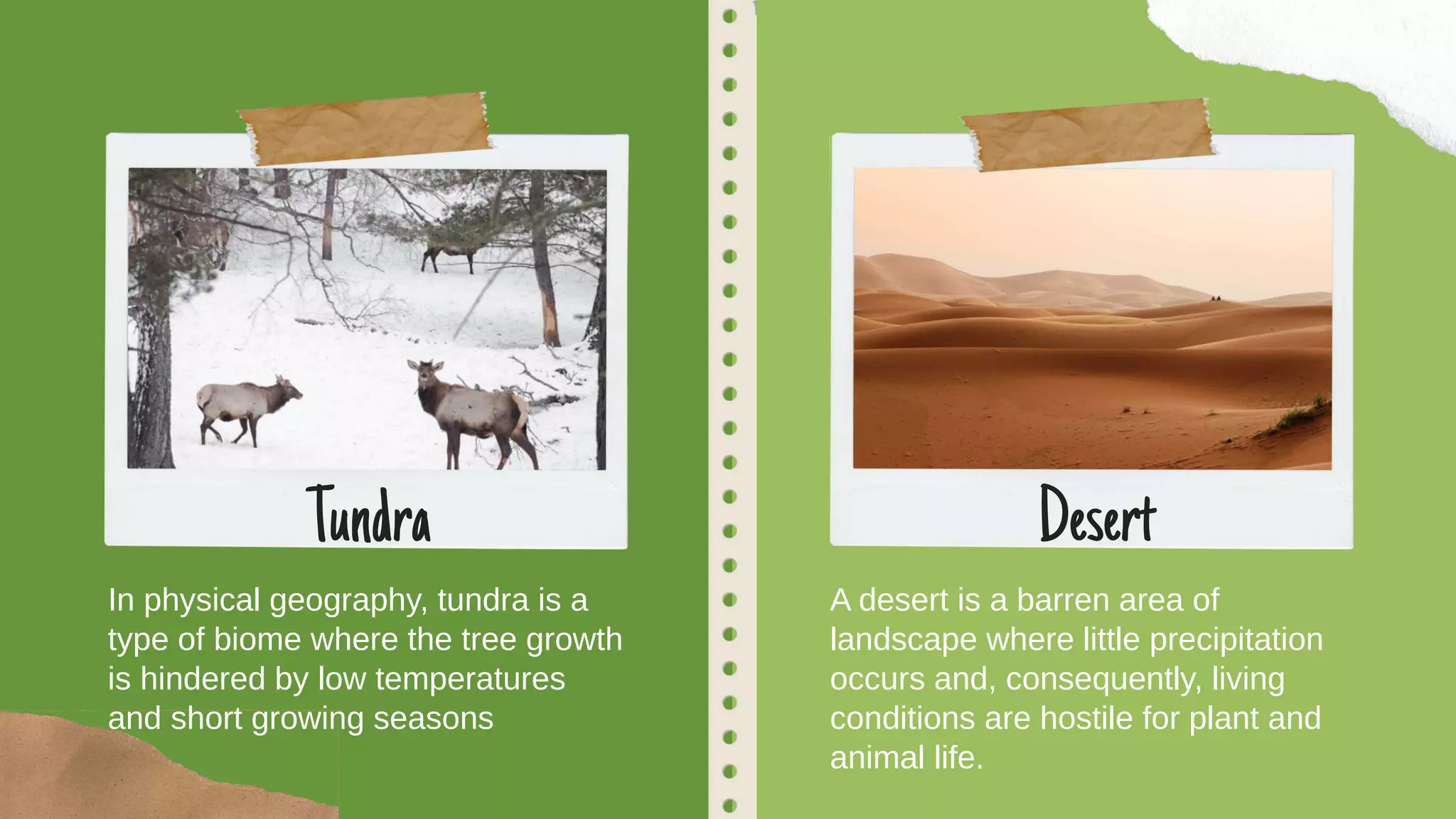
In a grassland ecosystem, the
vegetation is dominated by grasses
and herbs.
Forest Grassland
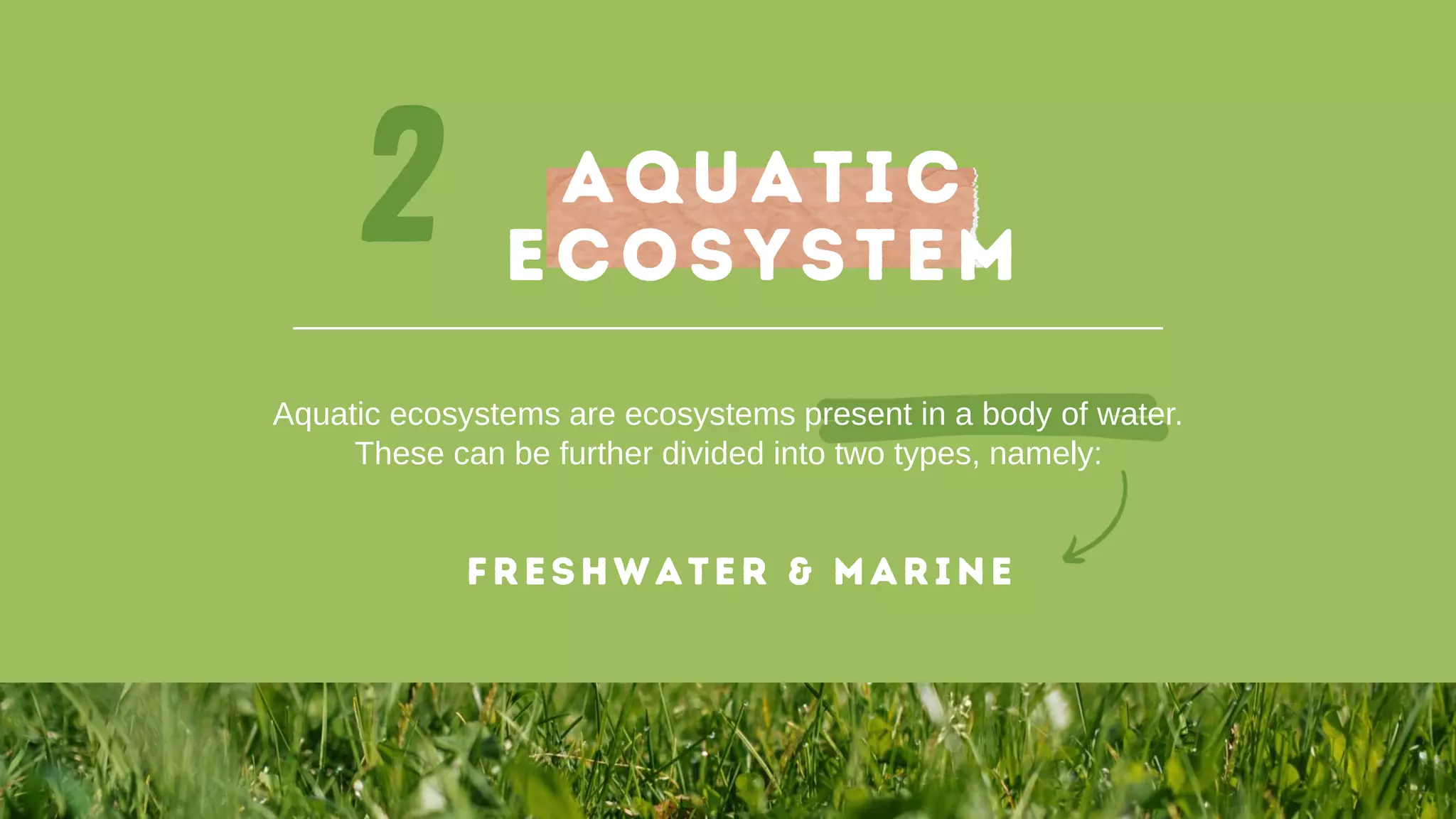
In physical geography, tundra is a
type of biome where the tree growth
is hindered by low temperatures
and short growing seasons
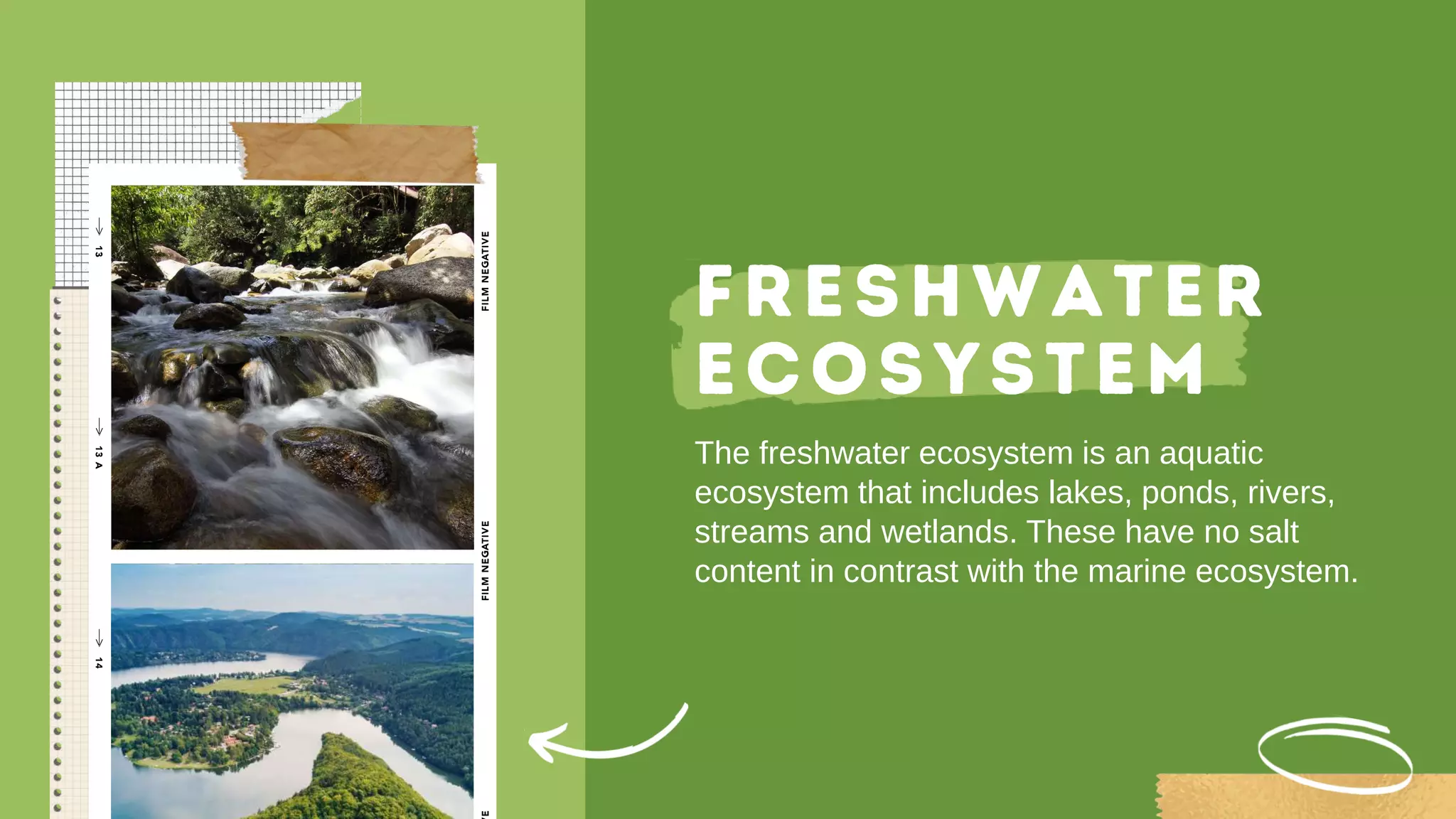
A desert is a barren area of
landscape where little precipitation
occurs and, consequently, living
conditions are hostile for plant and
animal life.
Tundra Desert
Aquatic ecosystems are ecosystems present in a body of water.
These can be further divided into two types, namely:
The freshwater ecosystem is an aquatic
ecosystem that includes lakes, ponds, rivers,
streams and wetlands. These have no salt
content in contrast with the marine ecosystem.
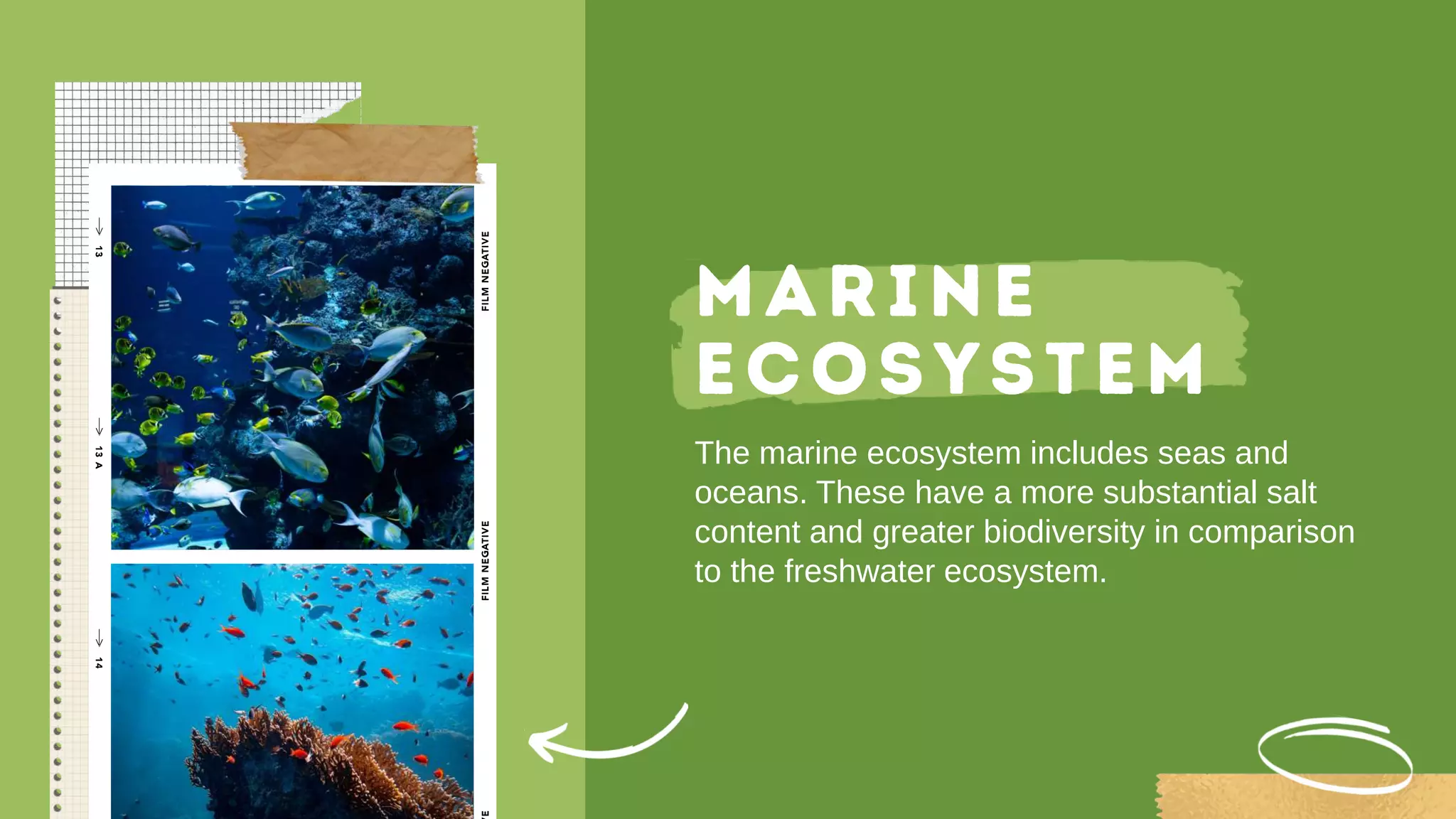
The marine ecosystem includes seas and
oceans. These have a more substantial salt
content and greater biodiversity in comparison
to the freshwater ecosystem.
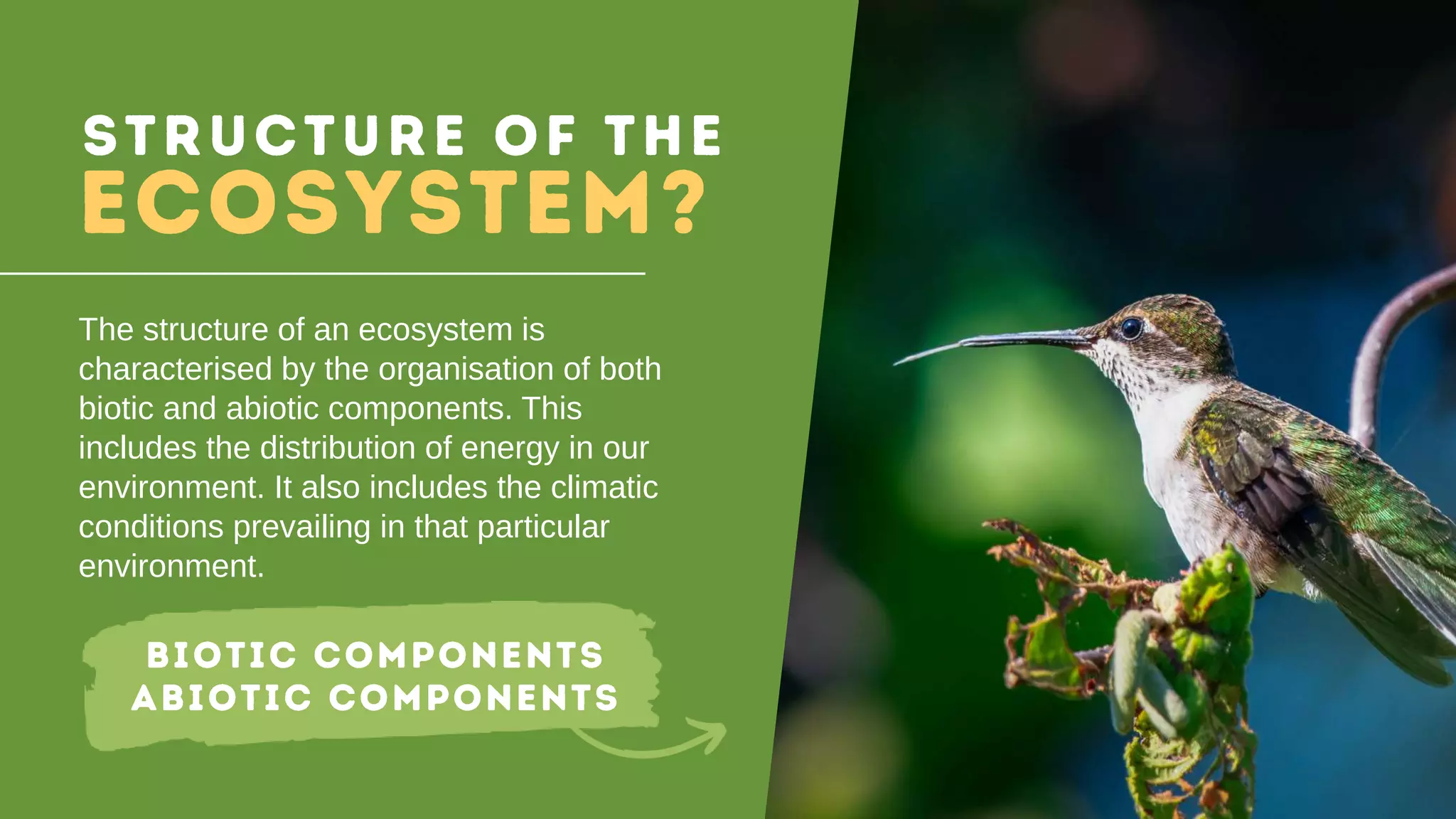
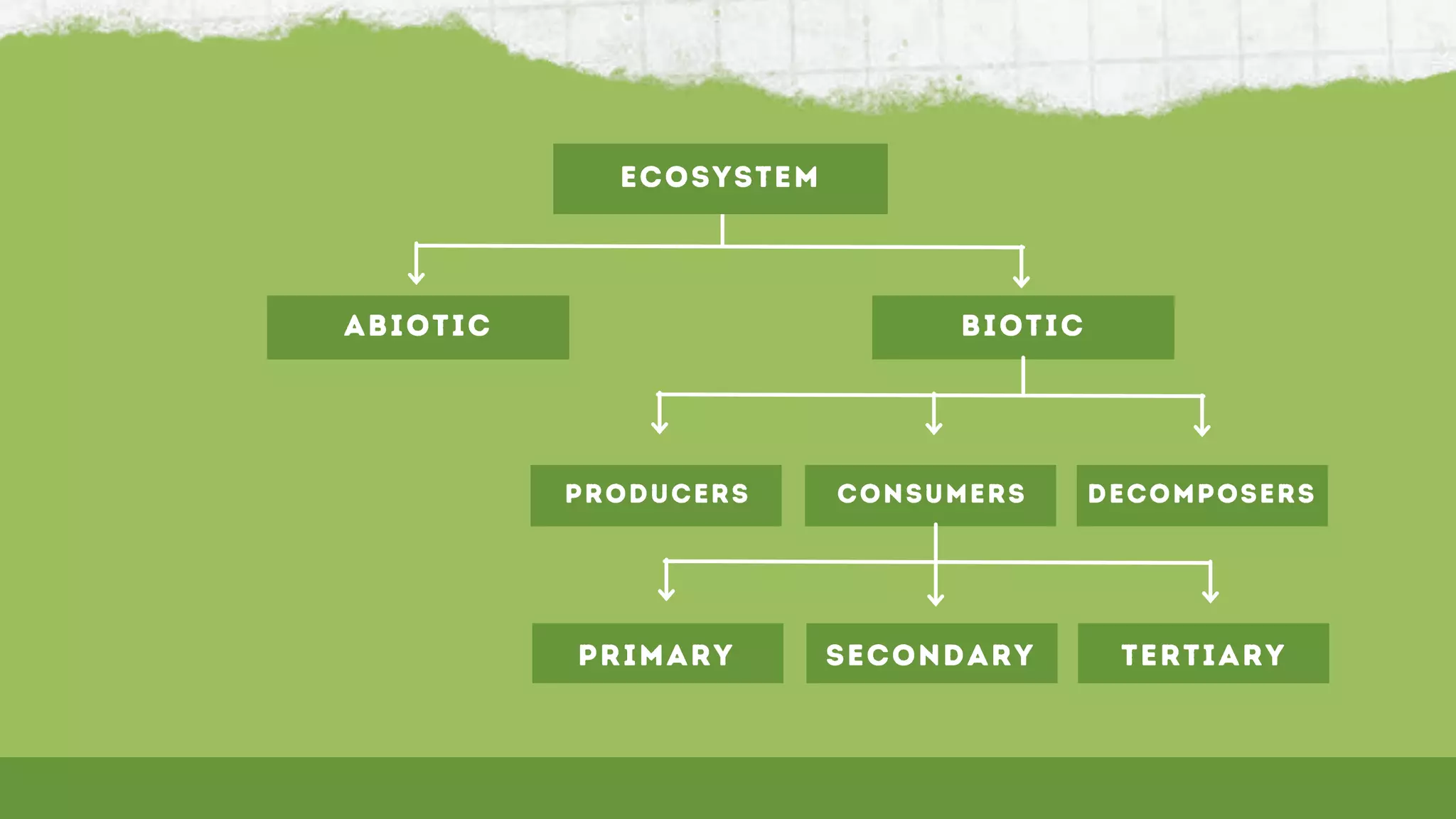
The structure of an ecosystem is
characterised by the organisation of both
biotic and abiotic components. This
includes the distribution of energy in our
environment. It also includes the climatic
conditions prevailing in that particular
environment.
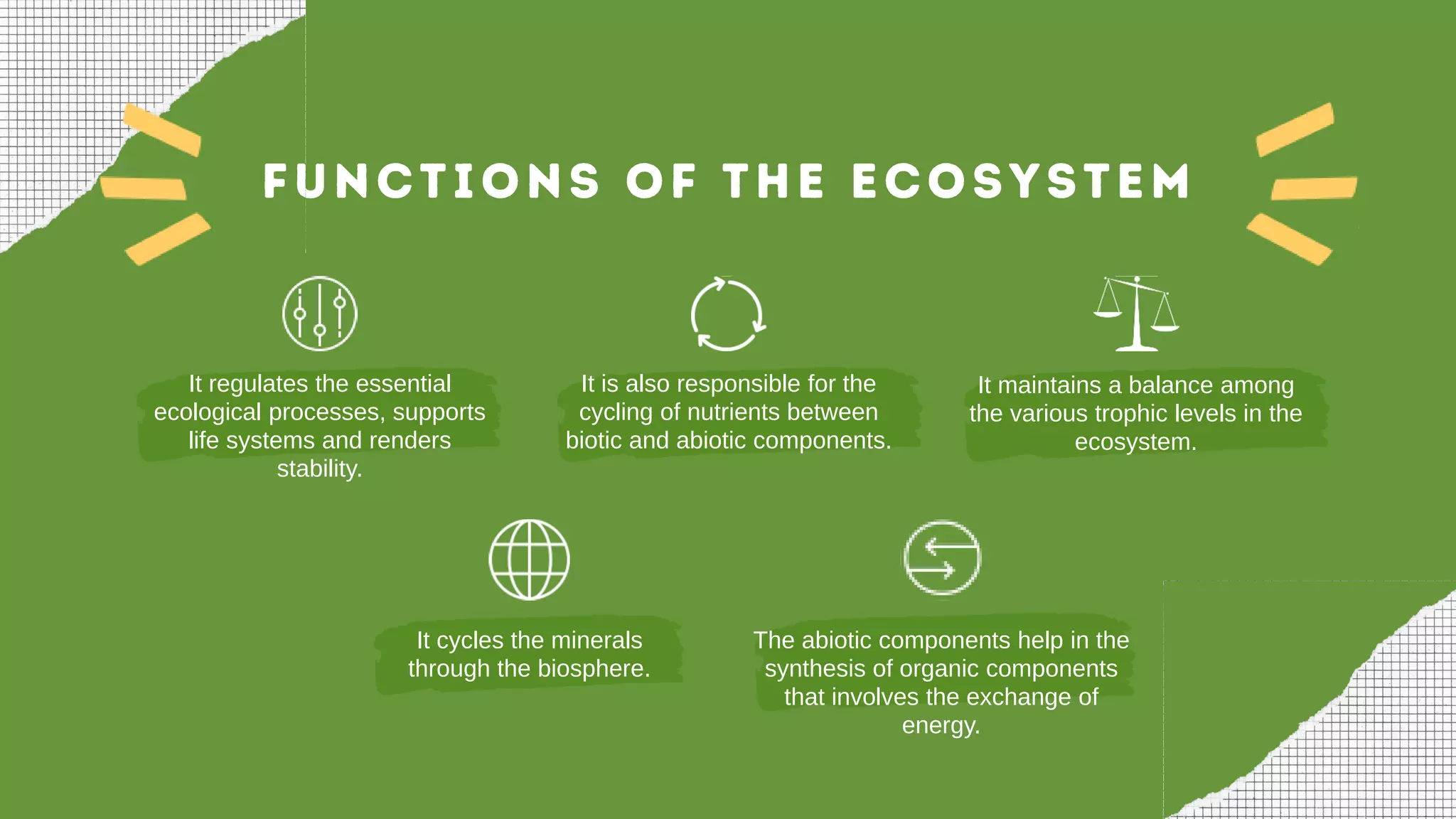
It regulates the essential
ecological processes, supports
life systems and renders
stability.
It is also responsible for the
cycling of nutrients between
biotic and abiotic components.
It maintains a balance among
the various trophic levels in the
ecosystem.
It cycles the minerals
through the biosphere.
The abiotic components help in the
synthesis of organic components
that involves the exchange of
energy.
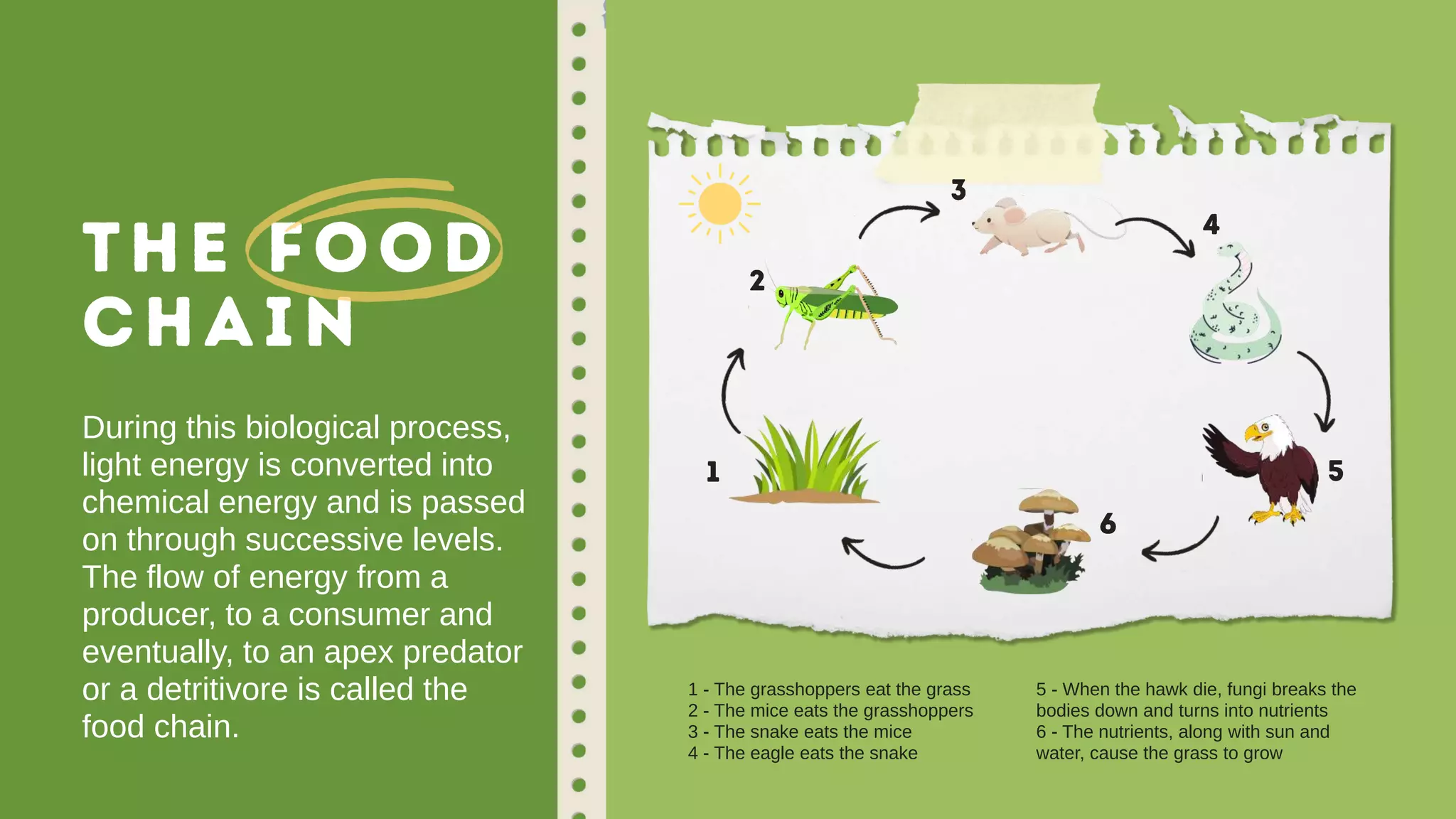
During this biological process,
light energy is converted into
chemical energy and is passed
on through successive levels.
The flow of energy from a
producer, to a consumer and
eventually, to an apex predator
or a detritivore is called the
food chain.
1 - The grasshoppers eat the grass
2 - The mice eats the grasshoppers
3 - The snake eats the mice
4 - The eagle eats the snake
5 - When the hawk die, fungi breaks the
bodies down and turns into nutrients
6 - The nutrients, along with sun and
water, cause the grass to grow
Ecosystem.pptx

Ecosystem.pptx

  • 1.
  • 2.
    The ecosystem isthe structural and functional unit of ecology where the living organisms interact with each other and the surrounding environment. An ecosystem is a chain of interactions between organisms and their environment.
  • 3.
    Terrestrial Aquatic An ecosystemcan be as small as an oasis in a desert, or as big as an ocean, spanning thousands of miles.
  • 4.
    A terrestrial ecosystemis a land-based community of organisms and the interactions of biotic and abiotic components in a given area. They are as follows:
  • 5.
    A forest isan area of land dominated by trees and animals that live in coordination with the abiotic factors of the environment. In a grassland ecosystem, the vegetation is dominated by grasses and herbs. Forest Grassland
  • 6.
    In physical geography,tundra is a type of biome where the tree growth is hindered by low temperatures and short growing seasons A desert is a barren area of landscape where little precipitation occurs and, consequently, living conditions are hostile for plant and animal life. Tundra Desert
  • 7.
    Aquatic ecosystems areecosystems present in a body of water. These can be further divided into two types, namely:
  • 8.
    The freshwater ecosystemis an aquatic ecosystem that includes lakes, ponds, rivers, streams and wetlands. These have no salt content in contrast with the marine ecosystem.
  • 9.
    The marine ecosystemincludes seas and oceans. These have a more substantial salt content and greater biodiversity in comparison to the freshwater ecosystem.
  • 10.
    The structure ofan ecosystem is characterised by the organisation of both biotic and abiotic components. This includes the distribution of energy in our environment. It also includes the climatic conditions prevailing in that particular environment.
  • 12.
    It regulates theessential ecological processes, supports life systems and renders stability. It is also responsible for the cycling of nutrients between biotic and abiotic components. It maintains a balance among the various trophic levels in the ecosystem. It cycles the minerals through the biosphere. The abiotic components help in the synthesis of organic components that involves the exchange of energy.
  • 13.
    During this biologicalprocess, light energy is converted into chemical energy and is passed on through successive levels. The flow of energy from a producer, to a consumer and eventually, to an apex predator or a detritivore is called the food chain. 1 - The grasshoppers eat the grass 2 - The mice eats the grasshoppers 3 - The snake eats the mice 4 - The eagle eats the snake 5 - When the hawk die, fungi breaks the bodies down and turns into nutrients 6 - The nutrients, along with sun and water, cause the grass to grow