Future TrendsInnovation BriefingFebruary 2011http://www.flickr.com/photos/mojodenbowsphotostudio/
Please note: Sample presentation only, please download the full presentation from:http://econsultancy.com/reports/future-trends-innovation-briefing
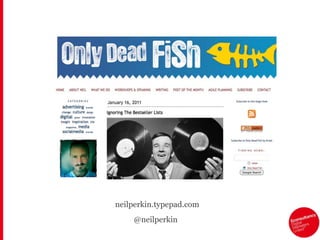
neilperkin.typepad.com@neilperkin
What I’m going to talk to you about todayNew and interesting digital models, ideasNew processes, techniques and ways of workingIdeas that are not new, but which are being applied in new ways 	…and are informed by a close understanding of consumer needs
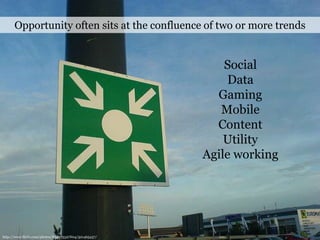
Opportunity often sits at the confluence of two or more trendsSocialDataGamingMobileContentUtilityAgile workinghttp://www.flickr.com/photos/8340753@N04/501465437/
WHAT IS INNOVATION?http://www.flickr.com/photos/fabiano/
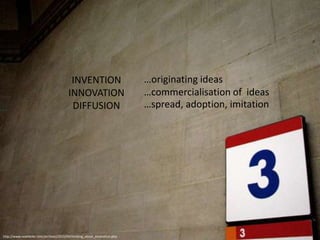
…originating ideasINVENTIONINNOVATIONDIFFUSION…commercialisation of  ideas…spread, adoption, imitationhttp://www.noahbrier.com/archives/2010/04/thinking_about_innovation.php
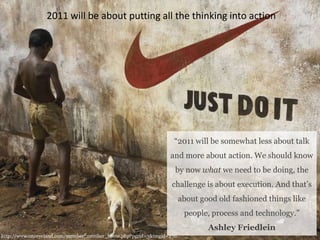
2011 will be about putting all the thinking into action“2011 will be somewhat less about talk and more about action. We should know by now what we need to be doing, the challenge is about execution. And that’s about good old fashioned things like people, process and technology.” Ashley Friedleinhttp://www.oneeyeland.com/member/member_home.php?pgrid=3&imgid=270
2011 will be about true innovation: the commercialisation of principles or ideas'arranging the economic requirements for implementing an invention’http://www.noahbrier.com/archives/2010/04/thinking_about_innovation.phphttp://www.flickr.com/photos/thomashawk/
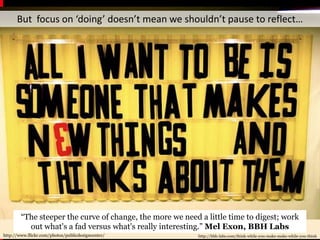
But  focus on ‘doing’ doesn’t mean we shouldn’t pause to reflect…“The steeper the curve of change, the more we need a little time to digest; work out what's a fad versus what's really interesting.” Mel Exon, BBH Labshttp://www.flickr.com/photos/publicdesigncenter/http://bbh-labs.com/think-while-you-make-make-while-you-think
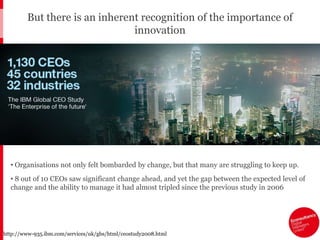
But there is an inherent recognition of the importance of innovationOrganisations not only felt bombarded by change, but that many are struggling to keep up.
 8 out of 10 CEOs saw significant change ahead, and yet the gap between the expected level of change and the ability to manage it had almost tripled since the previous study in 2006http://www-935.ibm.com/services/uk/gbs/html/ceostudy2008.html
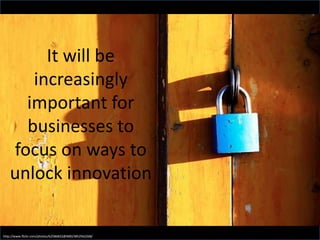
It will be increasingly important for businesses to focus on ways to unlock innovationhttp://www.flickr.com/photos/62586822@N00/3852562268/
INNOVATION IN THE SOCIAL WEBWe will get past the endless babble about social media platforms, and more  companies will begin embedding it into practices, strategies and workflows
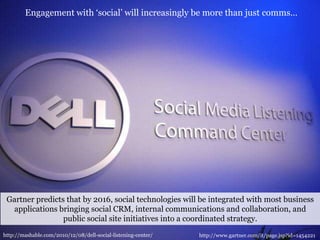
Engagement with ‘social’ will increasingly be more than just comms…Gartner predicts that by 2016, social technologies will be integrated with most business applications bringing social CRM, internal communications and collaboration, and public social site initiatives into a coordinated strategy.http://mashable.com/2010/12/08/dell-social-listening-center/http://www.gartner.com/it/page.jsp?id=1454221
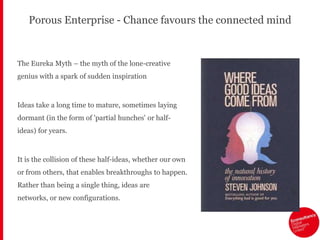
Porous Enterprise - Chance favours the connected mindThe Eureka Myth – the myth of the lone-creative genius with a spark of sudden inspirationIdeas take a long time to mature, sometimes laying dormant (in the form of 'partial hunches' or half-ideas) for years. It is the collision of these half-ideas, whether our own or from others, that enables breakthroughs to happen. Rather than being a single thing, ideas are networks, or new configurations.
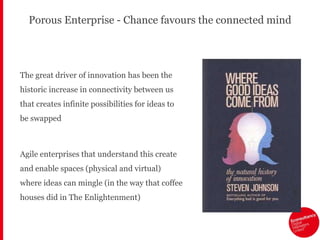
Porous Enterprise - Chance favours the connected mindThe great driver of innovation has been the historic increase in connectivity between us that creates infinite possibilities for ideas to be swappedAgile enterprises that understand this create and enable spaces (physical and virtual) where ideas can mingle (in the way that coffee houses did in The Enlightenment)
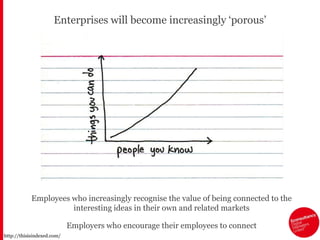
Enterprises will become increasingly ‘porous’Employees who increasingly recognise the value of being connected to the interesting ideas in their own and related marketsEmployers who encourage their employees to connecthttp://thisisindexed.com/
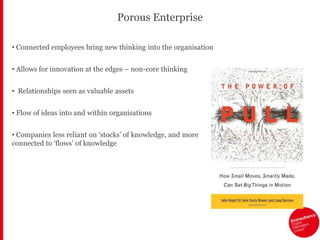
Porous Enterprise Connected employees bring new thinking into the organisation
 Allows for innovation at the edges – non-core thinking
  Relationships seen as valuable assets
 Flow of ideas into and within organisations
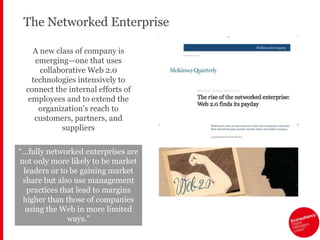
 Companies less reliant on ‘stocks’ of knowledge, and more connected to ‘flows’ of knowledgeThe Networked EnterpriseA new class of company is emerging—one that uses collaborative Web 2.0 technologies intensively to connect the internal efforts of employees and to extend the organization’s reach to customers, partners, and suppliers“…fully networked enterprises are not only more likely to be market leaders or to be gaining market share but also use management practices that lead to margins higher than those of companies using the Web in more limited ways.”https://www.mckinseyquarterly.com/Organization/Strategic_Organization/The_rise_of_the_networked_enterprise_Web_20_finds_its_payday_2716
But content on the social web will continue to become ever more important…
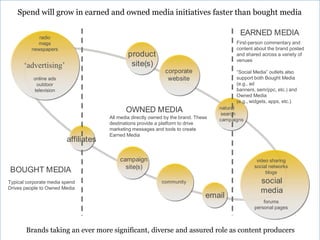
campaignsite(s)corporatewebsiteSpend will grow in earned and owned media initiatives faster than bought mediaradiomagsnewspapersonline adsoutdoortelevisionTHE NEW CONTENT ECOSYSTEMEARNED MEDIAFirst-person commentary and content about the brand posted and shared across a variety of venues“Social Media” outlets also support both Bought Media (e.g., ad banners, sem/ppc, etc.) and Owned Media (e.g., widgets, apps, etc.)productsite(s)‘advertising’OWNED MEDIAnatural search campaignsAll media directly owned by the brand. These destinations provide a platform to drive marketing messages and tools to create Earned Mediaaffiliatesvideo sharingsocial networksblogsforumspersonal pagesBOUGHT MEDIAsocialmediacommunityTypical corporate media spend Drives people to Owned MediaemailBrands taking an ever more significant, diverse and assured role as content producers
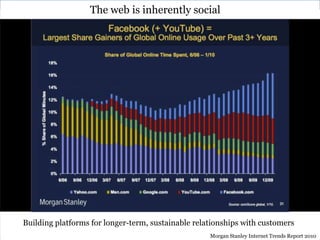
The web is inherently socialBuilding platforms for longer-term, sustainable relationships with customers Morgan Stanley Internet Trends Report 2010
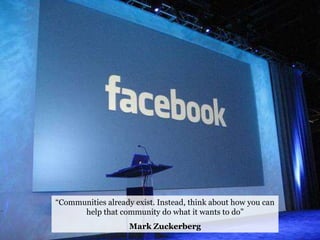
“Communities already exist. Instead, think about how you can help that community do what it wants to do”Mark Zuckerberg

Econsultancy Future Trends Briefing

  • 1.
    Future TrendsInnovation BriefingFebruary2011http://www.flickr.com/photos/mojodenbowsphotostudio/
  • 2.
    Please note: Samplepresentation only, please download the full presentation from:http://econsultancy.com/reports/future-trends-innovation-briefing
  • 3.
  • 4.
    What I’m goingto talk to you about todayNew and interesting digital models, ideasNew processes, techniques and ways of workingIdeas that are not new, but which are being applied in new ways …and are informed by a close understanding of consumer needs
  • 5.
    Opportunity often sitsat the confluence of two or more trendsSocialDataGamingMobileContentUtilityAgile workinghttp://www.flickr.com/photos/8340753@N04/501465437/
  • 6.
  • 7.
    …originating ideasINVENTIONINNOVATIONDIFFUSION…commercialisation of ideas…spread, adoption, imitationhttp://www.noahbrier.com/archives/2010/04/thinking_about_innovation.php
  • 8.
    2011 will beabout putting all the thinking into action“2011 will be somewhat less about talk and more about action. We should know by now what we need to be doing, the challenge is about execution. And that’s about good old fashioned things like people, process and technology.” Ashley Friedleinhttp://www.oneeyeland.com/member/member_home.php?pgrid=3&imgid=270
  • 9.
    2011 will beabout true innovation: the commercialisation of principles or ideas'arranging the economic requirements for implementing an invention’http://www.noahbrier.com/archives/2010/04/thinking_about_innovation.phphttp://www.flickr.com/photos/thomashawk/
  • 10.
    But focuson ‘doing’ doesn’t mean we shouldn’t pause to reflect…“The steeper the curve of change, the more we need a little time to digest; work out what's a fad versus what's really interesting.” Mel Exon, BBH Labshttp://www.flickr.com/photos/publicdesigncenter/http://bbh-labs.com/think-while-you-make-make-while-you-think
  • 11.
    But there isan inherent recognition of the importance of innovationOrganisations not only felt bombarded by change, but that many are struggling to keep up.
  • 12.
    8 outof 10 CEOs saw significant change ahead, and yet the gap between the expected level of change and the ability to manage it had almost tripled since the previous study in 2006http://www-935.ibm.com/services/uk/gbs/html/ceostudy2008.html
  • 13.
    It will beincreasingly important for businesses to focus on ways to unlock innovationhttp://www.flickr.com/photos/62586822@N00/3852562268/
  • 14.
    INNOVATION IN THESOCIAL WEBWe will get past the endless babble about social media platforms, and more companies will begin embedding it into practices, strategies and workflows
  • 15.
    Engagement with ‘social’will increasingly be more than just comms…Gartner predicts that by 2016, social technologies will be integrated with most business applications bringing social CRM, internal communications and collaboration, and public social site initiatives into a coordinated strategy.http://mashable.com/2010/12/08/dell-social-listening-center/http://www.gartner.com/it/page.jsp?id=1454221
  • 16.
    Porous Enterprise -Chance favours the connected mindThe Eureka Myth – the myth of the lone-creative genius with a spark of sudden inspirationIdeas take a long time to mature, sometimes laying dormant (in the form of 'partial hunches' or half-ideas) for years. It is the collision of these half-ideas, whether our own or from others, that enables breakthroughs to happen. Rather than being a single thing, ideas are networks, or new configurations.
  • 17.
    Porous Enterprise -Chance favours the connected mindThe great driver of innovation has been the historic increase in connectivity between us that creates infinite possibilities for ideas to be swappedAgile enterprises that understand this create and enable spaces (physical and virtual) where ideas can mingle (in the way that coffee houses did in The Enlightenment)
  • 18.
    Enterprises will becomeincreasingly ‘porous’Employees who increasingly recognise the value of being connected to the interesting ideas in their own and related marketsEmployers who encourage their employees to connecthttp://thisisindexed.com/
  • 19.
    Porous Enterprise Connectedemployees bring new thinking into the organisation
  • 20.
    Allows forinnovation at the edges – non-core thinking
  • 21.
    Relationshipsseen as valuable assets
  • 22.
    Flow ofideas into and within organisations
  • 23.
    Companies lessreliant on ‘stocks’ of knowledge, and more connected to ‘flows’ of knowledgeThe Networked EnterpriseA new class of company is emerging—one that uses collaborative Web 2.0 technologies intensively to connect the internal efforts of employees and to extend the organization’s reach to customers, partners, and suppliers“…fully networked enterprises are not only more likely to be market leaders or to be gaining market share but also use management practices that lead to margins higher than those of companies using the Web in more limited ways.”https://www.mckinseyquarterly.com/Organization/Strategic_Organization/The_rise_of_the_networked_enterprise_Web_20_finds_its_payday_2716
  • 24.
    But content onthe social web will continue to become ever more important…
  • 25.
    campaignsite(s)corporatewebsiteSpend will growin earned and owned media initiatives faster than bought mediaradiomagsnewspapersonline adsoutdoortelevisionTHE NEW CONTENT ECOSYSTEMEARNED MEDIAFirst-person commentary and content about the brand posted and shared across a variety of venues“Social Media” outlets also support both Bought Media (e.g., ad banners, sem/ppc, etc.) and Owned Media (e.g., widgets, apps, etc.)productsite(s)‘advertising’OWNED MEDIAnatural search campaignsAll media directly owned by the brand. These destinations provide a platform to drive marketing messages and tools to create Earned Mediaaffiliatesvideo sharingsocial networksblogsforumspersonal pagesBOUGHT MEDIAsocialmediacommunityTypical corporate media spend Drives people to Owned MediaemailBrands taking an ever more significant, diverse and assured role as content producers
  • 26.
    The web isinherently socialBuilding platforms for longer-term, sustainable relationships with customers Morgan Stanley Internet Trends Report 2010
  • 27.
    “Communities already exist.Instead, think about how you can help that community do what it wants to do”Mark Zuckerberg

Editor's Notes

  • #22 However, we have control over our “Owned Media” and traditionally most organsiation aren't doing as much as they could with this.