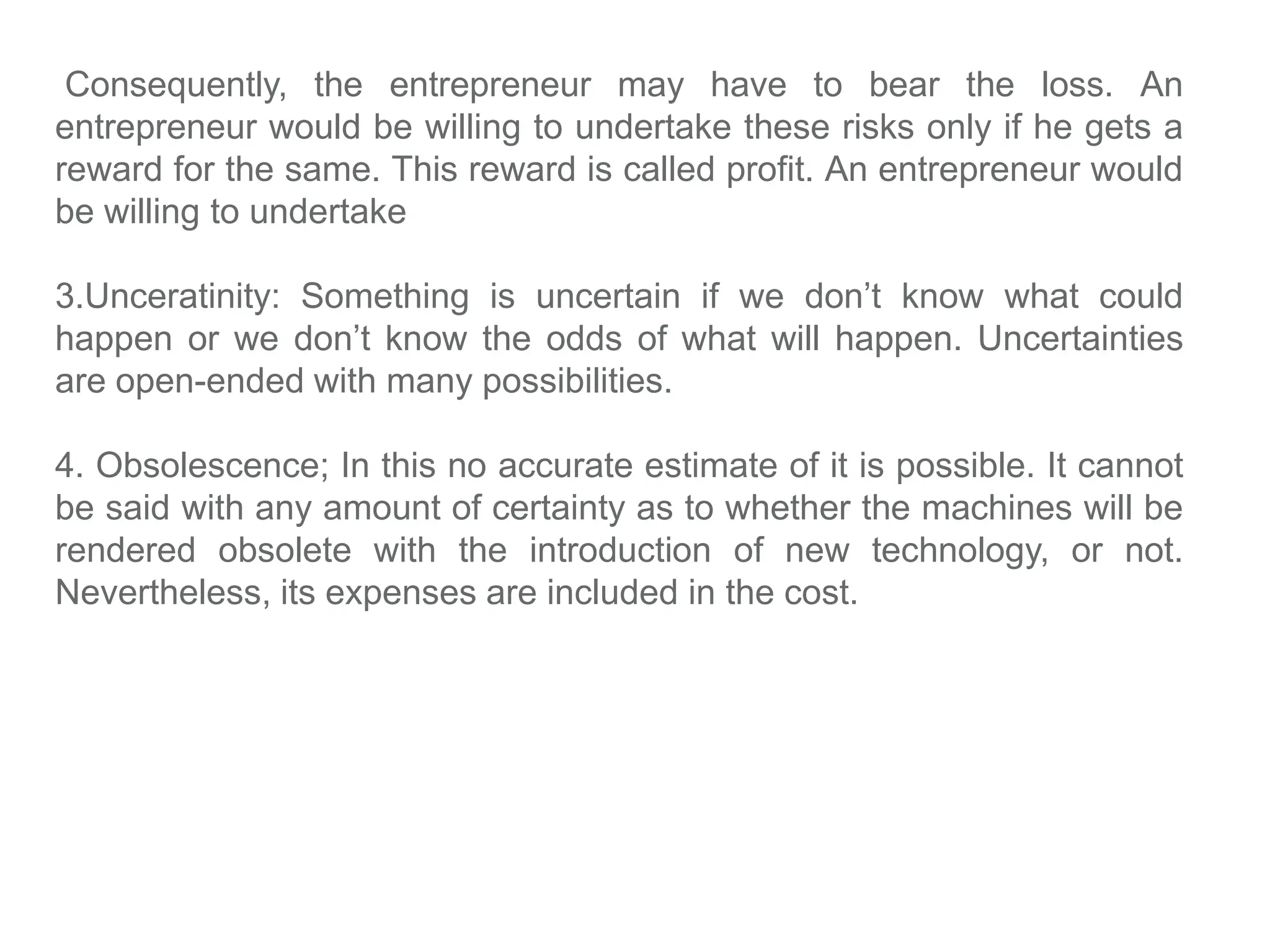
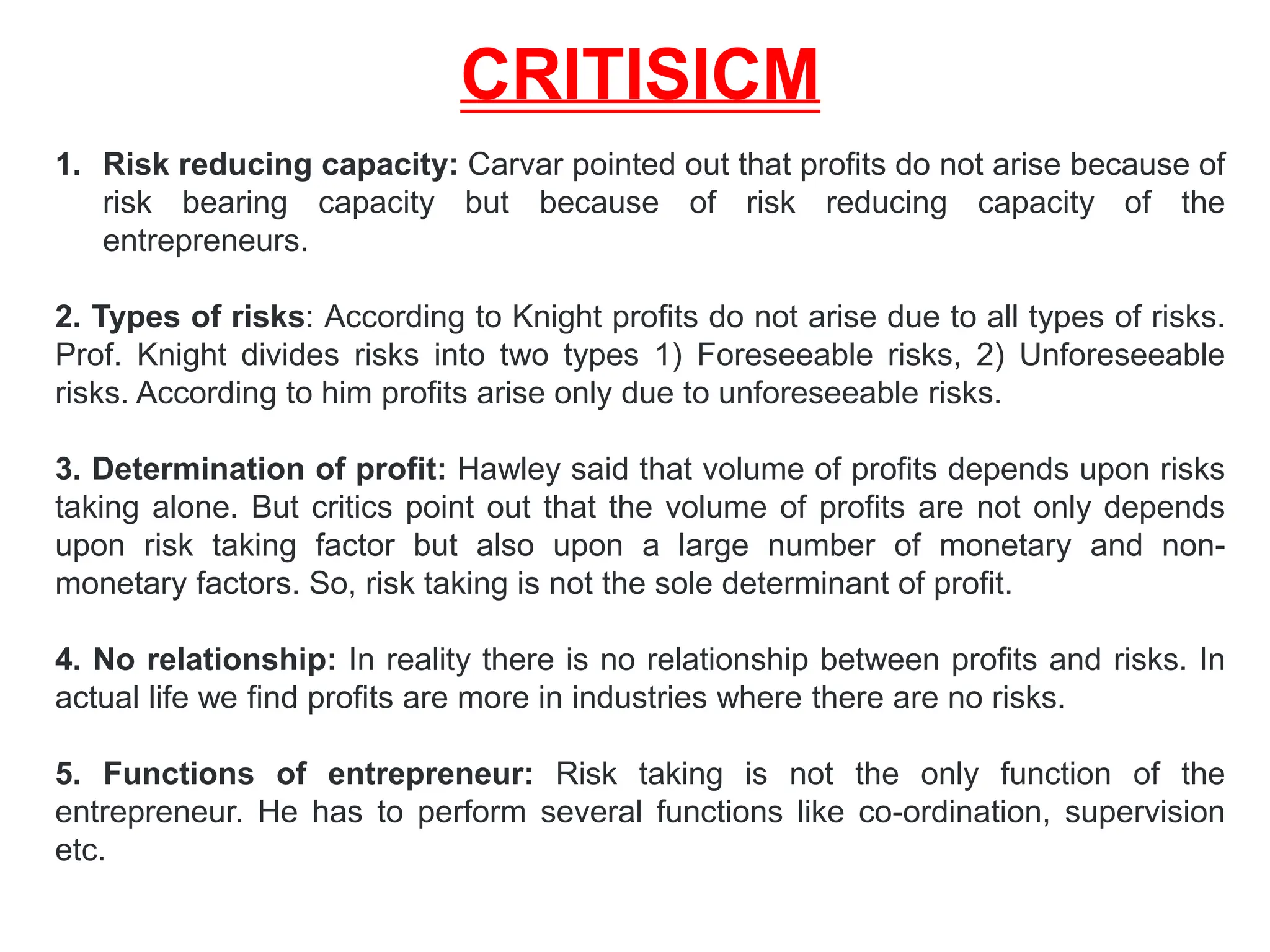
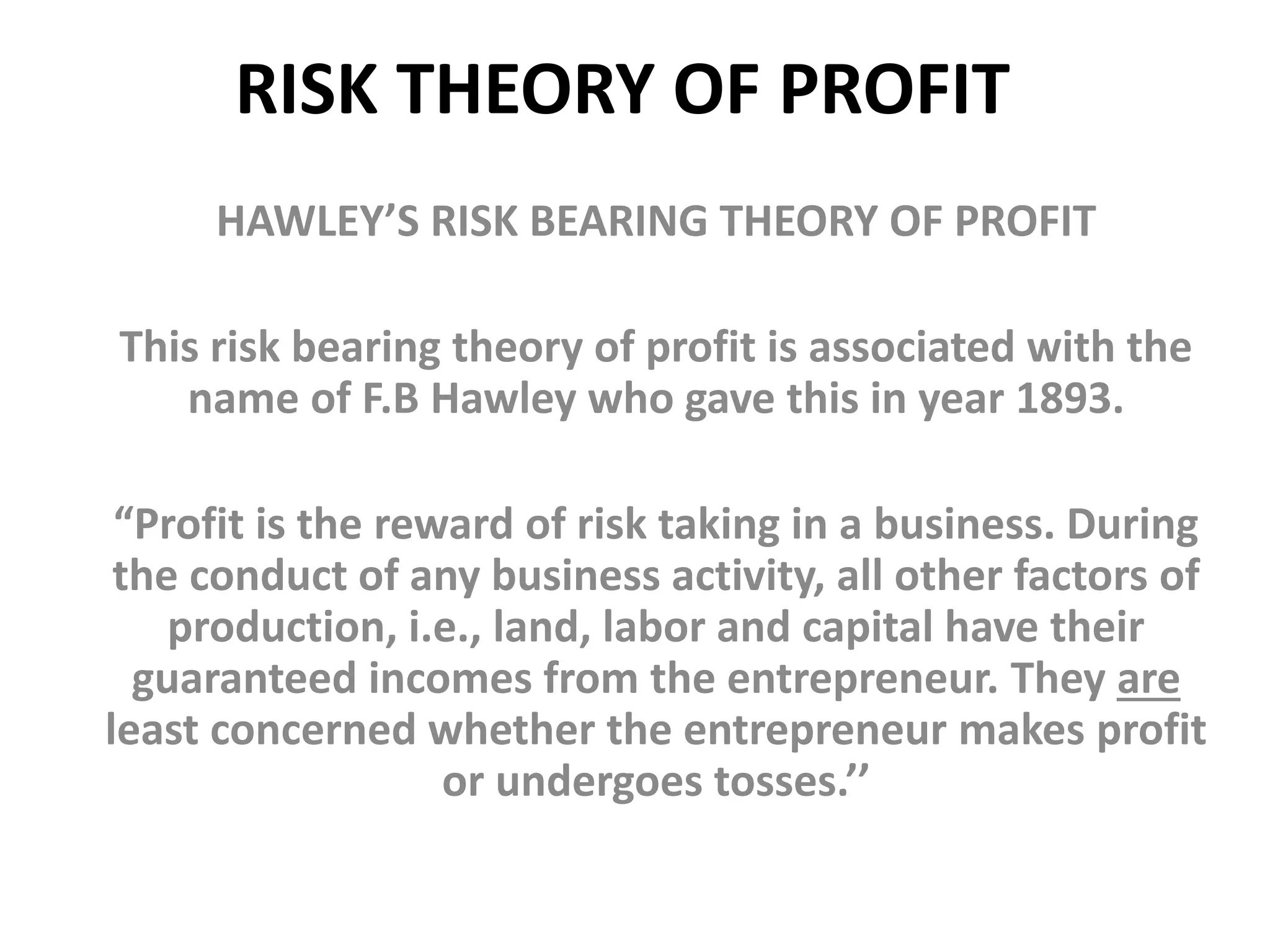
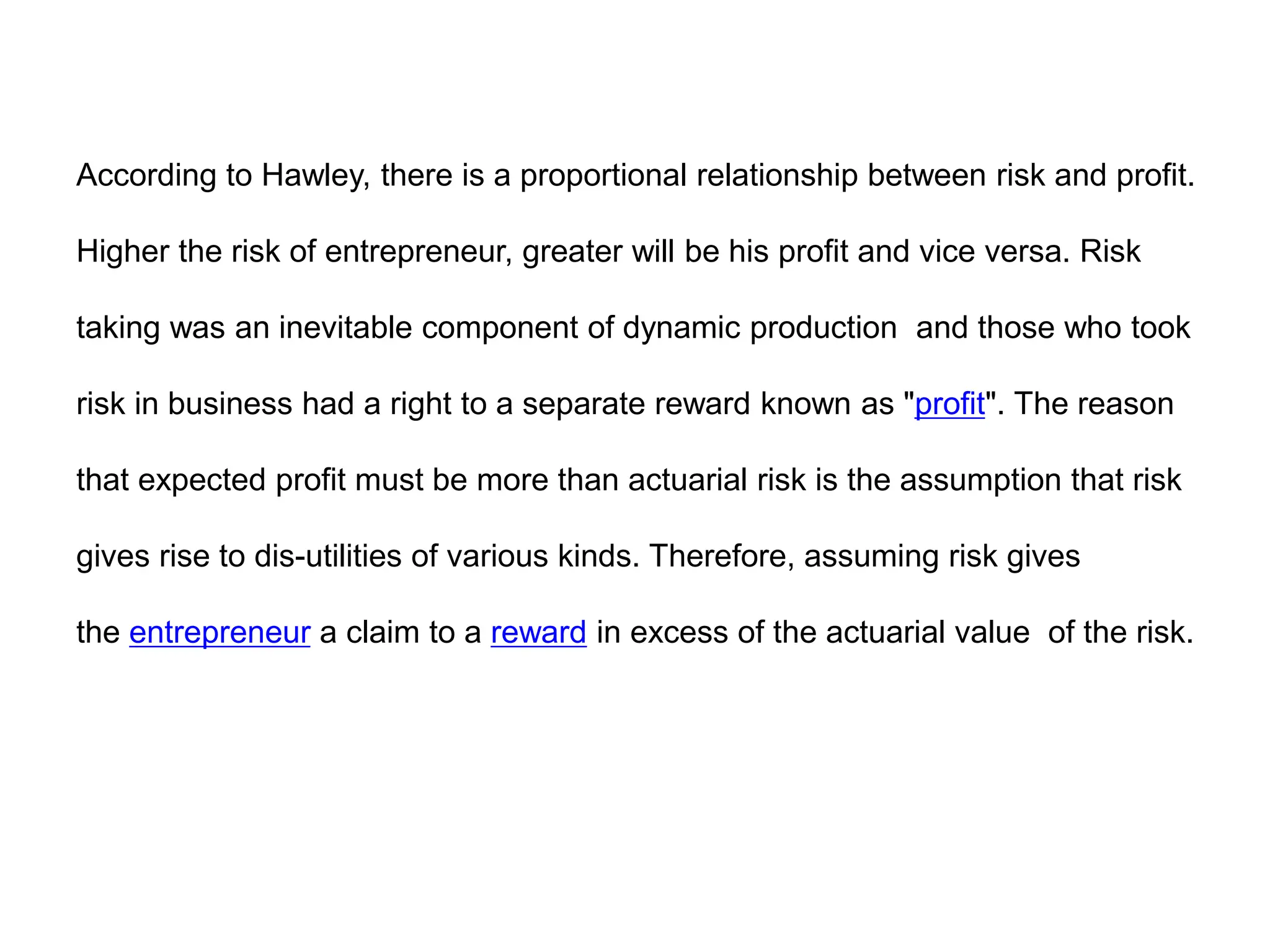
Hawley's risk bearing theory of profit from 1893 states that profit is the reward entrepreneurs receive for taking risks in business. Higher risks taken on by entrepreneurs lead to greater potential profits. There are four main types of risks according to Hawley: replacement risk, risk proper due to time lags between production and sale, uncertainty about possible outcomes, and obsolescence risks from new technologies. While critics acknowledge entrepreneurs bear some risks, they argue risks are not the sole determinant of profits, and entrepreneurs provide additional functions like coordination and supervision beyond only risk taking.
![Hawley believed that profits arose from the factor of ownership, as long as the
ownership there is risks. If the entrepreneur avoided [risk] by insuring against it, he
ceased to be an entrepreneur and should not receive profits.
According to Hawley, entrepreneur may have to bear four kinds of risks:
1. Replacement risk: It refers to depreciation. It can be calculated and sois
included in the cost of production. It therefore does not give rise to any
profit. An entrepreneur would be willing to undertake
2. Risk proper: It arises due to time-lag between the production of goods
and their sale. During this time-lag there can be so many unforeseen
changes.](https://image.slidesharecdn.com/risktheoryofprofit-240329092105-af44e7ae/75/Economics-ppt-Risk-theory-of-profit-risk-3-2048.jpg)