
Mechanisms of Action in Modern RCC Treatment
Conflict of Interest DeclarationBAYER – Advisory BoardGLAXOSMITHKLINE – Advisory BoardNOVARTIS – Support for this talk
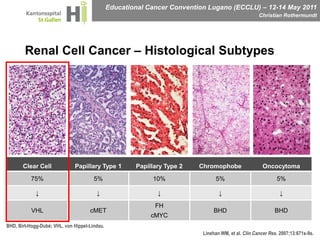
Renal Cell Cancer – Histological SubtypesBHD, Birt-Hogg-Dubé; VHL, von Hippel-Lindau.Linehan WM, et al. Clin Cancer Res. 2007;13:671s-9s.
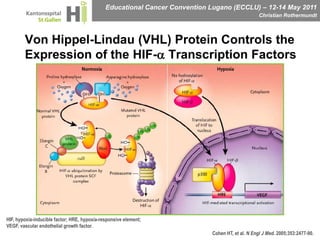
Von Hippel-Lindau (VHL) Protein Controls the Expression of the HIF- Transcription FactorsHIF, hypoxia-inducible factor; HRE, hypoxia-responsive element; VEGF, vascular endothelial growth factor.Cohen HT, et al. N Engl J Med. 2005;353:2477-90.
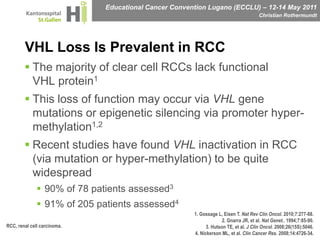
VHL Loss Is Prevalent in RCCThe majority of clear cell RCCs lack functional VHL protein1This loss of function may occur via VHL gene mutations or epigenetic silencing via promoter hyper-methylation1,2Recent studies have found VHL inactivation in RCC (via mutation or hyper-methylation) to be quite widespread90% of 78 patients assessed391% of 205 patients assessed41. Gossage L, Eisen T. Nat Rev Clin Oncol. 2010;7:277-88.2. Gnarra JR, et al. Nat Genet.. 1994;7:85-90.3. Hutson TE, et al. J Clin Oncol. 2008;26(15S):5046.4. Nickerson ML, et al. Clin Cancer Res. 2008;14:4726-34.RCC, renal cell carcinoma.
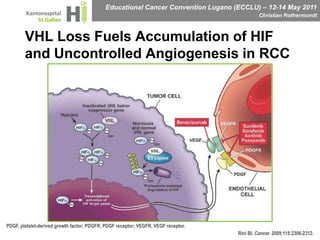
VHL Loss Fuels Accumulation of HIF and Uncontrolled Angiogenesis in RCCPDGF, platelet-derived growth factor; PDGFR, PDGF receptor; VEGFR, VEGF receptor.Rini BI. Cancer. 2009;115:2306-2312.
Anti-VEGF Treatment
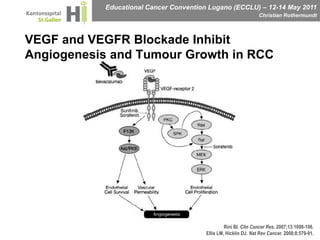
VEGF and VEGFR Blockade Inhibit Angiogenesis and Tumour Growth in RCCRini BI. Clin Cancer Res. 2007;13:1098-106.Ellis LM, Hicklin DJ. Nat Rev Cancer. 2008;8:579-91.
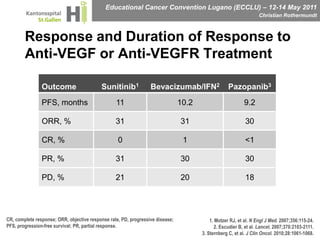
Response and Duration of Response to Anti-VEGF or Anti-VEGFR TreatmentCR, complete response; ORR, objective response rate, PD, progressive disease; PFS, progression-free survival; PR, partial response.1. Motzer RJ, et al. N Engl J Med. 2007;356:115-24.2. Escudier B, et al. Lancet. 2007;370:2103-2111.3. Sternberg C, et al. J Clin Oncol. 2010;28:1061-1068.
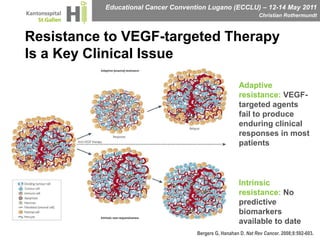
Adaptive resistance:VEGF-targeted agents fail to produce enduring clinical responses in most patientsIntrinsic resistance:No predictive biomarkers available to dateBergers G, Hanahan D. Nat Rev Cancer. 2008;8:592-603.Resistance to VEGF-targeted Therapy Is a Key Clinical Issue
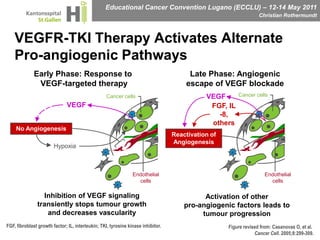
VEGFR-TKI Therapy Activates Alternate Pro­angiogenic PathwaysEarly Phase: Response to VEGF-targeted therapyLate Phase: Angiogenic escape of VEGF blockadeCancer cellsVEGFCancer cellsVEGFFGF, IL-8, othersNo AngiogenesisReactivation of AngiogenesisHypoxiaEndothelial cellsEndothelial cellsInhibition of VEGF signaling transiently stops tumour growth and decreases vascularityActivation of other                  pro-angiogenic factors leads to tumour progressionFGF, fibroblast growth factor; IL, interleukin; TKI, tyrosine kinase inhibitor.Figure revised from: Casanovas O, et al. Cancer Cell. 2005;8:299-309.
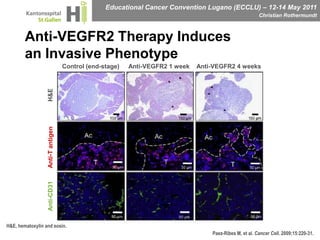
Anti-VEGFR2 Therapy Induces an Invasive PhenotypeControl (end-stage)Anti-VEGFR2 1 weekAnti-VEGFR2 4 weeksH&EAnti-T antigenAnti-CD31H&E, hematoxylin and eosin.Paez-Ribes M, et al. Cancer Cell. 2009;15:220-31.
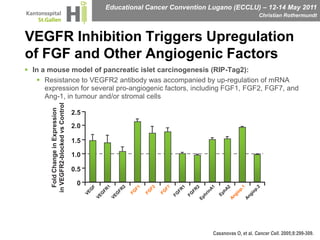
VEGFR Inhibition Triggers Upregulation of FGF and Other Angiogenic FactorsIn a mouse model of pancreatic islet carcinogenesis (RIP-Tag2):Resistance to VEGFR2 antibody was accompanied by up-regulation of mRNA expression for several pro-angiogenic factors, including FGF1, FGF2, FGF7, and Ang-1, in tumour and/or stromal cells2.52.01.5Fold Change in Expressionin VEGFR2-blocked vs Control1.00.50FGF1FGF2FGF7VEGFEphA2FGFR1FGFR2VEGFR1VEGFR2Angiop.1Angiop.2EphrinA1Casanovas O, et al. Cancer Cell. 2005;8:299-309.
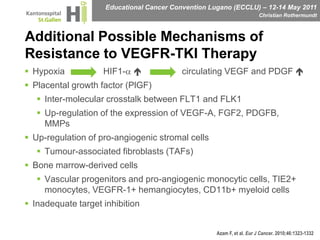
Additional Possible Mechanisms of Resistance to VEGFR-TKI Therapy Hypoxia 	      HIF1-a	            circulating VEGF and PDGF Placental growth factor (PlGF)Inter-molecular crosstalk between FLT1 and FLK1Up-regulation of the expression of VEGF-A, FGF2, PDGFB, MMPsUp-regulation of pro-angiogenic stromal cellsTumour-associated fibroblasts (TAFs)Bone marrow-derived cellsVascular progenitors and pro-angiogenic monocytic cells, TIE2+ monocytes, VEGFR-1+ hemangiocytes, CD11b+ myeloid cellsInadequate target inhibitionAzam F, et al. Eur J Cancer. 2010;46:1323-1332
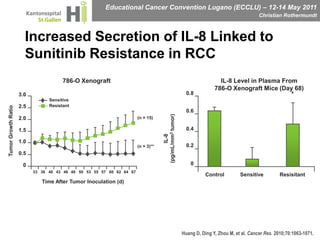
Increased Secretion of IL-8 Linked to Sunitinib Resistance in RCC786-O XenograftIL-8 Level in Plasma From786-O Xenograft Mice (Day 68)0.8*3.0SensitiveResistant2.50.62.0(n = 15)0.41.5Tumor Growth RatioIL-8(pg/mL/mm3 tumor)1.00.2(n = 3)**0.5003336674043464850535557606264ControlSensitiveResisitantTime After Tumor Inoculation (d)Huang D, Ding Y, Zhou M, et al. Cancer Res. 2010;70:1063-1071.
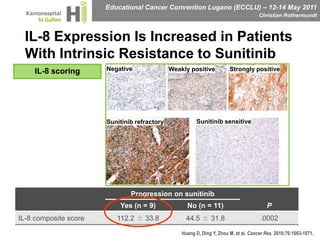
IL-8 Expression Is Increased in Patients With Intrinsic Resistance to SunitinibIL-8 scoringNegativeWeakly positiveStrongly positiveSunitinib sensitiveSunitinib refractoryHuang D, Ding Y, Zhou M, et al. Cancer Res. 2010;70:1063-1071.
Re-challenge With Anti-VEGF TreatmentSunitinib in bevacizumab-refractory patients1Axitinib in sorafenib-refractory patients2Sunitinib re-challenge after previous treatment with sunitinib31. Rini BI, et al. J Clin Oncol. 2008;26:3743-3748.2. Rini BI, et al. J Clin Oncol. 2009;27:4462-4468.3. Zama IN, et al. Cancer. 2010;116:5400-5406.
Summary: VEGF InhibitorsLoss of functional VHL and over-expression of HIF drive uncontrolled angiogenesis in RCCVEGF-targeted agents inhibit angiogenesis and have become the standard-of-care first-line treatment in mRCCDurable responses to VEGF-targeted agents are rare, and resistance can arise via multiple mechanisms
mTOR Inhibition
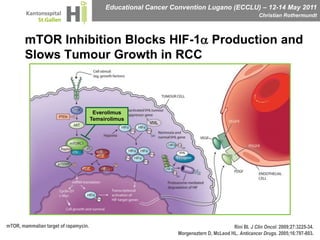
mTOR Inhibition Blocks HIF-1 Production and Slows Tumour Growth in RCCEverolimusTemsirolimusmTOR, mammalian target of rapamycin.Rini BI. J Clin Oncol. 2009;27:3225-34.Morgensztern D, McLeod HL. Anticancer Drugs. 2005;16:797-803.
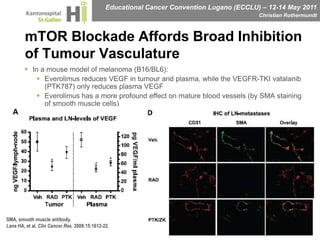
mTOR Blockade Affords Broad Inhibition of Tumour VasculatureIn a mouse model of melanoma (B16/BL6):Everolimus reduces VEGF in tumour and plasma, while the VEGFR-TKI vatalanib (PTK787) only reduces plasma VEGFEverolimus has a more profound effect on mature blood vessels (by SMA staining of smooth muscle cells)  SMA, smooth muscle antibody.Lane HA, et al. Clin Cancer Res. 2009;15:1612-22.
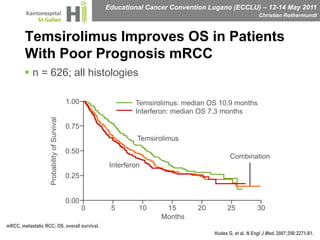
Temsirolimus Improves OS in Patients With Poor Prognosis mRCCn = 626; all histologies1.00Temsirolimus: median OS 10.9 monthsInterferon: median OS 7.3 months0.75Temsirolimus0.50Probability of SurvivalCombinationInterferon0.250.00051015202530MonthsmRCC, metastatic RCC; OS, overall survival.Hudes G, et al. N Engl J Med. 2007;356:2271-81.
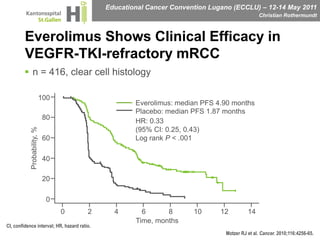
Everolimus Shows Clinical Efficacy in VEGFR-TKI-refractory mRCC n = 416, clear cell histology100Everolimus: median PFS 4.90 monthsPlacebo: median PFS 1.87 months80HR: 0.33(95% CI: 0.25, 0.43)Log rank P < .00160Probability, %4020002468101214Time, monthsCI, confidence interval; HR, hazard ratio.Motzer RJ et al. Cancer. 2010;116:4256-65.
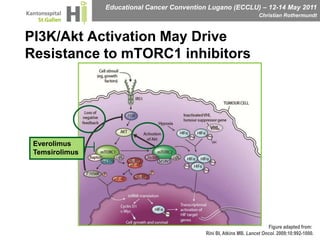
PI3K/Akt Activation May Drive Resistance to mTORC1 inhibitors EverolimusTemsirolimusFigure adapted from: Rini BI, Atkins MB. Lancet Oncol. 2009;10:992-1000.
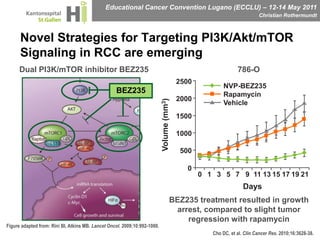
Novel Strategies for Targeting PI3K/Akt/mTOR Signaling in RCC are emerging Dual PI3K/mTOR inhibitor BEZ235786-O2500NVP-BEZ235BEZ235Rapamycin2000Vehicle1500Volume (mm3)10005000013579111315171921DaysBEZ235 treatment resulted in growth arrest, compared to slight tumor regression with rapamycinFigure adapted from: Rini BI, Atkins MB. Lancet Oncol. 2009;10:992-1000.Cho DC, et al. Clin Cancer Res. 2010;16:3628-38.
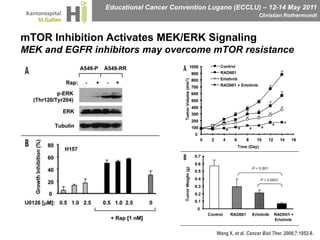
mTOR Inhibition Activates MEK/ERK SignalingMEK and EGFR inhibitors may overcome mTOR resistanceWang X, et al. Cancer Biol Ther. 2008;7:1952-8.
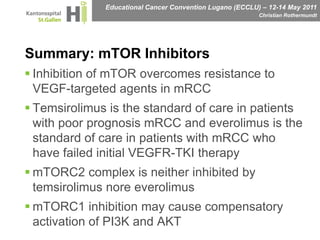
Summary: mTOR Inhibitors Inhibition of mTOR overcomes resistance to VEGF-targeted agents in mRCCTemsirolimus is the standard of care in patients with poor prognosis mRCC and everolimus is the standard of care in patients with mRCC who have failed initial VEGFR-TKI therapymTORC2 complex is neither inhibited by temsirolimus nore everolimusmTORC1 inhibition may cause compensatory activation of PI3K and AKT
Other Investigational Targets in RCC
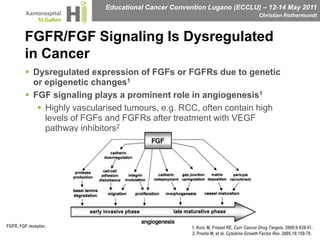
FGFR/FGF Signaling Is Dysregulated in CancerDysregulated expression of FGFs or FGFRs due to genetic or epigenetic changes1FGF signaling plays a prominent role in angiogenesis1Highly vascularised tumours, e.g. RCC, often contain high levels of FGFs and FGFRs after treatment with VEGF pathway inhibitors2FGFR, FGF receptor.1. Korc M, Friesel RE. Curr Cancer Drug Targets. 2009;9:639-51. 2. Presta M, et al. Cytokine Growth Factor Rev. 2005;16:159-78.
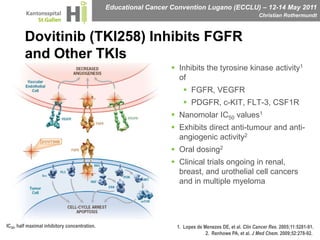
Dovitinib (TKI258) Inhibits FGFR and Other TKIsInhibits the tyrosine kinase activity1 ofFGFR, VEGFR PDGFR, c-KIT, FLT-3, CSF1RNanomolar IC50 values1Exhibits direct anti-tumour and anti-angiogenic activity2Oral dosing2Clinical trials ongoing in renal, breast, and urothelial cell cancers and in multiple myelomaIC50, half maximal inhibitory concentration.Lopes de Menezes DE, et al. Clin Cancer Res. 2005;11:5281-91.Renhowe PA, et al. J Med Chem. 2009;52:278-92.
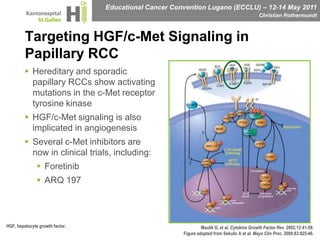
Targeting HGF/c-Met Signaling in Papillary RCCHereditary and sporadic papillary RCCs show activating mutations in the c-Met receptor tyrosine kinase HGF/c-Met signaling is also implicated in angiogenesisSeveral c-Met inhibitors are now in clinical trials, including:ForetinibARQ 197 HGF, hepatocyte growth factor.Maulik G, et al. Cytokine Growth Factor Rev. 2002;13:41-59.Figure adapted from Sekulic A et al. Mayo Clin Proc. 2008;83:825-46.
c-Met as a Target in Clear Cell RCCAnalysis of c-Met protein expression in 317 RCC tumour specimens c-Met is expressed in all RCCs, including those of clear cell histologyExpression is highest in tumours with papillary and sarcomatoid histologyHigh c-Met expression correlates with higher tumour grade (P = .0019) and clinical stage (P = .0208)High c-Met expression is an independent predictor of poor OS (P = .017) in RCC, including the clear cell subtype Gibney G, et al. J Clin Oncol. 2011;29(7 suppl):360.
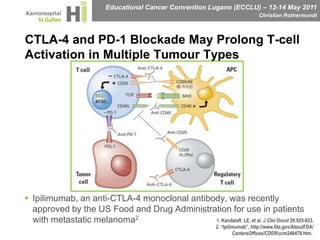
CTLA-4 and PD-1 Blockade May Prolong T-cell Activation in Multiple Tumour Types Ipilimumab, an anti-CTLA-4 monoclonal antibody, was recently approved by the US Food and Drug Administration for use in patients with metastatic melanoma21. Kandalaft  LE, et al. J Clin Oncol 29:925-933.2. “Ipilimumab”, http://www.fda.gov/AboutFDA/CentersOffices/CDER/ucm248478.htm.
Anti-CTLA-4 mAbs Show Preliminary Efficacy in mRCCPhase I dose-escalation study of tremelimumab in combination with sunitinib in mRCC121 patients enrolled; 9 achieved a PRPhase II trial of ipilimumab monotherapy in patients with mRCC261 patients enrolled; 6 achieved a PR33% of patients experienced grade 3/4 autoimmune-mediated toxicitySignificant association between autoimmune events and anti-tumour activity30% response rate in 20 patients with autoimmune toxicity0% response rate in 41 patients with no autoimmune toxicityP = .00071. Rini BI, et al. Cancer. 2011;117:758-67.2. Yang JC, et al. J Immunother. 2007;30:825-30.
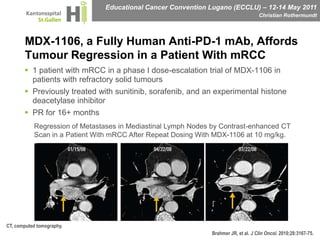
MDX-1106, a Fully Human Anti-PD-1 mAb, Affords Tumour Regression in a Patient With mRCC1 patient with mRCC in a phase I dose-escalation trial of MDX-1106 in patients with refractory solid tumoursPreviously treated with sunitinib, sorafenib, and an experimental histone deacetylase inhibitorPR for 16+ monthsRegression of Metastases in Mediastinal Lymph Nodes by Contrast-enhanced CT Scan in a Patient With mRCC After Repeat Dosing With MDX-1106 at 10 mg/kg.CT, computed tomography.Brahmer JR, et al. J Clin Oncol. 2010;28:3167-75.
ConclusionsNovel therapeutic targets currently under investigation may provide treatment options for patients who progress after VEGF-targeted treatment and mTOR inhibitorsPredictive markers are needed for treatment selectionDefinition of resistance by RECIST criteria has limitationsFunctional imaging needs validation and has to become widely availableDose escalation, drug combinations, dual pathway inhibition and sequencing of treatments are therapeutic strategiesRECIST, Response Evaluation Criteria In Solid Tumors.

ECCLU 2011 - C. Rothermundt - Mechanisms of action in modern RCC treatment

  • 1.
    Mechanisms of Actionin Modern RCC Treatment
  • 3.
    Conflict of InterestDeclarationBAYER – Advisory BoardGLAXOSMITHKLINE – Advisory BoardNOVARTIS – Support for this talk
  • 4.
    Renal Cell Cancer– Histological SubtypesBHD, Birt-Hogg-Dubé; VHL, von Hippel-Lindau.Linehan WM, et al. Clin Cancer Res. 2007;13:671s-9s.
  • 5.
    Von Hippel-Lindau (VHL)Protein Controls the Expression of the HIF- Transcription FactorsHIF, hypoxia-inducible factor; HRE, hypoxia-responsive element; VEGF, vascular endothelial growth factor.Cohen HT, et al. N Engl J Med. 2005;353:2477-90.
  • 6.
    VHL Loss IsPrevalent in RCCThe majority of clear cell RCCs lack functional VHL protein1This loss of function may occur via VHL gene mutations or epigenetic silencing via promoter hyper-methylation1,2Recent studies have found VHL inactivation in RCC (via mutation or hyper-methylation) to be quite widespread90% of 78 patients assessed391% of 205 patients assessed41. Gossage L, Eisen T. Nat Rev Clin Oncol. 2010;7:277-88.2. Gnarra JR, et al. Nat Genet.. 1994;7:85-90.3. Hutson TE, et al. J Clin Oncol. 2008;26(15S):5046.4. Nickerson ML, et al. Clin Cancer Res. 2008;14:4726-34.RCC, renal cell carcinoma.
  • 7.
    VHL Loss FuelsAccumulation of HIF and Uncontrolled Angiogenesis in RCCPDGF, platelet-derived growth factor; PDGFR, PDGF receptor; VEGFR, VEGF receptor.Rini BI. Cancer. 2009;115:2306-2312.
  • 8.
  • 9.
    VEGF and VEGFRBlockade Inhibit Angiogenesis and Tumour Growth in RCCRini BI. Clin Cancer Res. 2007;13:1098-106.Ellis LM, Hicklin DJ. Nat Rev Cancer. 2008;8:579-91.
  • 10.
    Response and Durationof Response to Anti-VEGF or Anti-VEGFR TreatmentCR, complete response; ORR, objective response rate, PD, progressive disease; PFS, progression-free survival; PR, partial response.1. Motzer RJ, et al. N Engl J Med. 2007;356:115-24.2. Escudier B, et al. Lancet. 2007;370:2103-2111.3. Sternberg C, et al. J Clin Oncol. 2010;28:1061-1068.
  • 11.
    Adaptive resistance:VEGF-targeted agentsfail to produce enduring clinical responses in most patientsIntrinsic resistance:No predictive biomarkers available to dateBergers G, Hanahan D. Nat Rev Cancer. 2008;8:592-603.Resistance to VEGF-targeted Therapy Is a Key Clinical Issue
  • 12.
    VEGFR-TKI Therapy ActivatesAlternate Pro­angiogenic PathwaysEarly Phase: Response to VEGF-targeted therapyLate Phase: Angiogenic escape of VEGF blockadeCancer cellsVEGFCancer cellsVEGFFGF, IL-8, othersNo AngiogenesisReactivation of AngiogenesisHypoxiaEndothelial cellsEndothelial cellsInhibition of VEGF signaling transiently stops tumour growth and decreases vascularityActivation of other pro-angiogenic factors leads to tumour progressionFGF, fibroblast growth factor; IL, interleukin; TKI, tyrosine kinase inhibitor.Figure revised from: Casanovas O, et al. Cancer Cell. 2005;8:299-309.
  • 13.
    Anti-VEGFR2 Therapy Inducesan Invasive PhenotypeControl (end-stage)Anti-VEGFR2 1 weekAnti-VEGFR2 4 weeksH&EAnti-T antigenAnti-CD31H&E, hematoxylin and eosin.Paez-Ribes M, et al. Cancer Cell. 2009;15:220-31.
  • 14.
    VEGFR Inhibition TriggersUpregulation of FGF and Other Angiogenic FactorsIn a mouse model of pancreatic islet carcinogenesis (RIP-Tag2):Resistance to VEGFR2 antibody was accompanied by up-regulation of mRNA expression for several pro-angiogenic factors, including FGF1, FGF2, FGF7, and Ang-1, in tumour and/or stromal cells2.52.01.5Fold Change in Expressionin VEGFR2-blocked vs Control1.00.50FGF1FGF2FGF7VEGFEphA2FGFR1FGFR2VEGFR1VEGFR2Angiop.1Angiop.2EphrinA1Casanovas O, et al. Cancer Cell. 2005;8:299-309.
  • 15.
    Additional Possible Mechanismsof Resistance to VEGFR-TKI Therapy Hypoxia HIF1-a circulating VEGF and PDGF Placental growth factor (PlGF)Inter-molecular crosstalk between FLT1 and FLK1Up-regulation of the expression of VEGF-A, FGF2, PDGFB, MMPsUp-regulation of pro-angiogenic stromal cellsTumour-associated fibroblasts (TAFs)Bone marrow-derived cellsVascular progenitors and pro-angiogenic monocytic cells, TIE2+ monocytes, VEGFR-1+ hemangiocytes, CD11b+ myeloid cellsInadequate target inhibitionAzam F, et al. Eur J Cancer. 2010;46:1323-1332
  • 16.
    Increased Secretion ofIL-8 Linked to Sunitinib Resistance in RCC786-O XenograftIL-8 Level in Plasma From786-O Xenograft Mice (Day 68)0.8*3.0SensitiveResistant2.50.62.0(n = 15)0.41.5Tumor Growth RatioIL-8(pg/mL/mm3 tumor)1.00.2(n = 3)**0.5003336674043464850535557606264ControlSensitiveResisitantTime After Tumor Inoculation (d)Huang D, Ding Y, Zhou M, et al. Cancer Res. 2010;70:1063-1071.
  • 17.
    IL-8 Expression IsIncreased in Patients With Intrinsic Resistance to SunitinibIL-8 scoringNegativeWeakly positiveStrongly positiveSunitinib sensitiveSunitinib refractoryHuang D, Ding Y, Zhou M, et al. Cancer Res. 2010;70:1063-1071.
  • 18.
    Re-challenge With Anti-VEGFTreatmentSunitinib in bevacizumab-refractory patients1Axitinib in sorafenib-refractory patients2Sunitinib re-challenge after previous treatment with sunitinib31. Rini BI, et al. J Clin Oncol. 2008;26:3743-3748.2. Rini BI, et al. J Clin Oncol. 2009;27:4462-4468.3. Zama IN, et al. Cancer. 2010;116:5400-5406.
  • 19.
    Summary: VEGF InhibitorsLossof functional VHL and over-expression of HIF drive uncontrolled angiogenesis in RCCVEGF-targeted agents inhibit angiogenesis and have become the standard-of-care first-line treatment in mRCCDurable responses to VEGF-targeted agents are rare, and resistance can arise via multiple mechanisms
  • 20.
  • 21.
    mTOR Inhibition BlocksHIF-1 Production and Slows Tumour Growth in RCCEverolimusTemsirolimusmTOR, mammalian target of rapamycin.Rini BI. J Clin Oncol. 2009;27:3225-34.Morgensztern D, McLeod HL. Anticancer Drugs. 2005;16:797-803.
  • 22.
    mTOR Blockade AffordsBroad Inhibition of Tumour VasculatureIn a mouse model of melanoma (B16/BL6):Everolimus reduces VEGF in tumour and plasma, while the VEGFR-TKI vatalanib (PTK787) only reduces plasma VEGFEverolimus has a more profound effect on mature blood vessels (by SMA staining of smooth muscle cells) SMA, smooth muscle antibody.Lane HA, et al. Clin Cancer Res. 2009;15:1612-22.
  • 23.
    Temsirolimus Improves OSin Patients With Poor Prognosis mRCCn = 626; all histologies1.00Temsirolimus: median OS 10.9 monthsInterferon: median OS 7.3 months0.75Temsirolimus0.50Probability of SurvivalCombinationInterferon0.250.00051015202530MonthsmRCC, metastatic RCC; OS, overall survival.Hudes G, et al. N Engl J Med. 2007;356:2271-81.
  • 24.
    Everolimus Shows ClinicalEfficacy in VEGFR-TKI-refractory mRCC n = 416, clear cell histology100Everolimus: median PFS 4.90 monthsPlacebo: median PFS 1.87 months80HR: 0.33(95% CI: 0.25, 0.43)Log rank P < .00160Probability, %4020002468101214Time, monthsCI, confidence interval; HR, hazard ratio.Motzer RJ et al. Cancer. 2010;116:4256-65.
  • 25.
    PI3K/Akt Activation MayDrive Resistance to mTORC1 inhibitors EverolimusTemsirolimusFigure adapted from: Rini BI, Atkins MB. Lancet Oncol. 2009;10:992-1000.
  • 26.
    Novel Strategies forTargeting PI3K/Akt/mTOR Signaling in RCC are emerging Dual PI3K/mTOR inhibitor BEZ235786-O2500NVP-BEZ235BEZ235Rapamycin2000Vehicle1500Volume (mm3)10005000013579111315171921DaysBEZ235 treatment resulted in growth arrest, compared to slight tumor regression with rapamycinFigure adapted from: Rini BI, Atkins MB. Lancet Oncol. 2009;10:992-1000.Cho DC, et al. Clin Cancer Res. 2010;16:3628-38.
  • 27.
    mTOR Inhibition ActivatesMEK/ERK SignalingMEK and EGFR inhibitors may overcome mTOR resistanceWang X, et al. Cancer Biol Ther. 2008;7:1952-8.
  • 28.
    Summary: mTOR InhibitorsInhibition of mTOR overcomes resistance to VEGF-targeted agents in mRCCTemsirolimus is the standard of care in patients with poor prognosis mRCC and everolimus is the standard of care in patients with mRCC who have failed initial VEGFR-TKI therapymTORC2 complex is neither inhibited by temsirolimus nore everolimusmTORC1 inhibition may cause compensatory activation of PI3K and AKT
  • 29.
  • 30.
    FGFR/FGF Signaling IsDysregulated in CancerDysregulated expression of FGFs or FGFRs due to genetic or epigenetic changes1FGF signaling plays a prominent role in angiogenesis1Highly vascularised tumours, e.g. RCC, often contain high levels of FGFs and FGFRs after treatment with VEGF pathway inhibitors2FGFR, FGF receptor.1. Korc M, Friesel RE. Curr Cancer Drug Targets. 2009;9:639-51. 2. Presta M, et al. Cytokine Growth Factor Rev. 2005;16:159-78.
  • 31.
    Dovitinib (TKI258) InhibitsFGFR and Other TKIsInhibits the tyrosine kinase activity1 ofFGFR, VEGFR PDGFR, c-KIT, FLT-3, CSF1RNanomolar IC50 values1Exhibits direct anti-tumour and anti-angiogenic activity2Oral dosing2Clinical trials ongoing in renal, breast, and urothelial cell cancers and in multiple myelomaIC50, half maximal inhibitory concentration.Lopes de Menezes DE, et al. Clin Cancer Res. 2005;11:5281-91.Renhowe PA, et al. J Med Chem. 2009;52:278-92.
  • 32.
    Targeting HGF/c-Met Signalingin Papillary RCCHereditary and sporadic papillary RCCs show activating mutations in the c-Met receptor tyrosine kinase HGF/c-Met signaling is also implicated in angiogenesisSeveral c-Met inhibitors are now in clinical trials, including:ForetinibARQ 197 HGF, hepatocyte growth factor.Maulik G, et al. Cytokine Growth Factor Rev. 2002;13:41-59.Figure adapted from Sekulic A et al. Mayo Clin Proc. 2008;83:825-46.
  • 33.
    c-Met as aTarget in Clear Cell RCCAnalysis of c-Met protein expression in 317 RCC tumour specimens c-Met is expressed in all RCCs, including those of clear cell histologyExpression is highest in tumours with papillary and sarcomatoid histologyHigh c-Met expression correlates with higher tumour grade (P = .0019) and clinical stage (P = .0208)High c-Met expression is an independent predictor of poor OS (P = .017) in RCC, including the clear cell subtype Gibney G, et al. J Clin Oncol. 2011;29(7 suppl):360.
  • 34.
    CTLA-4 and PD-1Blockade May Prolong T-cell Activation in Multiple Tumour Types Ipilimumab, an anti-CTLA-4 monoclonal antibody, was recently approved by the US Food and Drug Administration for use in patients with metastatic melanoma21. Kandalaft LE, et al. J Clin Oncol 29:925-933.2. “Ipilimumab”, http://www.fda.gov/AboutFDA/CentersOffices/CDER/ucm248478.htm.
  • 35.
    Anti-CTLA-4 mAbs ShowPreliminary Efficacy in mRCCPhase I dose-escalation study of tremelimumab in combination with sunitinib in mRCC121 patients enrolled; 9 achieved a PRPhase II trial of ipilimumab monotherapy in patients with mRCC261 patients enrolled; 6 achieved a PR33% of patients experienced grade 3/4 autoimmune-mediated toxicitySignificant association between autoimmune events and anti-tumour activity30% response rate in 20 patients with autoimmune toxicity0% response rate in 41 patients with no autoimmune toxicityP = .00071. Rini BI, et al. Cancer. 2011;117:758-67.2. Yang JC, et al. J Immunother. 2007;30:825-30.
  • 36.
    MDX-1106, a FullyHuman Anti-PD-1 mAb, Affords Tumour Regression in a Patient With mRCC1 patient with mRCC in a phase I dose-escalation trial of MDX-1106 in patients with refractory solid tumoursPreviously treated with sunitinib, sorafenib, and an experimental histone deacetylase inhibitorPR for 16+ monthsRegression of Metastases in Mediastinal Lymph Nodes by Contrast-enhanced CT Scan in a Patient With mRCC After Repeat Dosing With MDX-1106 at 10 mg/kg.CT, computed tomography.Brahmer JR, et al. J Clin Oncol. 2010;28:3167-75.
  • 37.
    ConclusionsNovel therapeutic targetscurrently under investigation may provide treatment options for patients who progress after VEGF-targeted treatment and mTOR inhibitorsPredictive markers are needed for treatment selectionDefinition of resistance by RECIST criteria has limitationsFunctional imaging needs validation and has to become widely availableDose escalation, drug combinations, dual pathway inhibition and sequencing of treatments are therapeutic strategiesRECIST, Response Evaluation Criteria In Solid Tumors.