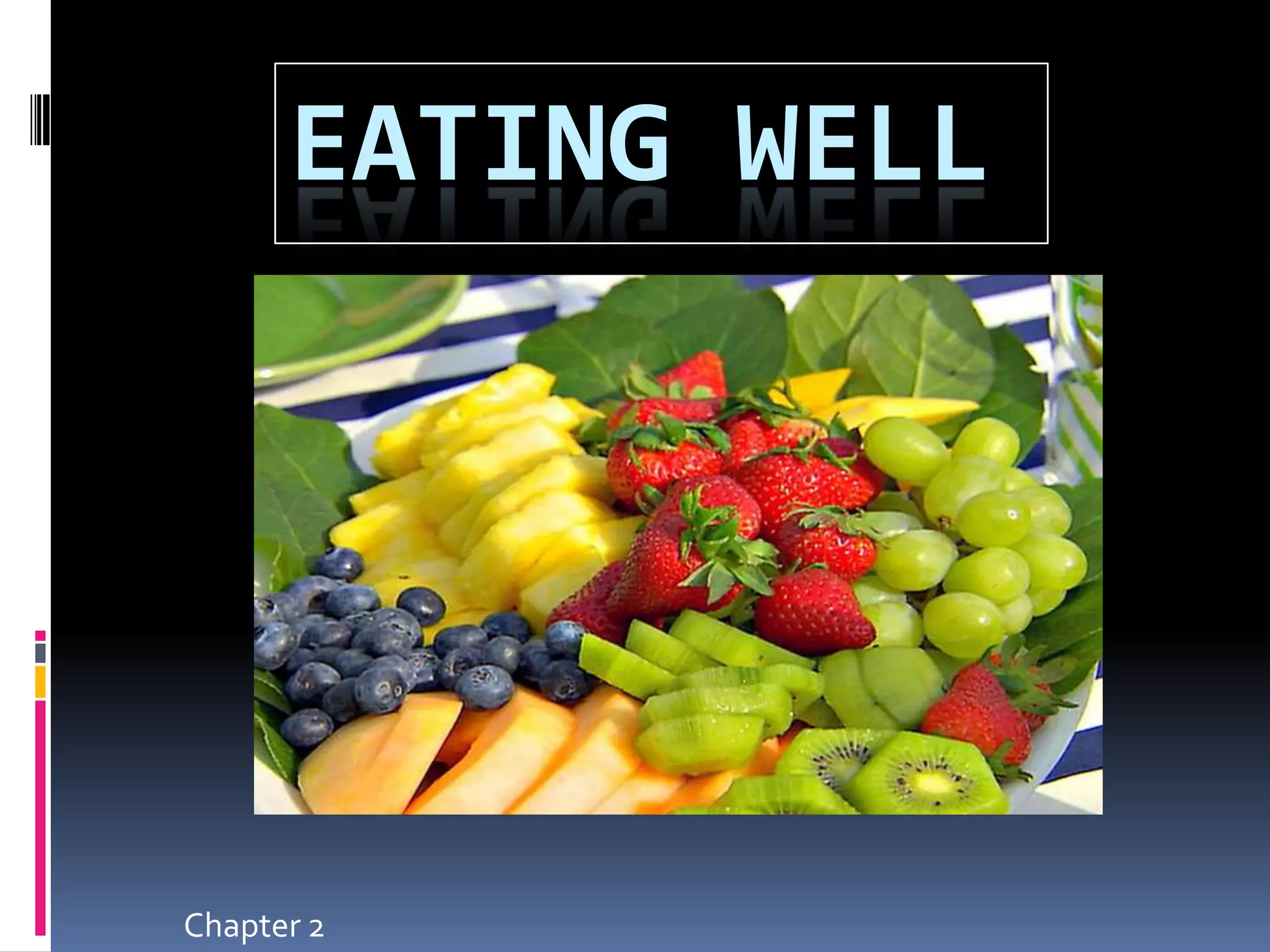
EATING WELL


Chapter 2
What is a healthy diet?

Each individual body type and metabolism is
  different so therefore we have different needs.
  Research has helped us to determine which food
  is nutritious and which foods are not.
1. Eat Whole Foods! These are foods that remain closest to its natural state, limited
   processing. Whole grains, oatmeal, wheat bread, multi grain etc.
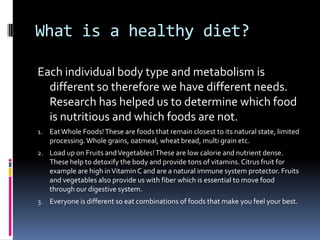
2. Load up on Fruits and Vegetables! These are low calorie and nutrient dense.
   These help to detoxify the body and provide tons of vitamins. Citrus fruit for
   example are high in Vitamin C and are a natural immune system protector. Fruits
   and vegetables also provide us with fiber which is essential to move food
   through our digestive system.
3. Everyone is different so eat combinations of foods that make you feel your best.
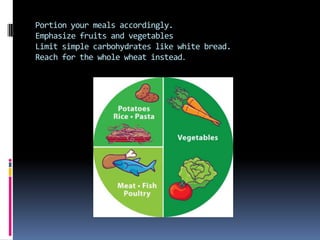
Portion your meals accordingly.
Emphasize fruits and vegetables
Limit simple carbohydrates like white bread.
Reach for the whole wheat instead.
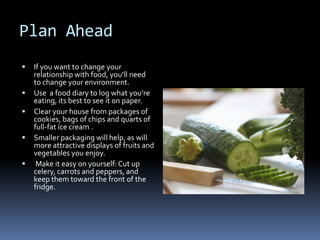
Plan Ahead
   If you want to change your
    relationship with food, you’ll need
    to change your environment.
   Use a food diary to log what you’re
    eating, its best to see it on paper.
   Clear your house from packages of
    cookies, bags of chips and quarts of
    full-fat ice cream .
   Smaller packaging will help, as will
    more attractive displays of fruits and
    vegetables you enjoy.
    Make it easy on yourself: Cut up
    celery, carrots and peppers, and
    keep them toward the front of the
    fridge.
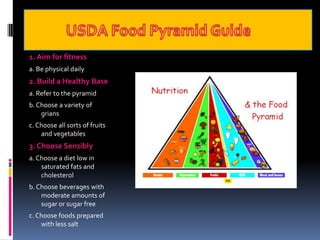
1. Aim for fitness
a. Be physical daily
2. Build a Healthy Base
a. Refer to the pyramid
b. Choose a variety of
    grians
c. Choose all sorts of fruits
    and vegetables
3. Choose Sensibly
a. Choose a diet low in
    saturated fats and
    cholesterol
b. Choose beverages with
    moderate amounts of
    sugar or sugar free
c. Choose foods prepared
    with less salt
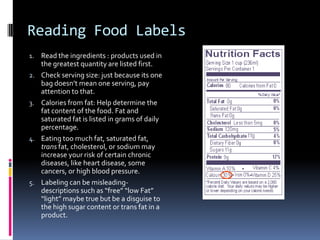
Reading Food Labels
1. Read the ingredients : products used in
     the greatest quantity are listed first.
2.   Check serving size: just because its one
     bag doesn’t mean one serving, pay
     attention to that.
3.   Calories from fat: Help determine the
     fat content of the food. Fat and
     saturated fat is listed in grams of daily
     percentage.
4.   Eating too much fat, saturated fat,
     trans fat, cholesterol, or sodium may
     increase your risk of certain chronic
     diseases, like heart disease, some
     cancers, or high blood pressure.
5.   Labeling can be misleading-
     descriptions such as “free” “low Fat”
     “light” maybe true but be a disguise to
     the high sugar content or trans fat in a
     product.
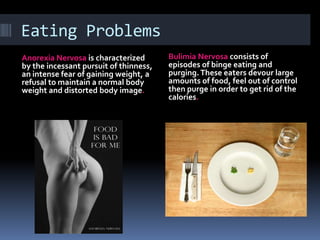
Eating Problems
Anorexia Nervosa is characterized       Bulimia Nervosa consists of
by the incessant pursuit of thinness,   episodes of binge eating and
an intense fear of gaining weight, a    purging. These eaters devour large
refusal to maintain a normal body       amounts of food, feel out of control
weight and distorted body image.        then purge in order to get rid of the
                                        calories.
Signs of Eating Problem

 Change in personality or behavior:
    Depressed, more with drawn, or irritable.
   Unusual eating habits: stops eating with
    people, smaller portions or stops eating
    entirely.
   Compulsive exercising.
   Thin/ unhealthy appearance
   Flat mood/lack of emotion
http://www.nationaleatingdisorders.org/information-resources/women-
and-girls.php


Anorexia, Bulimia, & Binge Eating Disorder: What is
  an Eating Disorder?
  Eating disorders such as anorexia, bulimia, and binge
  eating disorder include extreme emotions, attitudes,
  and behaviors surrounding weight and food issues.
What's Going On With Me?
   Living in our culture, it's not surprising if you feel
   you have to look a certain way to be happy or even
   healthy. However, the things you are doing to be
   thin can quickly spin out of control and become a
   serious life-threatening eating disorder.
Sources

 Read More http://www.ivillage.com/9-ways-
  break-cycle-comfort-eating/4-b-
  384673#ixzz1ZCdLDKvu
 http://www.mayoclinic.com/health/eating-
  disorders/DS00294/DSECTION=symptoms
 http://www.fda.gov/food/labelingnutrition/co
  nsumerinformation/ucm078889.htm#nutrien
  ts

Eating well

  • 1.
  • 2.
    What is ahealthy diet? Each individual body type and metabolism is different so therefore we have different needs. Research has helped us to determine which food is nutritious and which foods are not. 1. Eat Whole Foods! These are foods that remain closest to its natural state, limited processing. Whole grains, oatmeal, wheat bread, multi grain etc. 2. Load up on Fruits and Vegetables! These are low calorie and nutrient dense. These help to detoxify the body and provide tons of vitamins. Citrus fruit for example are high in Vitamin C and are a natural immune system protector. Fruits and vegetables also provide us with fiber which is essential to move food through our digestive system. 3. Everyone is different so eat combinations of foods that make you feel your best.
  • 3.
    Portion your mealsaccordingly. Emphasize fruits and vegetables Limit simple carbohydrates like white bread. Reach for the whole wheat instead.
  • 4.
    Plan Ahead  If you want to change your relationship with food, you’ll need to change your environment.  Use a food diary to log what you’re eating, its best to see it on paper.  Clear your house from packages of cookies, bags of chips and quarts of full-fat ice cream .  Smaller packaging will help, as will more attractive displays of fruits and vegetables you enjoy.  Make it easy on yourself: Cut up celery, carrots and peppers, and keep them toward the front of the fridge.
  • 5.
    1. Aim forfitness a. Be physical daily 2. Build a Healthy Base a. Refer to the pyramid b. Choose a variety of grians c. Choose all sorts of fruits and vegetables 3. Choose Sensibly a. Choose a diet low in saturated fats and cholesterol b. Choose beverages with moderate amounts of sugar or sugar free c. Choose foods prepared with less salt
  • 6.
    Reading Food Labels 1.Read the ingredients : products used in the greatest quantity are listed first. 2. Check serving size: just because its one bag doesn’t mean one serving, pay attention to that. 3. Calories from fat: Help determine the fat content of the food. Fat and saturated fat is listed in grams of daily percentage. 4. Eating too much fat, saturated fat, trans fat, cholesterol, or sodium may increase your risk of certain chronic diseases, like heart disease, some cancers, or high blood pressure. 5. Labeling can be misleading- descriptions such as “free” “low Fat” “light” maybe true but be a disguise to the high sugar content or trans fat in a product.
  • 7.
    Eating Problems Anorexia Nervosais characterized Bulimia Nervosa consists of by the incessant pursuit of thinness, episodes of binge eating and an intense fear of gaining weight, a purging. These eaters devour large refusal to maintain a normal body amounts of food, feel out of control weight and distorted body image. then purge in order to get rid of the calories.
  • 8.
    Signs of EatingProblem  Change in personality or behavior: Depressed, more with drawn, or irritable.  Unusual eating habits: stops eating with people, smaller portions or stops eating entirely.  Compulsive exercising.  Thin/ unhealthy appearance  Flat mood/lack of emotion
  • 9.
    http://www.nationaleatingdisorders.org/information-resources/women- and-girls.php Anorexia, Bulimia, &Binge Eating Disorder: What is an Eating Disorder? Eating disorders such as anorexia, bulimia, and binge eating disorder include extreme emotions, attitudes, and behaviors surrounding weight and food issues. What's Going On With Me? Living in our culture, it's not surprising if you feel you have to look a certain way to be happy or even healthy. However, the things you are doing to be thin can quickly spin out of control and become a serious life-threatening eating disorder.
  • 10.
    Sources  Read Morehttp://www.ivillage.com/9-ways- break-cycle-comfort-eating/4-b- 384673#ixzz1ZCdLDKvu  http://www.mayoclinic.com/health/eating- disorders/DS00294/DSECTION=symptoms  http://www.fda.gov/food/labelingnutrition/co nsumerinformation/ucm078889.htm#nutrien ts