SAKSHI SINGLA
L-2014-HSC-42-BND
INTRODUCTION
Eating disorders are actually serious mental disorder that cause severe disturbances to a
personโ€™s eating behaviors (abnormal eating) that has a detrimental effect on personโ€™s
PHYSICAL and MENTAL HEALTH.
Obsessions with food, body weight, and shape may also signal an eating disorder.
The cause of eating disorders is not clear. Both biological and environmental factors appear to
play a role. Cultural idealization of thinness is believed to contribute
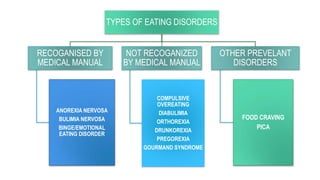
TYPES OF EATING DISORDERS
RECOGANISED BY
MEDICAL MANUAL
ANOREXIA NERVOSA
BULIMIA NERVOSA
BINGE/EMOTIONAL
EATING DISORDER
NOT RECOGANIZED
BY MEDICAL MANUAL
COMPULSIVE
OVEREATING
DIABULIMIA
ORTHOREXIA
DRUNKOREXIA
PREGOREXIA
GOURMAND SYNDROME
OTHER PREVELANT
DISORDERS
FOOD CRAVING
PICA
ANOREXIA
NERVOSA
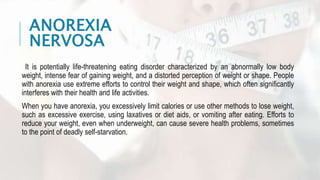
It is potentially life-threatening eating disorder characterized by an abnormally low body
weight, intense fear of gaining weight, and a distorted perception of weight or shape. People
with anorexia use extreme efforts to control their weight and shape, which often significantly
interferes with their health and life activities.
When you have anorexia, you excessively limit calories or use other methods to lose weight,
such as excessive exercise, using laxatives or diet aids, or vomiting after eating. Efforts to
reduce your weight, even when underweight, can cause severe health problems, sometimes
to the point of deadly self-starvation.
Life-threatening eating disorder.
There are episodes of bingeing and
purging that involve feeling a lack of
control over your eating. Many people
with bulimia also restrict their eating
during the day, which often leads to
more binge eating and purging.
BULIMIA
NERVOSA
BULIMIA NERVOSA
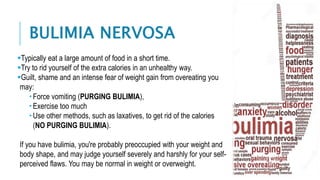
๏‚งTypically eat a large amount of food in a short time.
๏‚งTry to rid yourself of the extra calories in an unhealthy way.
๏‚งGuilt, shame and an intense fear of weight gain from overeating you
may:
๏‚ญ Force vomiting (PURGING BULIMIA),
๏‚ญ Exercise too much
๏‚ญ Use other methods, such as laxatives, to get rid of the calories
(NO PURGING BULIMIA).
If you have bulimia, you're probably preoccupied with your weight and
body shape, and may judge yourself severely and harshly for your self-
perceived flaws. You may be normal in weight or overweight.
BINGE or EMOTINAL EATING
Individuals who suffer from Binge Eating Disorder will frequently lose control over his
or her eating.
Different from bulimia nervosa however, episodes of binge-eating are not followed by
compensatory behaviors, such as purging, fasting, or excessive exercise. Because of
this, many people suffering from BED may be obese and at an increased risk of
developing other conditions, such as cardiovascular disease. Men and women who
struggle with this disorder may also experience intense feelings of guilt, distress, and
embarrassment related to their binge eating, which could influence the further
progression of the eating disorder.
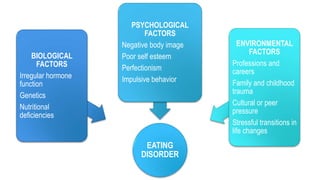
EATING
DISORDER
BIOLOGICAL
FACTORS
Irregular hormone
function
Genetics
Nutritional
deficiencies
PSYCHOLOGICAL
FACTORS
Negative body image
Poor self esteem
Perfectionism
Impulsive behavior
ENVIRONMENTAL
FACTORS
Professions and
careers
Family and childhood
trauma
Cultural or peer
pressure
Stressful transitions in
life changes
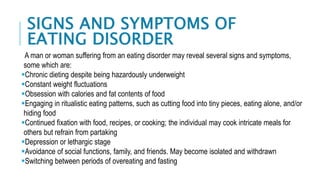
SIGNS AND SYMPTOMS OF
EATING DISORDER
A man or woman suffering from an eating disorder may reveal several signs and symptoms,
some which are:
๏‚งChronic dieting despite being hazardously underweight
๏‚งConstant weight fluctuations
๏‚งObsession with calories and fat contents of food
๏‚งEngaging in ritualistic eating patterns, such as cutting food into tiny pieces, eating alone, and/or
hiding food
๏‚งContinued fixation with food, recipes, or cooking; the individual may cook intricate meals for
others but refrain from partaking
๏‚งDepression or lethargic stage
๏‚งAvoidance of social functions, family, and friends. May become isolated and withdrawn
๏‚งSwitching between periods of overeating and fasting
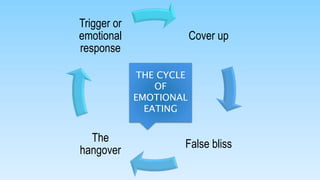
Cover up
False bliss
The
hangover
Trigger or
emotional
response
THE CYCLE
OF
EMOTIONAL
EATING
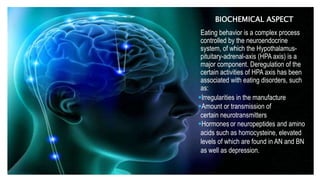
BIOCHEMICAL ASPECT
Eating behavior is a complex process
controlled by the neuroendocrine
system, of which the Hypothalamus-
pituitary-adrenal-axis (HPA axis) is a
major component. Deregulation of the
certain activities of HPA axis has been
associated with eating disorders, such
as:
๏‚งIrregularities in the manufacture
๏‚งAmount or transmission of
certain neurotransmitters
๏‚งHormones or neuropeptides and amino
acids such as homocysteine, elevated
levels of which are found in AN and BN
as well as depression.
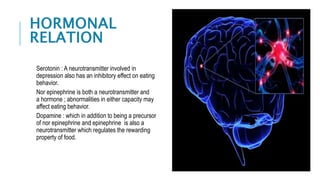
HORMONAL
RELATION
Serotonin : A neurotransmitter involved in
depression also has an inhibitory effect on eating
behavior.
Nor epinephrine is both a neurotransmitter and
a hormone ; abnormalities in either capacity may
affect eating behavior.
Dopamine : which in addition to being a precursor
of nor epinephrine and epinephrine is also a
neurotransmitter which regulates the rewarding
property of food.
Leptin is a hormone produced primarily by the fat
cells in the body; it has an inhibitory effect on
appetite by inducing a feeling of satiety.
Ghrelin is an appetite inducing hormone
produced in the stomach and the upper portion of
the small intestine.
Circulating levels of both hormones are an
important factor in weight control. While often
associated with obesity, both hormones and their
respective effects have been implicated in the
path physiology of anorexia nervosa and bulimia
nervosa. Leptin can also be used to distinguish
between constitutional thinness found in a healthy
person with a low BMI and an individual with
anorexia nervosa.
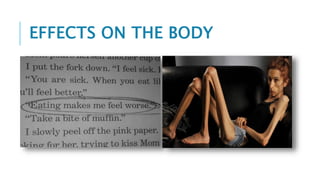
EFFECTS ON THE BODY
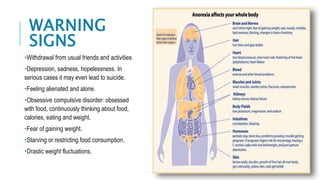
WARNING
SIGNS
โ€ขWithdrawal from usual friends and activities
โ€ขDepression, sadness, hopelessness. In
serious cases it may even lead to suicide.
โ€ขFeeling alienated and alone.
โ€ขObsessive compulsive disorder: obsessed
with food, continuously thinking about food,
calories, eating and weight.
โ€ขFear of gaining weight.
โ€ขStarving or restricting food consumption.
โ€ขDrastic weight fluctuations.
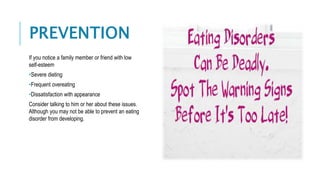
PREVENTION
If you notice a family member or friend with low
self-esteem
โ€ขSevere dieting
โ€ขFrequent overeating
โ€ขDissatisfaction with appearance
Consider talking to him or her about these issues.
Although you may not be able to prevent an eating
disorder from developing.
Reaching out with compassion may
encourage
the person to seek treatment.
TREATMENT
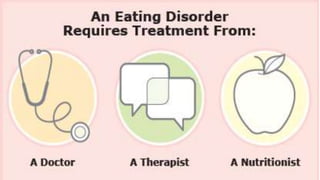
The American Psychiatric Association (APA) recommends
a team approach to treatment of eating disorders. The
members of the team are usually a psychiatrist, therapist,
and registered dietitian, but other clinicians may be
included.
Adequate nutrition, reducing excessive exercise, and
stopping purging behaviors are the foundations of
treatment. Treatment plans are tailored to individual needs
and may include one or more of the following:
๏‚งIndividual, group, and/or family psychotherapy
๏‚งMedical care and monitoring
๏‚งNutritional counseling
๏‚งMedications
๏‚งPsychotherapies
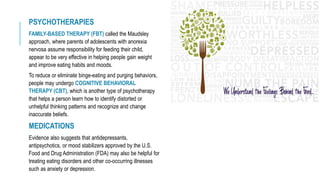
PSYCHOTHERAPIES
FAMILY-BASED THERAPY (FBT) called the Maudsley
approach, where parents of adolescents with anorexia
nervosa assume responsibility for feeding their child,
appear to be very effective in helping people gain weight
and improve eating habits and moods.
To reduce or eliminate binge-eating and purging behaviors,
people may undergo COGNITIVE BEHAVIORAL
THERAPY (CBT), which is another type of psychotherapy
that helps a person learn how to identify distorted or
unhelpful thinking patterns and recognize and change
inaccurate beliefs.
MEDICATIONS
Evidence also suggests that antidepressants,
antipsychotics, or mood stabilizers approved by the U.S.
Food and Drug Administration (FDA) may also be helpful for
treating eating disorders and other co-occurring illnesses
such as anxiety or depression.
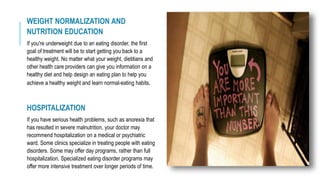
WEIGHT NORMALIZATION AND
NUTRITION EDUCATION
If you're underweight due to an eating disorder, the first
goal of treatment will be to start getting you back to a
healthy weight. No matter what your weight, dietitians and
other health care providers can give you information on a
healthy diet and help design an eating plan to help you
achieve a healthy weight and learn normal-eating habits.
HOSPITALIZATION
If you have serious health problems, such as anorexia that
has resulted in severe malnutrition, your doctor may
recommend hospitalization on a medical or psychiatric
ward. Some clinics specialize in treating people with eating
disorders. Some may offer day programs, rather than full
hospitalization. Specialized eating disorder programs may
offer more intensive treatment over longer periods of time.
Eating Disorders
Eating Disorders
Eating Disorders

Eating Disorders

  • 1.
  • 2.
    INTRODUCTION Eating disorders areactually serious mental disorder that cause severe disturbances to a personโ€™s eating behaviors (abnormal eating) that has a detrimental effect on personโ€™s PHYSICAL and MENTAL HEALTH. Obsessions with food, body weight, and shape may also signal an eating disorder. The cause of eating disorders is not clear. Both biological and environmental factors appear to play a role. Cultural idealization of thinness is believed to contribute
  • 3.
    TYPES OF EATINGDISORDERS RECOGANISED BY MEDICAL MANUAL ANOREXIA NERVOSA BULIMIA NERVOSA BINGE/EMOTIONAL EATING DISORDER NOT RECOGANIZED BY MEDICAL MANUAL COMPULSIVE OVEREATING DIABULIMIA ORTHOREXIA DRUNKOREXIA PREGOREXIA GOURMAND SYNDROME OTHER PREVELANT DISORDERS FOOD CRAVING PICA
  • 5.
    ANOREXIA NERVOSA It is potentiallylife-threatening eating disorder characterized by an abnormally low body weight, intense fear of gaining weight, and a distorted perception of weight or shape. People with anorexia use extreme efforts to control their weight and shape, which often significantly interferes with their health and life activities. When you have anorexia, you excessively limit calories or use other methods to lose weight, such as excessive exercise, using laxatives or diet aids, or vomiting after eating. Efforts to reduce your weight, even when underweight, can cause severe health problems, sometimes to the point of deadly self-starvation.
  • 6.
    Life-threatening eating disorder. Thereare episodes of bingeing and purging that involve feeling a lack of control over your eating. Many people with bulimia also restrict their eating during the day, which often leads to more binge eating and purging. BULIMIA NERVOSA
  • 7.
    BULIMIA NERVOSA ๏‚งTypically eata large amount of food in a short time. ๏‚งTry to rid yourself of the extra calories in an unhealthy way. ๏‚งGuilt, shame and an intense fear of weight gain from overeating you may: ๏‚ญ Force vomiting (PURGING BULIMIA), ๏‚ญ Exercise too much ๏‚ญ Use other methods, such as laxatives, to get rid of the calories (NO PURGING BULIMIA). If you have bulimia, you're probably preoccupied with your weight and body shape, and may judge yourself severely and harshly for your self- perceived flaws. You may be normal in weight or overweight.
  • 8.
    BINGE or EMOTINALEATING Individuals who suffer from Binge Eating Disorder will frequently lose control over his or her eating. Different from bulimia nervosa however, episodes of binge-eating are not followed by compensatory behaviors, such as purging, fasting, or excessive exercise. Because of this, many people suffering from BED may be obese and at an increased risk of developing other conditions, such as cardiovascular disease. Men and women who struggle with this disorder may also experience intense feelings of guilt, distress, and embarrassment related to their binge eating, which could influence the further progression of the eating disorder.
  • 14.
    EATING DISORDER BIOLOGICAL FACTORS Irregular hormone function Genetics Nutritional deficiencies PSYCHOLOGICAL FACTORS Negative bodyimage Poor self esteem Perfectionism Impulsive behavior ENVIRONMENTAL FACTORS Professions and careers Family and childhood trauma Cultural or peer pressure Stressful transitions in life changes
  • 15.
    SIGNS AND SYMPTOMSOF EATING DISORDER A man or woman suffering from an eating disorder may reveal several signs and symptoms, some which are: ๏‚งChronic dieting despite being hazardously underweight ๏‚งConstant weight fluctuations ๏‚งObsession with calories and fat contents of food ๏‚งEngaging in ritualistic eating patterns, such as cutting food into tiny pieces, eating alone, and/or hiding food ๏‚งContinued fixation with food, recipes, or cooking; the individual may cook intricate meals for others but refrain from partaking ๏‚งDepression or lethargic stage ๏‚งAvoidance of social functions, family, and friends. May become isolated and withdrawn ๏‚งSwitching between periods of overeating and fasting
  • 16.
    Cover up False bliss The hangover Triggeror emotional response THE CYCLE OF EMOTIONAL EATING
  • 17.
    BIOCHEMICAL ASPECT Eating behavioris a complex process controlled by the neuroendocrine system, of which the Hypothalamus- pituitary-adrenal-axis (HPA axis) is a major component. Deregulation of the certain activities of HPA axis has been associated with eating disorders, such as: ๏‚งIrregularities in the manufacture ๏‚งAmount or transmission of certain neurotransmitters ๏‚งHormones or neuropeptides and amino acids such as homocysteine, elevated levels of which are found in AN and BN as well as depression.
  • 18.
    HORMONAL RELATION Serotonin : Aneurotransmitter involved in depression also has an inhibitory effect on eating behavior. Nor epinephrine is both a neurotransmitter and a hormone ; abnormalities in either capacity may affect eating behavior. Dopamine : which in addition to being a precursor of nor epinephrine and epinephrine is also a neurotransmitter which regulates the rewarding property of food.
  • 19.
    Leptin is ahormone produced primarily by the fat cells in the body; it has an inhibitory effect on appetite by inducing a feeling of satiety. Ghrelin is an appetite inducing hormone produced in the stomach and the upper portion of the small intestine. Circulating levels of both hormones are an important factor in weight control. While often associated with obesity, both hormones and their respective effects have been implicated in the path physiology of anorexia nervosa and bulimia nervosa. Leptin can also be used to distinguish between constitutional thinness found in a healthy person with a low BMI and an individual with anorexia nervosa.
  • 20.
  • 22.
    WARNING SIGNS โ€ขWithdrawal from usualfriends and activities โ€ขDepression, sadness, hopelessness. In serious cases it may even lead to suicide. โ€ขFeeling alienated and alone. โ€ขObsessive compulsive disorder: obsessed with food, continuously thinking about food, calories, eating and weight. โ€ขFear of gaining weight. โ€ขStarving or restricting food consumption. โ€ขDrastic weight fluctuations.
  • 24.
    PREVENTION If you noticea family member or friend with low self-esteem โ€ขSevere dieting โ€ขFrequent overeating โ€ขDissatisfaction with appearance Consider talking to him or her about these issues. Although you may not be able to prevent an eating disorder from developing.
  • 25.
    Reaching out withcompassion may encourage the person to seek treatment.
  • 27.
    TREATMENT The American PsychiatricAssociation (APA) recommends a team approach to treatment of eating disorders. The members of the team are usually a psychiatrist, therapist, and registered dietitian, but other clinicians may be included. Adequate nutrition, reducing excessive exercise, and stopping purging behaviors are the foundations of treatment. Treatment plans are tailored to individual needs and may include one or more of the following: ๏‚งIndividual, group, and/or family psychotherapy ๏‚งMedical care and monitoring ๏‚งNutritional counseling ๏‚งMedications ๏‚งPsychotherapies
  • 28.
    PSYCHOTHERAPIES FAMILY-BASED THERAPY (FBT)called the Maudsley approach, where parents of adolescents with anorexia nervosa assume responsibility for feeding their child, appear to be very effective in helping people gain weight and improve eating habits and moods. To reduce or eliminate binge-eating and purging behaviors, people may undergo COGNITIVE BEHAVIORAL THERAPY (CBT), which is another type of psychotherapy that helps a person learn how to identify distorted or unhelpful thinking patterns and recognize and change inaccurate beliefs. MEDICATIONS Evidence also suggests that antidepressants, antipsychotics, or mood stabilizers approved by the U.S. Food and Drug Administration (FDA) may also be helpful for treating eating disorders and other co-occurring illnesses such as anxiety or depression.
  • 29.
    WEIGHT NORMALIZATION AND NUTRITIONEDUCATION If you're underweight due to an eating disorder, the first goal of treatment will be to start getting you back to a healthy weight. No matter what your weight, dietitians and other health care providers can give you information on a healthy diet and help design an eating plan to help you achieve a healthy weight and learn normal-eating habits. HOSPITALIZATION If you have serious health problems, such as anorexia that has resulted in severe malnutrition, your doctor may recommend hospitalization on a medical or psychiatric ward. Some clinics specialize in treating people with eating disorders. Some may offer day programs, rather than full hospitalization. Specialized eating disorder programs may offer more intensive treatment over longer periods of time.