


Eating Disorders
Anorexia and Bulimia
Shirley Gedney-Rubel
PSY-200 – Dr. Strbiak
Southern New Hampshire University
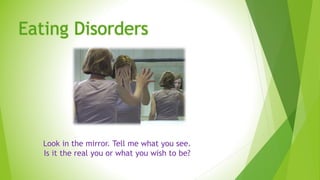
Eating Disorders
Look in the mirror. Tell me what you see.
Is it the real you or what you wish to be?
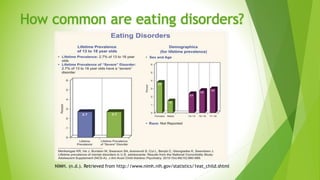
How common are eating disorders?
NIMH. (n.d.). Retrieved from http://www.nimh.nih.gov/statistics/1eat_child.shtml
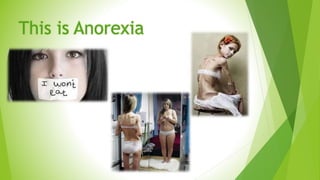
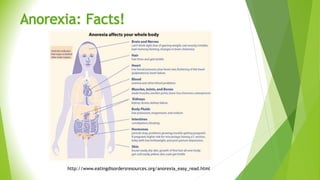
This is Anorexia
Anorexia: Facts!
http://www.eatingdisordersresources.org/anorexia_easy_read.html
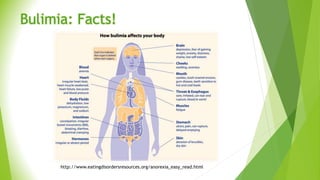
This is Bulimia
Bulimia: Facts!
http://www.eatingdisordersresources.org/anorexia_easy_read.html
Treatment
 Goals are to restore normal body weight and
normal eating
 Treatment includes therapy, medication,
and nutrition counseling
 Treatment is often long-term
 Overcoming denial is major hurdle in treatment
Prevention
 Learn the facts about eating disorders
 Happiness is not determined by weight or body size
 Challenge society’s false beliefs that “thin is in”
 Eat a balanced and varied diet
 Don’t judge yourself or others on body shape and size
 View the media with a critical eye
 If you think a friend has an eating disorder, say something
 Model positive self-talk
Marketing
 Middle Schools, High Schools and Colleges
 Youth programs such as Boys and Girls Clubs,
YMCA, Girl Scouts
 Religious Youth Groups
 Community Health Fairs
 Social Media Campaigns
 Other Internet Outlets
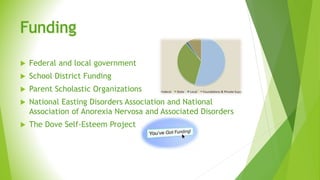
Funding
 Federal and local government
 School District Funding
 Parent Scholastic Organizations
 National Easting Disorders Association and National
Association of Anorexia Nervosa and Associated Disorders
 The Dove Self-Esteem Project
Evaluation of Program
 Questionnaires and Surveys
 Public health statistics
 Internet postings
References
 Eating Disorder Resources. (2006). Anorexia and Bulimia. Retrieved from
http://www.eatingdisordersresources.org/index.html
 Keca, J., & Cook-Cottone, C. (2006). Eating disorders: Prevention is worth every ounce.
National Association of School Psychologists. Retrieved from
http://www.nasponline.org/resources/principals/Eating%20Disorders%20WEB.pdf
 Medline Plus. (2014a). Anorexia nervosa. Retrieved from
http://www.nlm.nih.gov/medlineplus/ency/article/000362.htm
 Medline Plus. (2014b). Bulimia Nervosa. Retrieved from
http://www.nlm.nih.gov/medlineplus/ency/article/000341.htm
 Mulheim, L. (2012). Addressing eating disorders in middle and high schools. Retrieved from
F.E.A.S.T. Families Empowered and Supporting Treatment of Eating Disorders. Retrieved
from http://www.feast-
ed.org/Resources/ArticlesforFEAST/EatingDisordersinMiddleandHighSchools.aspx
 National Eating Disorders Association (NEDA). (n.d.). Types and symptoms of eating
disorders. Retrieved from http://www.nationaleatingdisorders.org/types-symptoms-eating-
disorders
 National Institute of Mental Health. (n.d.). Eating disorders among children. Retrieved from
http://www.nimh.nih.gov/statistics/1eat_child.shtml

Eating disorders

  • 1.
    Eating Disorders Anorexia andBulimia Shirley Gedney-Rubel PSY-200 – Dr. Strbiak Southern New Hampshire University
  • 2.
    Eating Disorders Look inthe mirror. Tell me what you see. Is it the real you or what you wish to be?
  • 3.
    How common areeating disorders? NIMH. (n.d.). Retrieved from http://www.nimh.nih.gov/statistics/1eat_child.shtml
  • 4.
  • 5.
  • 6.
  • 7.
  • 8.
    Treatment  Goals areto restore normal body weight and normal eating  Treatment includes therapy, medication, and nutrition counseling  Treatment is often long-term  Overcoming denial is major hurdle in treatment
  • 9.
    Prevention  Learn thefacts about eating disorders  Happiness is not determined by weight or body size  Challenge society’s false beliefs that “thin is in”  Eat a balanced and varied diet  Don’t judge yourself or others on body shape and size  View the media with a critical eye  If you think a friend has an eating disorder, say something  Model positive self-talk
  • 10.
    Marketing  Middle Schools,High Schools and Colleges  Youth programs such as Boys and Girls Clubs, YMCA, Girl Scouts  Religious Youth Groups  Community Health Fairs  Social Media Campaigns  Other Internet Outlets
  • 11.
    Funding  Federal andlocal government  School District Funding  Parent Scholastic Organizations  National Easting Disorders Association and National Association of Anorexia Nervosa and Associated Disorders  The Dove Self-Esteem Project
  • 12.
    Evaluation of Program Questionnaires and Surveys  Public health statistics  Internet postings
  • 13.
    References  Eating DisorderResources. (2006). Anorexia and Bulimia. Retrieved from http://www.eatingdisordersresources.org/index.html  Keca, J., & Cook-Cottone, C. (2006). Eating disorders: Prevention is worth every ounce. National Association of School Psychologists. Retrieved from http://www.nasponline.org/resources/principals/Eating%20Disorders%20WEB.pdf  Medline Plus. (2014a). Anorexia nervosa. Retrieved from http://www.nlm.nih.gov/medlineplus/ency/article/000362.htm  Medline Plus. (2014b). Bulimia Nervosa. Retrieved from http://www.nlm.nih.gov/medlineplus/ency/article/000341.htm  Mulheim, L. (2012). Addressing eating disorders in middle and high schools. Retrieved from F.E.A.S.T. Families Empowered and Supporting Treatment of Eating Disorders. Retrieved from http://www.feast- ed.org/Resources/ArticlesforFEAST/EatingDisordersinMiddleandHighSchools.aspx  National Eating Disorders Association (NEDA). (n.d.). Types and symptoms of eating disorders. Retrieved from http://www.nationaleatingdisorders.org/types-symptoms-eating- disorders  National Institute of Mental Health. (n.d.). Eating disorders among children. Retrieved from http://www.nimh.nih.gov/statistics/1eat_child.shtml

Editor's Notes

  • #2 Targeted Population: Adolescent girls, primarily middle school students.
  • #3 What is an eating disorder? An eating disorder (ED) is an unhealthy relationship with food. Anorexia nervosa and bulimia are the most commonly known EDs; binge eating is a newly recognized ED. When someone has an ED, their eating patterns are highly structured and inflexible; there are a lot of rules. EDs can cause health, academic, and social problems (Keca & Cottone, 2006). What causes eating disorders? Scientists suspect there are many reasons people develop eating disorders. One reason may be genetics; a family history increases the chance of having an ED (Mulheim, 2012). Social and cultural expectations play a role too. Being thin is highly valued in our society; you may feel a lot of pressure to look like the models, actresses and singers you admire. Body image is how you see and feel about your appearance and how comfortable you are in your own body. A negative body image may cause some people to diet and exercise to the extreme. (Mulheim, 2012).
  • #4 Eating disorders are more common in girls than in boys. Warning Signs: Skipping meals, avoiding certain foods, playing with or throwing away food. Not eating around other people, going to restroom right after eating, secretive about eating. Always thinking about & talking about diet & exercise. Wearing baggy clothes, being tired or dizzy, scars or scrapes on knuckles. Making negative comments about body image, low self esteem (Mulheim, 2012).
  • #5 Anorexia nervosa is an eating disorder that includes: Distorted body image & fixation on body weight or shape An intense fear of gaining weight Refusal to maintain normal weight for height & age Anxiety over food, calories and food preparation Excessive dieting, over-exercising, or use of laxatives Lying about eating and purging (Mulheim, 2012). Complications: Malnutrition, anemia & dehydration Damage to internal organs Neurological problems Death (Medline, 2014a)
  • #6 Anorexia affects the whole body, disrupting basic symptoms and damaging organs (Eating Disorder Resources, 2006).
  • #7 Two major symptoms of bulimia nervosa are binging and purging: Binging: eating a lot of high-calorie foods in a short amount of time. Purging: self-induced vomiting, extreme exercise or overusing laxatives, diuretics or enemas A vicious cycle of guilt: binge – purge – binge (Medline, 2014b) Complications: Tooth erosion and gingivitis Sore throat (Inflammation of the esophagus) Stomach rupture Irregular menstruation Electrolyte imbalance & dehydration Heart failure Death (Medline, 2014b)
  • #8 Bulimia affects the whole body, damaging the throat, mouth and teeth, disrupting basic body functions, and causing imbalance in body chemistry (Eating Disorders Resources, 2006).
  • #9 Treatment is very difficult. The main goals of treatment are to restore normal body weight and normal eating Treatment includes counseling, family therapy, medication, and nutrition counseling Treatment is often long-term; relapse is common and often triggered by stress Overcoming denial is major hurdle in treatment; you have to admit there is a problem before you can fix it
  • #10 Prevention: Build a healthy body image about yourself, accept your appearance and feel comfortable with your body (Mulheim, 2012). Learn the facts about eating disorders; they are deadly serious Happiness is not determined by weight or body size; every body is unique and special Challenge society’s false beliefs that “thin is in” and a larger size means shame, laziness, immorality, and worthlessness Eat a balanced and varied diet; avoid dieting and classifying foods as “good” or “bad” Don’t judge yourself or others on body shape and size; self-worth is not determined by a number on a tag View the media with a critical eye; be aware of photo shopping and airbrushing; that is not real life If you think a friend has an eating disorder, say something – encourage them to seek help; you might save a life Model positive self-talk; treat yourself with respect and appreciation; value your accomplishments, talents, and goals; don’t let others disrespect you Don’t let the way you feel about your body weight and shape determine the course of your day (NEDA, n.d.)
  • #11 Presenting in health classrooms would be an effective way to reach sixth through twelfth graders. Many colleges host health fairs and wellness days and having a booth/table with this slideshow as well as literature to distribute would reach a good number of young adults. Presenting at afterschool programs and other similar settings would target at-risk youth. A presence at community health fairs would target both youth and their parents to these serious disorders. Social media such as Facebook, Instagram and Twitter could be utilized. Other Internet outlets such as YouTube, Vimeo and Slide Share could be useful in spreading information.
  • #12 Federal funding through the National Institutes of Health grants as well as Federal and local Departments of Health and Human Services could be explored The school districts could be approached as well as parent-school organizations These national associations could be approached for funding The Dove Self-Esteem Project offers grants for programs that enhance girls’ and women’s self-images
  • #13 Pre- and Post-Program questionnaires and surveys could be distributed to participants to evaluate base knowledge and post-presentation understanding as well as overall satisfaction with the program. Statistical analysis of public health records to determine any effects on incidence of eating disorders before and after program participation. Internet postings should be assessed for feedback and suggestions for program improvement and effectiveness.