How to Eat an Ugly Frog and Love It: Practical Advice on Managing Workplace Priorities 
2014 GaCOMO/SELA Augusta, GA Friday, October 3 10:00 -10:50 am 
Presented By: 
Dr. Linda Golian-Lui (Lead Presenter), 
Sandra Barclay, Alan Lebish & Jennifer Young 
Kennesaw State University 
Library System
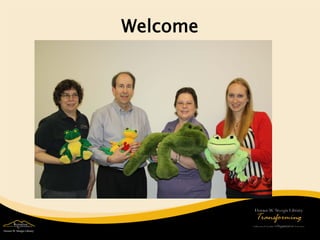
Welcome
Today’s Materials 
 
I. Eat That Frog Handout 
 
II. QR Information Cards 
 
III. LibGuide for Bibliography / PowerPoint 
 
IV. Ugly Frog Exercise 
 
V. Business Cards
Today’s Outline 
 
I. Never Enough Time 
 
II. Your Organizational Value – Linda 
 
III. Focus – Jennifer 
 
IV. Eat Your Frog with Gusto - Sandra 
 
V. Find Your Frog and Eat It - Alan 
 
VI. Ugly Frog Exercise 
 
VII. Conclusion
Part I: You Never Have Enough Time 
Law of forced efficiency – there is never enough time to do everything, but there is always enough time to do the important things.
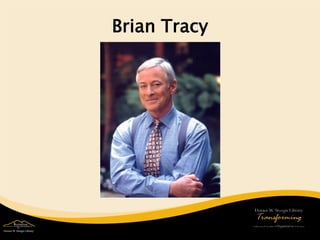
Brian Tracy
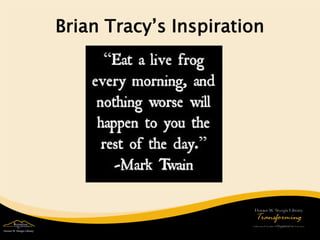
Brian Tracy’s Inspiration
What is a Frog? 
 
Your MOST important task at each moment 
 
More than likely to be the task you would procrastinate 
 
Satisfaction in knowing your most important task for the day is DONE 
 
If you have two frogs – eat the ugliest one first 
 
Tip: Try it for 15 minutes
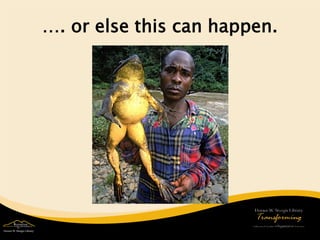
Begin eating your frog when it is little ……
…. or else this can happen.
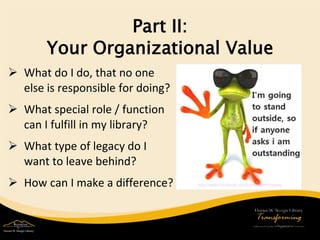
Part II: Your Organizational Value 
 
What do I do, that no one else is responsible for doing? 
 
What special role / function can I fulfill in my library? 
 
What type of legacy do I want to leave behind? 
 
How can I make a difference?
Tip 1: Set The Table 
 
Decide what you want to achieve / special role 
 
Confirm with supervisor 
 
Write it down 
 
Set a deadline 
 
Resolve to do something every day (Frog 1)
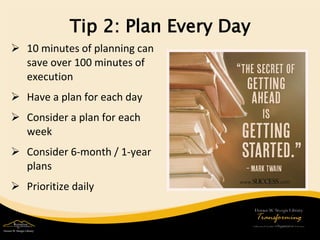
Tip 2: Plan Every Day 
 
10 minutes of planning can save over 100 minutes of execution 
 
Have a plan for each day 
 
Consider a plan for each week 
 
Consider 6-month / 1-year plans 
 
Prioritize daily
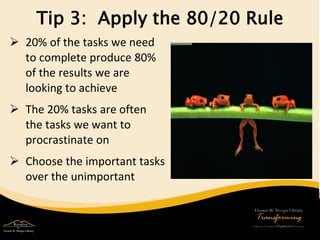
Tip 3: Apply the 80/20 Rule 
 
20% of the tasks we need to complete produce 80% of the results we are looking to achieve 
 
The 20% tasks are often the tasks we want to procrastinate on 
 
Choose the important tasks over the unimportant
Tip 4: Consider The Consequences 
 
What are the consequences of you taking OR NOT taking action 
 
Keep a long term perspective 
 
Ask yourself – what can I do that, if done well, can make a real difference 
 
Never be at the mercy of the tasks that matter least
Linda’s Priorities 
 
Create a culture of excellence, especially in service 
 
Hire the best 
 
Foster a Learning Organization 
 
Mentor 
 
Institute Succession Planning 
 
Empower
Linda’s Story
Part III: Focus
Tip 7: Focus on Key Result Areas 
 
“What are they paying me for?” 
 
5-7 things you are 100% responsible for 
 
Keep all your key areas strong 
 
Example for Jennifer: Form a good relationship with the ITS department at KSU
Tip 9: Prepare Thoroughly 
 
“If I had 8 hours to chop down a tree, I’d spend 6 sharpening my axe.” – Abe Lincoln 
 
Workspace 
 
Mindset 
 
Take the first step. “You miss 100 percent of the shots you don’t take.” – Wayne Gretzsky 
 
Don’t fear failure or rejection. “Do the thing you fear, and the death of fear is certain.” – Emerson 
 
Gets you ready for #10
Tip 10: Take it 1 Barrel at a Time 
 
Crossing the Sahara is no easy task 
 
But it can be done! 
 
Take 1 step, then another, then another 
 
Be confident that you’ll get to the next oil barrel 
 
Everything great is accomplished in single steps
Tip 11: Upgrade your Skills 
 
“Continuous learning is the minimum requirement for success in any field.” 
 
Everything is learnable 
 
Three steps to mastery: 
 
Read in your field 
 
Take courses and seminars in your key areas 
 
Turn driving time into learning time 
 
Teach someone else
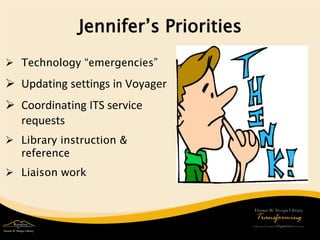
Jennifer’s Priorities 
 
Technology “emergencies” 
 
Updating settings in Voyager 
 
Coordinating ITS service requests 
 
Library instruction & reference 
 
Liaison work
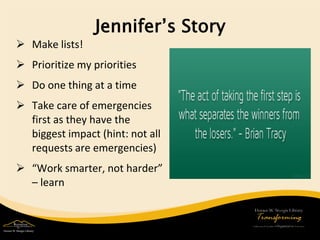
Jennifer’s Story 
 
Make lists! 
 
Prioritize my priorities 
 
Do one thing at a time 
 
Take care of emergencies first as they have the biggest impact (hint: not all requests are emergencies) 
 
“Work smarter, not harder” – learn
Part IV: Eat your frog with gusto!
Tip 5: Practice Creative Procrastination 
 
There will never be enough time to do everything 
Continuously look at your tasks and assess what is really important and what is not 
Deliberately decide what you will put off – for now or forever
Tip 8: The Law of 3 
 
What 3 things do you do that make up 90% of your contribution to your organization? 
 
It’s essential to identify these 3 things accurately 
 
The law of 3 can help you to live a long, happy, healthy life!
Tip 12: Leverage your Special Talents 
 
What are you very good at doing, or could learn to be very good at doing? Throw yourself into doing or learning that thing very well 
 
The top 20% of people discipline themselves to continuously learn new skills
Tip 13: Identify Key Constraints 
 
What is between you and that goal? 
 
Identifying and eliminating that constraint is the most important frog you can eat right now! 
 
80/20 rule applies here: 80% of constraints are internal and 20% are external
Sandra’s Priorities 
 
Cataloging and related projects 
 
Liaison related activities 
 
Service to library, university, and beyond
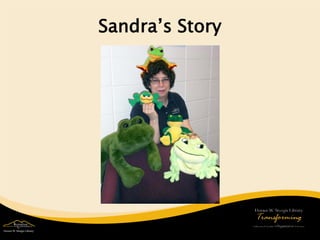
Sandra’s Story
Part V: Find your frog and eat it!
Tip 14: Put Pressure on Yourself 
 
Choose your own frogs – don’t let someone else put the pressure on you 
 
Lead the field by raising the bar on yourself and going beyond the expected 
 
Create imaginary, or not so imaginary deadlines, and plan each step…
Tip 15: Maximize Your Personal Powers 
 
Guard and nurture your energy & health to be more productive! 
 
Overworking can affect quality of work and be unproductive 
 
Work at your own pace – identify the times of day you are at your best
Tip 16: Motivate Yourself 
 
Control your inner dialogue – develop a routine of coaching yourself and being your own personal cheerleader 
 
Develop a positive mental attitude to ensure greater effectiveness in life
Tip 21: Single Handle Every Task 
 
Concentration – keep at your number one task until it is 100% complete 
 
Don’t waste time on other tasks that deplete your efficiency 
 
Self-discipline… stay on task! And, resolve to find the most important task or project
Alan’s Priorities 
 
Handling facilities- related emergencies 
 
Planning for renovation projects for two libraries 
 
Reference & instruction 
 
Liaison work 
 
Department and other committee work
Alan’s Story 
 
In a sea of priorities, identifying the top one 
 
Using daily and weekly sub-deadlines to make the task less daunting 
 
Working at my own pace and time 
 
Finding the balance!
Part VI: Ugly Frog Exercise
Part VII: Conclusions 
 
It is not easy 
 
You have to work at it every day 
 
Check your attitude 
 
Schedule down time / sharpen your saw 
 
Strive for life / work balance 
 
Read EAT THAT FROG! 
 
Facebook Brian Tracy 
 
e

How to Eat an Ugly Frog and Love It: Practical Advice on Managing Workplace Priorities

  • 2.
    How to Eatan Ugly Frog and Love It: Practical Advice on Managing Workplace Priorities 2014 GaCOMO/SELA Augusta, GA Friday, October 3 10:00 -10:50 am Presented By: Dr. Linda Golian-Lui (Lead Presenter), Sandra Barclay, Alan Lebish & Jennifer Young Kennesaw State University Library System
  • 3.
  • 4.
    Today’s Materials  I. Eat That Frog Handout  II. QR Information Cards  III. LibGuide for Bibliography / PowerPoint  IV. Ugly Frog Exercise  V. Business Cards
  • 5.
    Today’s Outline  I. Never Enough Time  II. Your Organizational Value – Linda  III. Focus – Jennifer  IV. Eat Your Frog with Gusto - Sandra  V. Find Your Frog and Eat It - Alan  VI. Ugly Frog Exercise  VII. Conclusion
  • 6.
    Part I: YouNever Have Enough Time Law of forced efficiency – there is never enough time to do everything, but there is always enough time to do the important things.
  • 7.
  • 8.
  • 9.
    What is aFrog?  Your MOST important task at each moment  More than likely to be the task you would procrastinate  Satisfaction in knowing your most important task for the day is DONE  If you have two frogs – eat the ugliest one first  Tip: Try it for 15 minutes
  • 10.
    Begin eating yourfrog when it is little ……
  • 11.
    …. or elsethis can happen.
  • 12.
    Part II: YourOrganizational Value  What do I do, that no one else is responsible for doing?  What special role / function can I fulfill in my library?  What type of legacy do I want to leave behind?  How can I make a difference?
  • 13.
    Tip 1: SetThe Table  Decide what you want to achieve / special role  Confirm with supervisor  Write it down  Set a deadline  Resolve to do something every day (Frog 1)
  • 14.
    Tip 2: PlanEvery Day  10 minutes of planning can save over 100 minutes of execution  Have a plan for each day  Consider a plan for each week  Consider 6-month / 1-year plans  Prioritize daily
  • 15.
    Tip 3: Applythe 80/20 Rule  20% of the tasks we need to complete produce 80% of the results we are looking to achieve  The 20% tasks are often the tasks we want to procrastinate on  Choose the important tasks over the unimportant
  • 16.
    Tip 4: ConsiderThe Consequences  What are the consequences of you taking OR NOT taking action  Keep a long term perspective  Ask yourself – what can I do that, if done well, can make a real difference  Never be at the mercy of the tasks that matter least
  • 17.
    Linda’s Priorities  Create a culture of excellence, especially in service  Hire the best  Foster a Learning Organization  Mentor  Institute Succession Planning  Empower
  • 18.
  • 19.
  • 20.
    Tip 7: Focuson Key Result Areas  “What are they paying me for?”  5-7 things you are 100% responsible for  Keep all your key areas strong  Example for Jennifer: Form a good relationship with the ITS department at KSU
  • 21.
    Tip 9: PrepareThoroughly  “If I had 8 hours to chop down a tree, I’d spend 6 sharpening my axe.” – Abe Lincoln  Workspace  Mindset  Take the first step. “You miss 100 percent of the shots you don’t take.” – Wayne Gretzsky  Don’t fear failure or rejection. “Do the thing you fear, and the death of fear is certain.” – Emerson  Gets you ready for #10
  • 22.
    Tip 10: Takeit 1 Barrel at a Time  Crossing the Sahara is no easy task  But it can be done!  Take 1 step, then another, then another  Be confident that you’ll get to the next oil barrel  Everything great is accomplished in single steps
  • 23.
    Tip 11: Upgradeyour Skills  “Continuous learning is the minimum requirement for success in any field.”  Everything is learnable  Three steps to mastery:  Read in your field  Take courses and seminars in your key areas  Turn driving time into learning time  Teach someone else
  • 24.
    Jennifer’s Priorities  Technology “emergencies”  Updating settings in Voyager  Coordinating ITS service requests  Library instruction & reference  Liaison work
  • 25.
    Jennifer’s Story  Make lists!  Prioritize my priorities  Do one thing at a time  Take care of emergencies first as they have the biggest impact (hint: not all requests are emergencies)  “Work smarter, not harder” – learn
  • 26.
    Part IV: Eatyour frog with gusto!
  • 27.
    Tip 5: PracticeCreative Procrastination  There will never be enough time to do everything Continuously look at your tasks and assess what is really important and what is not Deliberately decide what you will put off – for now or forever
  • 28.
    Tip 8: TheLaw of 3  What 3 things do you do that make up 90% of your contribution to your organization?  It’s essential to identify these 3 things accurately  The law of 3 can help you to live a long, happy, healthy life!
  • 29.
    Tip 12: Leverageyour Special Talents  What are you very good at doing, or could learn to be very good at doing? Throw yourself into doing or learning that thing very well  The top 20% of people discipline themselves to continuously learn new skills
  • 30.
    Tip 13: IdentifyKey Constraints  What is between you and that goal?  Identifying and eliminating that constraint is the most important frog you can eat right now!  80/20 rule applies here: 80% of constraints are internal and 20% are external
  • 31.
    Sandra’s Priorities  Cataloging and related projects  Liaison related activities  Service to library, university, and beyond
  • 32.
  • 33.
    Part V: Findyour frog and eat it!
  • 34.
    Tip 14: PutPressure on Yourself  Choose your own frogs – don’t let someone else put the pressure on you  Lead the field by raising the bar on yourself and going beyond the expected  Create imaginary, or not so imaginary deadlines, and plan each step…
  • 35.
    Tip 15: MaximizeYour Personal Powers  Guard and nurture your energy & health to be more productive!  Overworking can affect quality of work and be unproductive  Work at your own pace – identify the times of day you are at your best
  • 36.
    Tip 16: MotivateYourself  Control your inner dialogue – develop a routine of coaching yourself and being your own personal cheerleader  Develop a positive mental attitude to ensure greater effectiveness in life
  • 37.
    Tip 21: SingleHandle Every Task  Concentration – keep at your number one task until it is 100% complete  Don’t waste time on other tasks that deplete your efficiency  Self-discipline… stay on task! And, resolve to find the most important task or project
  • 38.
    Alan’s Priorities  Handling facilities- related emergencies  Planning for renovation projects for two libraries  Reference & instruction  Liaison work  Department and other committee work
  • 39.
    Alan’s Story  In a sea of priorities, identifying the top one  Using daily and weekly sub-deadlines to make the task less daunting  Working at my own pace and time  Finding the balance!
  • 40.
    Part VI: UglyFrog Exercise
  • 41.
    Part VII: Conclusions  It is not easy  You have to work at it every day  Check your attitude  Schedule down time / sharpen your saw  Strive for life / work balance  Read EAT THAT FROG!  Facebook Brian Tracy  e