


Analysis
Earth and Space
M1A1
By: T. Alfred Gico
1. What do you need to
determine in order to locate
the epicenter of an earthquake
using triangulation
method?
 determine the time interval
between the arrival of the P and
S waves (the S-P interval) on the
seismograms from at least three
different stations.
measure the interval to the
closest second and then use a
graph (Distance-time graph) to
convert the S-P interval to the
epicentral distance.
2. You draw a circle to
represent each distance on a
map.
What does the radii of circles
represents?
 The radius of each circle
corresponds to the epicentral
distance for each seismic
recording station.
1.What is the difference of
using triangulation method
to distance -time graph in
determining the epicenter of
the earthquake?
Triangulation method
-appropriate to use in
locating epicenter in an
earthquake happened locally
Distance – time Graph
- use by seismologist in
determining location of
epicenter of an earthquake in
greater distance
..Earthquake Epicenter
Triangulation.mp4
GENERALIZATION
Triangulation Method
Uses distance information from three seismic
stations
to locate the earthquake epicenter
To locate:
 Determine the time interval between the
arrival of the
P and S waves on the seismogram
from three
different stations
 Measure the interval closest to seconds
 Using epicentral distances, draw
circles to represent distance on
map. Radius of each circle
corresponds to epicentral distance
for each seismic recording station.
 Three circles will intersect at
one point that locates the
epicenter of an earthquake.
Locating earthquake epicenters will
pinpoint which fault lines are active.
- less active fault lines stores great
amount of energy that
could cause major earthquake once
released.
- places near fault lines that remain
inactive for a long period time are
due to experience a major
earthquake
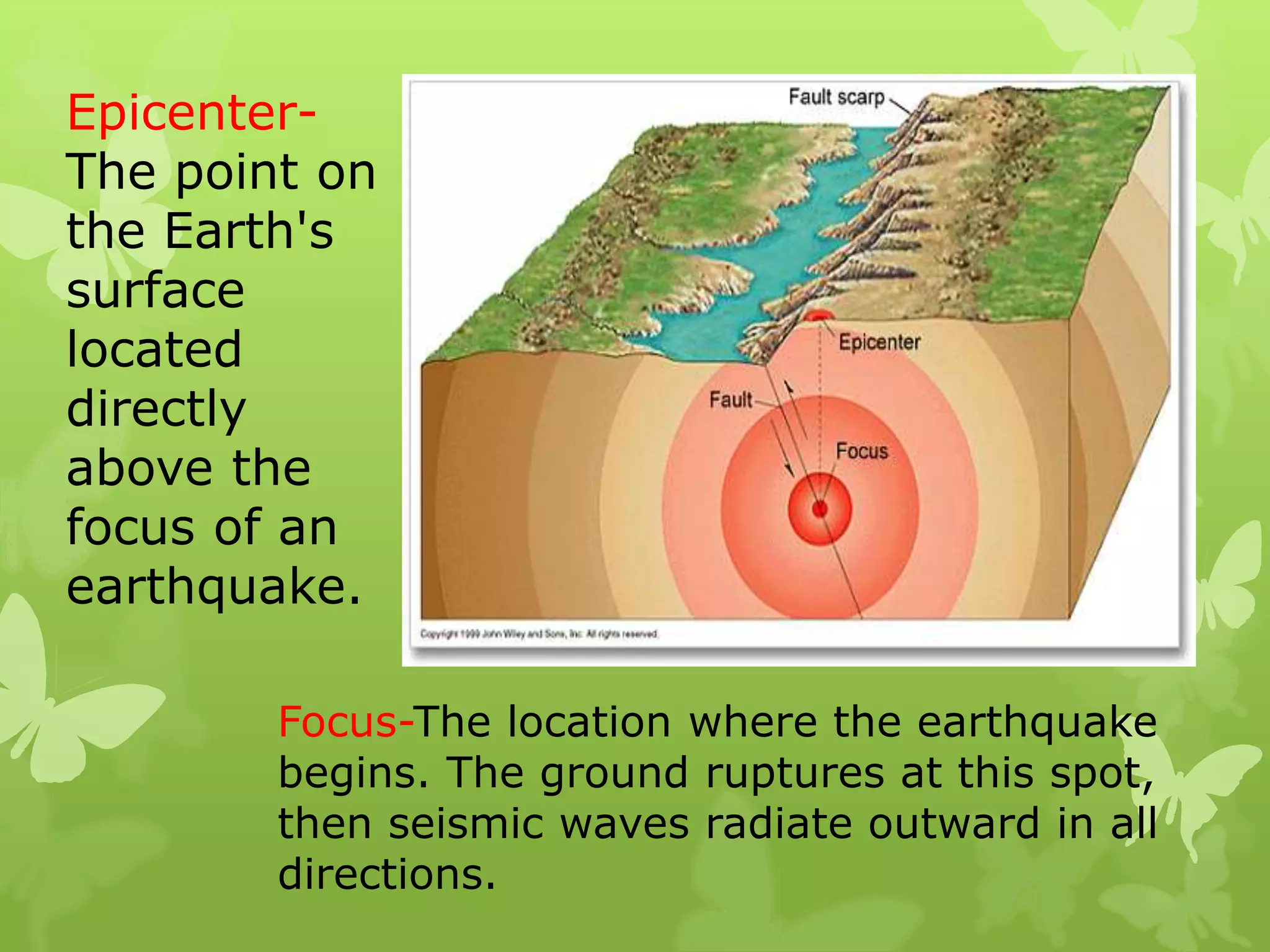
Epicenter-
The point on
the Earth's
surface
located
directly
above the
focus of an
earthquake.
Focus-The location where the earthquake
begins. The ground ruptures at this spot,
then seismic waves radiate outward in all
directions.
Good
DAY!

Earth Science G10 Module 1 Activity 1

  • 1.
  • 2.
    1. What doyou need to determine in order to locate the epicenter of an earthquake using triangulation method?
  • 3.
     determine thetime interval between the arrival of the P and S waves (the S-P interval) on the seismograms from at least three different stations. measure the interval to the closest second and then use a graph (Distance-time graph) to convert the S-P interval to the epicentral distance.
  • 4.
    2. You drawa circle to represent each distance on a map. What does the radii of circles represents?
  • 5.
     The radiusof each circle corresponds to the epicentral distance for each seismic recording station.
  • 6.
    1.What is thedifference of using triangulation method to distance -time graph in determining the epicenter of the earthquake?
  • 7.
    Triangulation method -appropriate touse in locating epicenter in an earthquake happened locally Distance – time Graph - use by seismologist in determining location of epicenter of an earthquake in greater distance
  • 8.
  • 9.
    GENERALIZATION Triangulation Method Uses distanceinformation from three seismic stations to locate the earthquake epicenter To locate:  Determine the time interval between the arrival of the P and S waves on the seismogram from three different stations  Measure the interval closest to seconds
  • 10.
     Using epicentraldistances, draw circles to represent distance on map. Radius of each circle corresponds to epicentral distance for each seismic recording station.  Three circles will intersect at one point that locates the epicenter of an earthquake.
  • 12.
    Locating earthquake epicenterswill pinpoint which fault lines are active. - less active fault lines stores great amount of energy that could cause major earthquake once released. - places near fault lines that remain inactive for a long period time are due to experience a major earthquake
  • 13.
    Epicenter- The point on theEarth's surface located directly above the focus of an earthquake. Focus-The location where the earthquake begins. The ground ruptures at this spot, then seismic waves radiate outward in all directions.
  • 14.