Earth's Atmosphere
Understanding Its Significance in Climate and Life
20 XX
Introduction
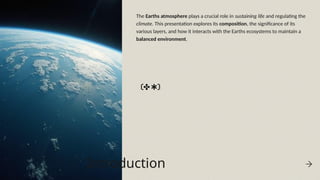
The Earths atmosphere plays a crucial role in sustaining life and regulating the
climate. This presentation explores its composition, the significance of its
various layers, and how it interacts with the Earths ecosystems to maintain a
balanced environment.
Earth's Atmosphere
01
20 XX
Composition and Layers
The atmosphere consists of several layers, including the troposphere, stratosphere, mesosphere, and thermosphere. Each layer
has distinct properties, temperature gradients, and functions, contributing to weather patterns and protection from radiation.
Role in Climate Regulation
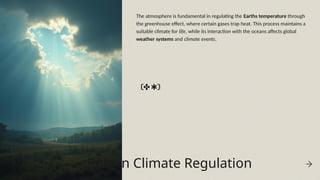
The atmosphere is fundamental in regulating the Earths temperature through
the greenhouse effect, where certain gases trap heat. This process maintains a
suitable climate for life, while its interaction with the oceans affects global
weather systems and climate events.
Interaction with Life Forms
The atmosphere comprises gases such as oxygen, nitrogen, and carbon dioxide, essential for respiration, photosynthesis, and
maintaining life. It also filters harmful radiation and provides weather systems that affect ecosystems and agriculture,
highlighting its integral role in sustaining biodiversity.
Geologic Layers of the
Earth
02
20 XX
Structure of the Earth's Crust
The Earth’s crust, divided into continental and oceanic types, is composed of diverse minerals. Its structure influences
geological activities, including earthquakes, volcanoes, and the formation of landscapes, emphasizing the importance of crustal
composition in Earths dynamic processes.
Mantle Properties and Behavior
The Earths mantle, characterized by viscous rock and high temperatures, plays a crucial role in tectonic movement. Its flow
drives the plate tectonics responsible for geological phenomena such as mountain formation and earthquakes, showcasing the
mantles impact on the planet’s surface.
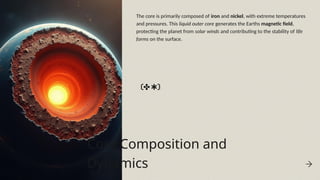
Core Composition and
Dynamics
The core is primarily composed of iron and nickel, with extreme temperatures
and pressures. This liquid outer core generates the Earths magnetic field,
protecting the planet from solar winds and contributing to the stability of life
forms on the surface.
Conclusions
The Earths atmosphere and geologic layers interact in complex ways to sustain life and influence the planets climate.
Understanding these layers composition and dynamics provides insights into our environments past and future, guiding
effective environmental management practices.
CREDITS: This presentation template was created by
Slidesgo, and includes icons, infographics & images by
Freepik
Thank you!
Do you have any questions?
+00 000 000 000
20 XX

Earth's Atmosphere class 7 chapter 6 sst

  • 1.
    Earth's Atmosphere Understanding ItsSignificance in Climate and Life 20 XX
  • 2.
    Introduction The Earths atmosphereplays a crucial role in sustaining life and regulating the climate. This presentation explores its composition, the significance of its various layers, and how it interacts with the Earths ecosystems to maintain a balanced environment.
  • 3.
  • 4.
    Composition and Layers Theatmosphere consists of several layers, including the troposphere, stratosphere, mesosphere, and thermosphere. Each layer has distinct properties, temperature gradients, and functions, contributing to weather patterns and protection from radiation.
  • 5.
    Role in ClimateRegulation The atmosphere is fundamental in regulating the Earths temperature through the greenhouse effect, where certain gases trap heat. This process maintains a suitable climate for life, while its interaction with the oceans affects global weather systems and climate events.
  • 6.
    Interaction with LifeForms The atmosphere comprises gases such as oxygen, nitrogen, and carbon dioxide, essential for respiration, photosynthesis, and maintaining life. It also filters harmful radiation and provides weather systems that affect ecosystems and agriculture, highlighting its integral role in sustaining biodiversity.
  • 7.
    Geologic Layers ofthe Earth 02 20 XX
  • 8.
    Structure of theEarth's Crust The Earth’s crust, divided into continental and oceanic types, is composed of diverse minerals. Its structure influences geological activities, including earthquakes, volcanoes, and the formation of landscapes, emphasizing the importance of crustal composition in Earths dynamic processes.
  • 9.
    Mantle Properties andBehavior The Earths mantle, characterized by viscous rock and high temperatures, plays a crucial role in tectonic movement. Its flow drives the plate tectonics responsible for geological phenomena such as mountain formation and earthquakes, showcasing the mantles impact on the planet’s surface.
  • 10.
    Core Composition and Dynamics Thecore is primarily composed of iron and nickel, with extreme temperatures and pressures. This liquid outer core generates the Earths magnetic field, protecting the planet from solar winds and contributing to the stability of life forms on the surface.
  • 11.
    Conclusions The Earths atmosphereand geologic layers interact in complex ways to sustain life and influence the planets climate. Understanding these layers composition and dynamics provides insights into our environments past and future, guiding effective environmental management practices.
  • 12.
    CREDITS: This presentationtemplate was created by Slidesgo, and includes icons, infographics & images by Freepik Thank you! Do you have any questions? +00 000 000 000 20 XX