@rilinho
Early Stage Product
Development
Proper Credit Attribution
Much of this presentation comes from:
Des Traynor
Intercom
https://blog.intercom.io
http://businessofsoftware.org/2014/12/prod
uct-strategy-saying-part-2-des-traynor-bos-
usa-2014/
(great example of good content marketing)
Why are you building a
product?
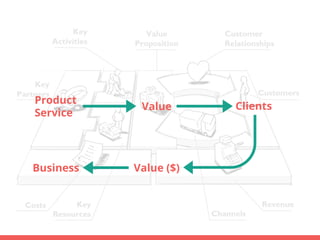
Product
Service
Value Clients
Value ($)Business
Your product is distributing value
For Clients,
not for the founders
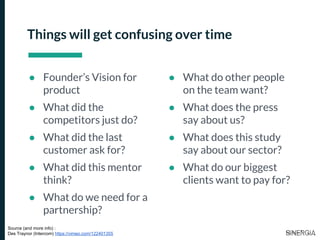
Things will get confusing over time
● Founder’s Vision for
product
● What did the
competitors just do?
● What did the last
customer ask for?
● What did this mentor
think?
● What do we need for a
partnership?
● What do other people
on the team want?
● What does the press
say about us?
● What does this study
say about our sector?
● What do our biggest
clients want to pay for?
Source (and more info) :
Des Traynor (Intercom) https://vimeo.com/122401355
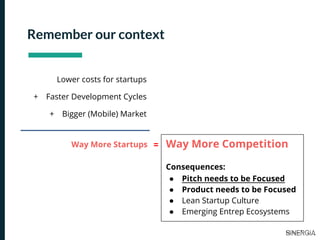
Lower costs for startups
+ Faster Development Cycles
+ Bigger (Mobile) Market
Way More Startups Way More Competition
Consequences:
● Pitch needs to be Focused
● Product needs to be Focused
● Lean Startup Culture
● Emerging Entrep Ecosystems
=
Remember our context
Managing a
Product
Dealing with
“Tension”
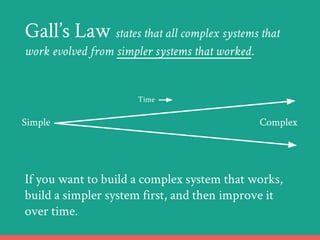
Gall’s Law states that all complex systems that
work evolved from simpler systems that worked.
If you want to build a complex system that works,
build a simpler system first, and then improve it
over time.
Simple Complex
Time
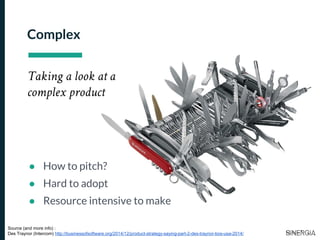
Complex
Taking a look at a
complex product
● How to pitch?
● Hard to adopt
● Resource intensive to make
Source (and more info) :
Des Traynor (Intercom) http://businessofsoftware.org/2014/12/product-strategy-saying-part-2-des-traynor-bos-usa-2014/
Simple
● Easier to explain
● Easier to adopt
● Easier to make
Do one simple thing,
and do it well
Source (and more info) :
Des Traynor (Intercom) http://businessofsoftware.org/2014/12/product-strategy-saying-part-2-des-traynor-bos-usa-2014/
Building Early Stage Products
● Finding simple solutions to real problems
● Easy to build, test and refine
● Easy to explain to potential customers
● Easy to adopt for potential customers
Explanation Adoption
Do they understand it?
Is this the right audience?
Is this valuable?
Are they actually using it?
Does it fit their process?
Source (and more info) :
Des Traynor (Intercom) http://businessofsoftware.org/2014/12/product-strategy-saying-part-2-des-traynor-bos-usa-2014/
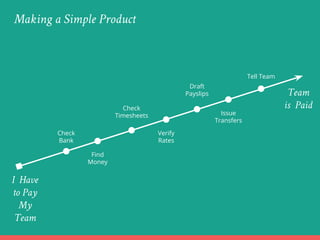
Making a Simple Product
Team
is Paid
I Have
to Pay
My
Team
Check
Bank
Find
Money
Check
Timesheets
Verify
Rates
Tell Team
Draft
Payslips
Issue
Transfers
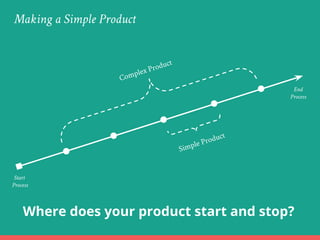
Making a Simple Product
End
Process
Start
Process
Complex Product
Simple Product
Where does your product start and stop?
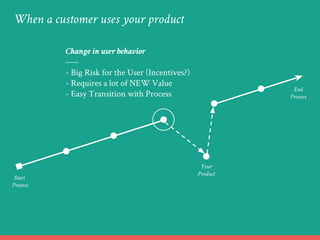
When a customer uses your product
End
Process
Start
Process
Your
Product
Change in user behavior
-----
- Big Risk for the User (Incentives?)
- Requires a lot of NEW Value
- Easy Transition with Process
When a customer uses your product
End
Process
Start
Process
Your
Product
Let the user back home
-----
- Your product did it’s job
- User is happy
- Transition them back
When a customer uses your product
End
Process
Start
Process
Your
Product
Reasons to leave steps out
-----
- Competing with a larger company
- Many ways to achieve step
- Dilution / More maintenance
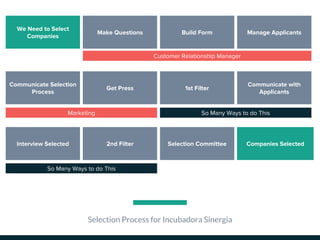
Selection Process for Incubadora Sinergia
We Need to Select
Companies
Companies Selected
Make Questions Build Form Manage Applicants
1st Filter
Interview Selected 2nd Filter
Communicate with
Applicants
Communicate Selection
Process
Get Press
Selection Committee
Customer Relationship Manager
Marketing So Many Ways to do This
So Many Ways to do This
Takeaways
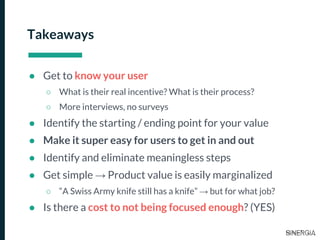
● Get to know your user
○ What is their real incentive? What is their process?
○ More interviews, no surveys
● Identify the starting / ending point for your value
● Make it super easy for users to get in and out
● Identify and eliminate meaningless steps
● Get simple → Product value is easily marginalized
○ “A Swiss Army knife still has a knife” → but for what job?
● Is there a cost to not being focused enough? (YES)
But… Features are
so cool
Myths in making
products
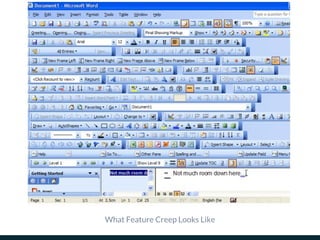
What Feature Creep Looks Like
● Forget about the “myths” that we learned from
Microsoft, Apple, and pretty much any big company
○ They built products and took advantage of a world where
distribution costed A LOT of money (moat) --> they could
afford to build features and experiment
● Startups today compete in a new context where
distribution costs are going to zero
○ You are competing with niche, international businesses
● There is a HUGE risk in trying to do too much...
That world has completely changed
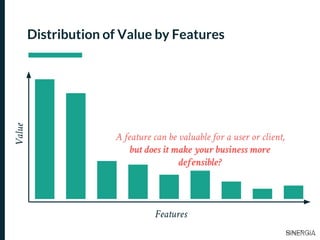
Distribution of Value by Features
Value
Features
A feature can be valuable for a user or client,
but does it make your business more
defensible?
Extra features tend to
● Snowball
○ Have to fulfill expectations with clients / users
○ Have to maintain, update and dedicate resources
● Dilute the core value of your product → harder to
explain, adopt
● Create more opportunities for competitors
● Take you off focus
○ New product ideas come from everywhere
● Have a long term impact on the scalability of your
business
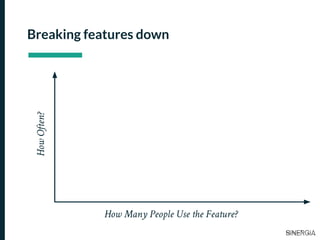
Breaking features downHowOften?
How Many People Use the Feature?
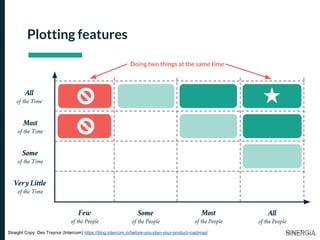
Plotting features
Few
of the People
Straight Copy: Des Traynor (Intercom) https://blog.intercom.io/before-you-plan-your-product-roadmap/
Some
of the People
Most
of the People
All
of the People
All
of the Time
Most
of the Time
Some
of the Time
Very Little
of the Time
Doing two things at the same time
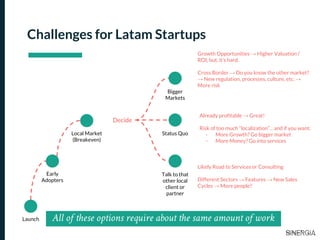
Challenges for Latam Startups
Launch
Early
Adopters
Local Market
(Breakeven)
Decide
Status Quo
Talk to that
other local
client or
partner
Bigger
Markets
Likely Road to Services or Consulting
Different Sectors → Features → New Sales
Cycles → More people?
Growth Opportunities → Higher Valuation /
ROI, but, it’s hard.
Cross Border → Do you know the other market?
→ New regulation, processes, culture, etc. →
More risk
Already profitable → Great!
Risk of too much “localization”... and if you want:
- More Growth? Go bigger market
- More Money? Go into services
All of these options require about the same amount of work
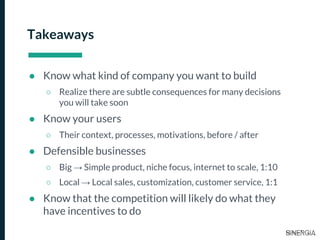
Takeaways
● Know what kind of company you want to build
○ Realize there are subtle consequences for many decisions
you will take soon
● Know your users
○ Their context, processes, motivations, before / after
● Defensible businesses
○ Big → Simple product, niche focus, internet to scale, 1:10
○ Local → Local sales, customization, customer service, 1:1
● Know that the competition will likely do what they
have incentives to do
Staying the Course Products & Jobs
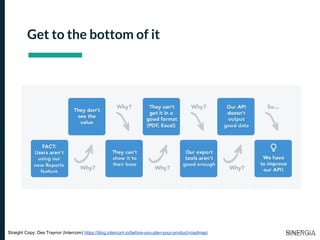
Get to the bottom of it
Straight Copy: Des Traynor (Intercom) https://blog.intercom.io/before-you-plan-your-product-roadmap/
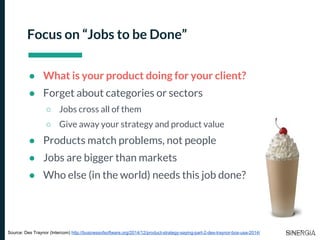
Focus on “Jobs to be Done”
● What is your product doing for your client?
● Forget about categories or sectors
○ Jobs cross all of them
○ Give away your strategy and product value
● Products match problems, not people
● Jobs are bigger than markets
● Who else (in the world) needs this job done?
Source: Des Traynor (Intercom) http://businessofsoftware.org/2014/12/product-strategy-saying-part-2-des-traynor-bos-usa-2014/
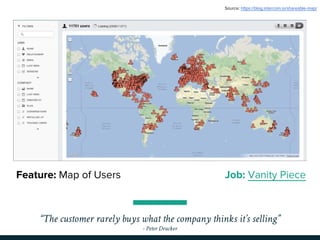
“The customer rarely buys what the company thinks it’s selling”
- Peter Drucker
Source: https://blog.intercom.io/shareable-map/
Feature: Map of Users Job: Vanity Piece
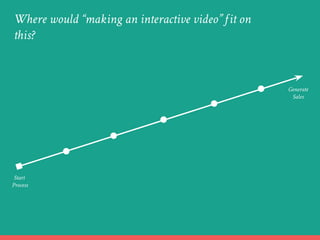
Where would “making an interactive video” it on
this?
Generate
Sales
Start
Process
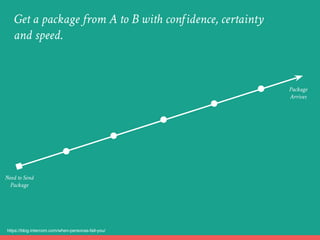
Get a package from A to B with conidence, certainty
and speed.
Package
Arrives
Need to Send
Package
https://blog.intercom.com/when-personas-fail-you/
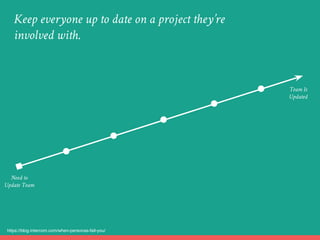
Keep everyone up to date on a project they’re
involved with.
Team Is
Updated
Need to
Update Team
https://blog.intercom.com/when-personas-fail-you/
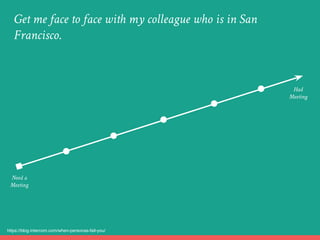
Get me face to face with my colleague who is in San
Francisco.
Had
Meeting
Need a
Meeting
https://blog.intercom.com/when-personas-fail-you/
● Capture this moment privately for me and her, so we can (hopefully) look
back on it fondly in years to come
● Embarrass my friend in front of her friends, cause she’ll regret this in the
morning.
● Get this file backed up online, so I can point others to it.
● Get a copy of this photo to my grandmother who doesn’t use computers.
● Make this look cool and interesting. Like me. And then share it.
● Get this edited and into my portfolio so that people consider hiring me for
future engagements.
The Jobs a Photograph Does...
So, what are the jobs you need to get done?
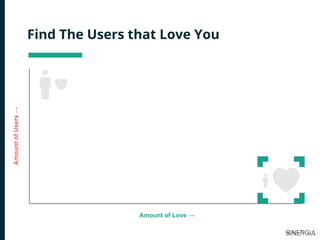
Find The Users that Love You
AmountofUsers→
Amount of Love →
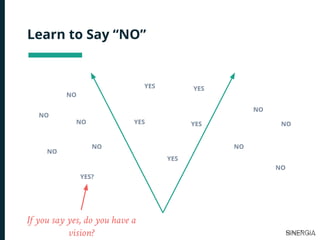
Learn to Say “NO”
YES
YES
YES
YES
NO
NO
NO
NO
NO
NO
NO
NO
NO
YES?
If you say yes, do you have a
vision?
YES
Macrotrends
Aggregation
Theory
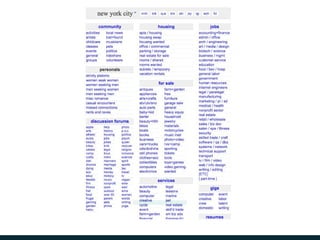
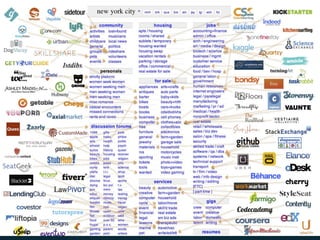
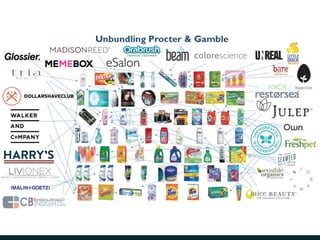
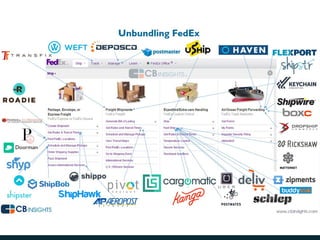
It is costing less and less money to
distribute products and services
This terrifies traditional industries
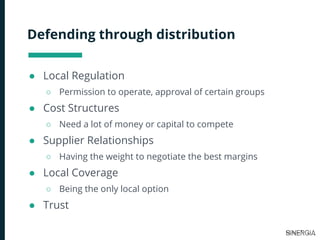
Defending through distribution
● Local Regulation
○ Permission to operate, approval of certain groups
● Cost Structures
○ Need a lot of money or capital to compete
● Supplier Relationships
○ Having the weight to negotiate the best margins
● Local Coverage
○ Being the only local option
● Trust
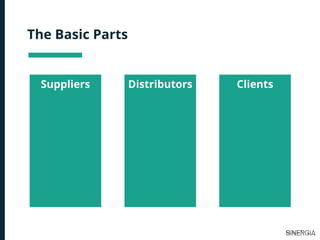
The Basic Parts
Suppliers Distributors Clients
Typical Way of Building Businesses
Suppliers Distributors Clients
Lock these together
Charge
Higher Prices
With Clients
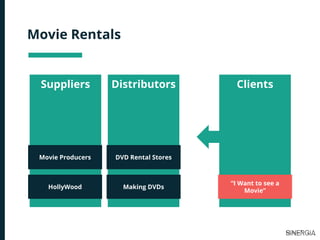
Movie Rentals
Suppliers Distributors Clients
HollyWood
Movie Producers DVD Rental Stores
“I Want to see a
Movie”
Making DVDs
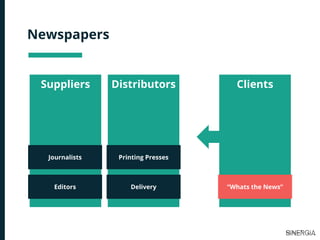
Newspapers
Suppliers Distributors Clients
Editors
Journalists Printing Presses
Delivery “Whats the News”
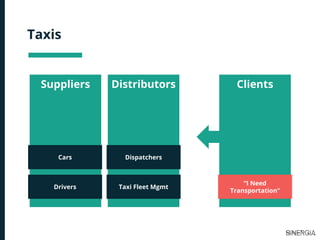
Taxis
Suppliers Distributors Clients
Drivers
Cars Dispatchers
“I Need
Transportation”
Taxi Fleet Mgmt
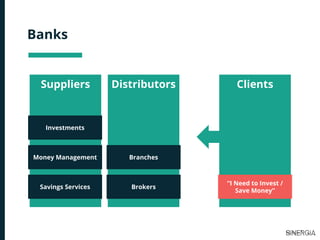
Banks
Suppliers Distributors Clients
Savings Services
Money Management Branches
Brokers
Investments
“I Need to Invest /
Save Money”
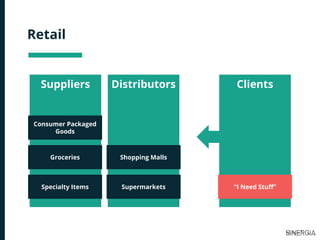
Retail
Suppliers Distributors Clients
Specialty Items
Groceries Shopping Malls
Supermarkets
Consumer Packaged
Goods
“I Need Stuff”
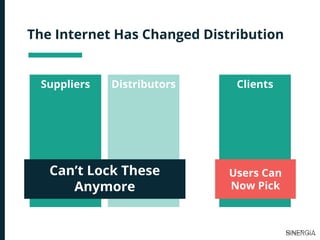
The Internet Has Changed Distribution
Suppliers Distributors Clients
Can’t Lock These
Anymore
Users Can
Now Pick
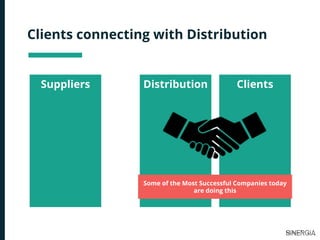
Clients connecting with Distribution
Suppliers Distribution Clients
Some of the Most Successful Companies today
are doing this
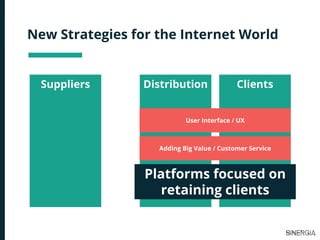
New Strategies for the Internet World
Suppliers Distribution Clients
Platforms focused on
retaining clients
Adding Big Value / Customer Service
User Interface / UX
When Distribution Goes to Zero
● Traditional businesses that depend on it will be
forced to innovate (on UX / service), or lose
business
● No barriers to entry for possible competitors
○ This will affect your startup directly - you are competing
with international offers even in your local market
● Force you to understand global players and
trends
● You can use the same playbook to solve big
problems and have larger impacts regionally or
globally
¡Gracias!
@rilinho
@paorapetti

Early Stage Product Development - Incubadora Sinergia

  • 1.
  • 3.
    Proper Credit Attribution Muchof this presentation comes from: Des Traynor Intercom https://blog.intercom.io http://businessofsoftware.org/2014/12/prod uct-strategy-saying-part-2-des-traynor-bos- usa-2014/ (great example of good content marketing)
  • 4.
    Why are youbuilding a product?
  • 5.
  • 6.
    Your product isdistributing value For Clients, not for the founders
  • 7.
    Things will getconfusing over time ● Founder’s Vision for product ● What did the competitors just do? ● What did the last customer ask for? ● What did this mentor think? ● What do we need for a partnership? ● What do other people on the team want? ● What does the press say about us? ● What does this study say about our sector? ● What do our biggest clients want to pay for? Source (and more info) : Des Traynor (Intercom) https://vimeo.com/122401355
  • 8.
    Lower costs forstartups + Faster Development Cycles + Bigger (Mobile) Market Way More Startups Way More Competition Consequences: ● Pitch needs to be Focused ● Product needs to be Focused ● Lean Startup Culture ● Emerging Entrep Ecosystems = Remember our context
  • 9.
  • 10.
    Gall’s Law statesthat all complex systems that work evolved from simpler systems that worked. If you want to build a complex system that works, build a simpler system first, and then improve it over time. Simple Complex Time
  • 11.
    Complex Taking a lookat a complex product ● How to pitch? ● Hard to adopt ● Resource intensive to make Source (and more info) : Des Traynor (Intercom) http://businessofsoftware.org/2014/12/product-strategy-saying-part-2-des-traynor-bos-usa-2014/
  • 12.
    Simple ● Easier toexplain ● Easier to adopt ● Easier to make Do one simple thing, and do it well Source (and more info) : Des Traynor (Intercom) http://businessofsoftware.org/2014/12/product-strategy-saying-part-2-des-traynor-bos-usa-2014/
  • 13.
    Building Early StageProducts ● Finding simple solutions to real problems ● Easy to build, test and refine ● Easy to explain to potential customers ● Easy to adopt for potential customers Explanation Adoption Do they understand it? Is this the right audience? Is this valuable? Are they actually using it? Does it fit their process? Source (and more info) : Des Traynor (Intercom) http://businessofsoftware.org/2014/12/product-strategy-saying-part-2-des-traynor-bos-usa-2014/
  • 14.
    Making a SimpleProduct Team is Paid I Have to Pay My Team Check Bank Find Money Check Timesheets Verify Rates Tell Team Draft Payslips Issue Transfers
  • 15.
    Making a SimpleProduct End Process Start Process Complex Product Simple Product Where does your product start and stop?
  • 16.
    When a customeruses your product End Process Start Process Your Product Change in user behavior ----- - Big Risk for the User (Incentives?) - Requires a lot of NEW Value - Easy Transition with Process
  • 17.
    When a customeruses your product End Process Start Process Your Product Let the user back home ----- - Your product did it’s job - User is happy - Transition them back
  • 18.
    When a customeruses your product End Process Start Process Your Product Reasons to leave steps out ----- - Competing with a larger company - Many ways to achieve step - Dilution / More maintenance
  • 19.
    Selection Process forIncubadora Sinergia We Need to Select Companies Companies Selected Make Questions Build Form Manage Applicants 1st Filter Interview Selected 2nd Filter Communicate with Applicants Communicate Selection Process Get Press Selection Committee Customer Relationship Manager Marketing So Many Ways to do This So Many Ways to do This
  • 20.
    Takeaways ● Get toknow your user ○ What is their real incentive? What is their process? ○ More interviews, no surveys ● Identify the starting / ending point for your value ● Make it super easy for users to get in and out ● Identify and eliminate meaningless steps ● Get simple → Product value is easily marginalized ○ “A Swiss Army knife still has a knife” → but for what job? ● Is there a cost to not being focused enough? (YES)
  • 21.
    But… Features are socool Myths in making products
  • 22.
  • 23.
    ● Forget aboutthe “myths” that we learned from Microsoft, Apple, and pretty much any big company ○ They built products and took advantage of a world where distribution costed A LOT of money (moat) --> they could afford to build features and experiment ● Startups today compete in a new context where distribution costs are going to zero ○ You are competing with niche, international businesses ● There is a HUGE risk in trying to do too much... That world has completely changed
  • 24.
    Distribution of Valueby Features Value Features A feature can be valuable for a user or client, but does it make your business more defensible?
  • 30.
    Extra features tendto ● Snowball ○ Have to fulfill expectations with clients / users ○ Have to maintain, update and dedicate resources ● Dilute the core value of your product → harder to explain, adopt ● Create more opportunities for competitors ● Take you off focus ○ New product ideas come from everywhere ● Have a long term impact on the scalability of your business
  • 31.
    Breaking features downHowOften? HowMany People Use the Feature?
  • 32.
    Plotting features Few of thePeople Straight Copy: Des Traynor (Intercom) https://blog.intercom.io/before-you-plan-your-product-roadmap/ Some of the People Most of the People All of the People All of the Time Most of the Time Some of the Time Very Little of the Time Doing two things at the same time
  • 33.
    Challenges for LatamStartups Launch Early Adopters Local Market (Breakeven) Decide Status Quo Talk to that other local client or partner Bigger Markets Likely Road to Services or Consulting Different Sectors → Features → New Sales Cycles → More people? Growth Opportunities → Higher Valuation / ROI, but, it’s hard. Cross Border → Do you know the other market? → New regulation, processes, culture, etc. → More risk Already profitable → Great! Risk of too much “localization”... and if you want: - More Growth? Go bigger market - More Money? Go into services All of these options require about the same amount of work
  • 34.
    Takeaways ● Know whatkind of company you want to build ○ Realize there are subtle consequences for many decisions you will take soon ● Know your users ○ Their context, processes, motivations, before / after ● Defensible businesses ○ Big → Simple product, niche focus, internet to scale, 1:10 ○ Local → Local sales, customization, customer service, 1:1 ● Know that the competition will likely do what they have incentives to do
  • 35.
    Staying the CourseProducts & Jobs
  • 36.
    Get to thebottom of it Straight Copy: Des Traynor (Intercom) https://blog.intercom.io/before-you-plan-your-product-roadmap/
  • 37.
    Focus on “Jobsto be Done” ● What is your product doing for your client? ● Forget about categories or sectors ○ Jobs cross all of them ○ Give away your strategy and product value ● Products match problems, not people ● Jobs are bigger than markets ● Who else (in the world) needs this job done? Source: Des Traynor (Intercom) http://businessofsoftware.org/2014/12/product-strategy-saying-part-2-des-traynor-bos-usa-2014/
  • 38.
    “The customer rarelybuys what the company thinks it’s selling” - Peter Drucker Source: https://blog.intercom.io/shareable-map/ Feature: Map of Users Job: Vanity Piece
  • 39.
    Where would “makingan interactive video” it on this? Generate Sales Start Process
  • 40.
    Get a packagefrom A to B with conidence, certainty and speed. Package Arrives Need to Send Package https://blog.intercom.com/when-personas-fail-you/
  • 41.
    Keep everyone upto date on a project they’re involved with. Team Is Updated Need to Update Team https://blog.intercom.com/when-personas-fail-you/
  • 42.
    Get me faceto face with my colleague who is in San Francisco. Had Meeting Need a Meeting https://blog.intercom.com/when-personas-fail-you/
  • 43.
    ● Capture thismoment privately for me and her, so we can (hopefully) look back on it fondly in years to come ● Embarrass my friend in front of her friends, cause she’ll regret this in the morning. ● Get this file backed up online, so I can point others to it. ● Get a copy of this photo to my grandmother who doesn’t use computers. ● Make this look cool and interesting. Like me. And then share it. ● Get this edited and into my portfolio so that people consider hiring me for future engagements. The Jobs a Photograph Does...
  • 44.
    So, what arethe jobs you need to get done?
  • 45.
    Find The Usersthat Love You AmountofUsers→ Amount of Love →
  • 46.
    Learn to Say“NO” YES YES YES YES NO NO NO NO NO NO NO NO NO YES? If you say yes, do you have a vision? YES
  • 47.
  • 48.
    It is costingless and less money to distribute products and services This terrifies traditional industries
  • 49.
    Defending through distribution ●Local Regulation ○ Permission to operate, approval of certain groups ● Cost Structures ○ Need a lot of money or capital to compete ● Supplier Relationships ○ Having the weight to negotiate the best margins ● Local Coverage ○ Being the only local option ● Trust
  • 50.
    The Basic Parts SuppliersDistributors Clients
  • 51.
    Typical Way ofBuilding Businesses Suppliers Distributors Clients Lock these together Charge Higher Prices With Clients
  • 52.
    Movie Rentals Suppliers DistributorsClients HollyWood Movie Producers DVD Rental Stores “I Want to see a Movie” Making DVDs
  • 53.
    Newspapers Suppliers Distributors Clients Editors JournalistsPrinting Presses Delivery “Whats the News”
  • 54.
    Taxis Suppliers Distributors Clients Drivers CarsDispatchers “I Need Transportation” Taxi Fleet Mgmt
  • 55.
    Banks Suppliers Distributors Clients SavingsServices Money Management Branches Brokers Investments “I Need to Invest / Save Money”
  • 56.
    Retail Suppliers Distributors Clients SpecialtyItems Groceries Shopping Malls Supermarkets Consumer Packaged Goods “I Need Stuff”
  • 57.
    The Internet HasChanged Distribution Suppliers Distributors Clients Can’t Lock These Anymore Users Can Now Pick
  • 58.
    Clients connecting withDistribution Suppliers Distribution Clients Some of the Most Successful Companies today are doing this
  • 59.
    New Strategies forthe Internet World Suppliers Distribution Clients Platforms focused on retaining clients Adding Big Value / Customer Service User Interface / UX
  • 60.
    When Distribution Goesto Zero ● Traditional businesses that depend on it will be forced to innovate (on UX / service), or lose business ● No barriers to entry for possible competitors ○ This will affect your startup directly - you are competing with international offers even in your local market ● Force you to understand global players and trends ● You can use the same playbook to solve big problems and have larger impacts regionally or globally
  • 61.