E-PAYMENTS
SYSTEM
Persented By:
Shubham
(PGD20043)
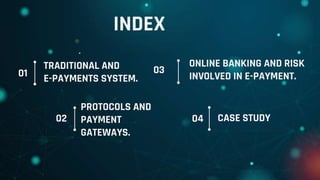
TRADITIONAL AND
E-PAYMENTS SYSTEM.
ONLINE BANKING AND RISK
INVOLVED IN E-PAYMENT.
PROTOCOLS AND
PAYMENT
GATEWAYS.
CASE STUDY
02
01
04
03
INDEX
01
TRADITIONAL
AND
E-PAYMENTS
SYSTEM
FLOW OF 01
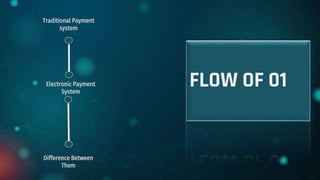
Traditional Payment
system
Electronic Payment
System
Difference Between
Them
TRADITIONAL
PAYMENT
SYSTEM
Traditional payment system
is way of making
transaction or paying for
good and services by
physical medium, with the
use of checks or cash.
E-PAYMENT
SYSTEM
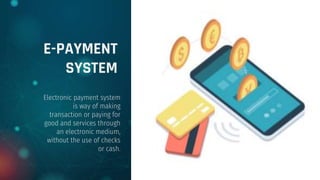
Electronic payment system
is way of making
transaction or paying for
good and services through
an electronic medium,
without the use of checks
or cash.
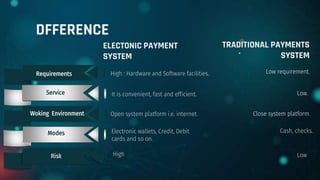
DFFERENCE
TRADITIONAL PAYMENTS
SYSTEM
ELECTONIC PAYMENT
SYSTEM
High : Hardware and Software facilities.
OPTION 01
OPTION 01
OPTION 01
OPTION 01
Service
Woking Environment
Modes
Requirements
It is convenient, fast and efficient.
Open system platform i.e. internet.
Low requirement.
Low.
Close system platform.
Electronic wallets, Credit, Debit
cards and so on.
Cash, checks.
Risk High Low
PROTOCOLS
AND
GATEWAYS
02
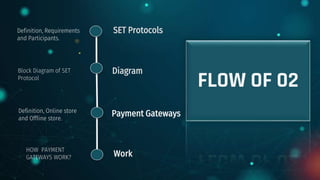
FLOW OF 02
SET Protocols
Block Diagram of SET
Protocol
Diagram
Payment Gateways
Work
Definition, Requirements
and Participants.
Definition, Online store
and Offline store.
HOW PAYMENT
GATEWAYS WORK?
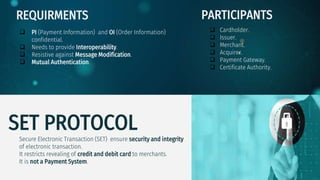
SET PROTOCOL
Secure Electronic Transaction (SET) ensure security and integrity
of electronic transaction.
It restricts revealing of credit and debit card to merchants.
It is not a Payment System.
REQUIRMENTS
 PI (Payment Information) and OI (Order Information)
confidential.
 Needs to provide Interoperability.
 Resistive against Message Modification.
 Mutual Authentication.
PARTICIPANTS
 Cardholder.
 Issuer.
 Merchant.
 Acquirer.
 Payment Gateway.
 Certificate Authority.
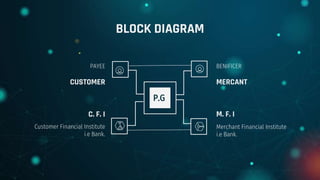
BLOCK DIAGRAM
PAYEE BENIFICER
Customer Financial Institute
i.e Bank.
Merchant Financial Institute
i.e Bank.
P.G
CUSTOMER MERCANT
C. F. I M. F. I
YOUTUBE LINK
OF
SET PROTOCOL
https://www.youtube.com/watch?v=GEVq9
YQVIm8&t=157s
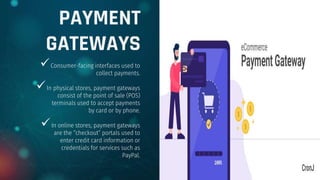
Consumer-facing interfaces used to
collect payments.
In physical stores, payment gateways
consist of the point of sale (POS)
terminals used to accept payments
by card or by phone.
In online stores, payment gateways
are the “checkout” portals used to
enter credit card information or
credentials for services such as
PayPal.
PAYMENT
GATEWAYS
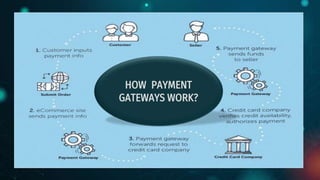
HOW PAYMENT
GATEWAYS WORK?
03
ONLINE BANKING AND
RISK INVOLVED IN
E-PAYMENT
ONLINE BANKING
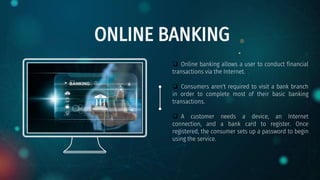
 Online banking allows a user to conduct financial
transactions via the Internet.
 Consumers aren't required to visit a bank branch
in order to complete most of their basic banking
transactions.
 A customer needs a device, an Internet
connection, and a bank card to register. Once
registered, the consumer sets up a password to begin
using the service.
RISK INVOLVED IN
E-PAYMENT
Electronic payment systems are popular because
of their convenience.
However, they also may pose serious risks to
consumers and financial institutions.
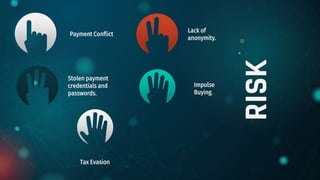
RISK
Payment Conflict
Stolen payment
credentials and
passwords.
Lack of
anonymity.
Impulse
Buying.
Tax Evasion
04
CASE STUDY
ELECTRONIC PAYMENT &
SERVICES (EPS)
EPS works in close partnership with HPE to
put in place a highly scalable, available and
secure deployment and achieve its
business objective of delivering real-time
ATM transactions to end users of banks
and payment solutions to financial
institutions.
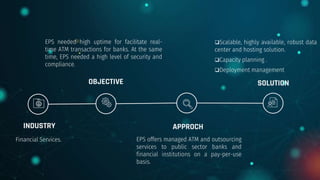
Financial Services. EPS offers managed ATM and outsourcing
services to public sector banks and
financial institutions on a pay-per-use
basis.
EPS needed high uptime for facilitate real-
time ATM transactions for banks. At the same
time, EPS needed a high level of security and
compliance.
Scalable, highly available, robust data
center and hosting solution.
Capacity planning .
Deployment management
OBJECTIVE SOLUTION
INDUSTRY APPROCH
THANKS!
Do you have any questions?
Shubham.pgdm2020@imsnoida.com
+91 8837763170

E payment

  • 1.
  • 2.
    TRADITIONAL AND E-PAYMENTS SYSTEM. ONLINEBANKING AND RISK INVOLVED IN E-PAYMENT. PROTOCOLS AND PAYMENT GATEWAYS. CASE STUDY 02 01 04 03 INDEX
  • 3.
  • 4.
    FLOW OF 01 TraditionalPayment system Electronic Payment System Difference Between Them
  • 5.
    TRADITIONAL PAYMENT SYSTEM Traditional payment system isway of making transaction or paying for good and services by physical medium, with the use of checks or cash.
  • 6.
    E-PAYMENT SYSTEM Electronic payment system isway of making transaction or paying for good and services through an electronic medium, without the use of checks or cash.
  • 7.
    DFFERENCE TRADITIONAL PAYMENTS SYSTEM ELECTONIC PAYMENT SYSTEM High: Hardware and Software facilities. OPTION 01 OPTION 01 OPTION 01 OPTION 01 Service Woking Environment Modes Requirements It is convenient, fast and efficient. Open system platform i.e. internet. Low requirement. Low. Close system platform. Electronic wallets, Credit, Debit cards and so on. Cash, checks. Risk High Low
  • 8.
  • 9.
    FLOW OF 02 SETProtocols Block Diagram of SET Protocol Diagram Payment Gateways Work Definition, Requirements and Participants. Definition, Online store and Offline store. HOW PAYMENT GATEWAYS WORK?
  • 10.
    SET PROTOCOL Secure ElectronicTransaction (SET) ensure security and integrity of electronic transaction. It restricts revealing of credit and debit card to merchants. It is not a Payment System. REQUIRMENTS  PI (Payment Information) and OI (Order Information) confidential.  Needs to provide Interoperability.  Resistive against Message Modification.  Mutual Authentication. PARTICIPANTS  Cardholder.  Issuer.  Merchant.  Acquirer.  Payment Gateway.  Certificate Authority.
  • 11.
    BLOCK DIAGRAM PAYEE BENIFICER CustomerFinancial Institute i.e Bank. Merchant Financial Institute i.e Bank. P.G CUSTOMER MERCANT C. F. I M. F. I
  • 12.
  • 13.
    Consumer-facing interfaces usedto collect payments. In physical stores, payment gateways consist of the point of sale (POS) terminals used to accept payments by card or by phone. In online stores, payment gateways are the “checkout” portals used to enter credit card information or credentials for services such as PayPal. PAYMENT GATEWAYS
  • 14.
  • 15.
    03 ONLINE BANKING AND RISKINVOLVED IN E-PAYMENT
  • 16.
    ONLINE BANKING  Onlinebanking allows a user to conduct financial transactions via the Internet.  Consumers aren't required to visit a bank branch in order to complete most of their basic banking transactions.  A customer needs a device, an Internet connection, and a bank card to register. Once registered, the consumer sets up a password to begin using the service.
  • 17.
    RISK INVOLVED IN E-PAYMENT Electronicpayment systems are popular because of their convenience. However, they also may pose serious risks to consumers and financial institutions.
  • 18.
    RISK Payment Conflict Stolen payment credentialsand passwords. Lack of anonymity. Impulse Buying. Tax Evasion
  • 19.
  • 20.
    ELECTRONIC PAYMENT & SERVICES(EPS) EPS works in close partnership with HPE to put in place a highly scalable, available and secure deployment and achieve its business objective of delivering real-time ATM transactions to end users of banks and payment solutions to financial institutions.
  • 21.
    Financial Services. EPSoffers managed ATM and outsourcing services to public sector banks and financial institutions on a pay-per-use basis. EPS needed high uptime for facilitate real- time ATM transactions for banks. At the same time, EPS needed a high level of security and compliance. Scalable, highly available, robust data center and hosting solution. Capacity planning . Deployment management OBJECTIVE SOLUTION INDUSTRY APPROCH
  • 22.
    THANKS! Do you haveany questions? Shubham.pgdm2020@imsnoida.com +91 8837763170