by
Victoria Branagan
 Identify different aspects of dyslexia
 Identify some dyslexia-friendly resources
 Understand assessments for access
arrangements and reports
 A syndrome of difficulties which can include
problems with reading, spelling, writing,
processing, memory and organisation
 How can you tell if one of your students has
dyslexia?
 Free writing
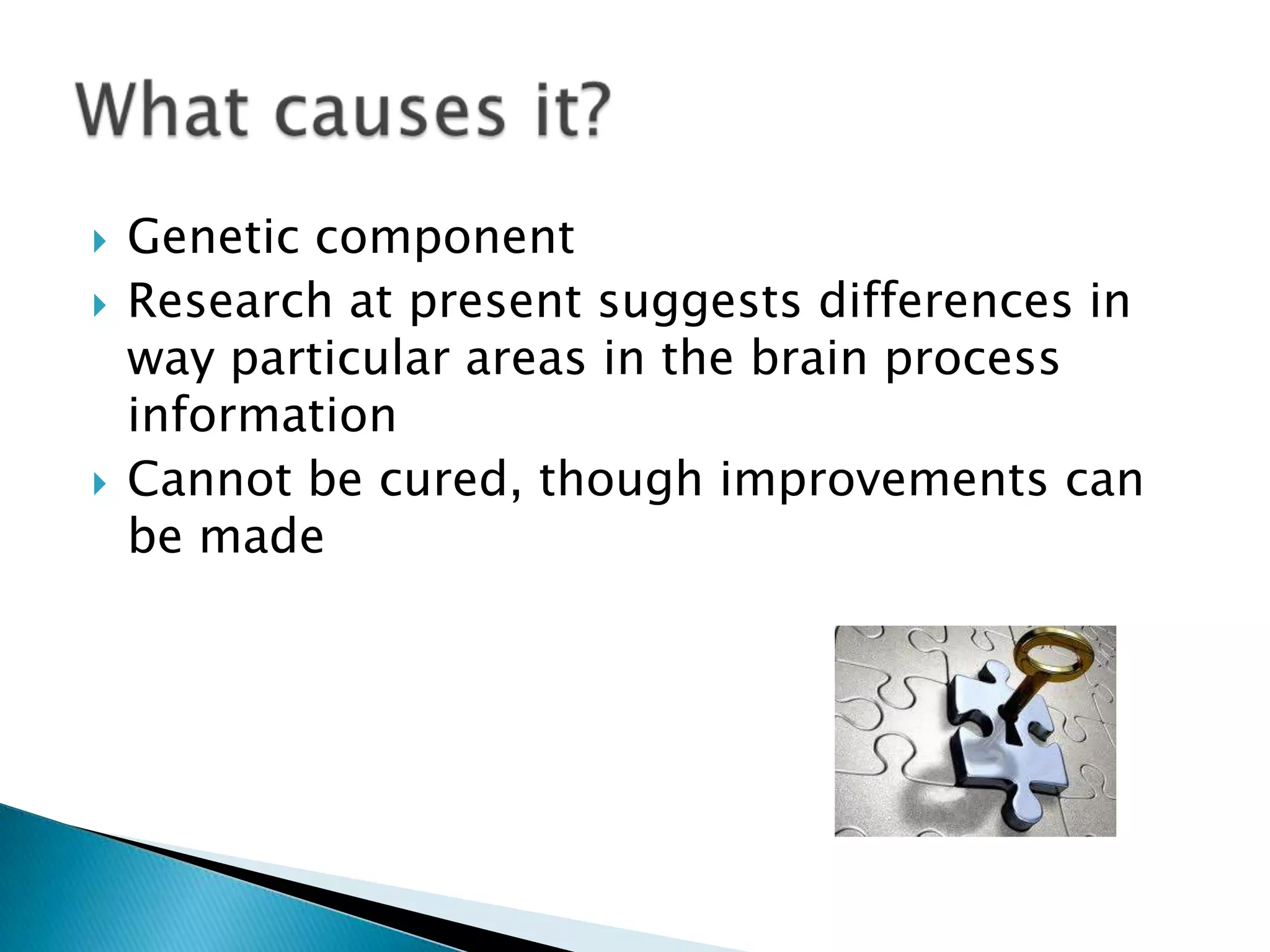
 Genetic component
 Research at present suggests differences in
way particular areas in the brain process
information
 Cannot be cured, though improvements can
be made
 Ask your student!
 Use kinaesthetic teaching methods(learning by
doing)
 Use multi-sensory resources – sound, touch etc
 Reading
 Comprehension
 Writing
 Spelling
 Processing and memory
 Allow extra time
 Acetate overlays*
 Claro view*
 Readability see Niace.org – readability leaflet*
 Apply to text*
 DARTs and various approaches
 http://www.swanseagfl.gov.uk/
 Questioning before and after
reading/different levels of questioning
 Glossary of words used in a particular subject
Reading pens*
Claroread*
Present information in different ways -
Information is beautiful*
Videos
 Spelling programme
 Spelling strategies*
 Electronic dictionary*
 Extra time
 Laptop/computer
 Dictaphone/tape
 Voice recognition
 Apps on phone – on Ipad*
 Assess in different ways – video, board*
 Midmaps (Claro ideas)*
 Sticky notes
 Writing frames
 Allow time for processing
 Give instructions in a variety of formats
 Action plan/Diary/on Moodle
 Record important information on phone
 What are access arrangements?
 What is special consideration?
 How do I/how does my student apply for an
assessment for access arrangements?*
 What is a report?
 Report from home
 Main ones – 25% extra time, reader, scribe
 Normal way of working
 This year to have a set date to hand in
referral form
 JCQ regulations*

Dyslexia Awareness

  • 1.
  • 2.
     Identify differentaspects of dyslexia  Identify some dyslexia-friendly resources  Understand assessments for access arrangements and reports
  • 3.
     A syndromeof difficulties which can include problems with reading, spelling, writing, processing, memory and organisation  How can you tell if one of your students has dyslexia?  Free writing
  • 4.
     Genetic component Research at present suggests differences in way particular areas in the brain process information  Cannot be cured, though improvements can be made
  • 5.
     Ask yourstudent!  Use kinaesthetic teaching methods(learning by doing)  Use multi-sensory resources – sound, touch etc  Reading  Comprehension  Writing  Spelling  Processing and memory
  • 6.
     Allow extratime  Acetate overlays*  Claro view*
  • 7.
     Readability seeNiace.org – readability leaflet*  Apply to text*  DARTs and various approaches  http://www.swanseagfl.gov.uk/  Questioning before and after reading/different levels of questioning  Glossary of words used in a particular subject
  • 8.
    Reading pens* Claroread* Present informationin different ways - Information is beautiful* Videos
  • 9.
     Spelling programme Spelling strategies*  Electronic dictionary*
  • 11.
     Extra time Laptop/computer  Dictaphone/tape  Voice recognition  Apps on phone – on Ipad*  Assess in different ways – video, board*
  • 12.
     Midmaps (Claroideas)*  Sticky notes  Writing frames
  • 13.
     Allow timefor processing  Give instructions in a variety of formats  Action plan/Diary/on Moodle  Record important information on phone
  • 14.
     What areaccess arrangements?  What is special consideration?  How do I/how does my student apply for an assessment for access arrangements?*  What is a report?  Report from home
  • 15.
     Main ones– 25% extra time, reader, scribe  Normal way of working  This year to have a set date to hand in referral form  JCQ regulations*