Dynamic
Stretching
What is Dynamic
Stretching?
• Dynamic stretches are active movements where joints
and muscles go through a full range of motion
• Dynamic stretches can be functional and mimic the
movement of the activity or sport you’re about to
perform
• Dynamic stretches can also be a series of movements
to get the body moving before any type of exercise.
Dynamic Stretching vs.
static stretching
Dynamic Stretching
• Dynamic stretches
are meant to get the
body moving. The
stretches aren’t
held for any length
of time.
Static Stretching
• Static stretches, on
the other hand, are
where muscles are
extended and held
for a period of
time.
When to use dynamic
stretching
Dynamic stretching can be
used before the start of
any exercise routine. It
may help warm up your body
or get your muscles moving
and ready to work.
•Before sports or athletics. Studies Trusted Source show that
dynamic stretches may be beneficial for athletes who will be
running or jumping, including basketball players, soccer players,
and sprinters.
•Before cardiovascular exercise. Whether you’ll be running, in boot
camp, or swimming, dynamic exercises can get your muscles
warmed up and ready, which may improve performance and reduce
risk for injury.
Dynamic stretches for
warming up
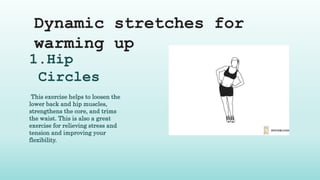
1.Hip
Circles
This exercise helps to loosen the
lower back and hip muscles,
strengthens the core, and trims
the waist. This is also a great
exercise for relieving stress and
tension and improving your
flexibility.
Dynamic stretches for
warming up
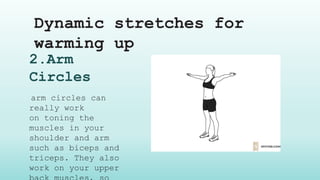
2.Arm
Circles
arm circles can
really work
on toning the
muscles in your
shoulder and arm
such as biceps and
triceps. They also
work on your upper
Dynamic stretches for
warming up
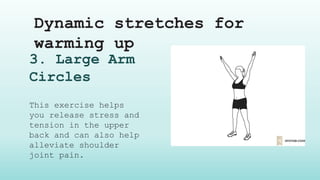
3. Large Arm
Circles
This exercise helps
you release stress and
tension in the upper
back and can also help
alleviate shoulder
joint pain.
Dynamic stretches for
warming up
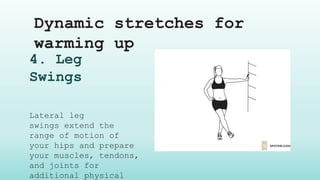
4. Leg
Swings
Lateral leg
swings extend the
range of motion of
your hips and prepare
your muscles, tendons,
and joints for
additional physical
THAT’S
ALL
THANK
YOU.
Prepared by:
Liza Mae Dacuba
Zohar Ivan Seras
Dynamic stretching

Dynamic stretching

  • 1.
  • 2.
    What is Dynamic Stretching? •Dynamic stretches are active movements where joints and muscles go through a full range of motion • Dynamic stretches can be functional and mimic the movement of the activity or sport you’re about to perform • Dynamic stretches can also be a series of movements to get the body moving before any type of exercise.
  • 3.
    Dynamic Stretching vs. staticstretching Dynamic Stretching • Dynamic stretches are meant to get the body moving. The stretches aren’t held for any length of time. Static Stretching • Static stretches, on the other hand, are where muscles are extended and held for a period of time.
  • 4.
    When to usedynamic stretching Dynamic stretching can be used before the start of any exercise routine. It may help warm up your body or get your muscles moving and ready to work.
  • 5.
    •Before sports orathletics. Studies Trusted Source show that dynamic stretches may be beneficial for athletes who will be running or jumping, including basketball players, soccer players, and sprinters. •Before cardiovascular exercise. Whether you’ll be running, in boot camp, or swimming, dynamic exercises can get your muscles warmed up and ready, which may improve performance and reduce risk for injury.
  • 6.
    Dynamic stretches for warmingup 1.Hip Circles This exercise helps to loosen the lower back and hip muscles, strengthens the core, and trims the waist. This is also a great exercise for relieving stress and tension and improving your flexibility.
  • 7.
    Dynamic stretches for warmingup 2.Arm Circles arm circles can really work on toning the muscles in your shoulder and arm such as biceps and triceps. They also work on your upper
  • 8.
    Dynamic stretches for warmingup 3. Large Arm Circles This exercise helps you release stress and tension in the upper back and can also help alleviate shoulder joint pain.
  • 9.
    Dynamic stretches for warmingup 4. Leg Swings Lateral leg swings extend the range of motion of your hips and prepare your muscles, tendons, and joints for additional physical
  • 10.