DYNAMIC LANGUAGE
TOPICS
1. Introduction
2. History of Dynamic language
3. Dynamic language Run time
4. DLR Architecture
5. Examples of Dynamic language
6. Advantages
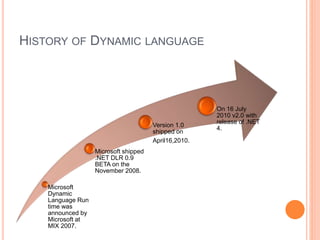
HISTORY OF DYNAMIC LANGUAGE
Microsoft
Dynamic
Language Run
time was
announced by
Microsoft at
MIX 2007.
Microsoft shipped
.NET DLR 0.9
BETA on the
November 2008.
Version 1.0
shipped on
April16,2010.
On 16 July
2010 v2.0 with
release of .NET
4.
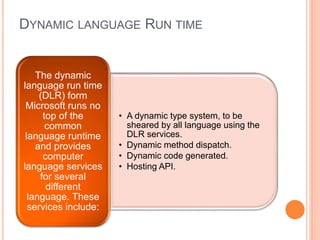
DYNAMIC LANGUAGE RUN TIME
• A dynamic type system, to be
sheared by all language using the
DLR services.
• Dynamic method dispatch.
• Dynamic code generated.
• Hosting API.
The dynamic
language run time
(DLR) form
Microsoft runs no
top of the
common
language runtime
and provides
computer
language services
for several
different
language. These
services include:
 A dynamic programming language is a
programming language in which operations
otherwise done at compile time can be done at run
time . For example, JavaScript it is possible to
change the type of a variable or add new properties
or methods to an object while the program is
running.
 This is opposed to so-called static programming
language , in which such changes are normally not
possible.
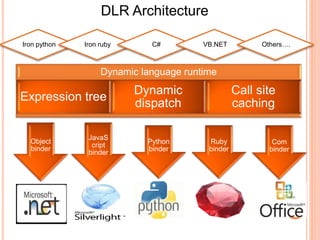
Dynamic language runtime
Expression tree
Dynamic
dispatch
Call site
caching
Iron python Iron ruby C# VB.NET Others….
Object
binder
JavaS
cript
binder
Python
binder
Ruby
binder
Com
binder
DLR Architecture
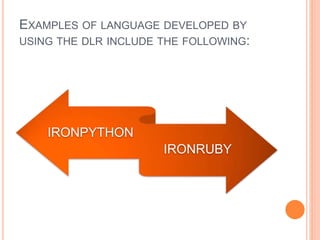
EXAMPLES OF LANGUAGE DEVELOPED BY
USING THE DLR INCLUDE THE FOLLOWING:
IRONPYTHON
IRONRUBY
EXAMPLES OF
DYNAMIC LANGUAGE
JAVA script is a lightweight, interpreter
programming language.
Designed for creating network-centric
application
Complementary to and integrated with
JAVA.
Complementary to and integrated with
HTML.
Open and cross-platform.
1
2
Ruby is an open source, interpreted,
object-oriented programming.
Ruby is designed to be simple,
complete, extensible and portable.
Developed mostly on linux, unix,
windows, macintosh, BeOS and
OS/2.
PHP is a server side scripting
language.
PHP is an interpreted language,
i.e. there is no need for
compilation.
PHP is an object-oriented
language.
PHP is an open-source scripting
language.
3
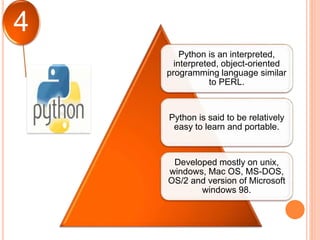
Python is an interpreted,
interpreted, object-oriented
programming language similar
to PERL.
Python is said to be relatively
easy to learn and portable.
Developed mostly on unix,
windows, Mac OS, MS-DOS,
OS/2 and version of Microsoft
windows 98.
4
DYNAMIC LANGUAGE PROVIDE THE FOLLOWING
ADVANTAGES FOR DEVELOPERS:
 The ability to use a rapid feedback loop. This lets
you enter several statement and immediately
execute them to see the result.
 Support for both top-down development and more
traditional bottom-top development.
 Easier refactoring and code modification.

Dynamic language

  • 1.
  • 2.
    TOPICS 1. Introduction 2. Historyof Dynamic language 3. Dynamic language Run time 4. DLR Architecture 5. Examples of Dynamic language 6. Advantages
  • 3.
    HISTORY OF DYNAMICLANGUAGE Microsoft Dynamic Language Run time was announced by Microsoft at MIX 2007. Microsoft shipped .NET DLR 0.9 BETA on the November 2008. Version 1.0 shipped on April16,2010. On 16 July 2010 v2.0 with release of .NET 4.
  • 4.
    DYNAMIC LANGUAGE RUNTIME • A dynamic type system, to be sheared by all language using the DLR services. • Dynamic method dispatch. • Dynamic code generated. • Hosting API. The dynamic language run time (DLR) form Microsoft runs no top of the common language runtime and provides computer language services for several different language. These services include:
  • 5.
     A dynamicprogramming language is a programming language in which operations otherwise done at compile time can be done at run time . For example, JavaScript it is possible to change the type of a variable or add new properties or methods to an object while the program is running.  This is opposed to so-called static programming language , in which such changes are normally not possible.
  • 6.
    Dynamic language runtime Expressiontree Dynamic dispatch Call site caching Iron python Iron ruby C# VB.NET Others…. Object binder JavaS cript binder Python binder Ruby binder Com binder DLR Architecture
  • 7.
    EXAMPLES OF LANGUAGEDEVELOPED BY USING THE DLR INCLUDE THE FOLLOWING: IRONPYTHON IRONRUBY
  • 8.
  • 9.
    JAVA script isa lightweight, interpreter programming language. Designed for creating network-centric application Complementary to and integrated with JAVA. Complementary to and integrated with HTML. Open and cross-platform. 1
  • 10.
    2 Ruby is anopen source, interpreted, object-oriented programming. Ruby is designed to be simple, complete, extensible and portable. Developed mostly on linux, unix, windows, macintosh, BeOS and OS/2.
  • 11.
    PHP is aserver side scripting language. PHP is an interpreted language, i.e. there is no need for compilation. PHP is an object-oriented language. PHP is an open-source scripting language. 3
  • 12.
    Python is aninterpreted, interpreted, object-oriented programming language similar to PERL. Python is said to be relatively easy to learn and portable. Developed mostly on unix, windows, Mac OS, MS-DOS, OS/2 and version of Microsoft windows 98. 4
  • 13.
    DYNAMIC LANGUAGE PROVIDETHE FOLLOWING ADVANTAGES FOR DEVELOPERS:  The ability to use a rapid feedback loop. This lets you enter several statement and immediately execute them to see the result.  Support for both top-down development and more traditional bottom-top development.  Easier refactoring and code modification.