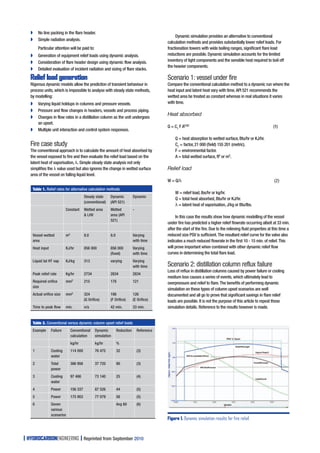
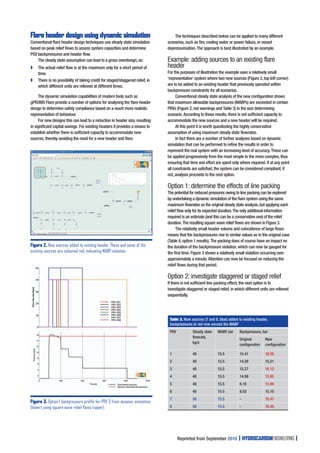
This document summarizes how modern computer dynamic analysis and detailed evaluations can yield significant savings in both weight and cost of flare and relief systems compared to traditional steady state calculation methods. It provides examples showing that dynamic simulation can predict substantially lower relief loads for vessels under fire or distillation column upsets. It also illustrates how dynamic flow analysis of flare header designs allows additional relief sources to be accommodated without exceeding pressure limits, avoiding the need for larger and more expensive systems.





![2014.03.31.bach glc-pham-finalizing[conflict]](https://cdn.slidesharecdn.com/ss_thumbnails/2014-150417024004-conversion-gate01-thumbnail.jpg?width=640&height=640&fit=bounds)


