Dynamic Change Data Capture with Flink CDC and
Consistent Hashing
Hi!
Xiao Meng
● Software Engineer @ Goldsky
● Expert Data Engineer @ Activision
● Data, Infrastructure, and SRE
Yaroslav Tkachenko
● Founding Engineer @ Goldsky
● Staff Data Engineer @ Shopify
● Software Architect @ Activision
● Kafka, Flink, and all things
streaming!
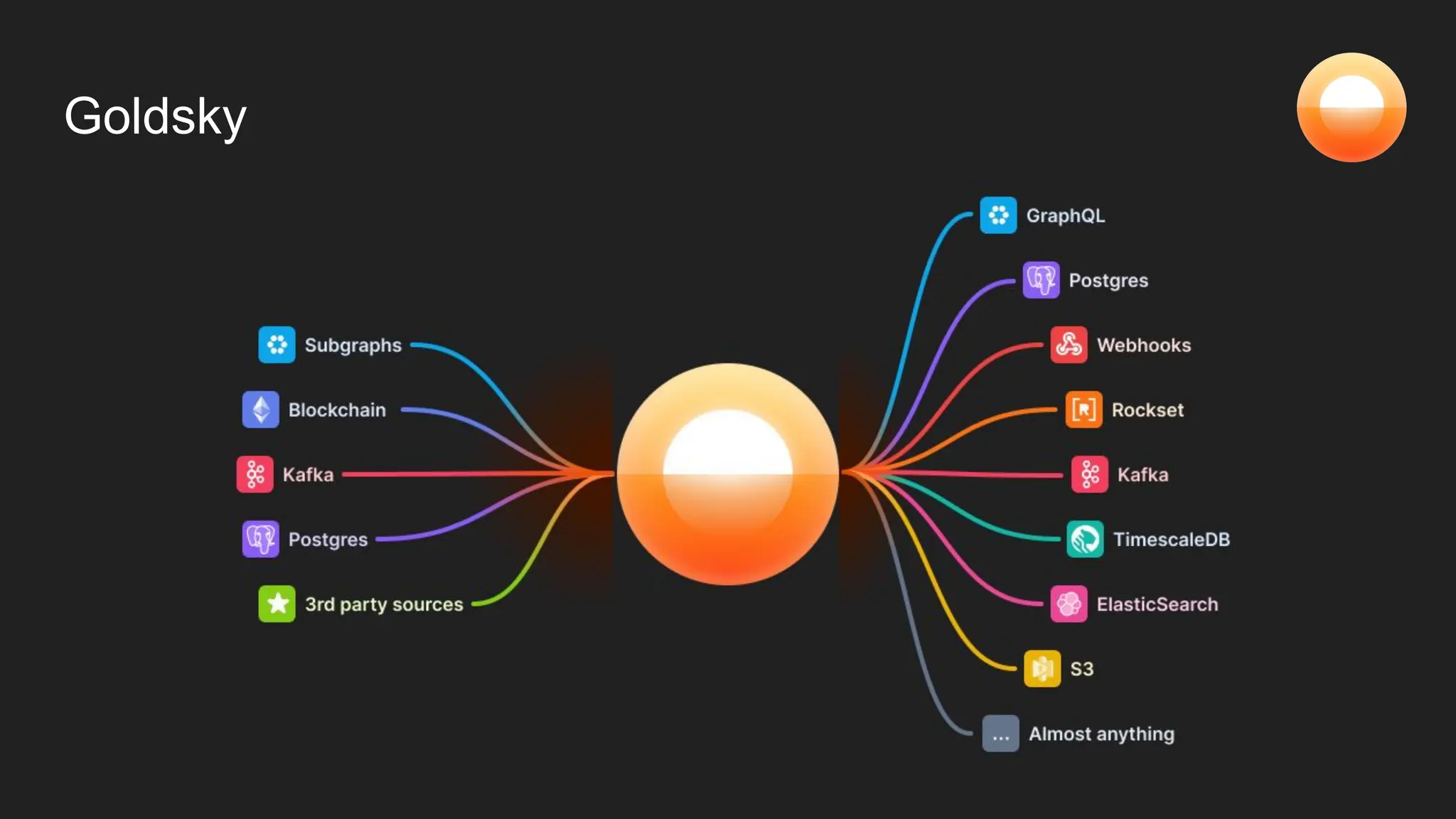
Goldsky
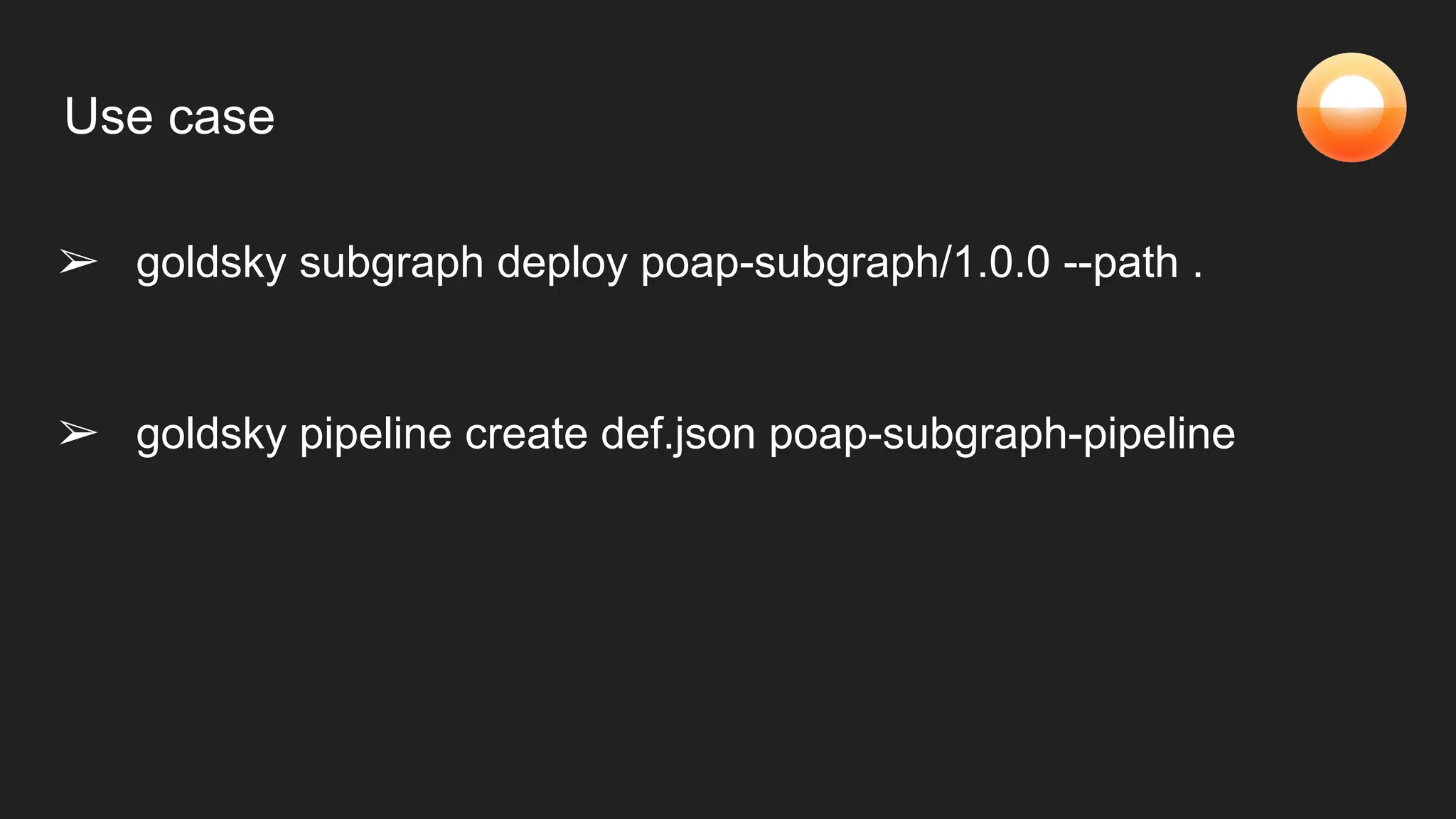
Use case
➢ goldsky subgraph deploy poap-subgraph/1.0.0 --path .
➢ goldsky pipeline create def.json poap-subgraph-pipeline
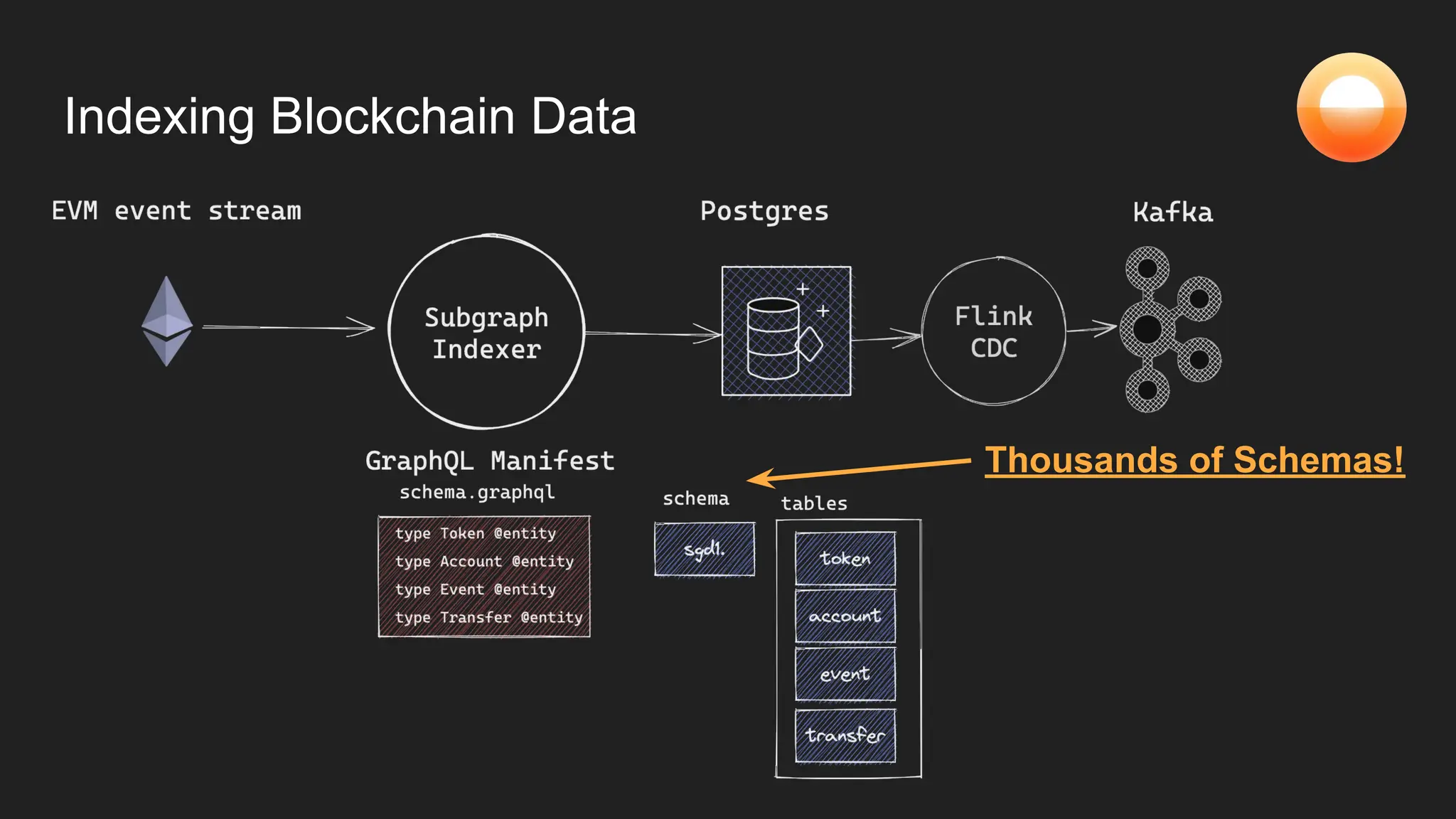
Indexing Blockchain Data
Thousands of Schemas!
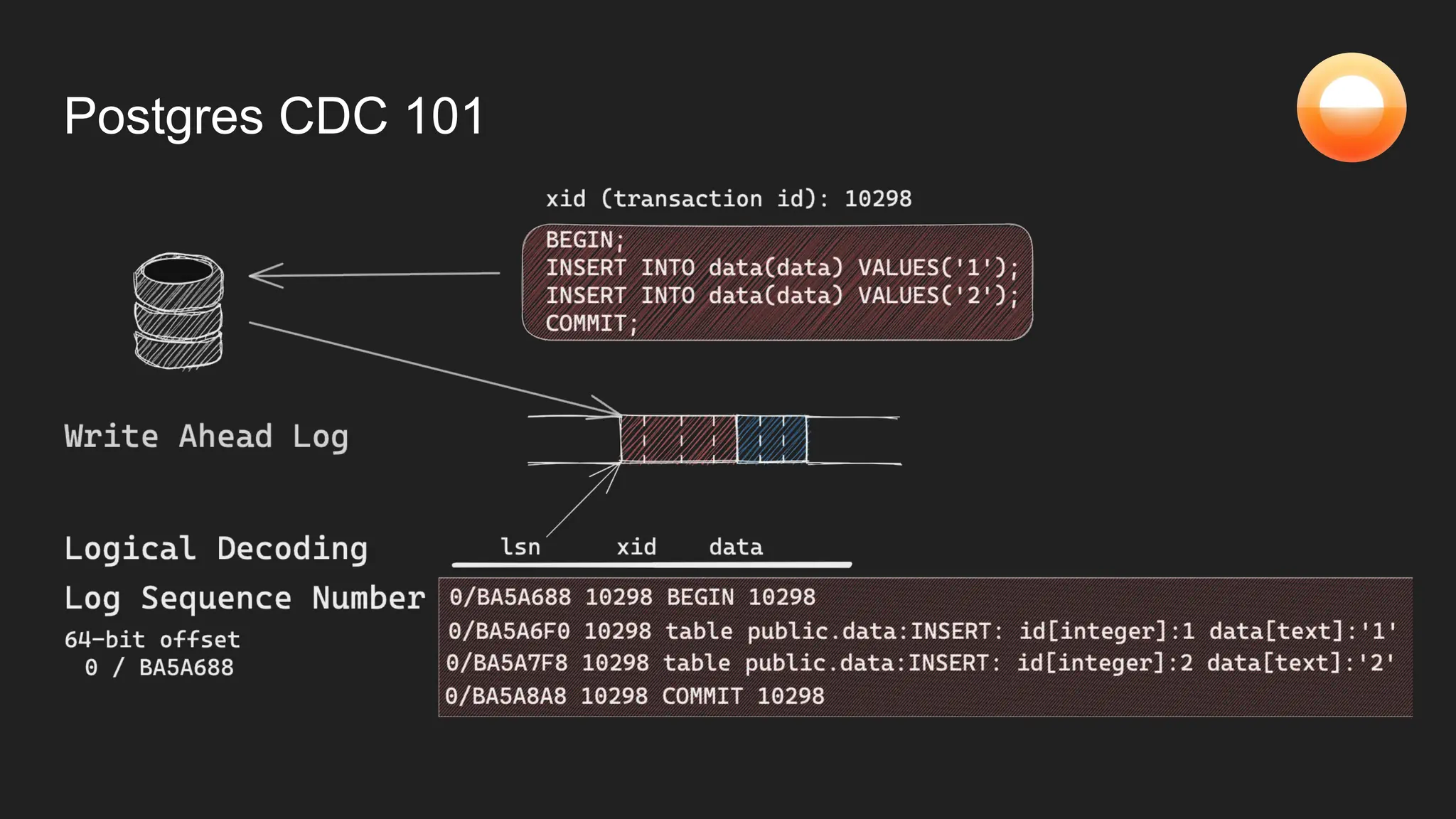
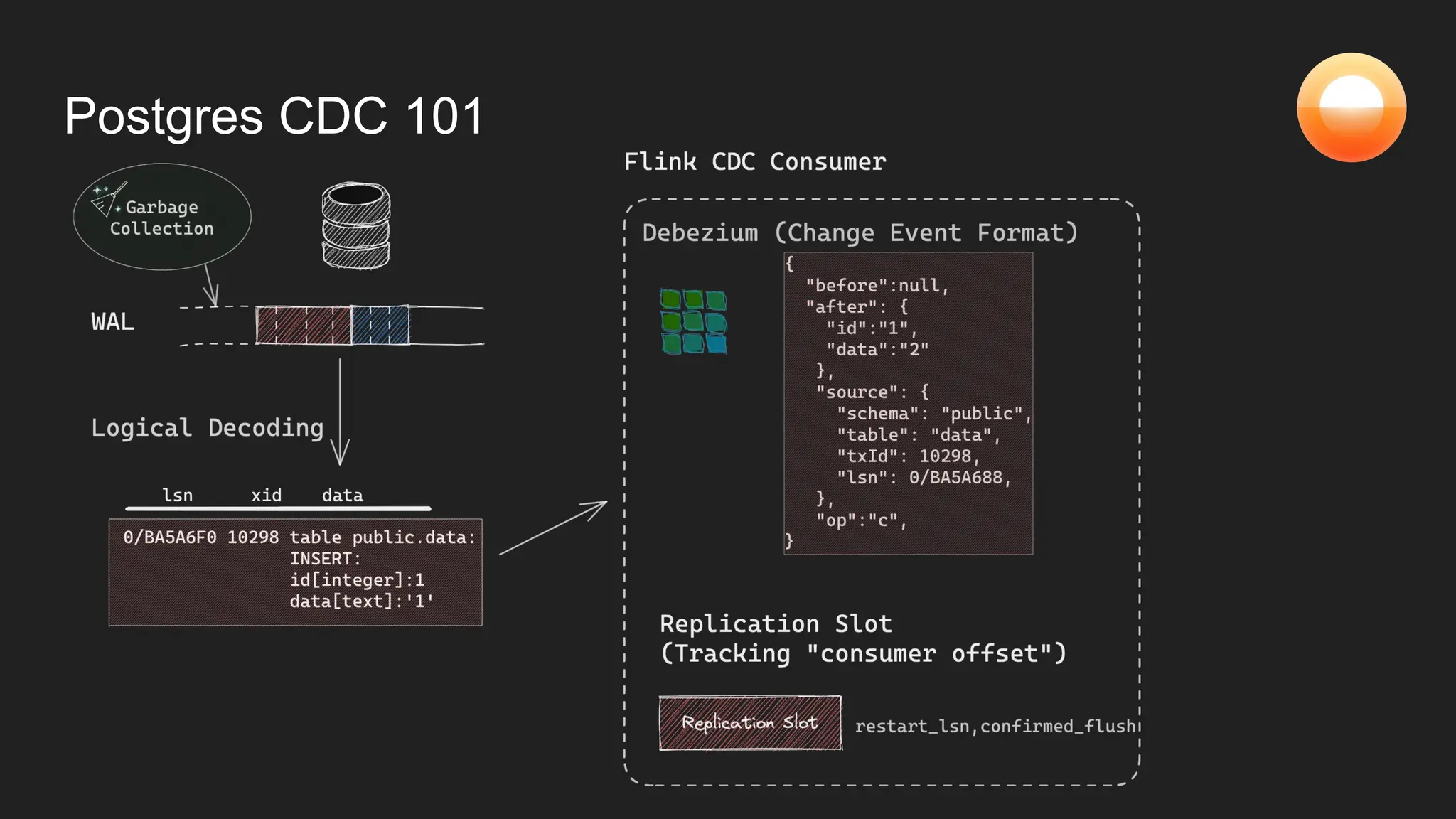
Postgres CDC 101
Postgres CDC 101
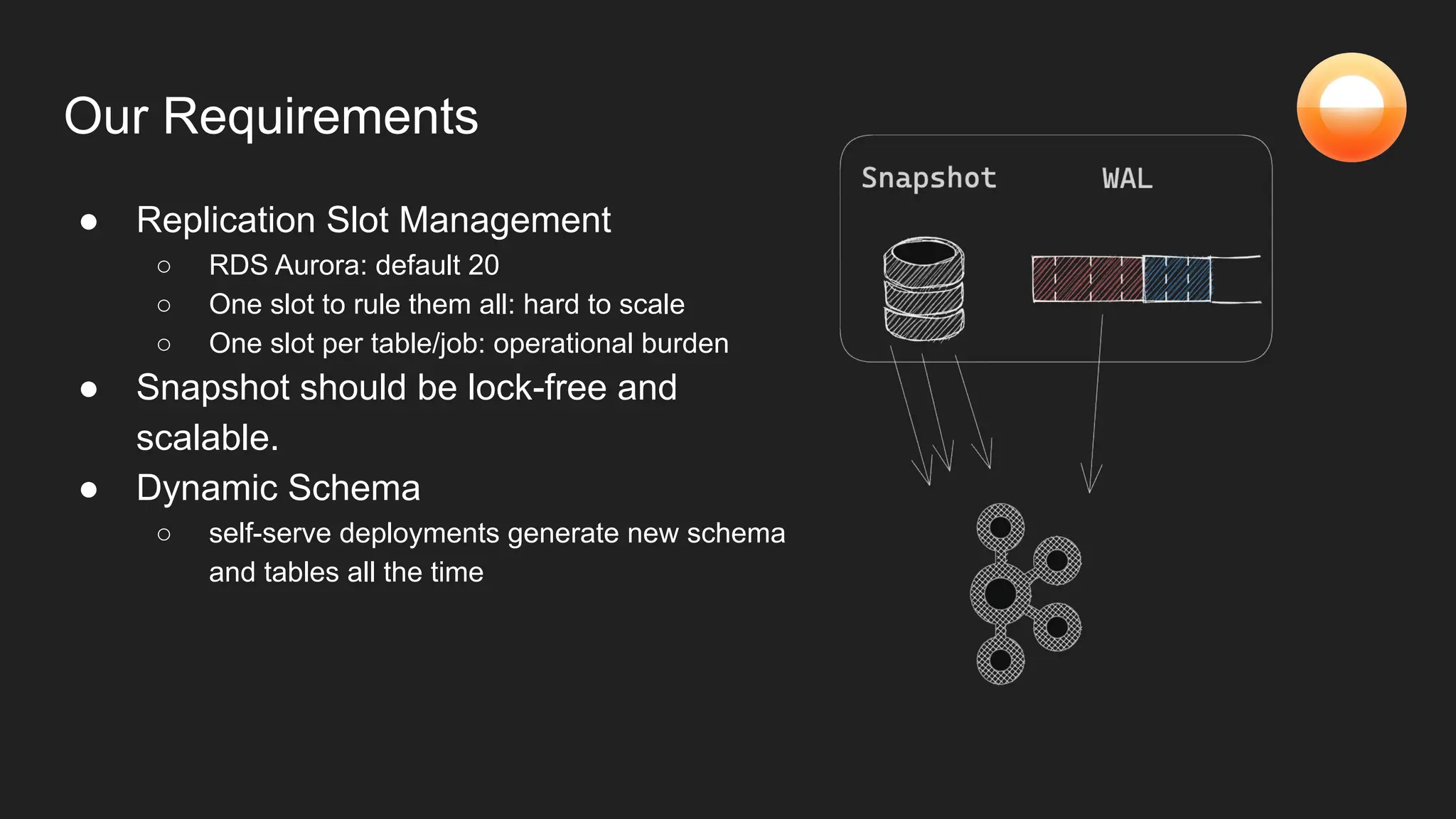
Our Requirements
● Replication Slot Management
○ RDS Aurora: default 20
○ One slot to rule them all: hard to scale
○ One slot per table/job: operational burden
● Snapshot should be lock-free and
scalable.
● Dynamic Schema
○ self-serve deployments generate new schema
and tables all the time
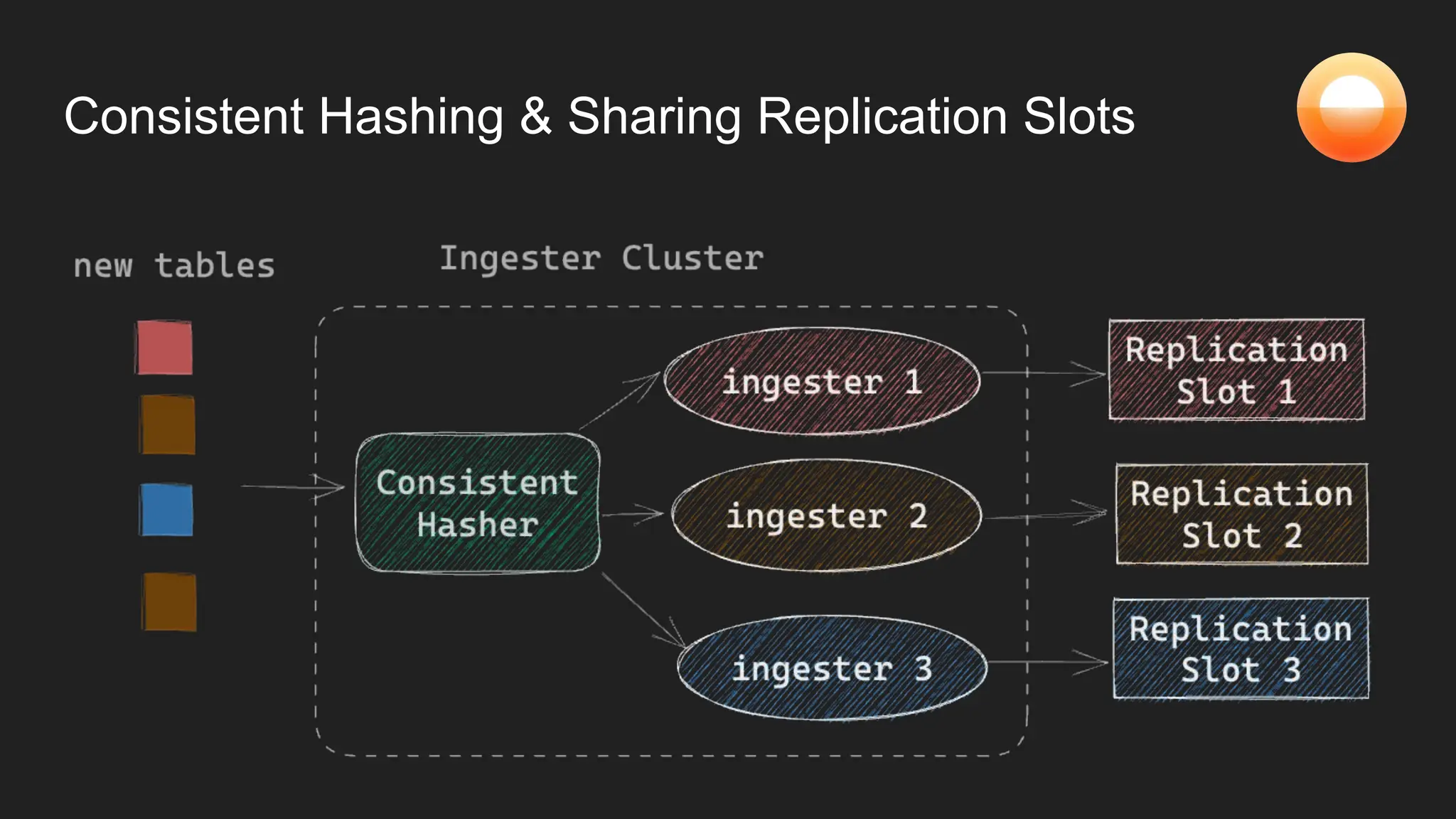
Consistent Hashing & Sharing Replication Slots
Our Requirements
● ✅ Replication Slot Management
● Lock-Free and Parallel Snapshot
● Scan Newly Added Tables
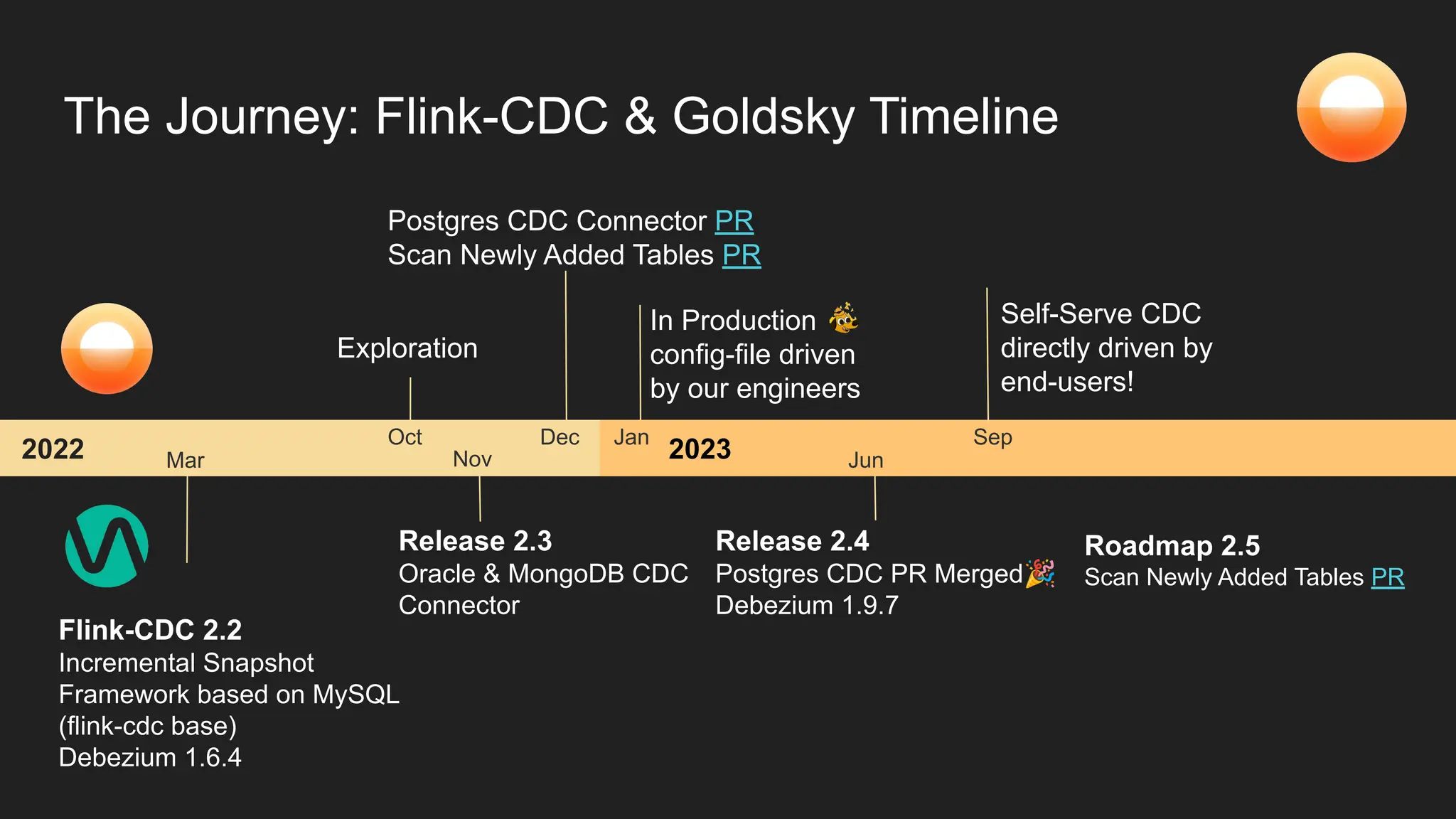
The Journey: Flink-CDC & Goldsky Timeline
2022
Release 2.3
Oracle & MongoDB CDC
Connector
Exploration
Flink-CDC 2.2
Incremental Snapshot
Framework based on MySQL
(flink-cdc base)
Debezium 1.6.4
Postgres CDC Connector PR
Scan Newly Added Tables PR
In Production
config-file driven
by our engineers
Scan Newly Added Tables PR
Self-Serve CDC
directly driven by
end-users!
2023
Mar
Oct
Nov
Dec
Jun
Jan
Release 2.4
Postgres CDC PR Merged🎉
Debezium 1.9.7
Roadmap 2.5
Sep
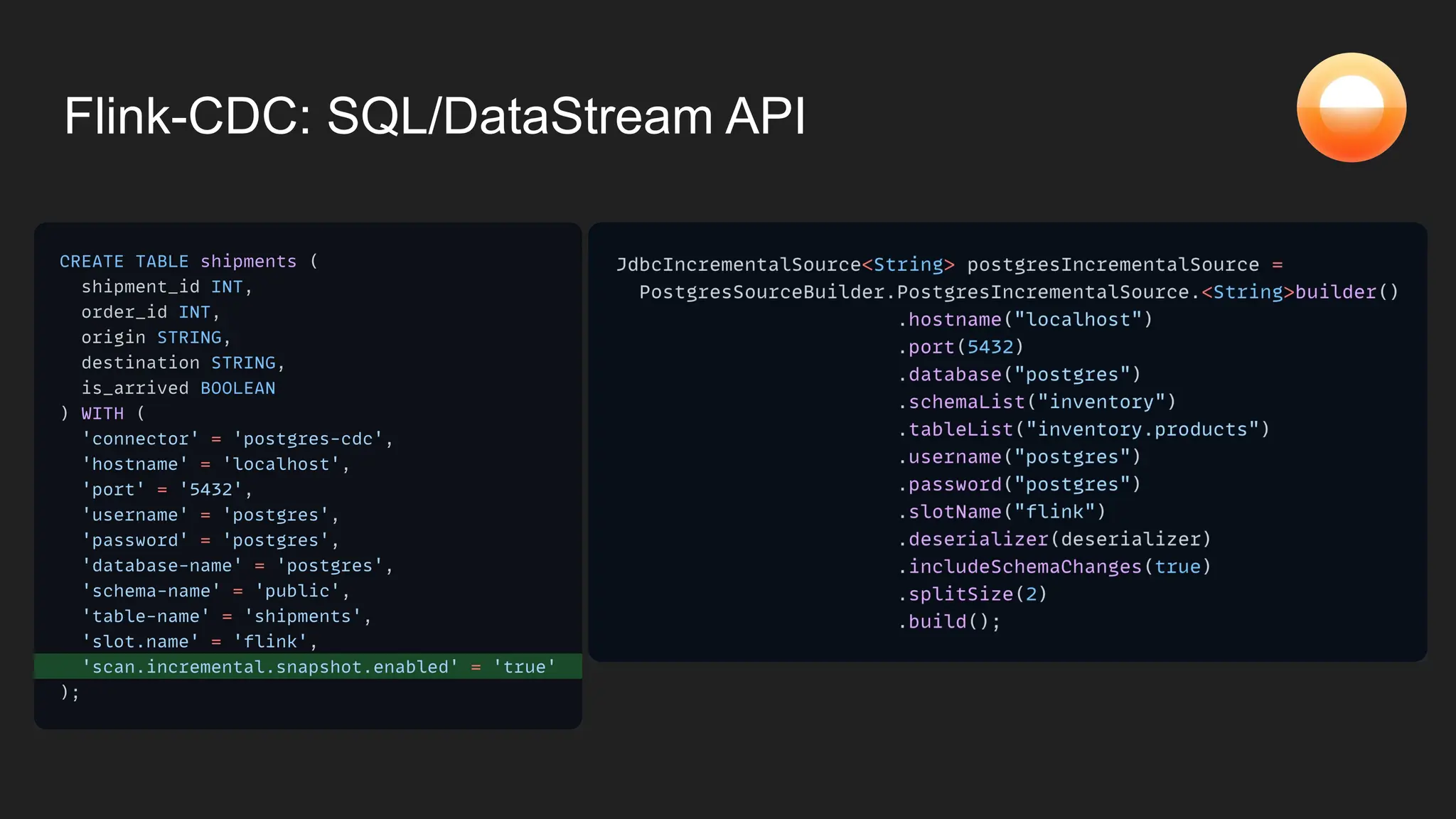
Flink-CDC: SQL/DataStream API
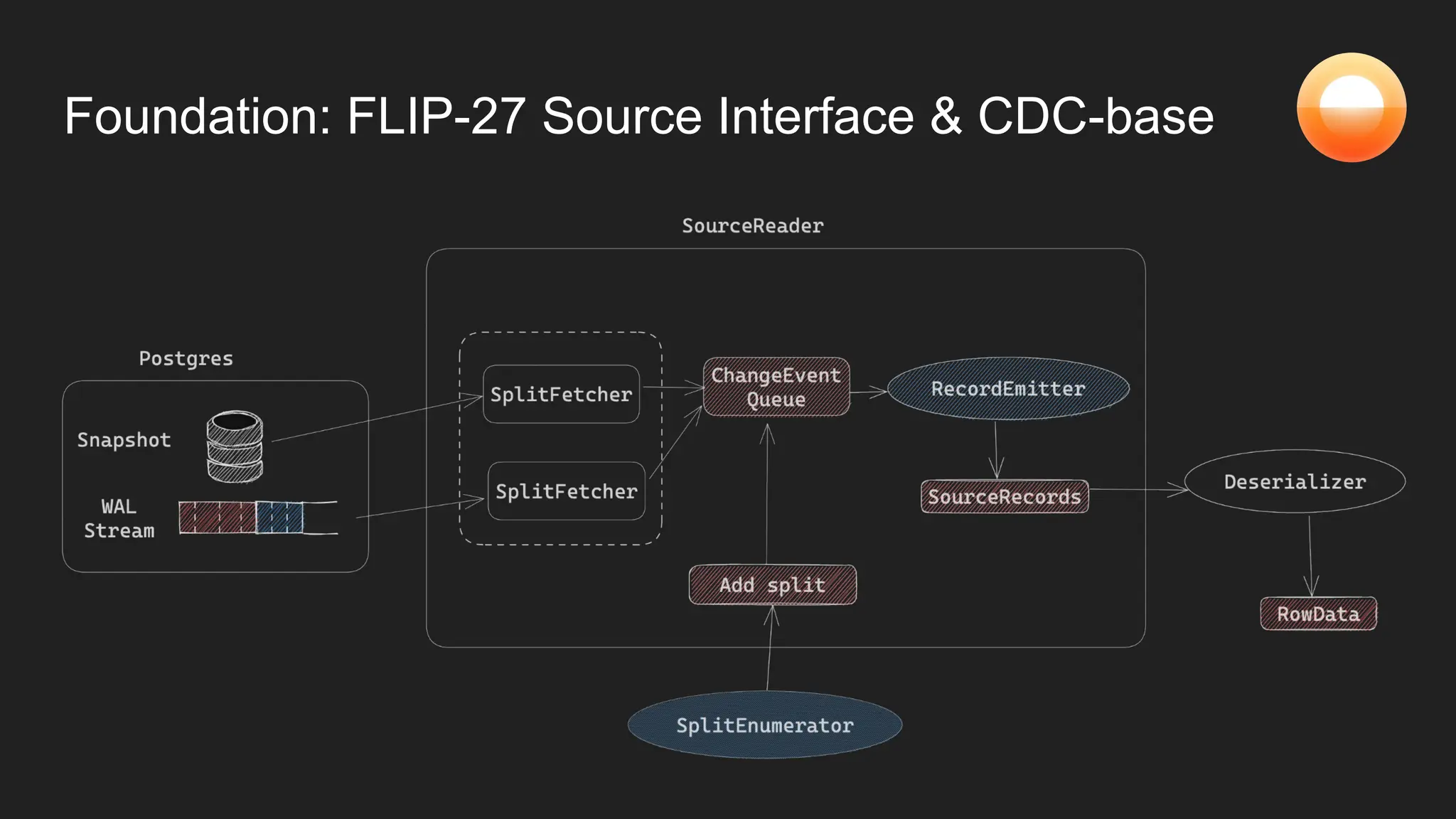
Foundation: FLIP-27 Source Interface & CDC-base
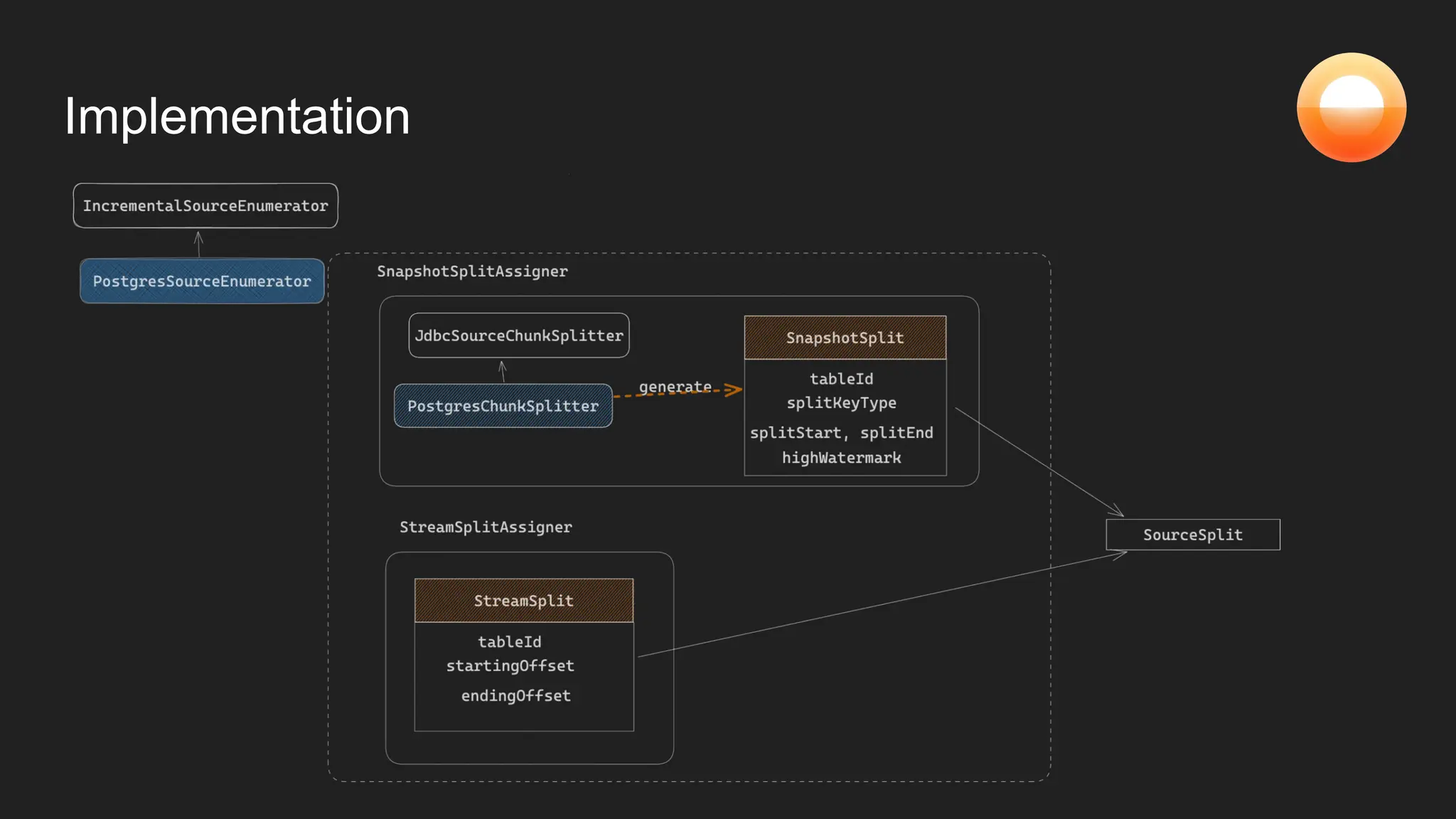
Implementation
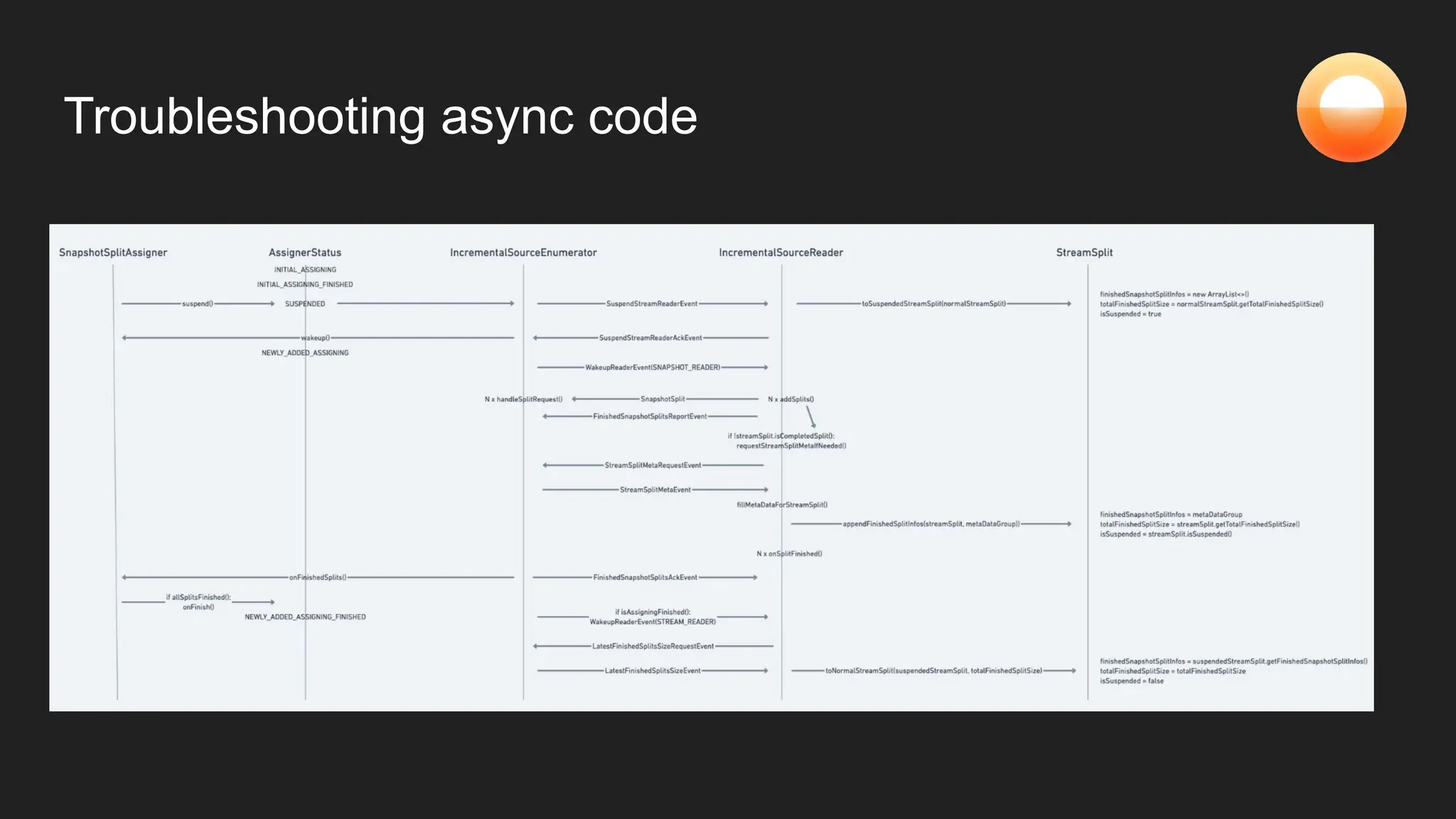
Troubleshooting async code
Well, things didn’t work!
We noticed that the connector tried to use the
replication slot during snapshotting… But why?
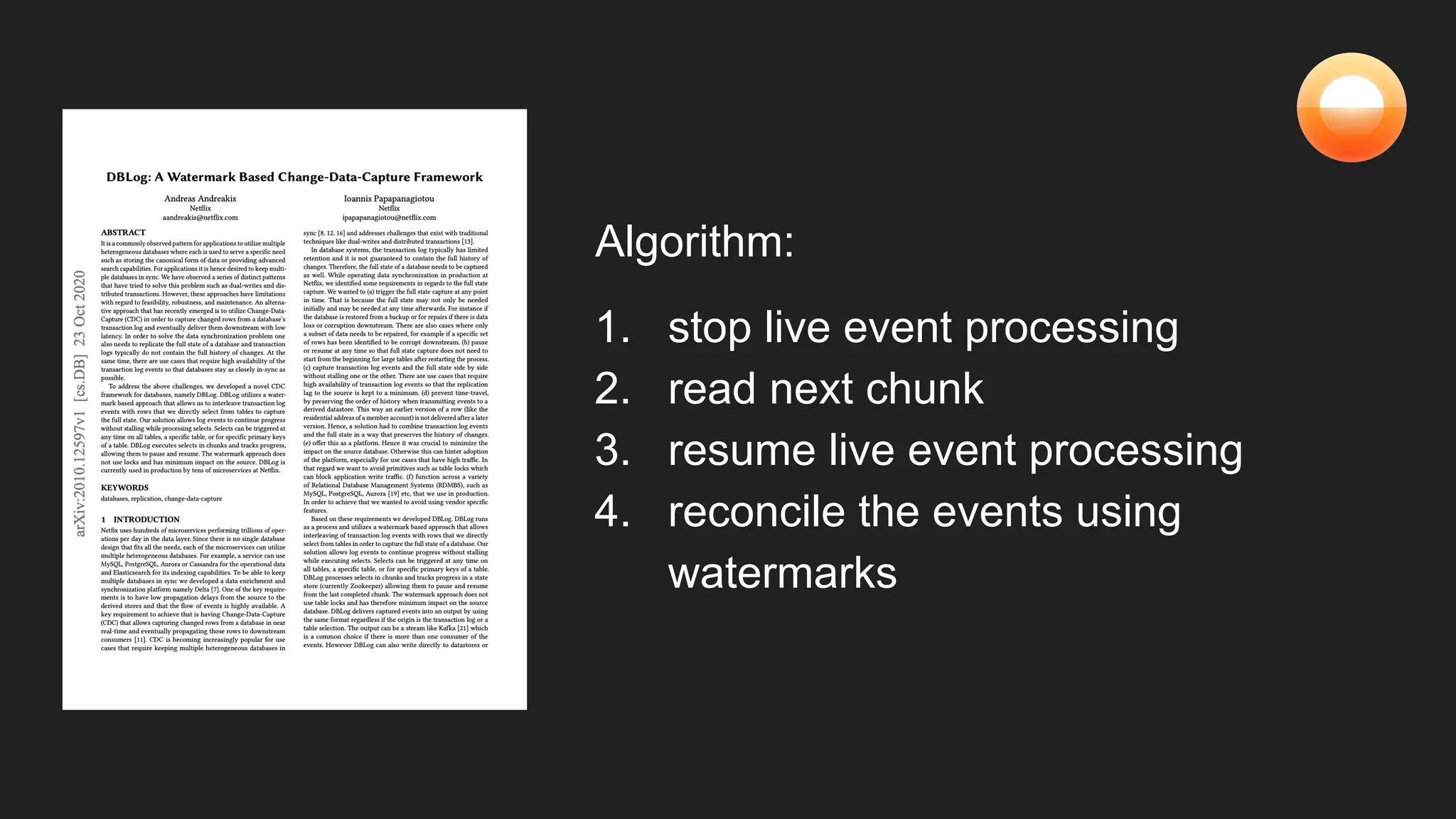
Algorithm:
1. stop live event processing
2. read next chunk
3. resume live event processing
4. reconcile the events using
watermarks
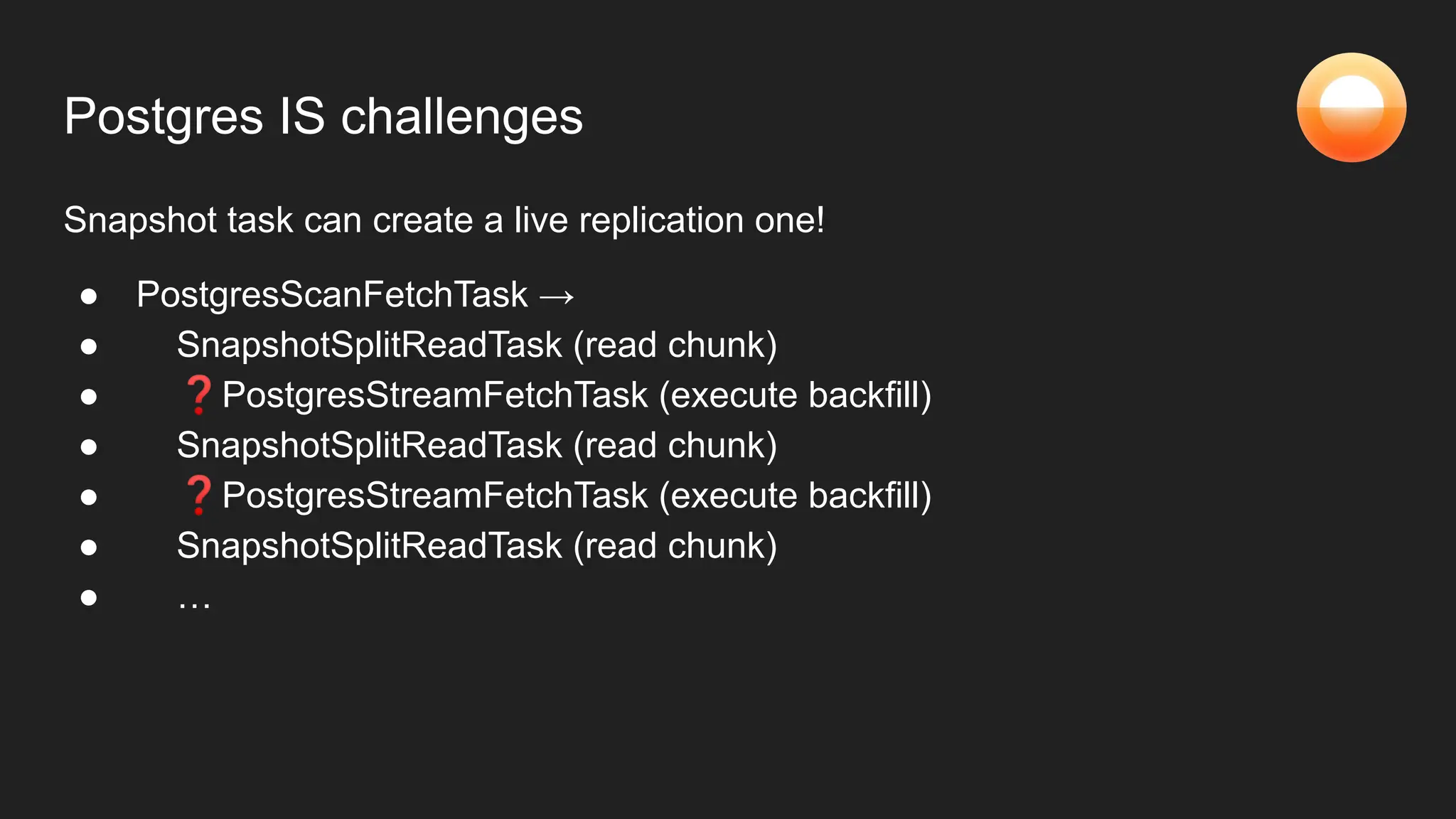
Postgres IS challenges
Snapshot task can create a live replication one!
● PostgresScanFetchTask →
● SnapshotSplitReadTask (read chunk)
● ❓PostgresStreamFetchTask (execute backfill)
● SnapshotSplitReadTask (read chunk)
● ❓PostgresStreamFetchTask (execute backfill)
● SnapshotSplitReadTask (read chunk)
● …
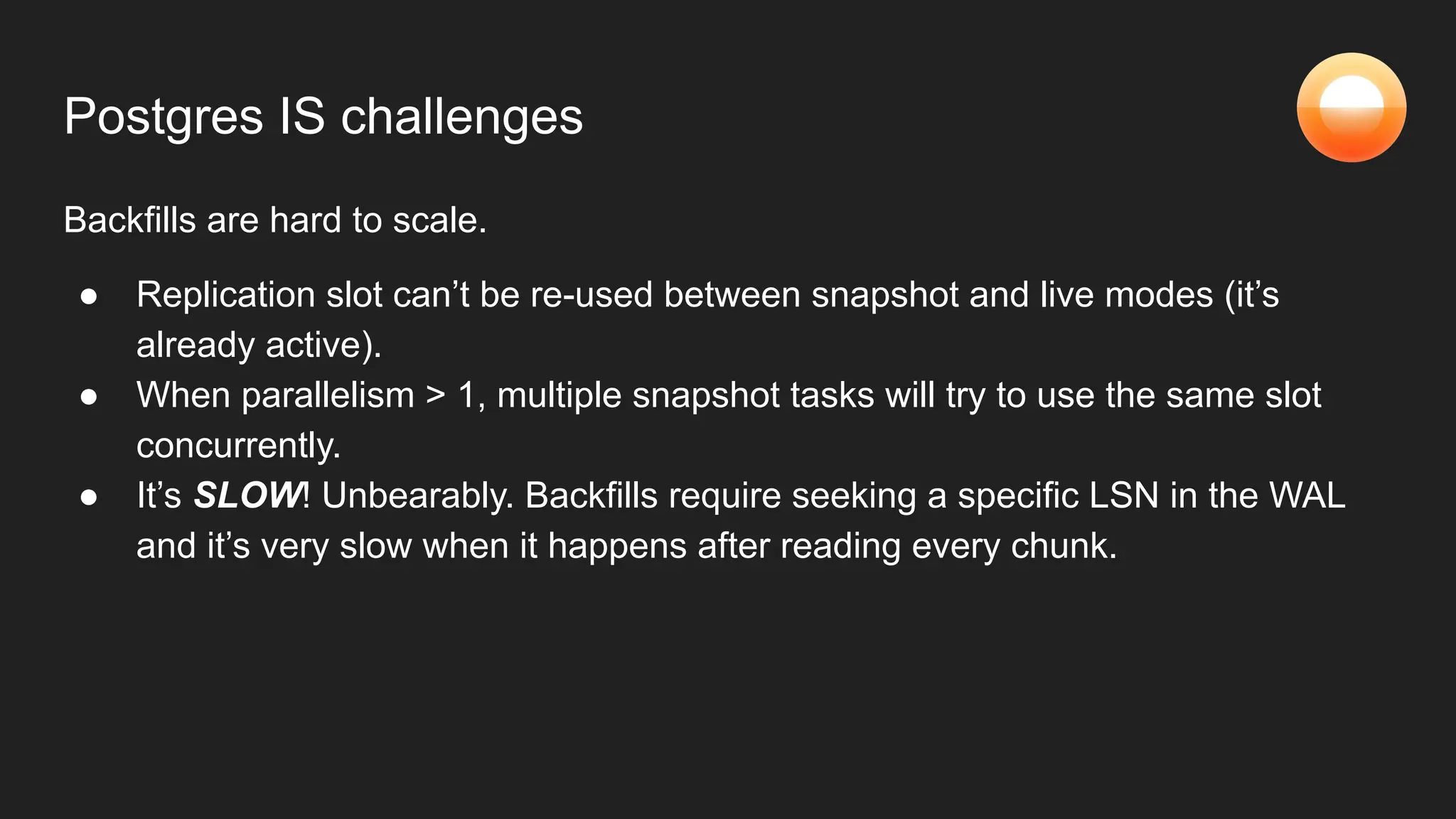
Postgres IS challenges
Backfills are hard to scale.
● Replication slot can’t be re-used between snapshot and live modes (it’s
already active).
● When parallelism > 1, multiple snapshot tasks will try to use the same slot
concurrently.
● It’s SLOW! Unbearably. Backfills require seeking a specific LSN in the WAL
and it’s very slow when it happens after reading every chunk.
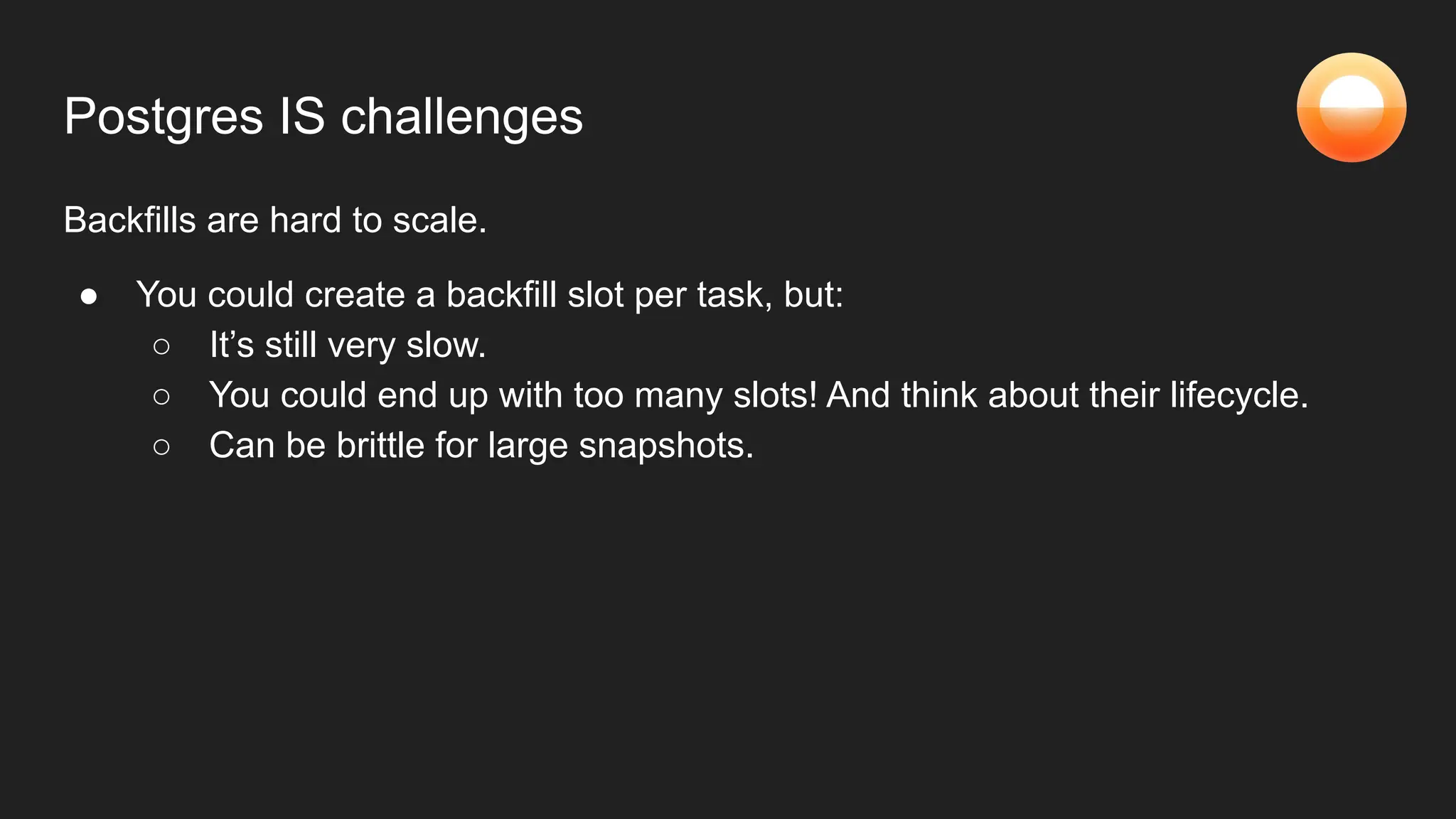
Postgres IS challenges
Backfills are hard to scale.
● You could create a backfill slot per task, but:
○ It’s still very slow.
○ You could end up with too many slots! And think about their lifecycle.
○ Can be brittle for large snapshots.
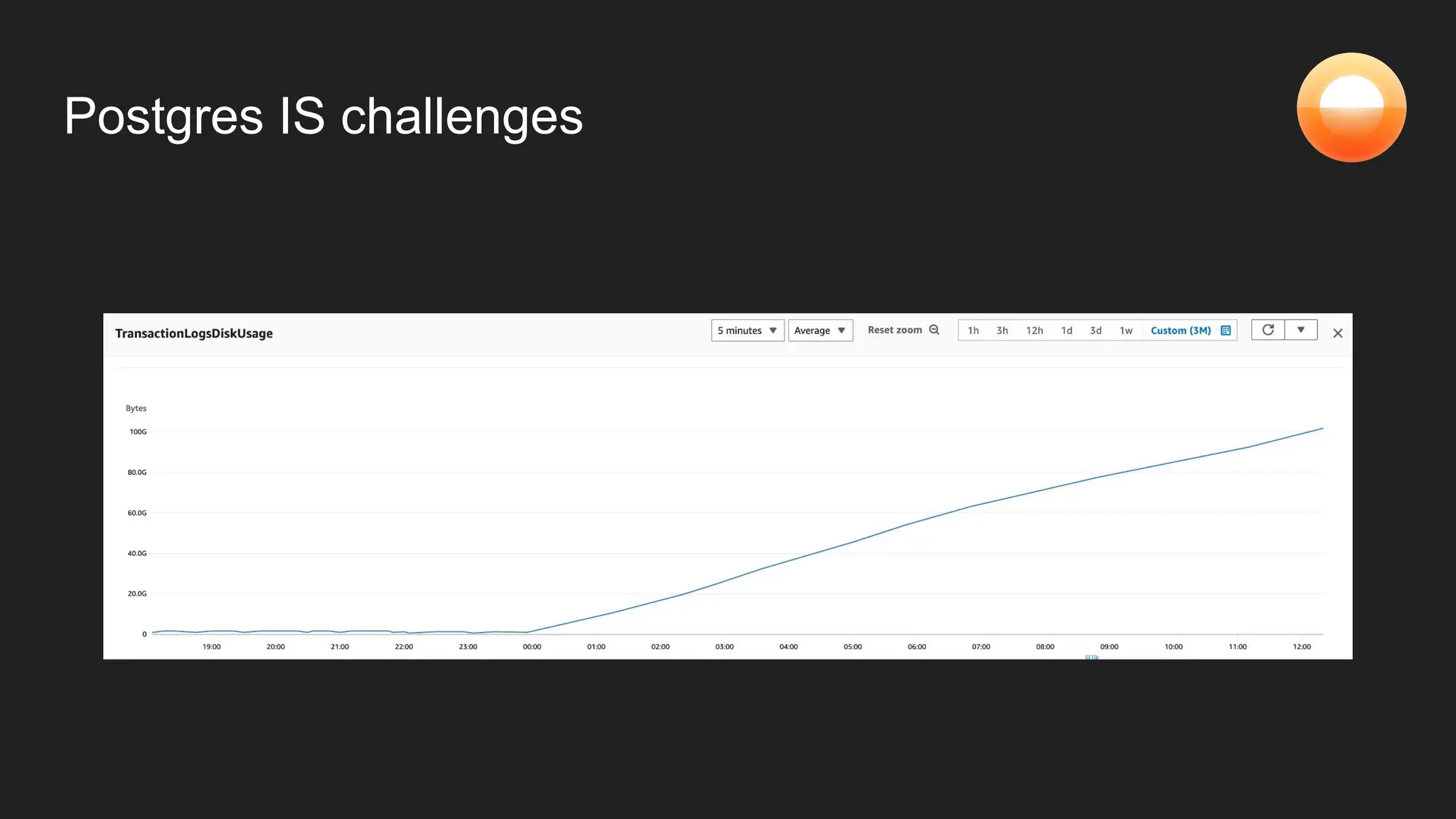
Postgres IS challenges
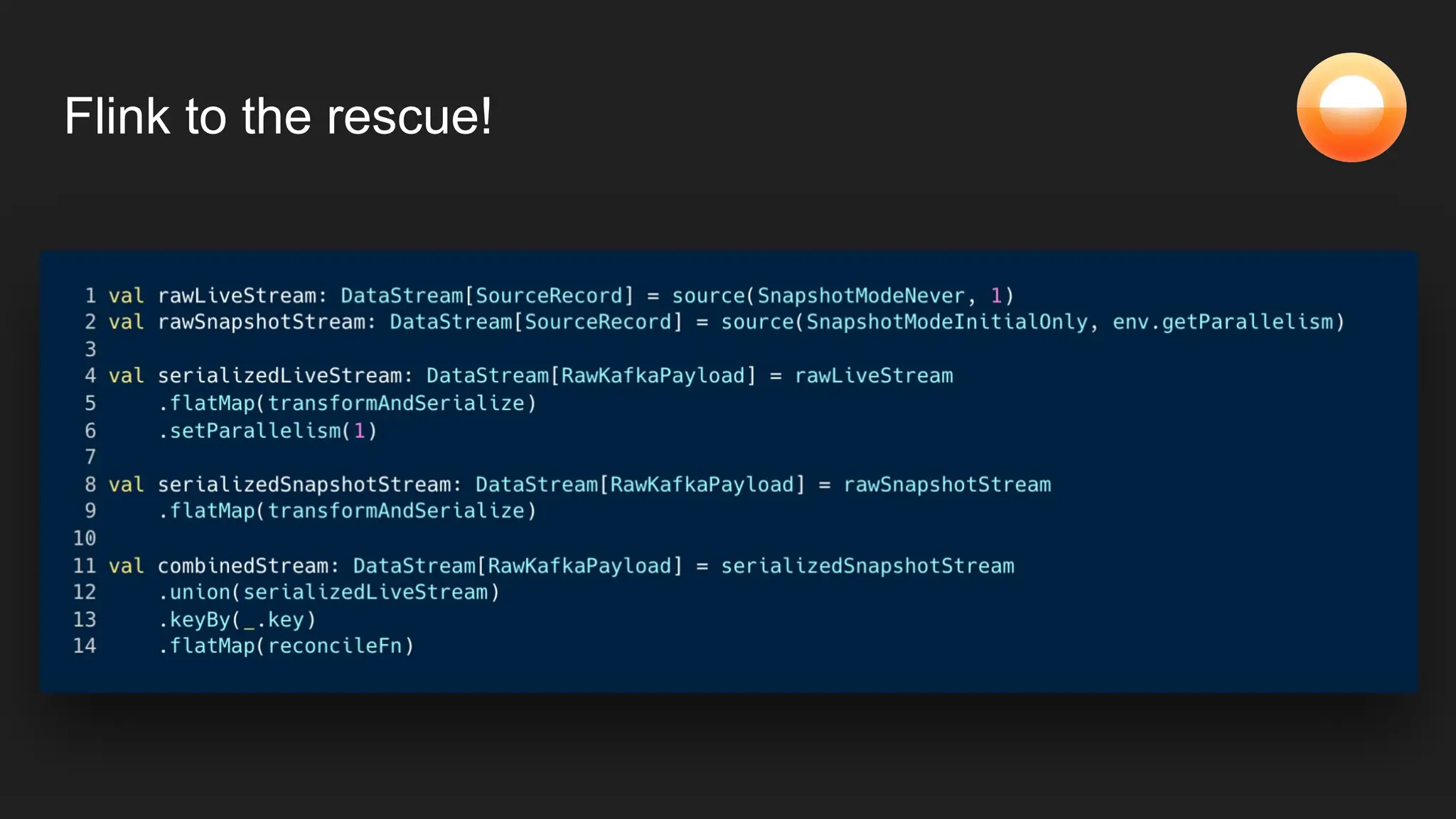
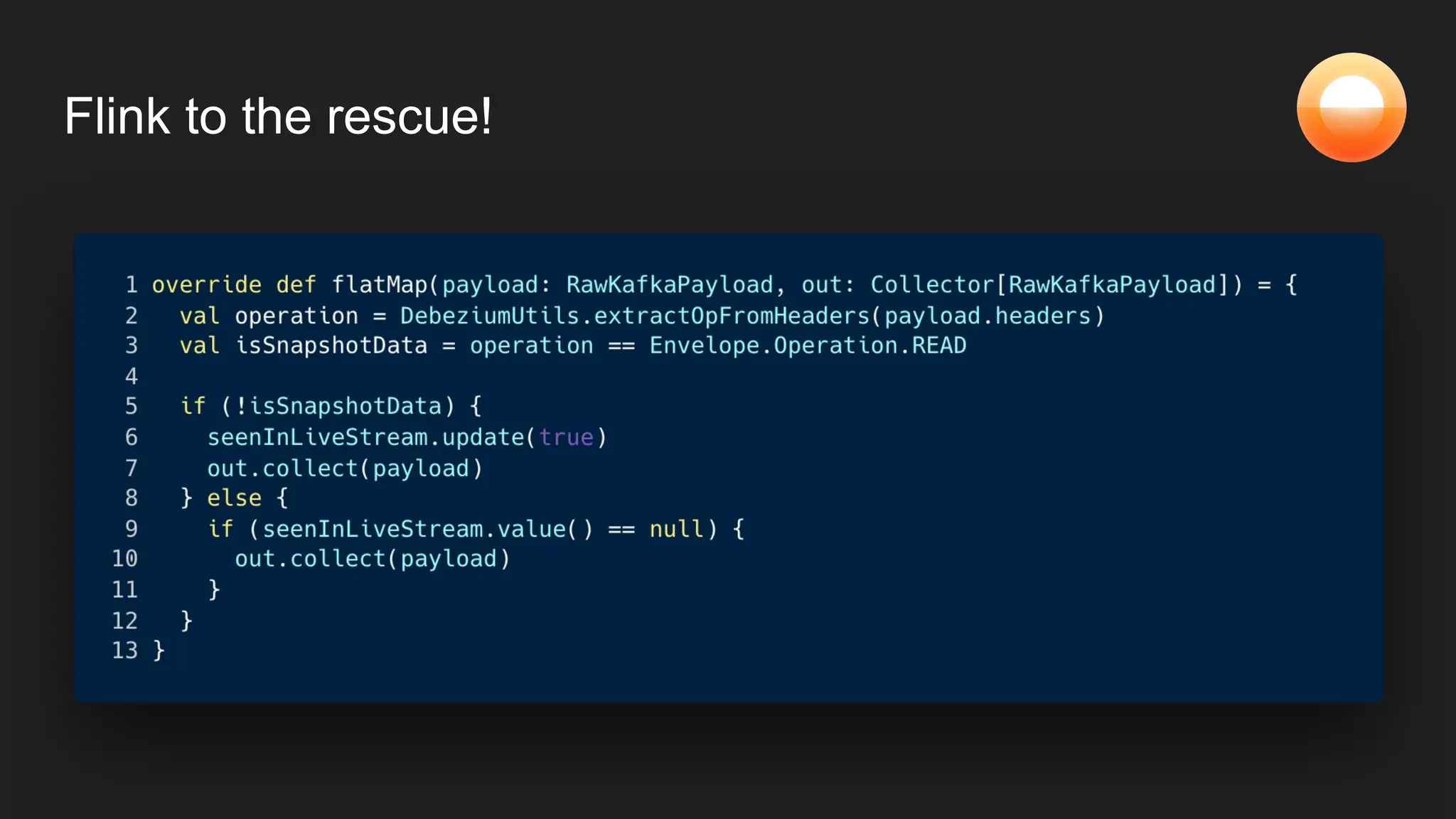
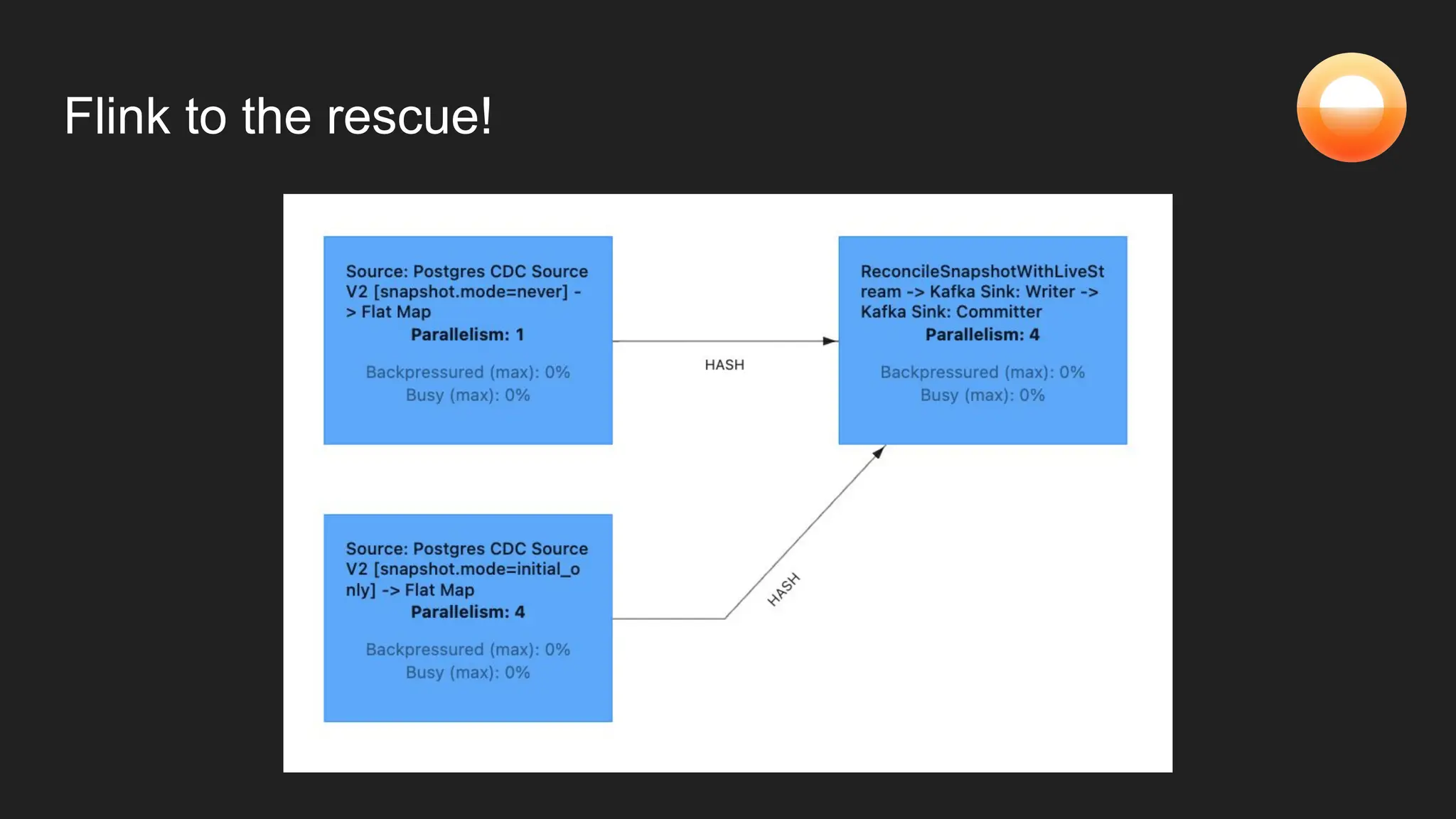
Flink to the rescue!
What if we re-implement some parts of the
incremental snapshotting algorithm with Flink?
Postgres
CDC source
[snapshot
mode]
Postgres
CDC source
[live mode]
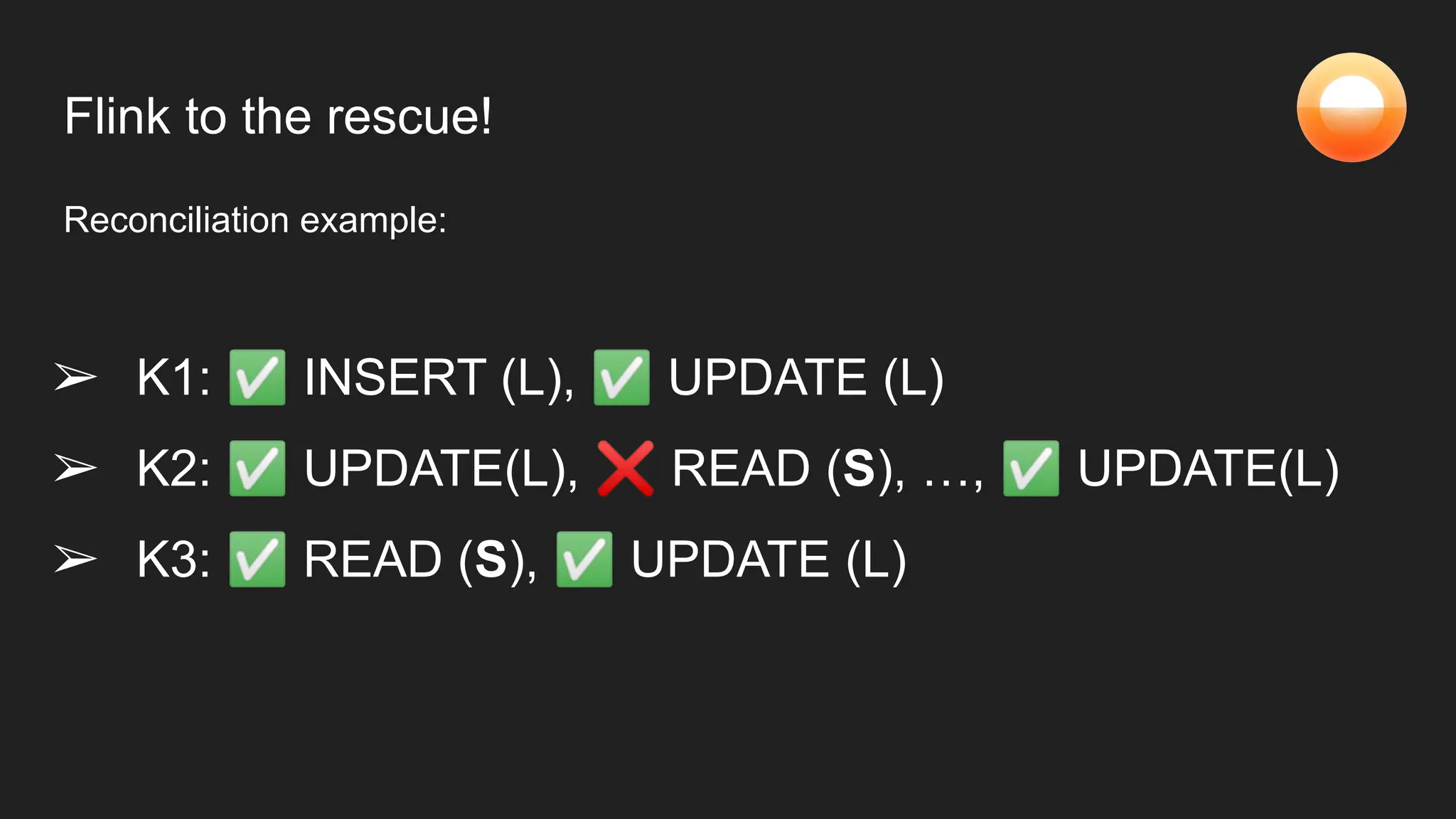
Reconcile
Flink to the rescue!
Reconciliation example:
➢ K1: ✅ INSERT (L), ✅ UPDATE (L)
➢ K2: ✅ UPDATE(L), ❌ READ (S), …, ✅ UPDATE(L)
➢ K3: ✅ READ (S), ✅ UPDATE (L)
Flink to the rescue!
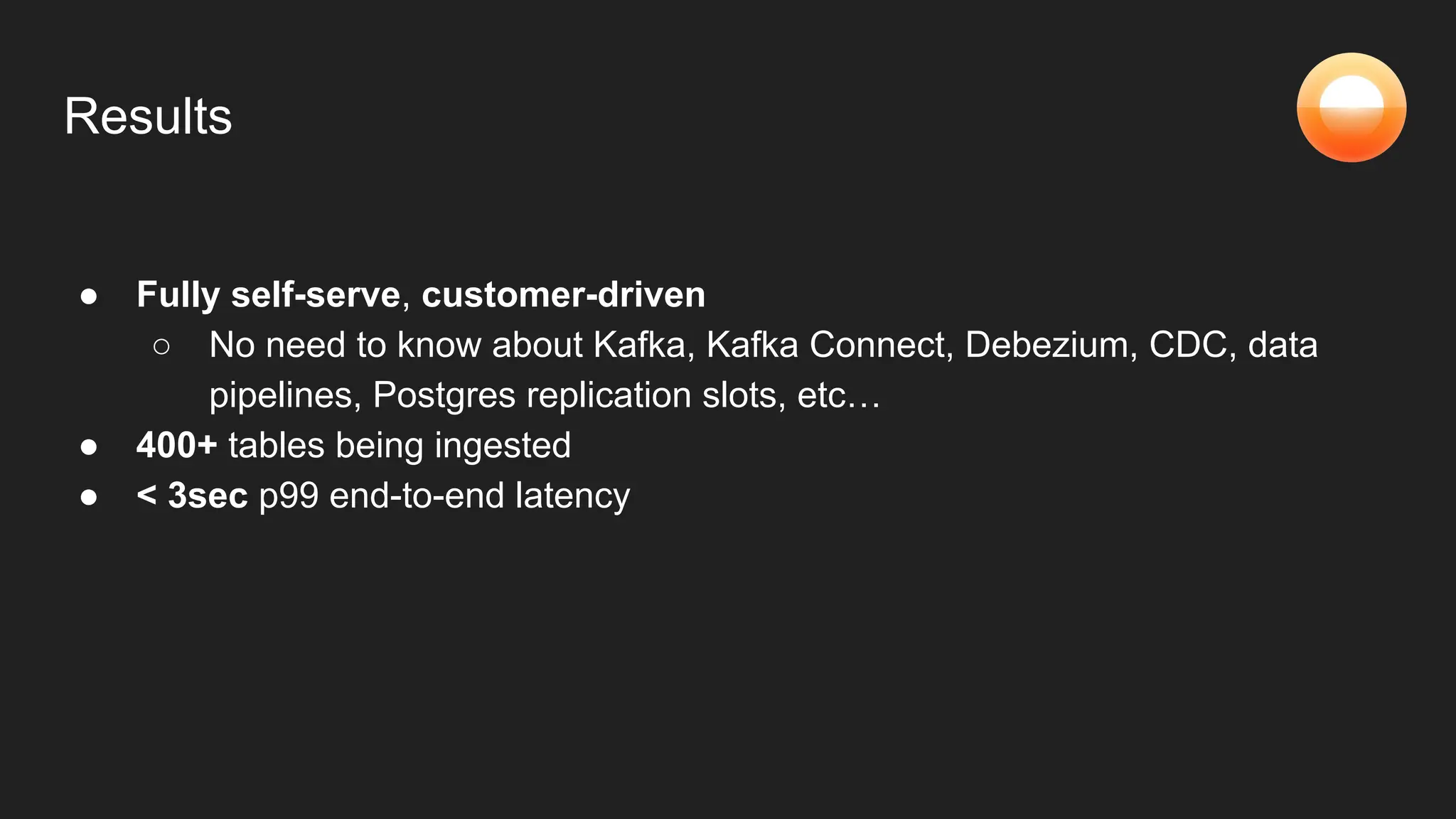
Results
● Fully self-serve, customer-driven
○ No need to know about Kafka, Kafka Connect, Debezium, CDC, data
pipelines, Postgres replication slots, etc…
● 400+ tables being ingested
● < 3sec p99 end-to-end latency
Key Takeaways
● Maintaining replication slots can be tricky!
○ Ensure you have the right monitoring & alerting.
● Use consistent hashing for managing a pool of resources.
● Flink has many low-level building blocks that can be used to customize any
workflow.
○ You can build your own flavour of incremental snapshotting!
Links
● DBLog: A Watermark Based Change-Data-Capture Framework
● Flink CDC
○ Demo: Streaming ETL for MySQL and Postgres with Flink CDC
○ Postgres Incremental Snapshotting PR
○ Postgres Connector
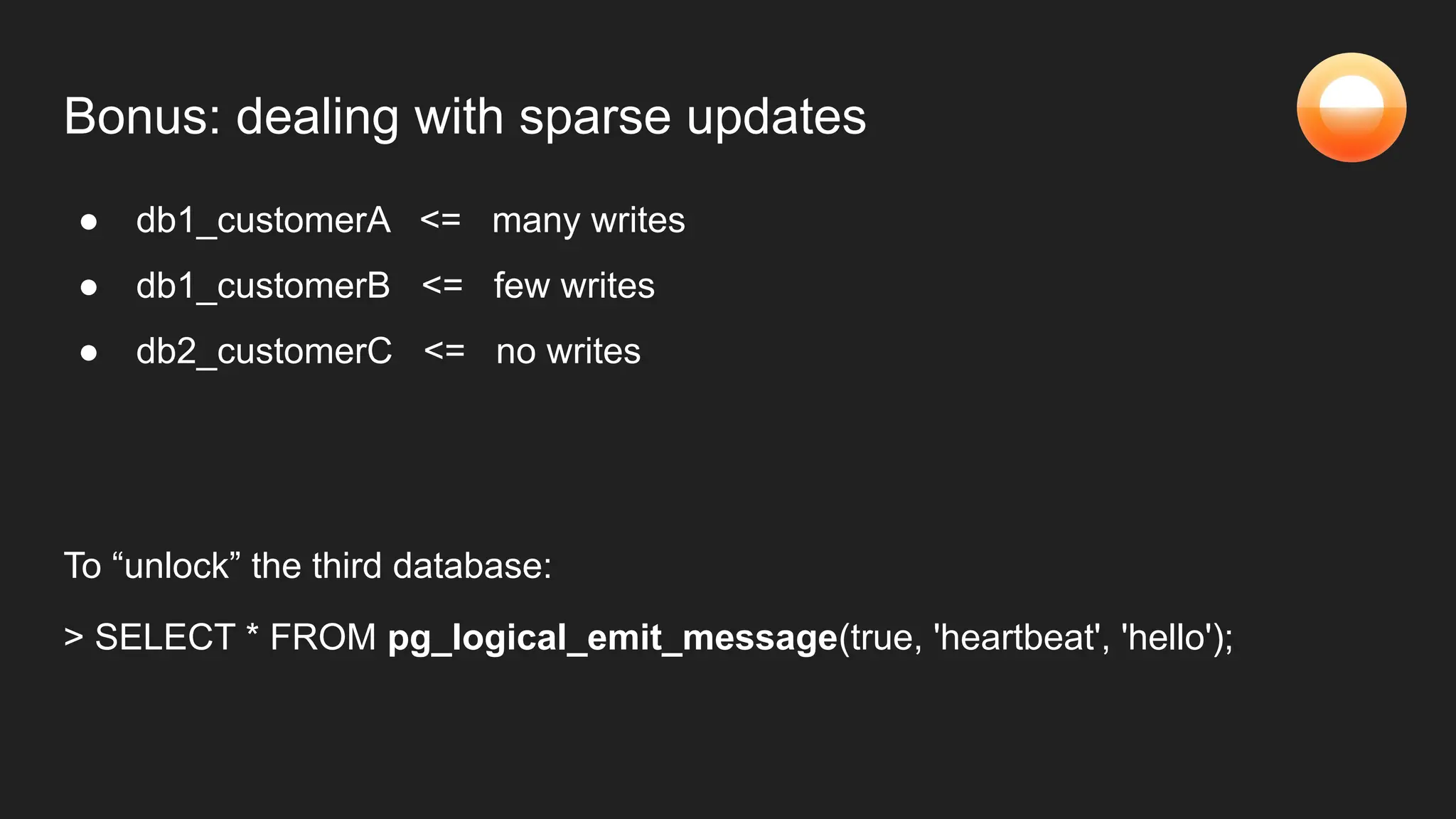
Bonus: dealing with sparse updates
● db1_customerA <= many writes
● db1_customerB <= few writes
● db2_customerC <= no writes
To “unlock” the third database:
> SELECT * FROM pg_logical_emit_message(true, 'heartbeat', 'hello');
Questions?
@sap1ens @xiaomeng

Dynamic Change Data Capture with Flink CDC and Consistent Hashing

  • 1.
    Dynamic Change DataCapture with Flink CDC and Consistent Hashing
  • 2.
    Hi! Xiao Meng ● SoftwareEngineer @ Goldsky ● Expert Data Engineer @ Activision ● Data, Infrastructure, and SRE Yaroslav Tkachenko ● Founding Engineer @ Goldsky ● Staff Data Engineer @ Shopify ● Software Architect @ Activision ● Kafka, Flink, and all things streaming!
  • 3.
  • 4.
    Use case ➢ goldskysubgraph deploy poap-subgraph/1.0.0 --path . ➢ goldsky pipeline create def.json poap-subgraph-pipeline
  • 5.
  • 6.
  • 7.
  • 8.
    Our Requirements ● ReplicationSlot Management ○ RDS Aurora: default 20 ○ One slot to rule them all: hard to scale ○ One slot per table/job: operational burden ● Snapshot should be lock-free and scalable. ● Dynamic Schema ○ self-serve deployments generate new schema and tables all the time
  • 9.
    Consistent Hashing &Sharing Replication Slots
  • 10.
    Our Requirements ● ✅Replication Slot Management ● Lock-Free and Parallel Snapshot ● Scan Newly Added Tables
  • 11.
    The Journey: Flink-CDC& Goldsky Timeline 2022 Release 2.3 Oracle & MongoDB CDC Connector Exploration Flink-CDC 2.2 Incremental Snapshot Framework based on MySQL (flink-cdc base) Debezium 1.6.4 Postgres CDC Connector PR Scan Newly Added Tables PR In Production config-file driven by our engineers Scan Newly Added Tables PR Self-Serve CDC directly driven by end-users! 2023 Mar Oct Nov Dec Jun Jan Release 2.4 Postgres CDC PR Merged🎉 Debezium 1.9.7 Roadmap 2.5 Sep
  • 12.
  • 13.
    Foundation: FLIP-27 SourceInterface & CDC-base
  • 14.
  • 15.
  • 17.
    Well, things didn’twork! We noticed that the connector tried to use the replication slot during snapshotting… But why?
  • 18.
    Algorithm: 1. stop liveevent processing 2. read next chunk 3. resume live event processing 4. reconcile the events using watermarks
  • 19.
    Postgres IS challenges Snapshottask can create a live replication one! ● PostgresScanFetchTask → ● SnapshotSplitReadTask (read chunk) ● ❓PostgresStreamFetchTask (execute backfill) ● SnapshotSplitReadTask (read chunk) ● ❓PostgresStreamFetchTask (execute backfill) ● SnapshotSplitReadTask (read chunk) ● …
  • 20.
    Postgres IS challenges Backfillsare hard to scale. ● Replication slot can’t be re-used between snapshot and live modes (it’s already active). ● When parallelism > 1, multiple snapshot tasks will try to use the same slot concurrently. ● It’s SLOW! Unbearably. Backfills require seeking a specific LSN in the WAL and it’s very slow when it happens after reading every chunk.
  • 21.
    Postgres IS challenges Backfillsare hard to scale. ● You could create a backfill slot per task, but: ○ It’s still very slow. ○ You could end up with too many slots! And think about their lifecycle. ○ Can be brittle for large snapshots.
  • 22.
  • 23.
    Flink to therescue! What if we re-implement some parts of the incremental snapshotting algorithm with Flink?
  • 24.
  • 25.
    Flink to therescue!
  • 26.
    Flink to therescue!
  • 27.
    Flink to therescue! Reconciliation example: ➢ K1: ✅ INSERT (L), ✅ UPDATE (L) ➢ K2: ✅ UPDATE(L), ❌ READ (S), …, ✅ UPDATE(L) ➢ K3: ✅ READ (S), ✅ UPDATE (L)
  • 28.
    Flink to therescue!
  • 29.
    Results ● Fully self-serve,customer-driven ○ No need to know about Kafka, Kafka Connect, Debezium, CDC, data pipelines, Postgres replication slots, etc… ● 400+ tables being ingested ● < 3sec p99 end-to-end latency
  • 30.
    Key Takeaways ● Maintainingreplication slots can be tricky! ○ Ensure you have the right monitoring & alerting. ● Use consistent hashing for managing a pool of resources. ● Flink has many low-level building blocks that can be used to customize any workflow. ○ You can build your own flavour of incremental snapshotting!
  • 31.
    Links ● DBLog: AWatermark Based Change-Data-Capture Framework ● Flink CDC ○ Demo: Streaming ETL for MySQL and Postgres with Flink CDC ○ Postgres Incremental Snapshotting PR ○ Postgres Connector
  • 32.
    Bonus: dealing withsparse updates ● db1_customerA <= many writes ● db1_customerB <= few writes ● db2_customerC <= no writes To “unlock” the third database: > SELECT * FROM pg_logical_emit_message(true, 'heartbeat', 'hello');
  • 33.