Durham DLC
Our Mission
Explicitly focusing on reducing the achievement gap in
reading and writing in students’ first years of formal
education will result in stronger academic outcomes for
students of color in successive years.
OurTeam
 Kindergarten
 Leslie Kolb
 KatieToppel
 Brittany McLean
 Amber Duncan
 First Grade
 Ronna Marx
Approaching Reading Level
 Title 1
 Sheri LeDrew
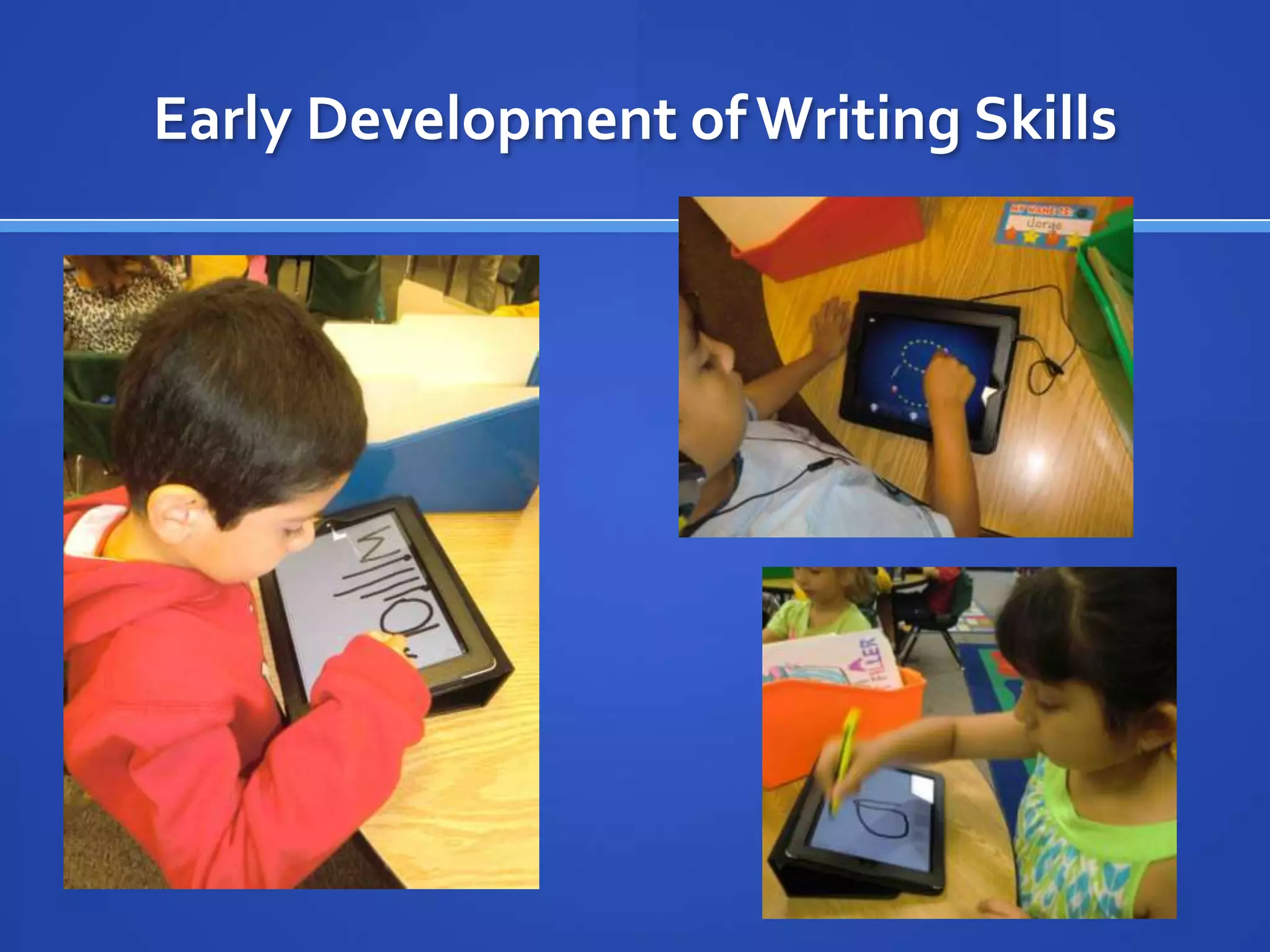
Early Development of Writing Skills
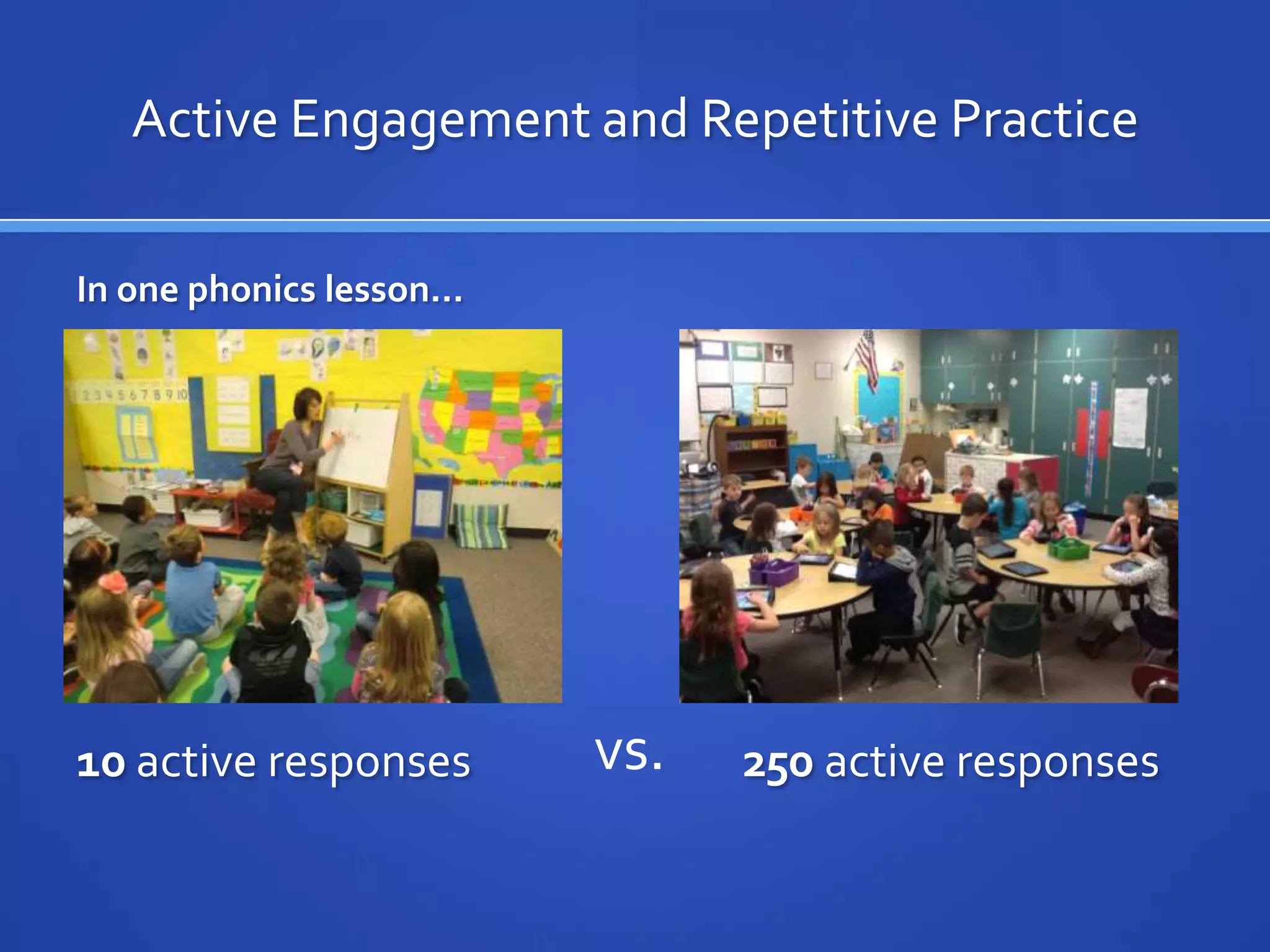
Active Engagement and Repetitive Practice
10 active responses 250 active responses
In one phonics lesson…
vs.
Independent Practice in
Phonemic Awareness Activities
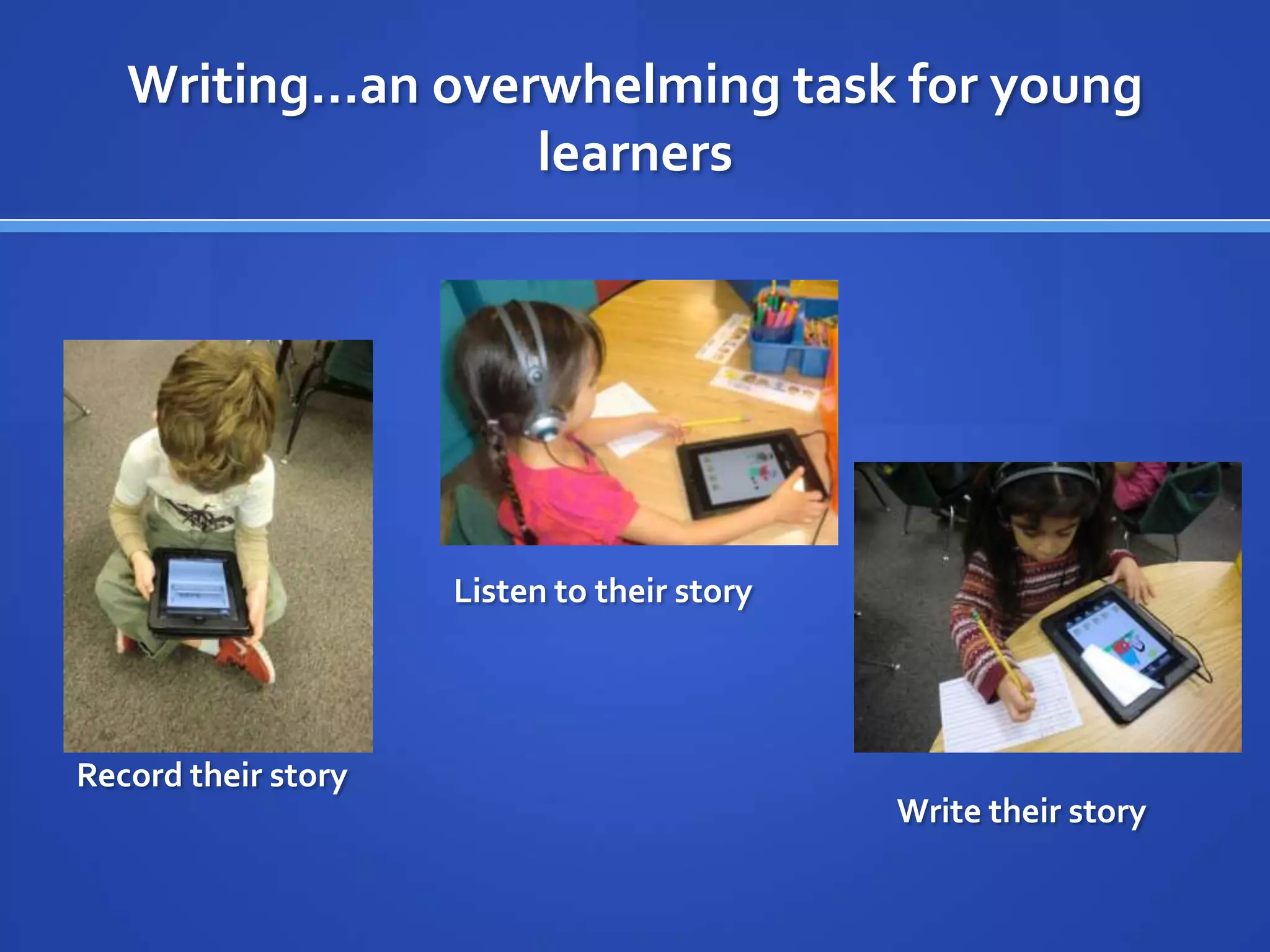
Writing…an overwhelming task for young
learners
Record their story
Listen to their story
Write their story
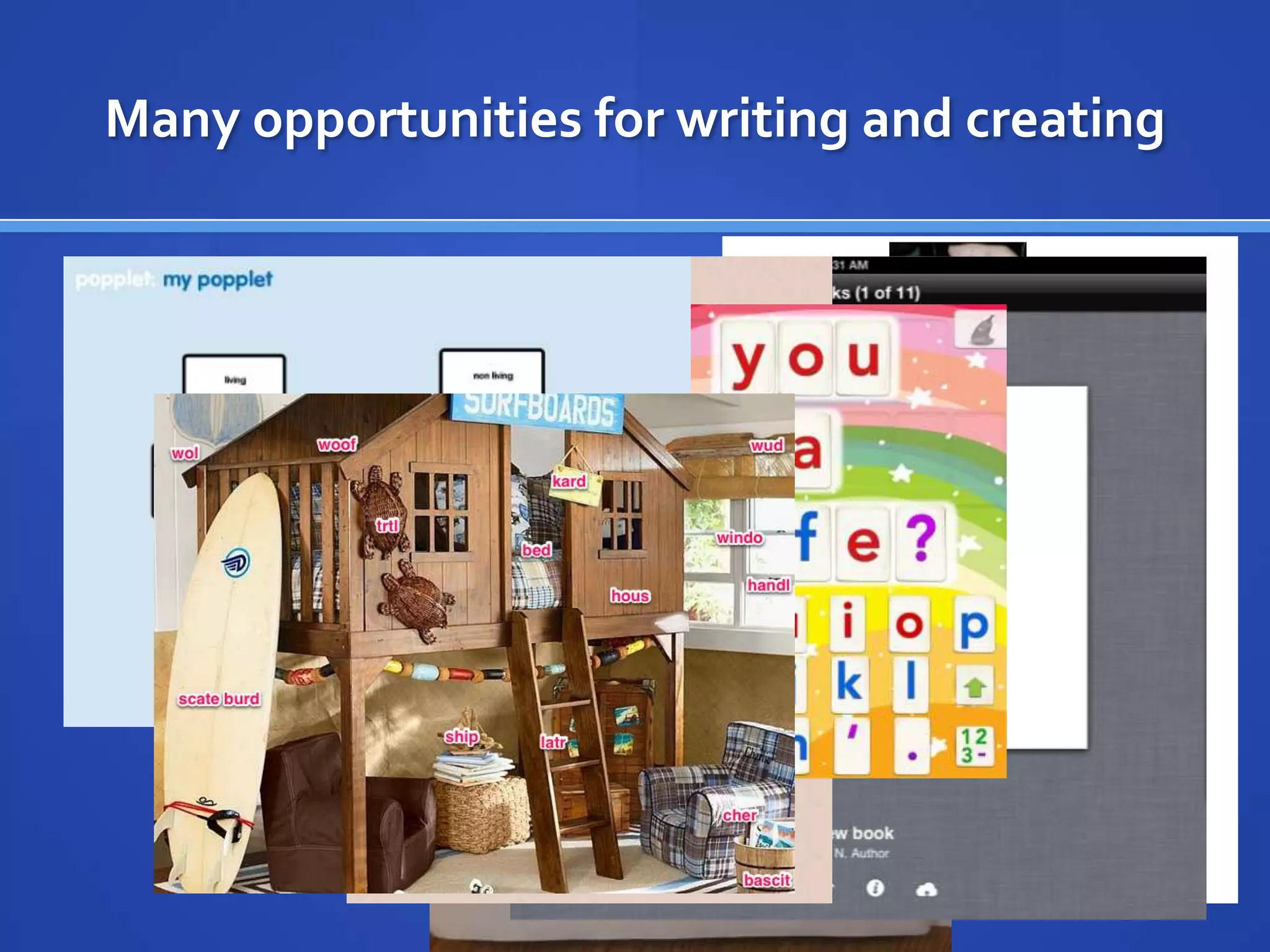
Many opportunities for writing and creating
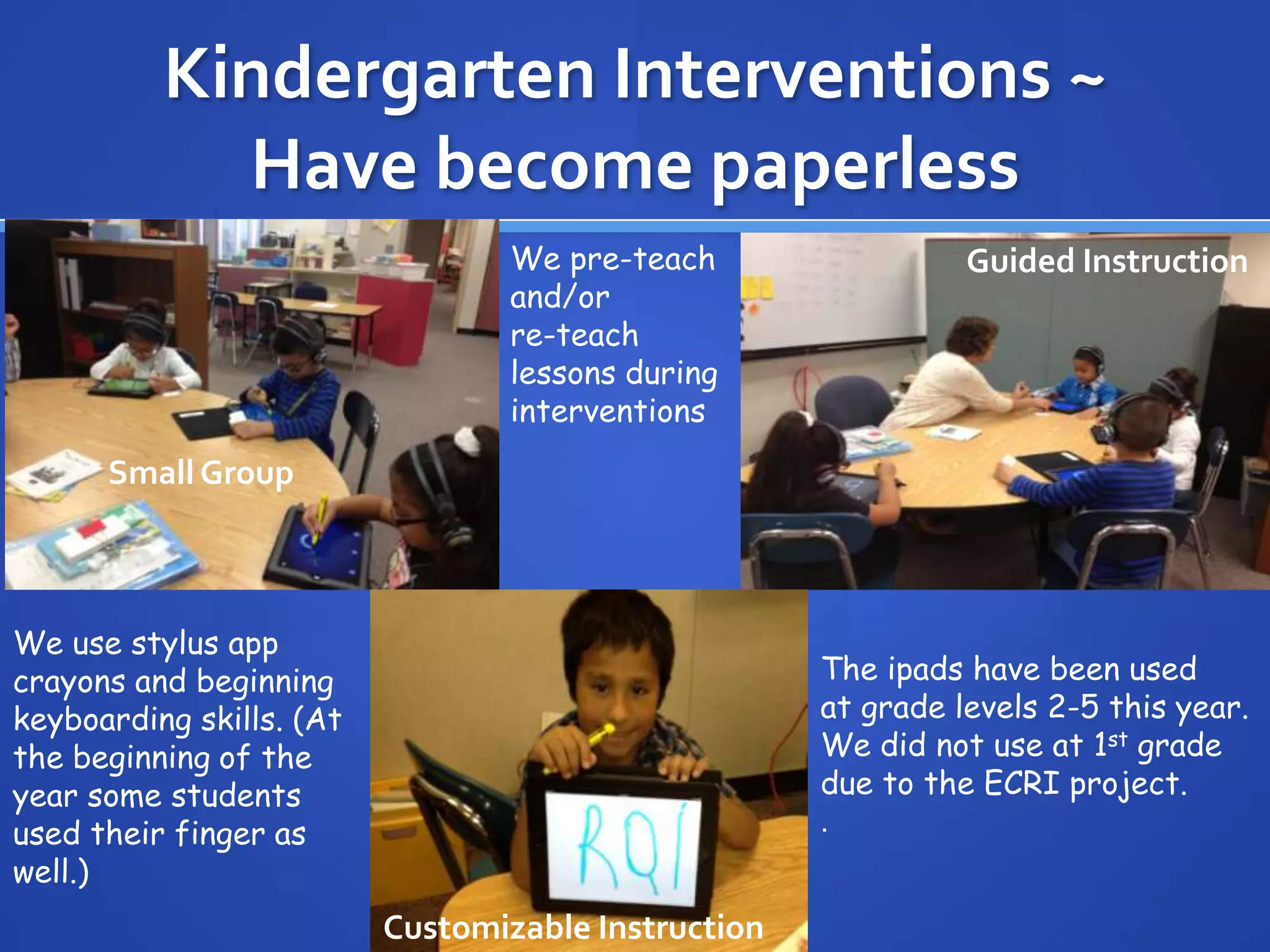
Kindergarten Interventions ~
Have become paperless
Small Group
Guided Instruction
Customizable Instruction
The ipads have been used
at grade levels 2-5 this year.
We did not use at 1st grade
due to the ECRI project.
.
We pre-teach
and/or
re-teach
lessons during
interventions
We use stylus app
crayons and beginning
keyboarding skills. (At
the beginning of the
year some students
used their finger as
well.)
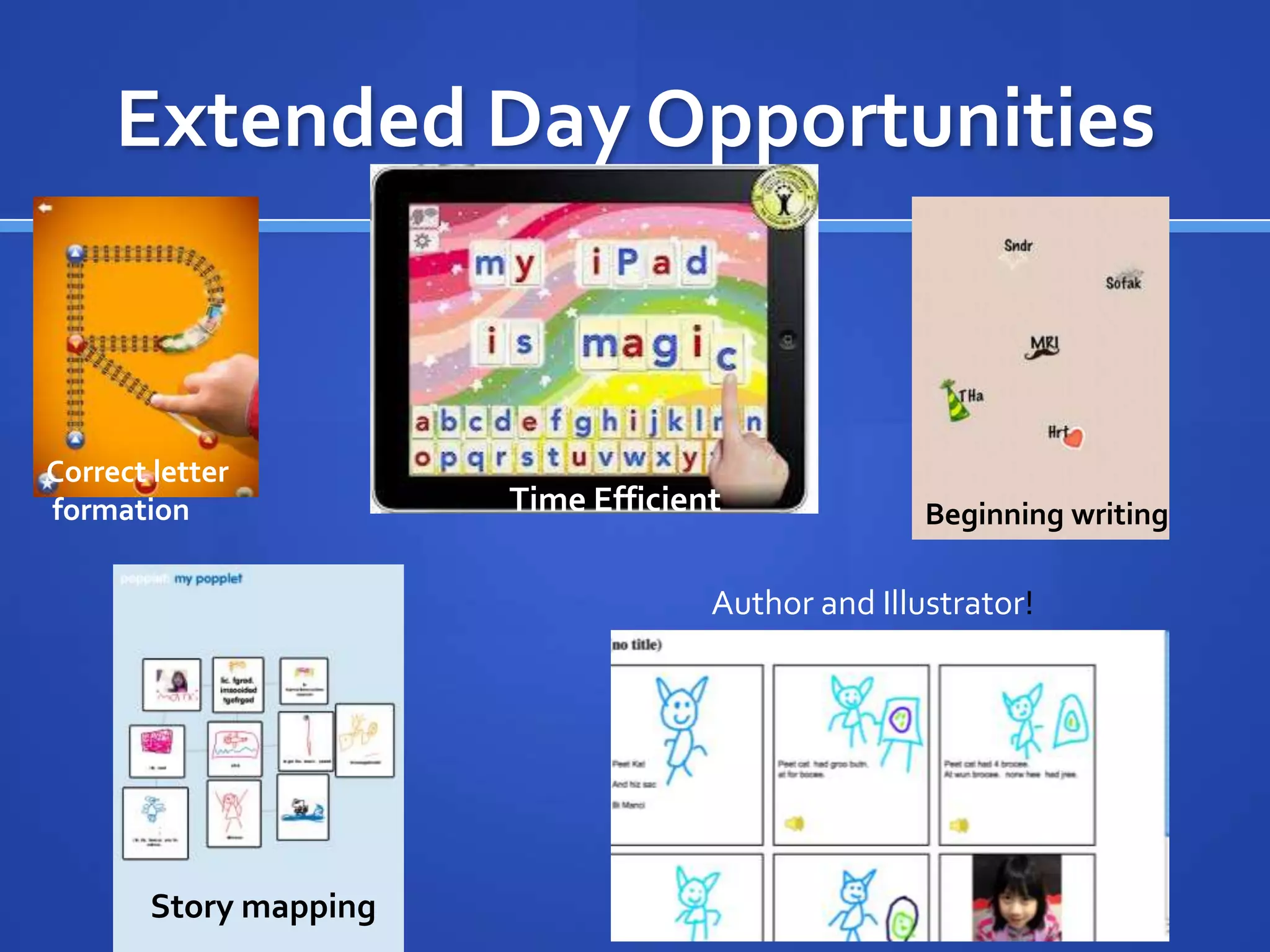
Extended Day Opportunities
Correct letter
formation Time Efficient Beginning writing
Story mapping
Author and Illustrator!
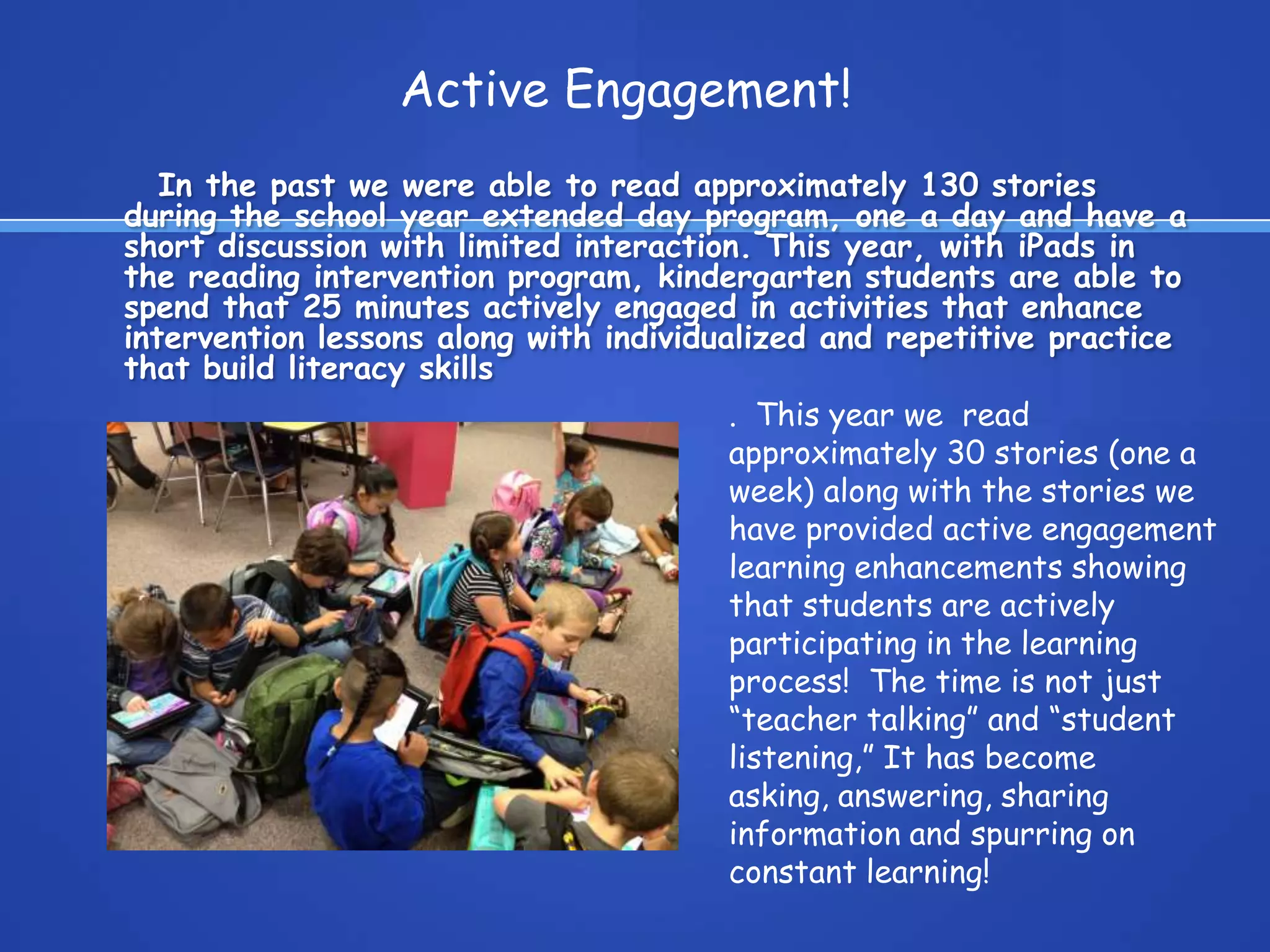
In the past we were able to read approximately 130 stories
during the school year extended day program, one a day and have a
short discussion with limited interaction. This year, with iPads in
the reading intervention program, kindergarten students are able to
spend that 25 minutes actively engaged in activities that enhance
intervention lessons along with individualized and repetitive practice
that build literacy skills
Active Engagement!
. This year we read
approximately 30 stories (one a
week) along with the stories we
have provided active engagement
learning enhancements showing
that students are actively
participating in the learning
process! The time is not just
“teacher talking” and “student
listening,” It has become
asking, answering, sharing
information and spurring on
constant learning!
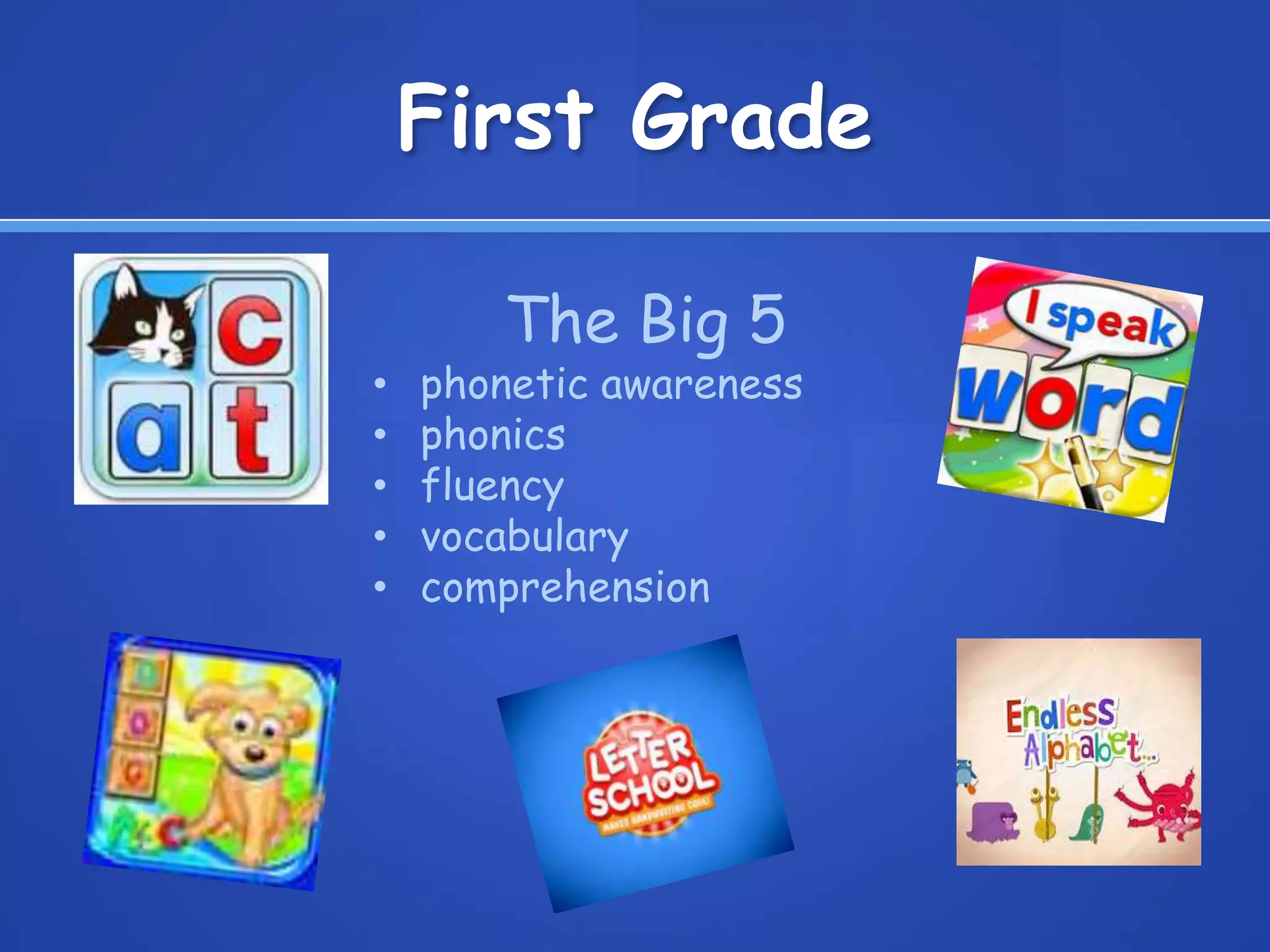
First Grade
The Big 5
• phonetic awareness
• phonics
• fluency
• vocabulary
• comprehension
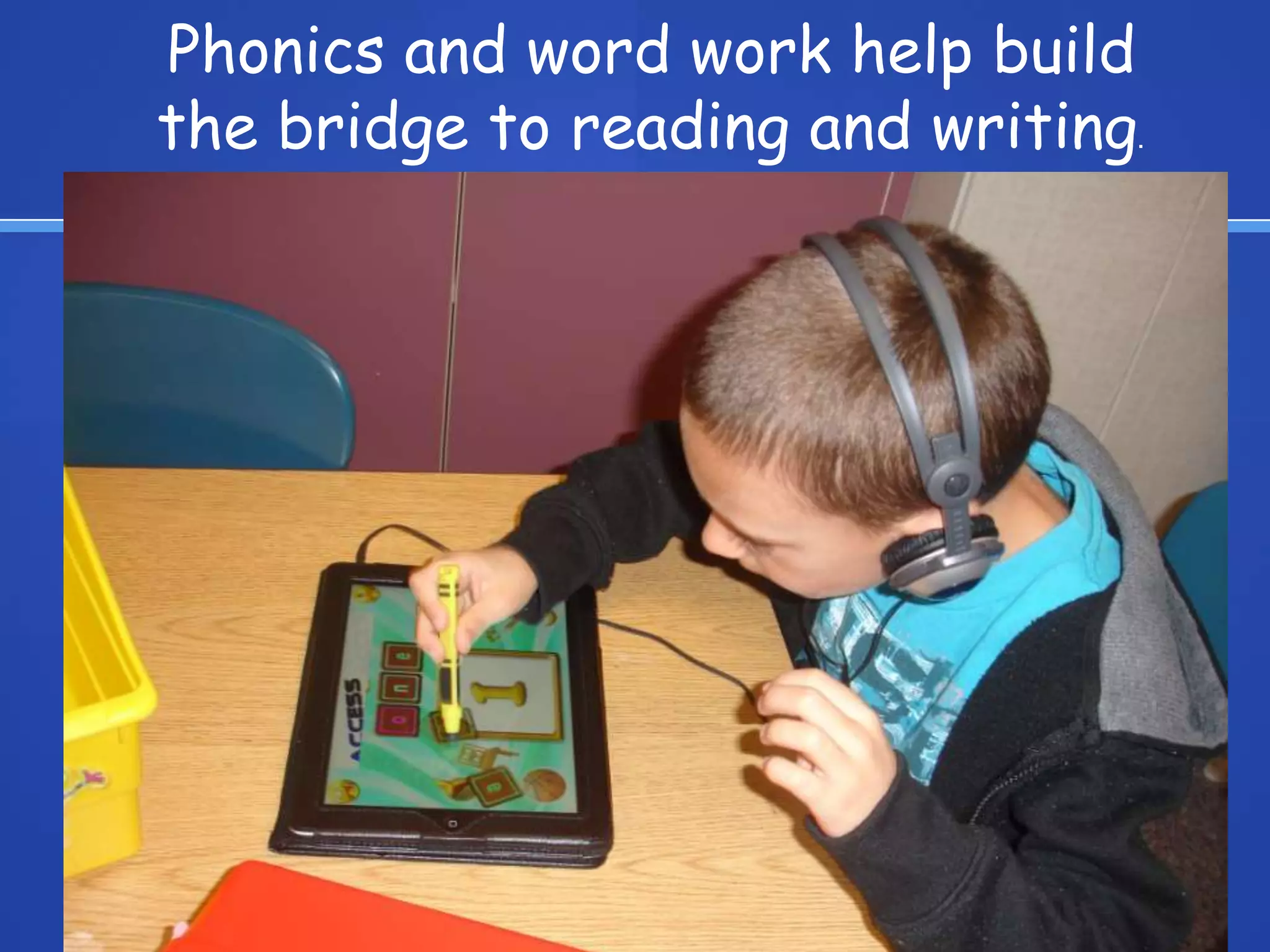
Phonics and word work help build
the bridge to reading and writing.
Enriched Vocabulary
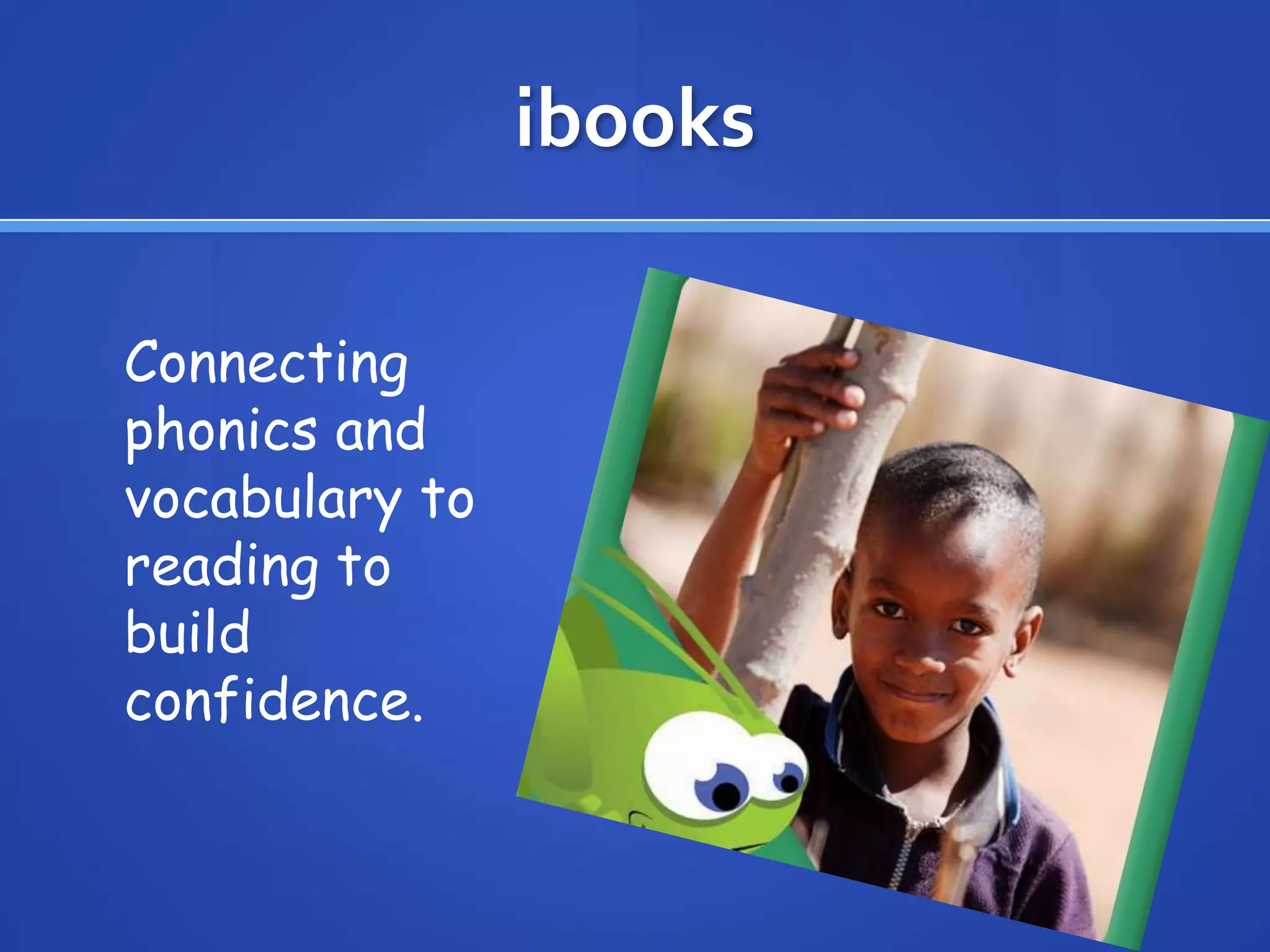
ibooks
Connecting
phonics and
vocabulary to
reading to
build
confidence.
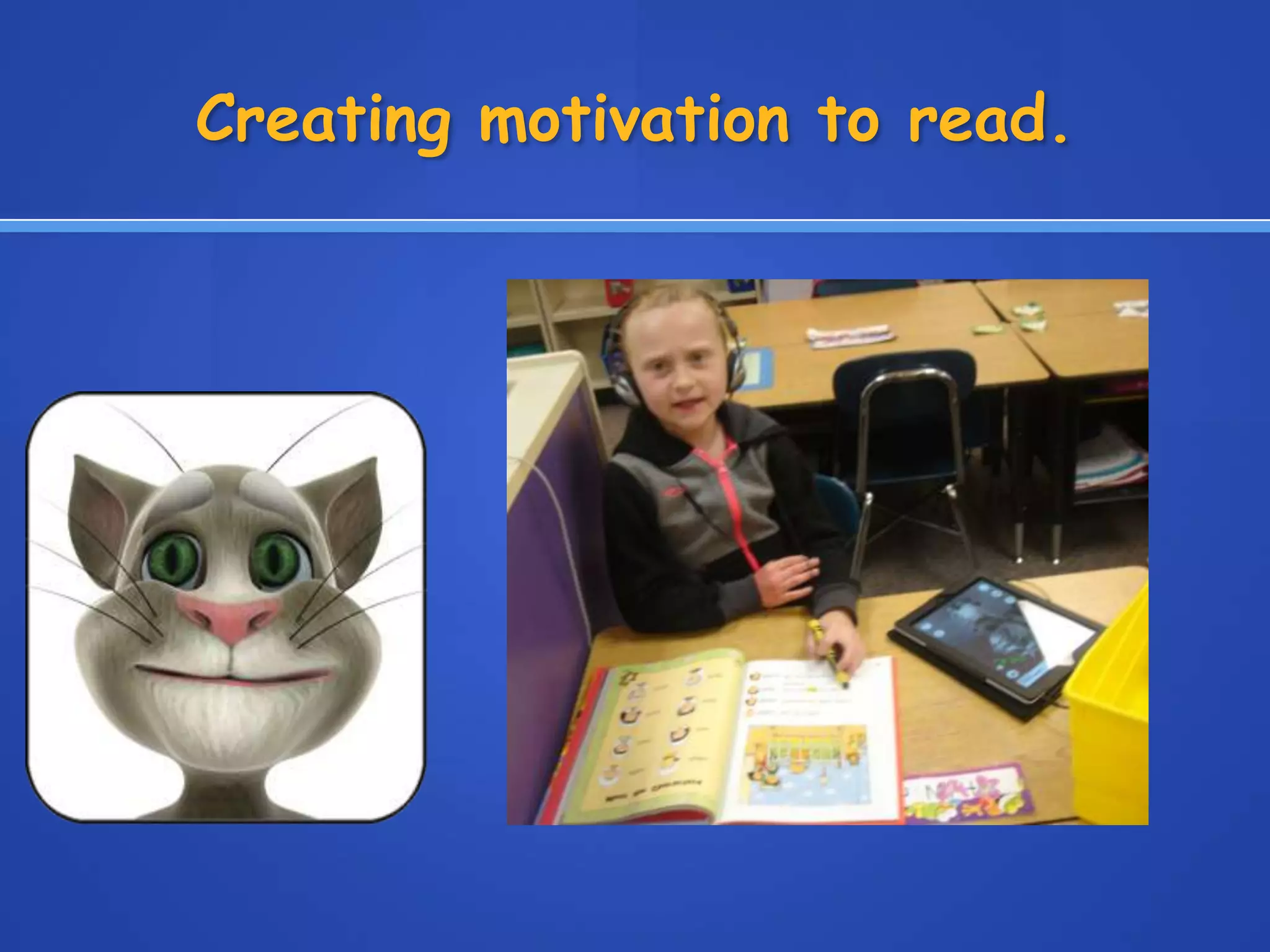
Creating motivation to read.
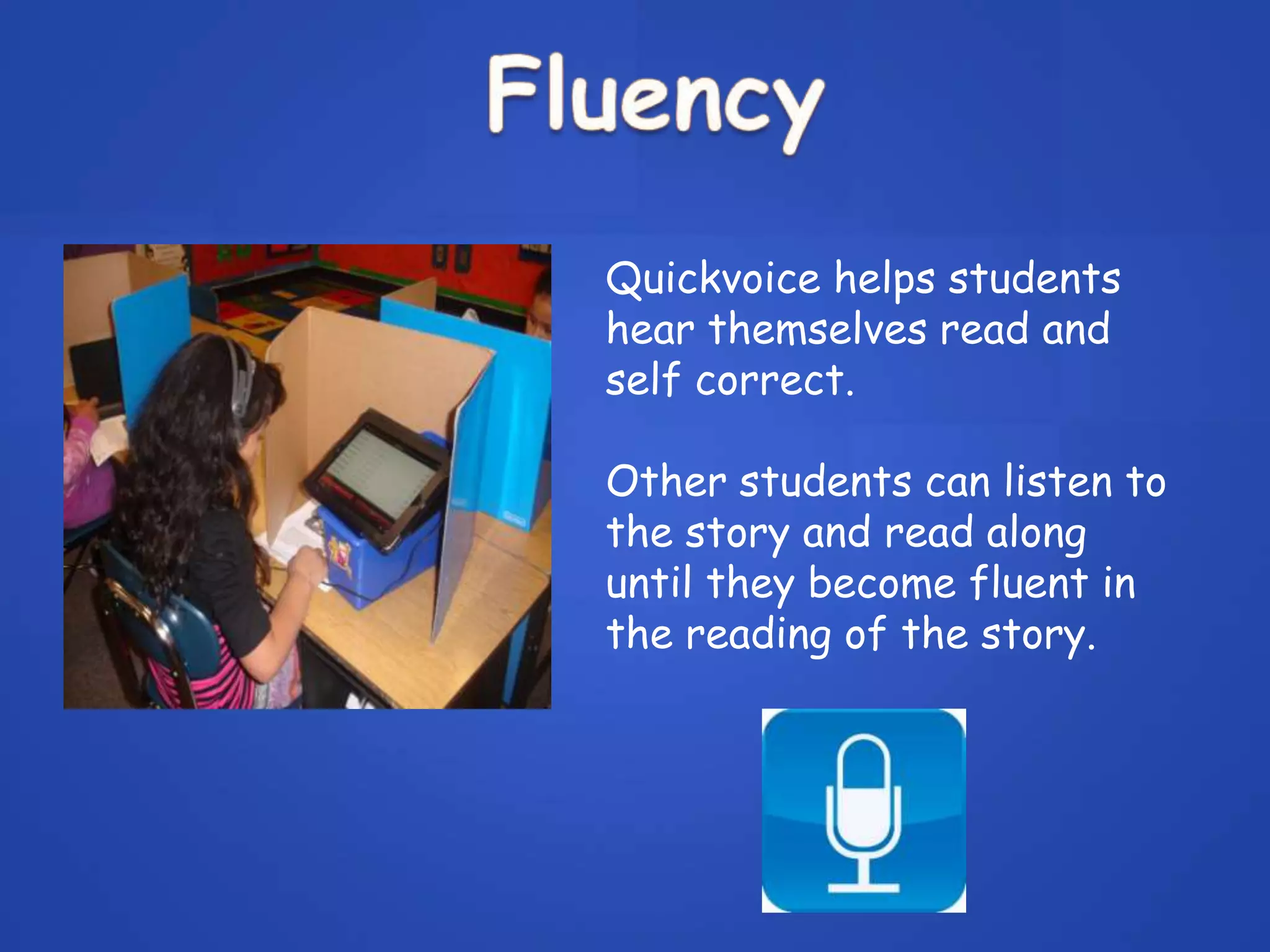
Quickvoice helps students
hear themselves read and
self correct.
Other students can listen to
the story and read along
until they become fluent in
the reading of the story.
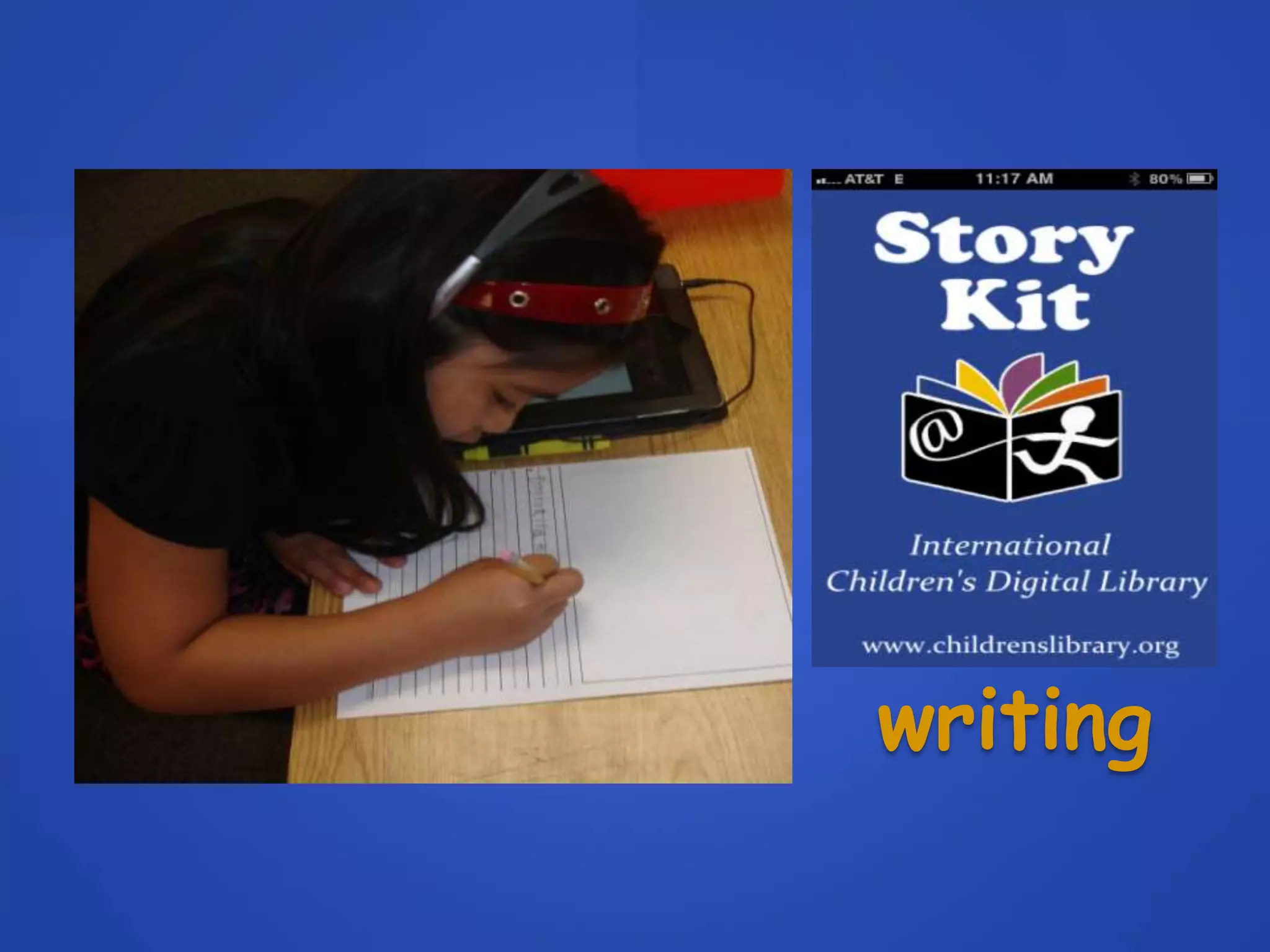
writing
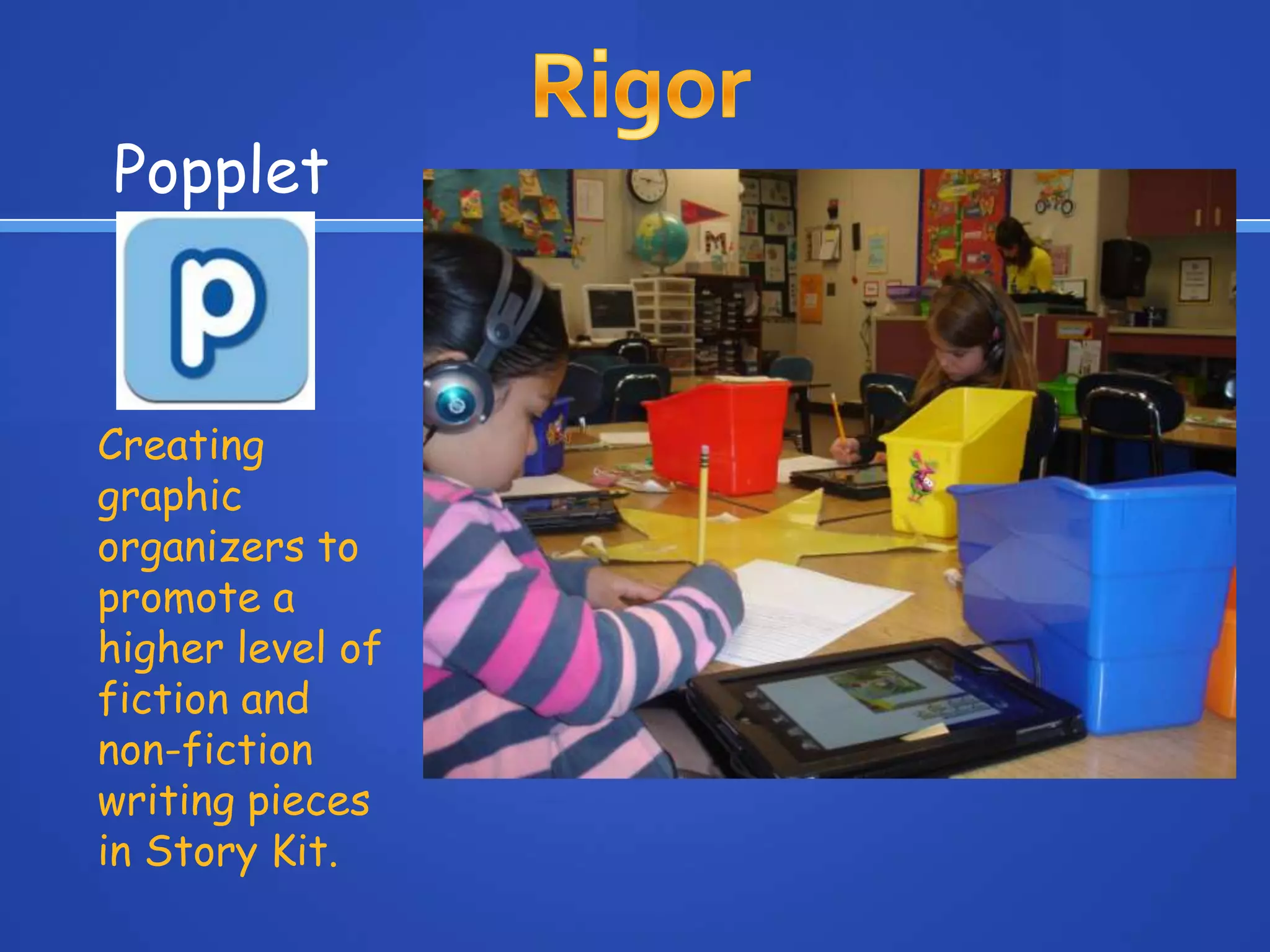
Creating
graphic
organizers to
promote a
higher level of
fiction and
non-fiction
writing pieces
in Story Kit.
Popplet
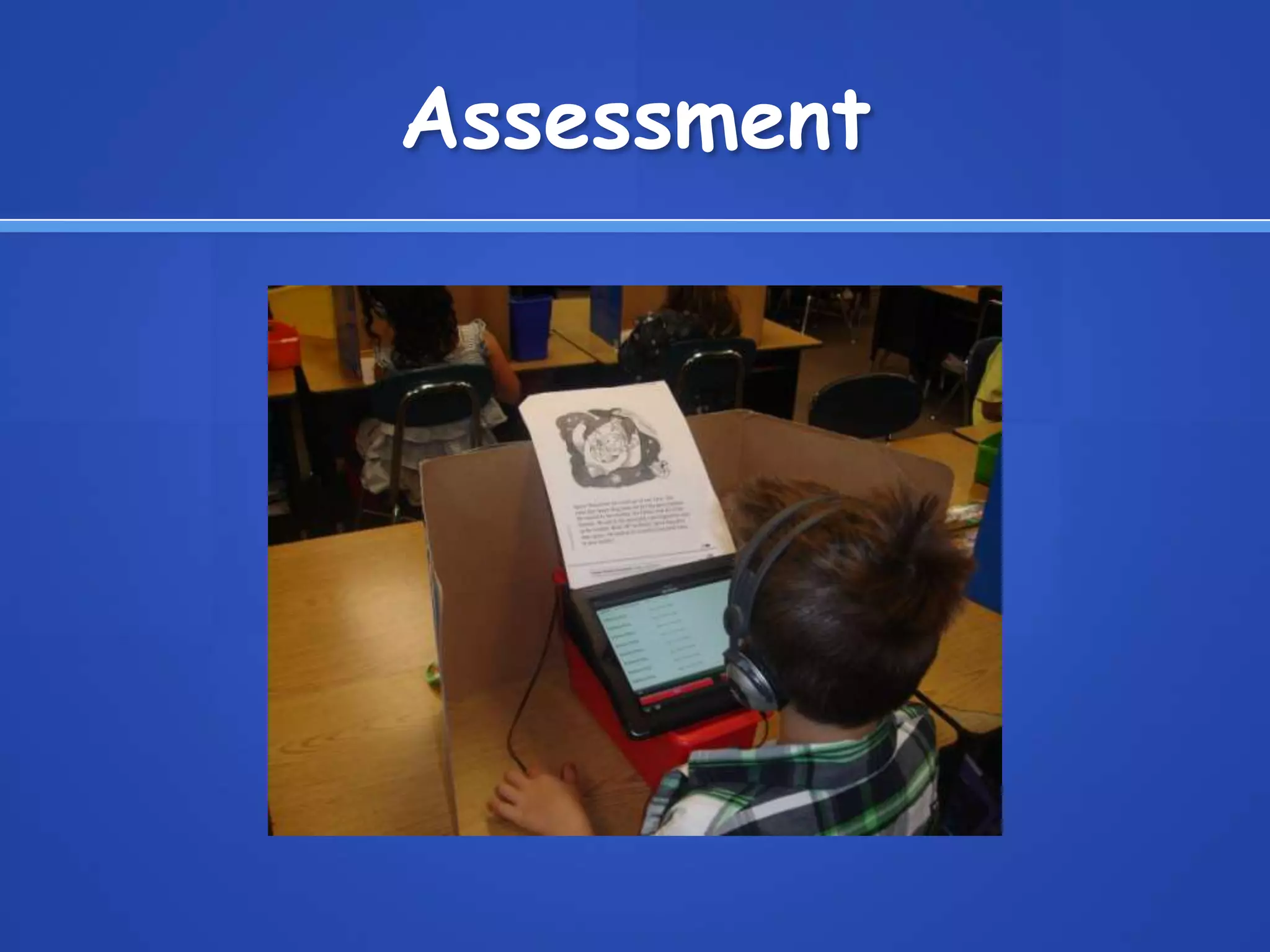
Assessment

Durham DLC Showcase presentation

  • 1.
  • 2.
    Our Mission Explicitly focusingon reducing the achievement gap in reading and writing in students’ first years of formal education will result in stronger academic outcomes for students of color in successive years.
  • 3.
    OurTeam  Kindergarten  LeslieKolb  KatieToppel  Brittany McLean  Amber Duncan  First Grade  Ronna Marx Approaching Reading Level  Title 1  Sheri LeDrew
  • 4.
    Early Development ofWriting Skills
  • 5.
    Active Engagement andRepetitive Practice 10 active responses 250 active responses In one phonics lesson… vs.
  • 6.
  • 7.
    Writing…an overwhelming taskfor young learners Record their story Listen to their story Write their story
  • 8.
    Many opportunities forwriting and creating
  • 9.
    Kindergarten Interventions ~ Havebecome paperless Small Group Guided Instruction Customizable Instruction The ipads have been used at grade levels 2-5 this year. We did not use at 1st grade due to the ECRI project. . We pre-teach and/or re-teach lessons during interventions We use stylus app crayons and beginning keyboarding skills. (At the beginning of the year some students used their finger as well.)
  • 10.
    Extended Day Opportunities Correctletter formation Time Efficient Beginning writing Story mapping Author and Illustrator!
  • 11.
    In the pastwe were able to read approximately 130 stories during the school year extended day program, one a day and have a short discussion with limited interaction. This year, with iPads in the reading intervention program, kindergarten students are able to spend that 25 minutes actively engaged in activities that enhance intervention lessons along with individualized and repetitive practice that build literacy skills Active Engagement! . This year we read approximately 30 stories (one a week) along with the stories we have provided active engagement learning enhancements showing that students are actively participating in the learning process! The time is not just “teacher talking” and “student listening,” It has become asking, answering, sharing information and spurring on constant learning!
  • 12.
    First Grade The Big5 • phonetic awareness • phonics • fluency • vocabulary • comprehension
  • 13.
    Phonics and wordwork help build the bridge to reading and writing.
  • 14.
  • 15.
  • 16.
  • 17.
    Quickvoice helps students hearthemselves read and self correct. Other students can listen to the story and read along until they become fluent in the reading of the story.
  • 18.
  • 19.
    Creating graphic organizers to promote a higherlevel of fiction and non-fiction writing pieces in Story Kit. Popplet
  • 20.