HUMAN BEHAVIOUR AND ITS IMPACT IN LOGISTICS
INDUSTRY
WITH REFERENCE TO DTDC COURIER AND CARGO
LTD, KOLKATA
Presented By,
Nilanjan Paul
SAMPLING PLAN BASE POINTS INFORMATIONS
SAMPLING UNIT 30
SAMPLING TECHNIQUE RANDOM SAMPLING METHOD
RESEARCH INSTRUMENT QUESTIONNAIRE
CONTACT METHOD DIRECT
SAMPLING PLAN
DATA ANALYSIS
STRUCTURE
LEADERSHIP
CULTURE
MOTIVATION
PARAMETERS LEADERSHIP
Transformational leadership 53.33%
Transactional leadership 26.67%
Laissez faire 20%
PARAMETERS MOTIVATION
Highly Self Desired 56.67%
Average Self Desired 43.33%
PARAMETERS ORGANISATIONAL
STRUCTURE
Satisfied 58.33%
Dissatisfied 41.67%
PARAMETERS ORGANISATIONAL CULTURE
Satisfied 67.5%
Dissatisfied 32.5%
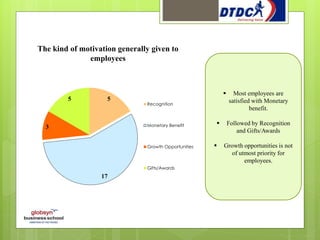
5
17
3
5
Recognition
Monetary Benefit
Growth Opportunities
Gifts/Awards
The kind of motivation generally given to
employees
 Most employees are
satisfied with Monetary
benefit.
 Followed by Recognition
and Gifts/Awards
 Growth opportunities is not
of utmost priority for
employees.
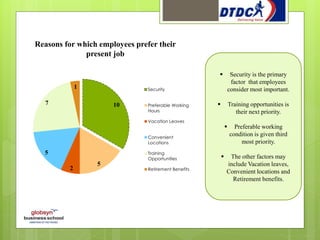
 Security is the primary
factor that employees
consider most important.
 Training opportunities is
their next priority.
 Preferable working
condition is given third
most priority.
 The other factors may
include Vacation leaves,
Convenient locations and
Retirement benefits.
10
5
2
5
7
1 Security
Preferable Working
Hours
Vacation Leaves
Convenient
Locations
Training
Opportunities
Retirement Benefits
Reasons for which employees prefer their
present job
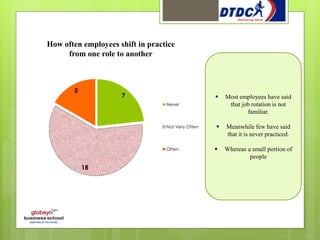
 Most employees have said
that job rotation is not
familiar.
 Meanwhile few have said
that it is never practiced.
 Whereas a small portion of
people
7
18
5
Never
Not Very Often
Often
How often employees shift in practice
from one role to another
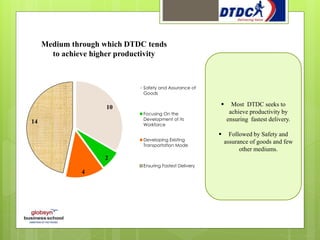
10
2
4
14
Safety and Assurance of
Goods
Focusing On the
Development of its
Workforce
Developing Existing
Transportation Mode
Ensuring Fastest Delivery
 Most DTDC seeks to
achieve productivity by
ensuring fastest delivery.
 Followed by Safety and
assurance of goods and few
other mediums.
Medium through which DTDC tends
to achieve higher productivity
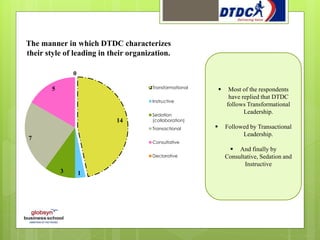
14
13
7
5
0
Transformational
Instructive
Sedation
(collaboration)
Transactional
Consultative
Declarative
 Most of the respondents
have replied that DTDC
follows Transformational
Leadership.
 Followed by Transactional
Leadership.
 And finally by
Consultative, Sedation and
Instructive
The manner in which DTDC characterizes
their style of leading in their organization.
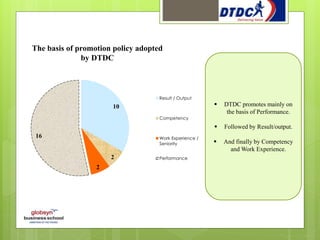
10
2
2
16
Result / Output
Competency
Work Experience /
Seniority
Performance
The basis of promotion policy adopted
by DTDC
 DTDC promotes mainly on
the basis of Performance.
 Followed by Result/output.
 And finally by Competency
and Work Experience.
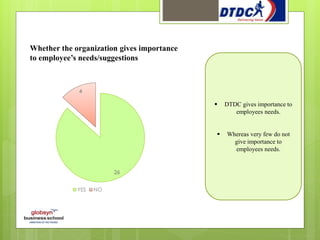
Whether the organization gives importance
to employee’s needs/suggestions
26
4
YES NO
 DTDC gives importance to
employees needs.
 Whereas very few do not
give importance to
employees needs.
INFERENCES
 Job accomplished is recognised through various
HR initiatives.
 Quality Circle & Management.
 Business process is Decentralised.
 Matrix Organisational Structure.
 Good span of control.
 Resistance to Change
 Failure of Motivation
 Job Security
RECOMMENDATION
 Introduction of Flex-Time.
 Promoting “Stress Management Programmes”.
 Increasing Supporting Staff.
 Rigorous training to avoid human errors.
 Emphasis on incentives and increment policies.
 Employee Engagement.
CONCLUSION
 There is a scope for capacity creation and efficiency
improvement in logistics performance index (Time and
Cost).
 The opportunity in both sectors is enormous and they
have eventually set ambitious targets for expanding
these capacities significantly over the planned period.
 Employees effective and efficient work outcomes.
 Motivational policy.
DTDC project

DTDC project

  • 1.
    HUMAN BEHAVIOUR ANDITS IMPACT IN LOGISTICS INDUSTRY WITH REFERENCE TO DTDC COURIER AND CARGO LTD, KOLKATA Presented By, Nilanjan Paul
  • 2.
    SAMPLING PLAN BASEPOINTS INFORMATIONS SAMPLING UNIT 30 SAMPLING TECHNIQUE RANDOM SAMPLING METHOD RESEARCH INSTRUMENT QUESTIONNAIRE CONTACT METHOD DIRECT SAMPLING PLAN
  • 3.
    DATA ANALYSIS STRUCTURE LEADERSHIP CULTURE MOTIVATION PARAMETERS LEADERSHIP Transformationalleadership 53.33% Transactional leadership 26.67% Laissez faire 20% PARAMETERS MOTIVATION Highly Self Desired 56.67% Average Self Desired 43.33% PARAMETERS ORGANISATIONAL STRUCTURE Satisfied 58.33% Dissatisfied 41.67% PARAMETERS ORGANISATIONAL CULTURE Satisfied 67.5% Dissatisfied 32.5%
  • 4.
    5 17 3 5 Recognition Monetary Benefit Growth Opportunities Gifts/Awards Thekind of motivation generally given to employees  Most employees are satisfied with Monetary benefit.  Followed by Recognition and Gifts/Awards  Growth opportunities is not of utmost priority for employees.
  • 5.
     Security isthe primary factor that employees consider most important.  Training opportunities is their next priority.  Preferable working condition is given third most priority.  The other factors may include Vacation leaves, Convenient locations and Retirement benefits. 10 5 2 5 7 1 Security Preferable Working Hours Vacation Leaves Convenient Locations Training Opportunities Retirement Benefits Reasons for which employees prefer their present job
  • 6.
     Most employeeshave said that job rotation is not familiar.  Meanwhile few have said that it is never practiced.  Whereas a small portion of people 7 18 5 Never Not Very Often Often How often employees shift in practice from one role to another
  • 7.
    10 2 4 14 Safety and Assuranceof Goods Focusing On the Development of its Workforce Developing Existing Transportation Mode Ensuring Fastest Delivery  Most DTDC seeks to achieve productivity by ensuring fastest delivery.  Followed by Safety and assurance of goods and few other mediums. Medium through which DTDC tends to achieve higher productivity
  • 8.
    14 13 7 5 0 Transformational Instructive Sedation (collaboration) Transactional Consultative Declarative  Most ofthe respondents have replied that DTDC follows Transformational Leadership.  Followed by Transactional Leadership.  And finally by Consultative, Sedation and Instructive The manner in which DTDC characterizes their style of leading in their organization.
  • 9.
    10 2 2 16 Result / Output Competency WorkExperience / Seniority Performance The basis of promotion policy adopted by DTDC  DTDC promotes mainly on the basis of Performance.  Followed by Result/output.  And finally by Competency and Work Experience.
  • 10.
    Whether the organizationgives importance to employee’s needs/suggestions 26 4 YES NO  DTDC gives importance to employees needs.  Whereas very few do not give importance to employees needs.
  • 11.
    INFERENCES  Job accomplishedis recognised through various HR initiatives.  Quality Circle & Management.  Business process is Decentralised.  Matrix Organisational Structure.  Good span of control.  Resistance to Change  Failure of Motivation  Job Security
  • 12.
    RECOMMENDATION  Introduction ofFlex-Time.  Promoting “Stress Management Programmes”.  Increasing Supporting Staff.  Rigorous training to avoid human errors.  Emphasis on incentives and increment policies.  Employee Engagement.
  • 13.
    CONCLUSION  There isa scope for capacity creation and efficiency improvement in logistics performance index (Time and Cost).  The opportunity in both sectors is enormous and they have eventually set ambitious targets for expanding these capacities significantly over the planned period.  Employees effective and efficient work outcomes.  Motivational policy.