Driving into the
Future: The
Evolution of
Autonomous
Vehicles and Robot
Cars
Introduction
Welcome to the future of
transportation! Autonomous vehicles
and robot cars are revolutionizing the
way we travel. These vehicles use
advanced technologies such as
artificial intelligence and sensors to
navigate and make decisions. In this
presentation, we will explore the
evolution of autonomous vehicles and
the benefits they bring to society.
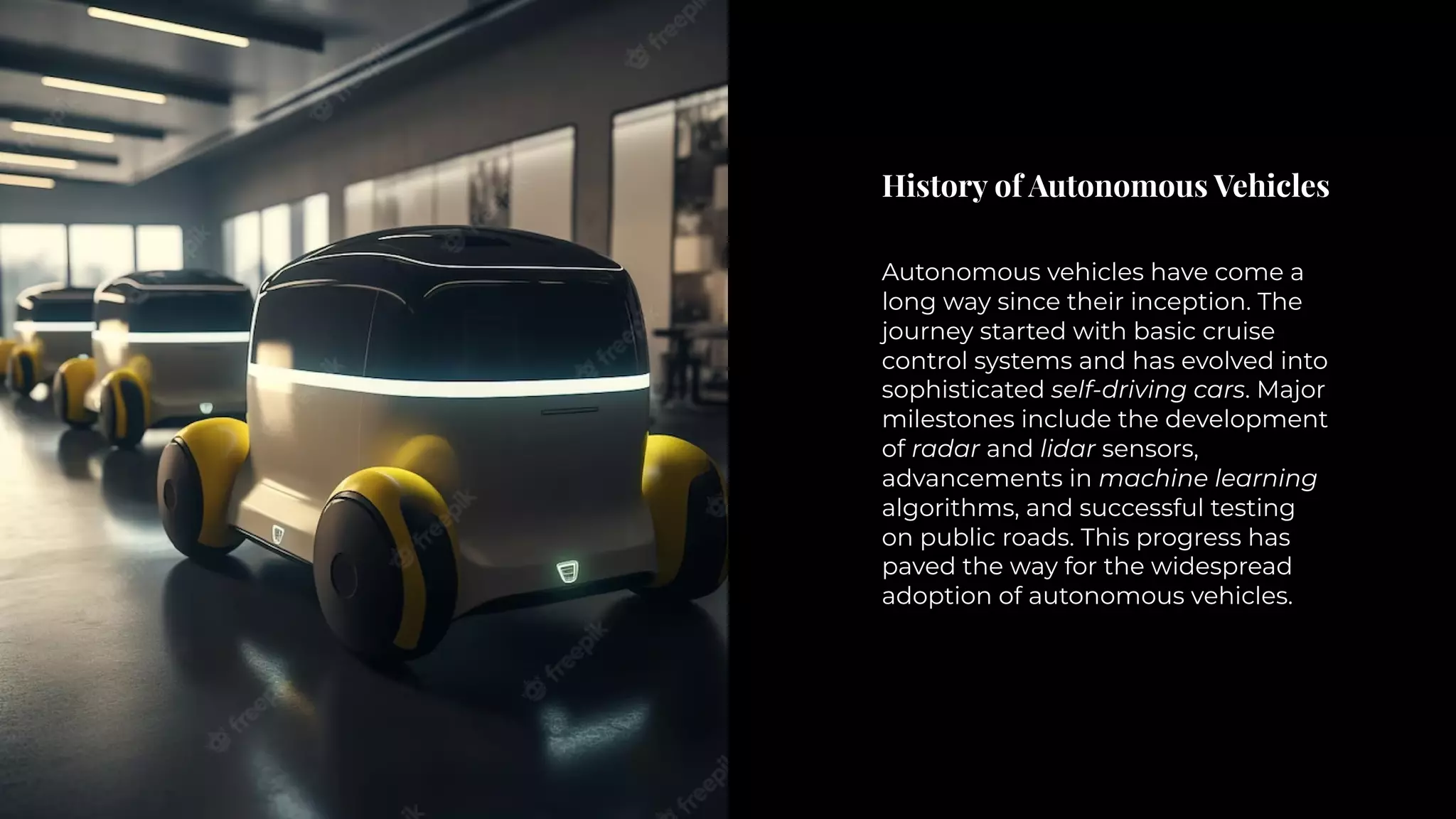
History of Autonomous Vehicles
Autonomous vehicles have come a
long way since their inception. The
journey started with basic cruise
control systems and has evolved into
sophisticated self-driving cars. Major
milestones include the development
of radar and lidar sensors,
advancements in machine learning
algorithms, and successful testing
on public roads. This progress has
paved the way for the widespread
adoption of autonomous vehicles.
Benefits of Autonomous Vehicles
Autonomous vehicles offer numerous benefits to
individuals and society. They enhance safety by
eliminating human error and reducing
accidents. Efficiency is improved through
optimized routes and reduced traffic congestion.
Additionally, autonomous vehicles provide
accessibility to transportation for individuals who
are unable to drive. These benefits contribute to
a more sustainable and convenient future of
transportation.
Challenges and Limitations
While autonomous vehicles hold great
promise, there are challenges that need
to be addressed. Regulatory frameworks
must be established to ensure safety
and liability. Cybersecurity is a concern
as these vehicles rely heavily on
connectivity. Additionally, ethical
dilemmas arise when programming
vehicles to make life-or-death decisions.
Overcoming these challenges will be
crucial for the widespread acceptance of
autonomous vehicles.
Current Applications
Autonomous vehicles are already being
used in various industries. They are
employed for ride-sharing services,
delivery of goods, and even in mining
operations. Companies like Tesla,
Waymo, and Uber are leading the way
in deploying autonomous vehicles on a
large scale. These applications
demonstrate the versatility and
potential of autonomous vehicles
beyond personal transportation.
Thanks!
Do you have any questions? https://www.blogplus.one/autonomous-vehicles-and-
robot-cars-advancements-in-self-driving-technology/
blogplus.one

driving-into-the-future-the-evolution-of-autonomous-vehicles-and-robot-cars. Blogplus.one.pdf

  • 1.
    Driving into the Future:The Evolution of Autonomous Vehicles and Robot Cars
  • 2.
    Introduction Welcome to thefuture of transportation! Autonomous vehicles and robot cars are revolutionizing the way we travel. These vehicles use advanced technologies such as artificial intelligence and sensors to navigate and make decisions. In this presentation, we will explore the evolution of autonomous vehicles and the benefits they bring to society.
  • 3.
    History of AutonomousVehicles Autonomous vehicles have come a long way since their inception. The journey started with basic cruise control systems and has evolved into sophisticated self-driving cars. Major milestones include the development of radar and lidar sensors, advancements in machine learning algorithms, and successful testing on public roads. This progress has paved the way for the widespread adoption of autonomous vehicles.
  • 4.
    Benefits of AutonomousVehicles Autonomous vehicles offer numerous benefits to individuals and society. They enhance safety by eliminating human error and reducing accidents. Efficiency is improved through optimized routes and reduced traffic congestion. Additionally, autonomous vehicles provide accessibility to transportation for individuals who are unable to drive. These benefits contribute to a more sustainable and convenient future of transportation.
  • 5.
    Challenges and Limitations Whileautonomous vehicles hold great promise, there are challenges that need to be addressed. Regulatory frameworks must be established to ensure safety and liability. Cybersecurity is a concern as these vehicles rely heavily on connectivity. Additionally, ethical dilemmas arise when programming vehicles to make life-or-death decisions. Overcoming these challenges will be crucial for the widespread acceptance of autonomous vehicles.
  • 6.
    Current Applications Autonomous vehiclesare already being used in various industries. They are employed for ride-sharing services, delivery of goods, and even in mining operations. Companies like Tesla, Waymo, and Uber are leading the way in deploying autonomous vehicles on a large scale. These applications demonstrate the versatility and potential of autonomous vehicles beyond personal transportation.
  • 7.
    Thanks! Do you haveany questions? https://www.blogplus.one/autonomous-vehicles-and- robot-cars-advancements-in-self-driving-technology/ blogplus.one