“Autonomous Vehicles: Challenges and Opportunities”
Submitted By: Aman Dangwal Submitted to : Mechanical Department
Presentation on
THDC Institute of Hydropower Engineering and Technology , Tehri
(VMSBUTU Campus Institute, Dehradun)
2023-24
Autonomous Vehicles
Autonomous vehicles, powered by advanced sensors and artificial intelligence, are poised to revolutionize transportation. From enhanced
safety to improved accessibility, these cutting-edge technologies hold immense potential to transform the way we travel.
Aa
Technological Advancements
1
Sensor Integration
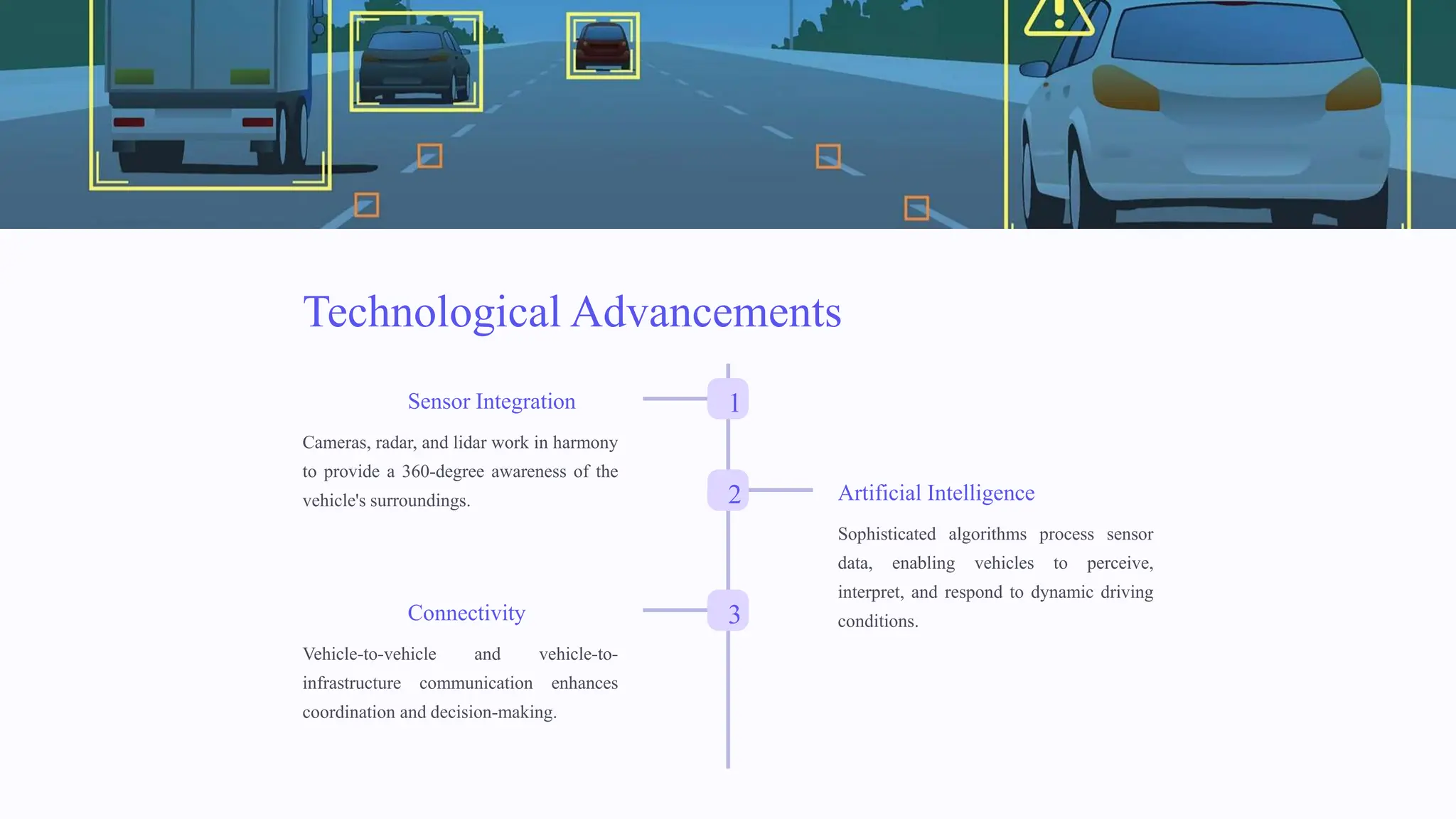
Cameras, radar, and lidar work in harmony
to provide a 360-degree awareness of the
vehicle's surroundings. 2 Artificial Intelligence
Sophisticated algorithms process sensor
data, enabling vehicles to perceive,
interpret, and respond to dynamic driving
conditions.
3
Connectivity
Vehicle-to-vehicle and vehicle-to-
infrastructure communication enhances
coordination and decision-making.
Regulatory Landscape
Evolving Policies
Governments worldwide are
introducing regulations to ensure
the safe deployment of
autonomous vehicles on public
roads.
Ethical Considerations
Policymakers are grappling with
complex ethical questions, such
as how autonomous vehicles
should respond in collision
scenarios.
Data Privacy
Strict data privacy and security
protocols are essential to protect
users' personal information.
Safety Considerations
1 Improved Perception
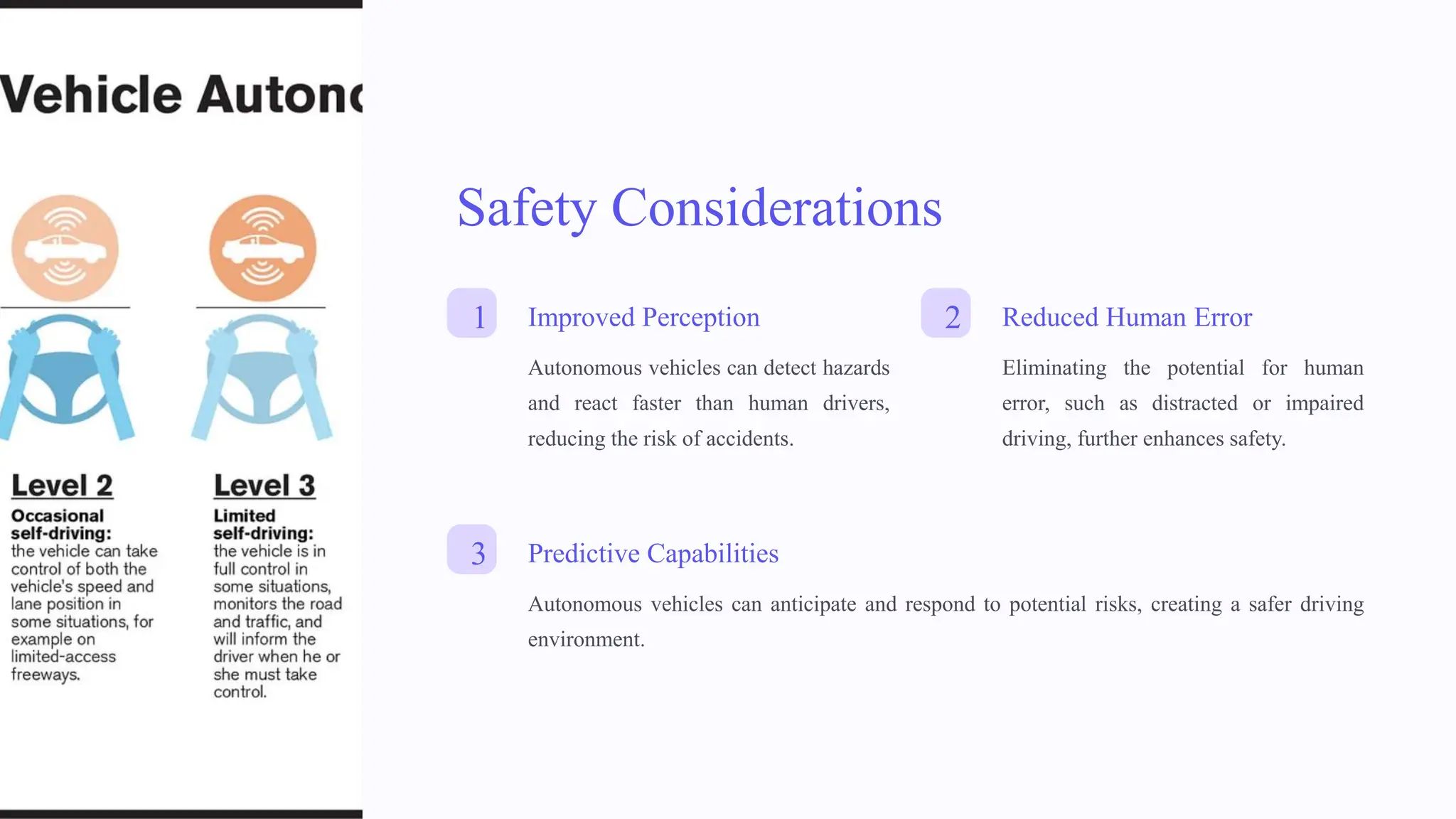
Autonomous vehicles can detect hazards
and react faster than human drivers,
reducing the risk of accidents.
2 Reduced Human Error
Eliminating the potential for human
error, such as distracted or impaired
driving, further enhances safety.
3 Predictive Capabilities
Autonomous vehicles can anticipate and respond to potential risks, creating a safer driving
environment.
Infrastructure Challenges
Connectivity
Requirements
Reliable and widespread
connectivity, including 5G
networks and V2X
communication, is crucial for
autonomous vehicles to
function effectively.
Roadway Adaptations
Existing roads may need to be
modified with clear lane
markings, signage, and other
cues to support autonomous
navigation.
Charging Infrastructure
The widespread deployment
of electric autonomous
vehicles will require a robust
network of charging stations.
Impact on Transportation Industry
Traffic Optimization
Autonomous vehicles can
communicate and coordinate,
reducing congestion and
improving traffic flow.
Logistics Revolution
Autonomous delivery vehicles and
drones can revolutionize last-mile
logistics, increasing efficiency and
reducing costs.
Public Transportation
Autonomous shuttles and buses
can enhance the accessibility and
reliability of public transportation
systems.
Ethical Dilemmas
Liability Concerns
Determining responsibility in
the event of an accident
involving an autonomous
vehicle is a complex legal issue.
Algorithmic Bias
Ensuring that autonomous
vehicle decision-making
algorithms are free from bias
and discrimination is crucial.
Trolley Problem
Autonomous vehicles may face
ethical dilemmas, such as
prioritizing the safety of
passengers or pedestrians in
collision scenarios.
Future Outlook and Opportunities
1 Increased Mobility
Autonomous vehicles can provide transportation access to underserved communities, the
elderly, and individuals with disabilities.
2 Reduced Emissions
The integration of autonomous and electric vehicle technologies can significantly reduce
greenhouse gas emissions and contribute to a sustainable future.
3 New Economic Opportunities
The autonomous vehicle industry is expected to create new jobs and stimulate economic
growth in various sectors.

Autonomous-Vehicles-Challenges-and-Opportunities.pptx

  • 1.
    “Autonomous Vehicles: Challengesand Opportunities” Submitted By: Aman Dangwal Submitted to : Mechanical Department Presentation on THDC Institute of Hydropower Engineering and Technology , Tehri (VMSBUTU Campus Institute, Dehradun) 2023-24
  • 2.
    Autonomous Vehicles Autonomous vehicles,powered by advanced sensors and artificial intelligence, are poised to revolutionize transportation. From enhanced safety to improved accessibility, these cutting-edge technologies hold immense potential to transform the way we travel. Aa
  • 3.
    Technological Advancements 1 Sensor Integration Cameras,radar, and lidar work in harmony to provide a 360-degree awareness of the vehicle's surroundings. 2 Artificial Intelligence Sophisticated algorithms process sensor data, enabling vehicles to perceive, interpret, and respond to dynamic driving conditions. 3 Connectivity Vehicle-to-vehicle and vehicle-to- infrastructure communication enhances coordination and decision-making.
  • 4.
    Regulatory Landscape Evolving Policies Governmentsworldwide are introducing regulations to ensure the safe deployment of autonomous vehicles on public roads. Ethical Considerations Policymakers are grappling with complex ethical questions, such as how autonomous vehicles should respond in collision scenarios. Data Privacy Strict data privacy and security protocols are essential to protect users' personal information.
  • 5.
    Safety Considerations 1 ImprovedPerception Autonomous vehicles can detect hazards and react faster than human drivers, reducing the risk of accidents. 2 Reduced Human Error Eliminating the potential for human error, such as distracted or impaired driving, further enhances safety. 3 Predictive Capabilities Autonomous vehicles can anticipate and respond to potential risks, creating a safer driving environment.
  • 6.
    Infrastructure Challenges Connectivity Requirements Reliable andwidespread connectivity, including 5G networks and V2X communication, is crucial for autonomous vehicles to function effectively. Roadway Adaptations Existing roads may need to be modified with clear lane markings, signage, and other cues to support autonomous navigation. Charging Infrastructure The widespread deployment of electric autonomous vehicles will require a robust network of charging stations.
  • 7.
    Impact on TransportationIndustry Traffic Optimization Autonomous vehicles can communicate and coordinate, reducing congestion and improving traffic flow. Logistics Revolution Autonomous delivery vehicles and drones can revolutionize last-mile logistics, increasing efficiency and reducing costs. Public Transportation Autonomous shuttles and buses can enhance the accessibility and reliability of public transportation systems.
  • 8.
    Ethical Dilemmas Liability Concerns Determiningresponsibility in the event of an accident involving an autonomous vehicle is a complex legal issue. Algorithmic Bias Ensuring that autonomous vehicle decision-making algorithms are free from bias and discrimination is crucial. Trolley Problem Autonomous vehicles may face ethical dilemmas, such as prioritizing the safety of passengers or pedestrians in collision scenarios.
  • 9.
    Future Outlook andOpportunities 1 Increased Mobility Autonomous vehicles can provide transportation access to underserved communities, the elderly, and individuals with disabilities. 2 Reduced Emissions The integration of autonomous and electric vehicle technologies can significantly reduce greenhouse gas emissions and contribute to a sustainable future. 3 New Economic Opportunities The autonomous vehicle industry is expected to create new jobs and stimulate economic growth in various sectors.