Drivers of CSR in India
Prachi Singla (17)
MBA HR
Introduction
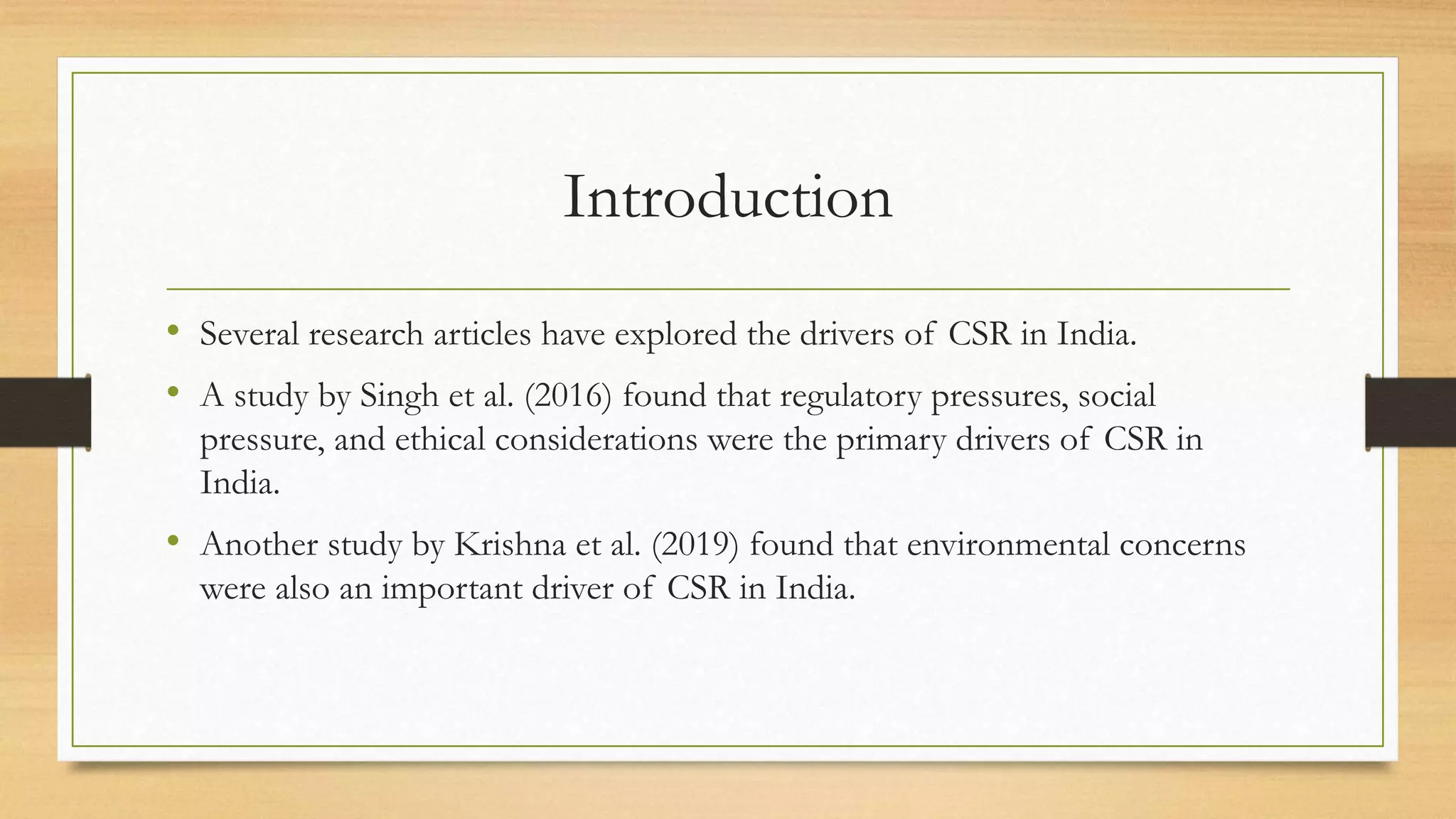
• Several research articles have explored the drivers of CSR in India.
• A study by Singh et al. (2016) found that regulatory pressures, social
pressure, and ethical considerations were the primary drivers of CSR in
India.
• Another study by Krishna et al. (2019) found that environmental concerns
were also an important driver of CSR in India.
Regulatory Framework
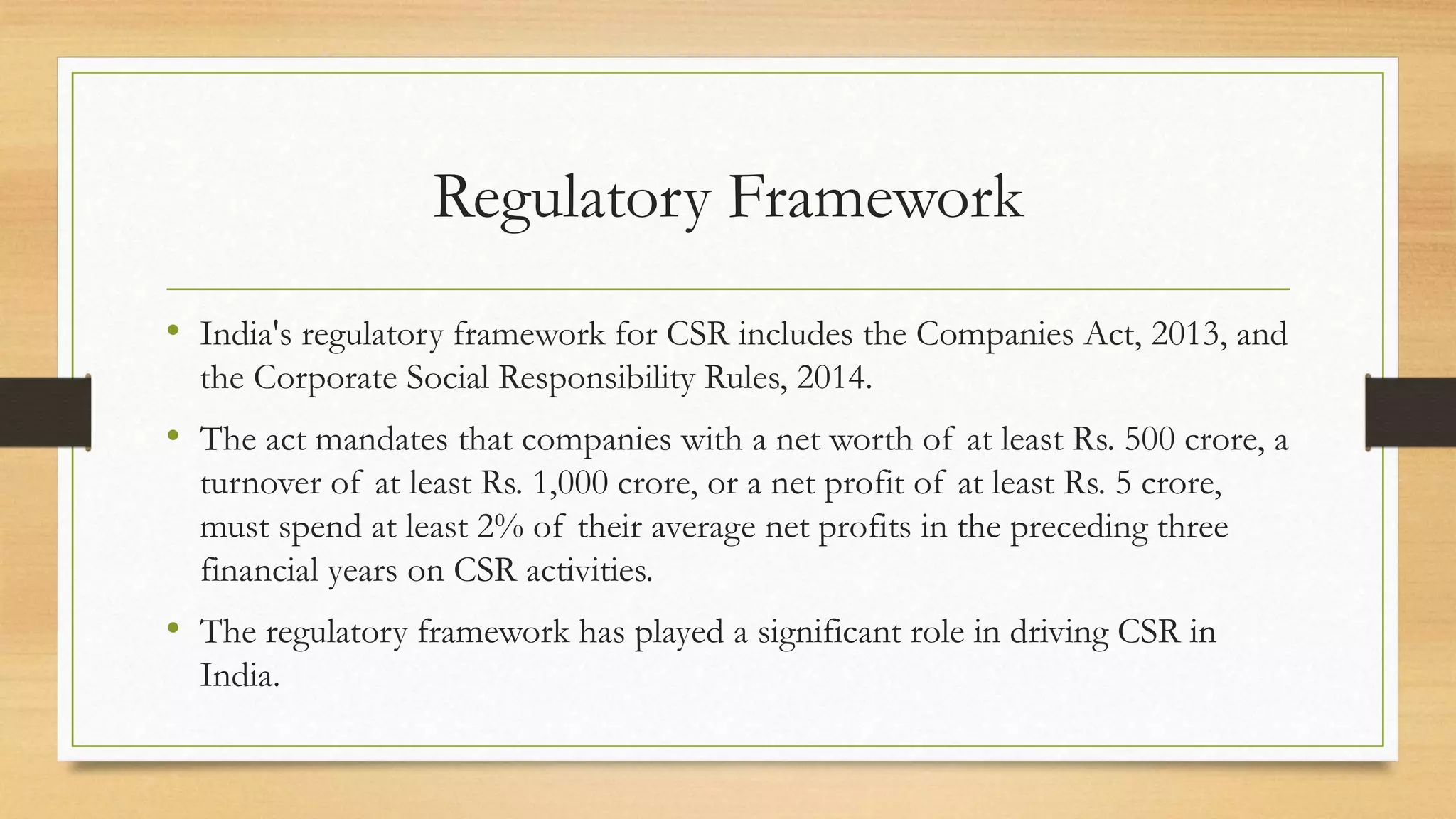
• India's regulatory framework for CSR includes the Companies Act, 2013, and
the Corporate Social Responsibility Rules, 2014.
• The act mandates that companies with a net worth of at least Rs. 500 crore, a
turnover of at least Rs. 1,000 crore, or a net profit of at least Rs. 5 crore,
must spend at least 2% of their average net profits in the preceding three
financial years on CSR activities.
• The regulatory framework has played a significant role in driving CSR in
India.
Economic Benefits
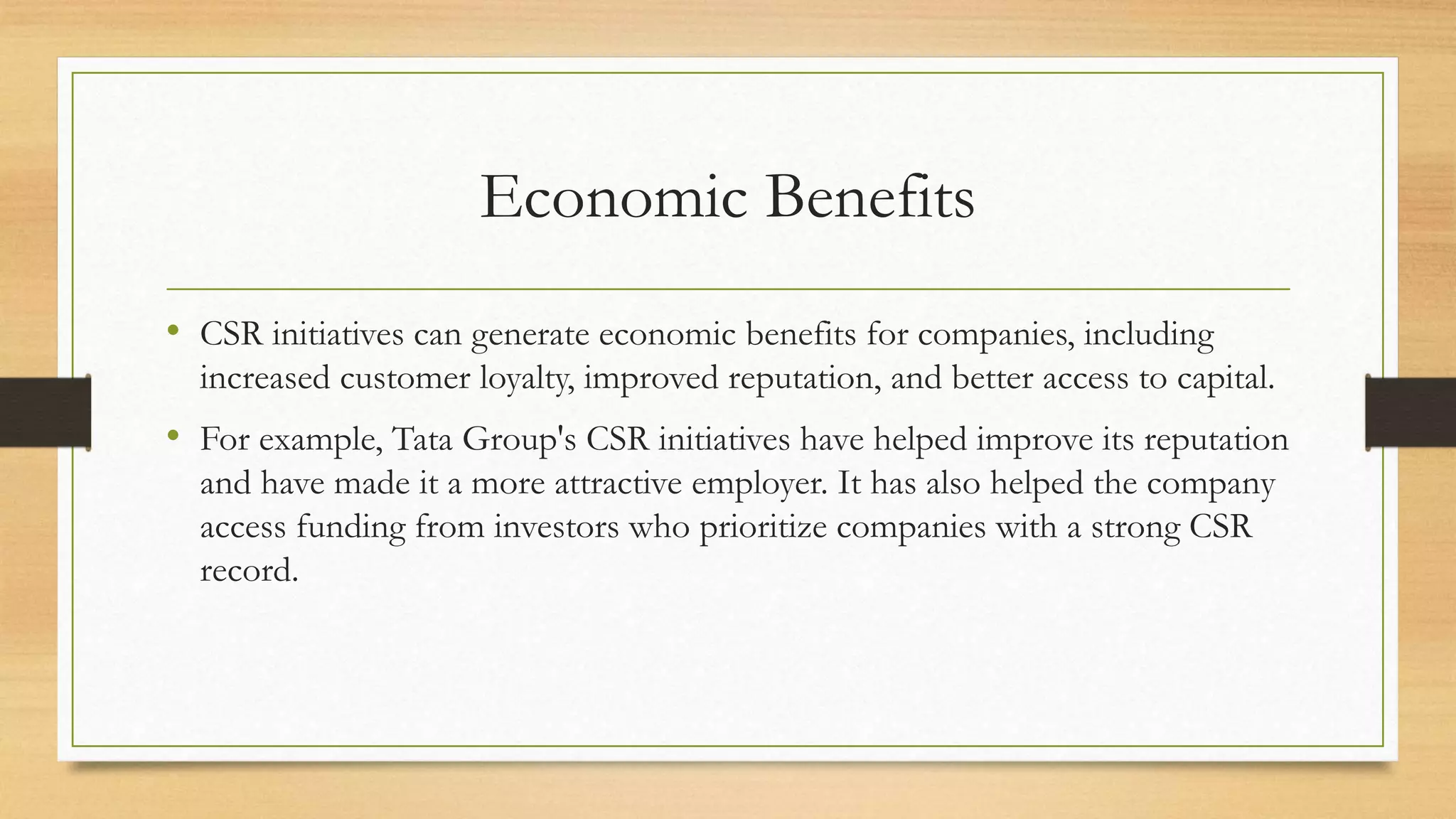
• CSR initiatives can generate economic benefits for companies, including
increased customer loyalty, improved reputation, and better access to capital.
• For example, Tata Group's CSR initiatives have helped improve its reputation
and have made it a more attractive employer. It has also helped the company
access funding from investors who prioritize companies with a strong CSR
record.
Ethical Considerations
• Companies are increasingly expected to behave in a socially responsible
manner. CSR can help companies meet these expectations and operate
ethically.
• For example, HUL's Project Shakti has helped empower rural women
entrepreneurs, providing them with livelihood opportunities and addressing
gender inequality
Environmental Concerns
• The environmental concerns that drive CSR in India include climate change,
pollution, and resource depletion.
• For example, Infosys has implemented several initiatives to reduce its carbon
footprint, including the use of renewable energy and the adoption of energy-
efficient practices.
Social Impact
• CSR can have a significant social impact, including poverty reduction,
education, and healthcare.
• For example, Wipro's Project Santwana provides healthcare services to
underserved communities in India, helping to improve their overall health
outcomes.
Stakeholder Pressure
• Stakeholders, including investors, customers, and employees, can exert
pressure on companies to engage in CSR.
• Notably, the growing trend of impact investing, where investors prioritize
companies with a strong CSR record, has led to an increase in CSR initiatives
in India.
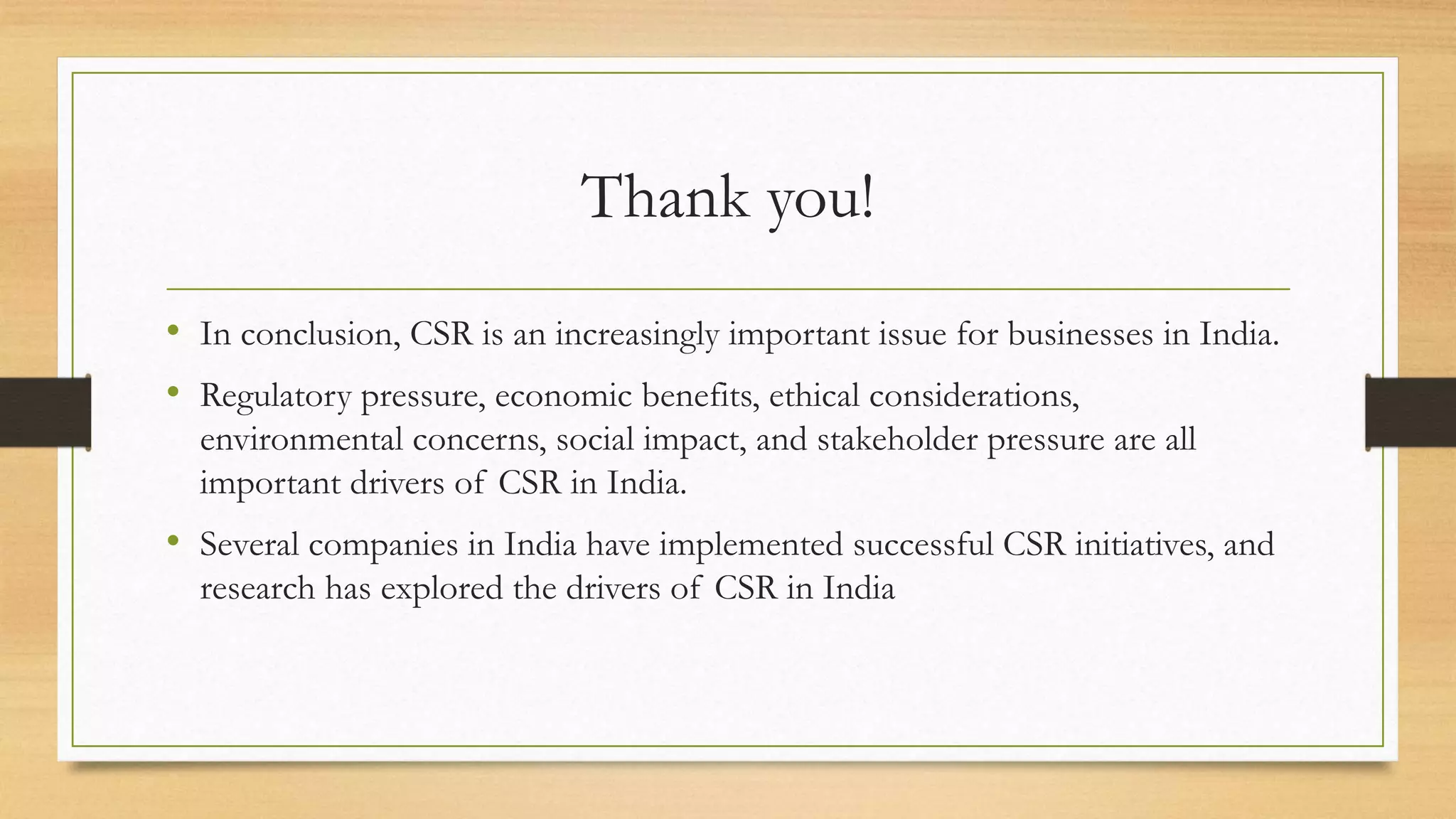
Thank you!
• In conclusion, CSR is an increasingly important issue for businesses in India.
• Regulatory pressure, economic benefits, ethical considerations,
environmental concerns, social impact, and stakeholder pressure are all
important drivers of CSR in India.
• Several companies in India have implemented successful CSR initiatives, and
research has explored the drivers of CSR in India

Drivers of CSR in India

  • 1.
    Drivers of CSRin India Prachi Singla (17) MBA HR
  • 2.
    Introduction • Several researcharticles have explored the drivers of CSR in India. • A study by Singh et al. (2016) found that regulatory pressures, social pressure, and ethical considerations were the primary drivers of CSR in India. • Another study by Krishna et al. (2019) found that environmental concerns were also an important driver of CSR in India.
  • 3.
    Regulatory Framework • India'sregulatory framework for CSR includes the Companies Act, 2013, and the Corporate Social Responsibility Rules, 2014. • The act mandates that companies with a net worth of at least Rs. 500 crore, a turnover of at least Rs. 1,000 crore, or a net profit of at least Rs. 5 crore, must spend at least 2% of their average net profits in the preceding three financial years on CSR activities. • The regulatory framework has played a significant role in driving CSR in India.
  • 4.
    Economic Benefits • CSRinitiatives can generate economic benefits for companies, including increased customer loyalty, improved reputation, and better access to capital. • For example, Tata Group's CSR initiatives have helped improve its reputation and have made it a more attractive employer. It has also helped the company access funding from investors who prioritize companies with a strong CSR record.
  • 5.
    Ethical Considerations • Companiesare increasingly expected to behave in a socially responsible manner. CSR can help companies meet these expectations and operate ethically. • For example, HUL's Project Shakti has helped empower rural women entrepreneurs, providing them with livelihood opportunities and addressing gender inequality
  • 6.
    Environmental Concerns • Theenvironmental concerns that drive CSR in India include climate change, pollution, and resource depletion. • For example, Infosys has implemented several initiatives to reduce its carbon footprint, including the use of renewable energy and the adoption of energy- efficient practices.
  • 7.
    Social Impact • CSRcan have a significant social impact, including poverty reduction, education, and healthcare. • For example, Wipro's Project Santwana provides healthcare services to underserved communities in India, helping to improve their overall health outcomes.
  • 8.
    Stakeholder Pressure • Stakeholders,including investors, customers, and employees, can exert pressure on companies to engage in CSR. • Notably, the growing trend of impact investing, where investors prioritize companies with a strong CSR record, has led to an increase in CSR initiatives in India.
  • 9.
    Thank you! • Inconclusion, CSR is an increasingly important issue for businesses in India. • Regulatory pressure, economic benefits, ethical considerations, environmental concerns, social impact, and stakeholder pressure are all important drivers of CSR in India. • Several companies in India have implemented successful CSR initiatives, and research has explored the drivers of CSR in India