For amalgam and and resin based restoration
material
*Presentation prepared by: Allan Magid Hassan
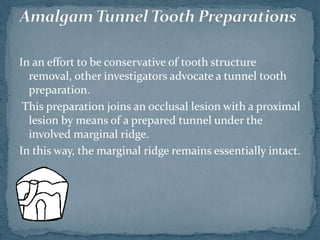
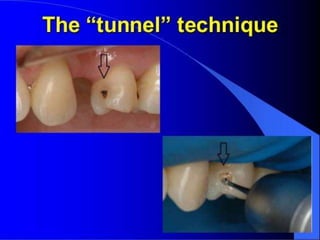
In an effort to be conservative of tooth structure
removal, other investigators advocate a tunnel tooth
preparation.
This preparation joins an occlusal lesion with a proximal
lesion by means of a prepared tunnel under the
involved marginal ridge.
In this way, the marginal ridge remains essentially intact.
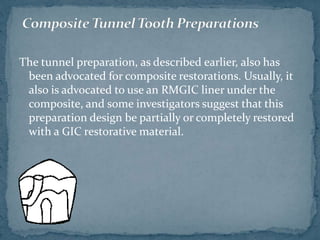
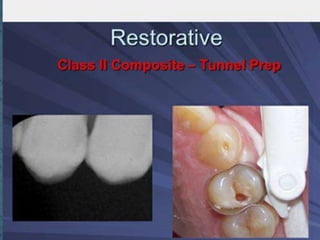
The tunnel preparation, as described earlier, also has
been advocated for composite restorations. Usually, it
also is advocated to use an RMGIC liner under the
composite, and some investigators suggest that this
preparation design be partially or completely restored
with a GIC restorative material.
 Tunnel preparation and restoration with a glass
ionomer cement (GIC) is possible due to the chemical
adhesion of the cement,
 The transference of fluoride ions. Since the material
allows the flow of moisture, the dehydration of the
cusps is reduced, making them less vulnerable to
future fracture. If there is any likelihood of occlusal
load more than glass ionomer can withstand, then
reduce the cement to DE junction and laminate with
composite resin
use of tunnel preparation can be considered when proximal
carious lesion necessitate restoration
preparation should be avoided in :
1. large carious lesion are diagnosed , when access is
particularly difficult.
2. overlying marginal ridge is subjected to heavy occlusion
or demonstrates a crack.
Thank you for listen

Dr. allan magid

  • 2.
    For amalgam andand resin based restoration material *Presentation prepared by: Allan Magid Hassan
  • 3.
    In an effortto be conservative of tooth structure removal, other investigators advocate a tunnel tooth preparation. This preparation joins an occlusal lesion with a proximal lesion by means of a prepared tunnel under the involved marginal ridge. In this way, the marginal ridge remains essentially intact.
  • 4.
    The tunnel preparation,as described earlier, also has been advocated for composite restorations. Usually, it also is advocated to use an RMGIC liner under the composite, and some investigators suggest that this preparation design be partially or completely restored with a GIC restorative material.
  • 5.
     Tunnel preparationand restoration with a glass ionomer cement (GIC) is possible due to the chemical adhesion of the cement,  The transference of fluoride ions. Since the material allows the flow of moisture, the dehydration of the cusps is reduced, making them less vulnerable to future fracture. If there is any likelihood of occlusal load more than glass ionomer can withstand, then reduce the cement to DE junction and laminate with composite resin
  • 8.
    use of tunnelpreparation can be considered when proximal carious lesion necessitate restoration preparation should be avoided in : 1. large carious lesion are diagnosed , when access is particularly difficult. 2. overlying marginal ridge is subjected to heavy occlusion or demonstrates a crack.
  • 9.