10
DO’S AND DON’TS
SCAFFOLD SAFETY
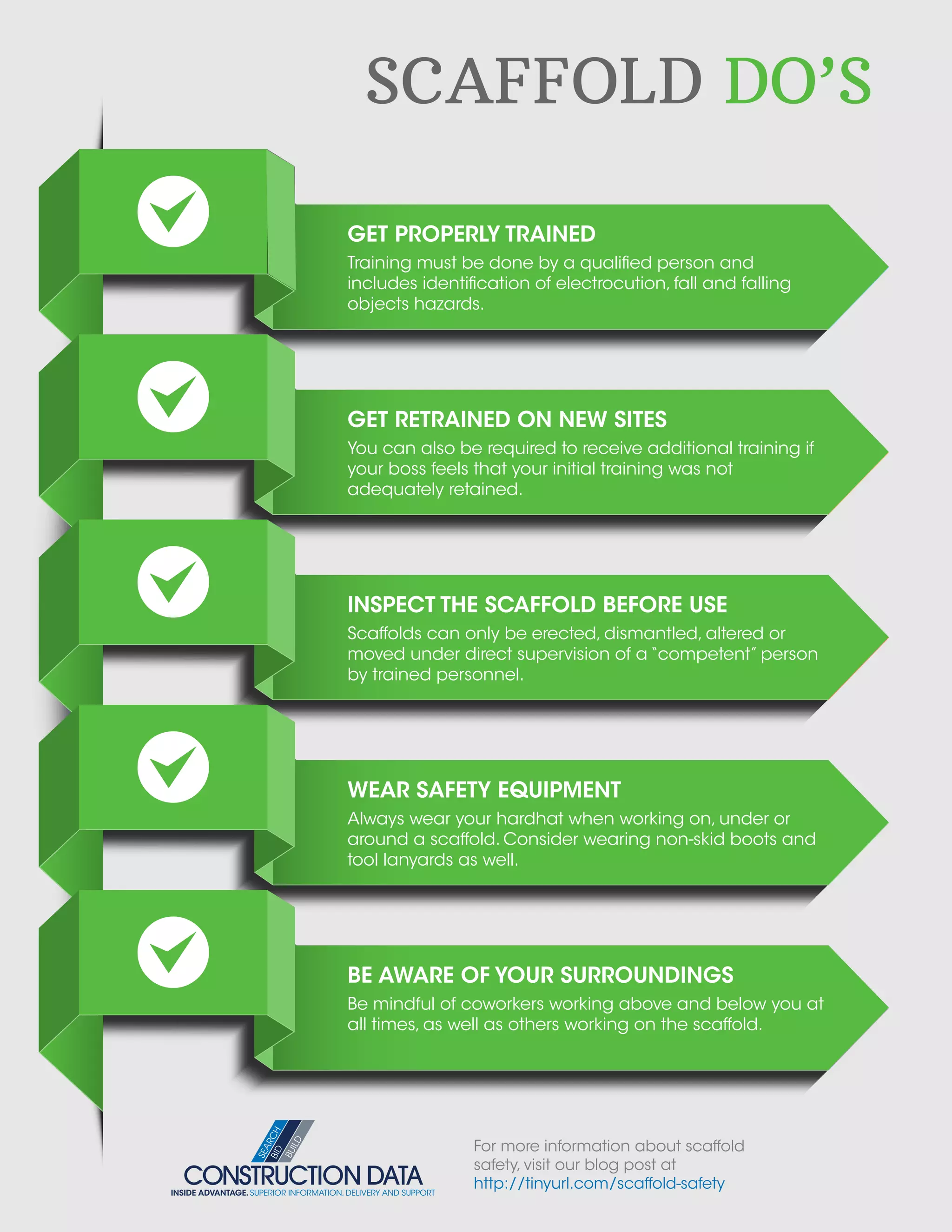
SCAFFOLD DO’S
INSIDE ADVANTAGE. SUPERIOR INFORMATION, DELIVERY AND SUPPORT
For more information about scaffold
safety, visit our blog post at
http://tinyurl.com/scaffold-safety
GET PROPERLY TRAINED
Training must be done by a qualified person and
includes identification of electrocution, fall and falling
objects hazards.
GET RETRAINED ON NEW SITES
You can also be required to receive additional training if
your boss feels that your initial training was not
adequately retained.
INSPECT THE SCAFFOLD BEFORE USE
Scaffolds can only be erected, dismantled, altered or
moved under direct supervision of a “competent” person
by trained personnel.
WEAR SAFETY EQUIPMENT
Always wear your hardhat when working on, under or
around a scaffold. Consider wearing non-skid boots and
tool lanyards as well.
BE AWARE OF YOUR SURROUNDINGS
Be mindful of coworkers working above and below you at
all times, as well as others working on the scaffold.
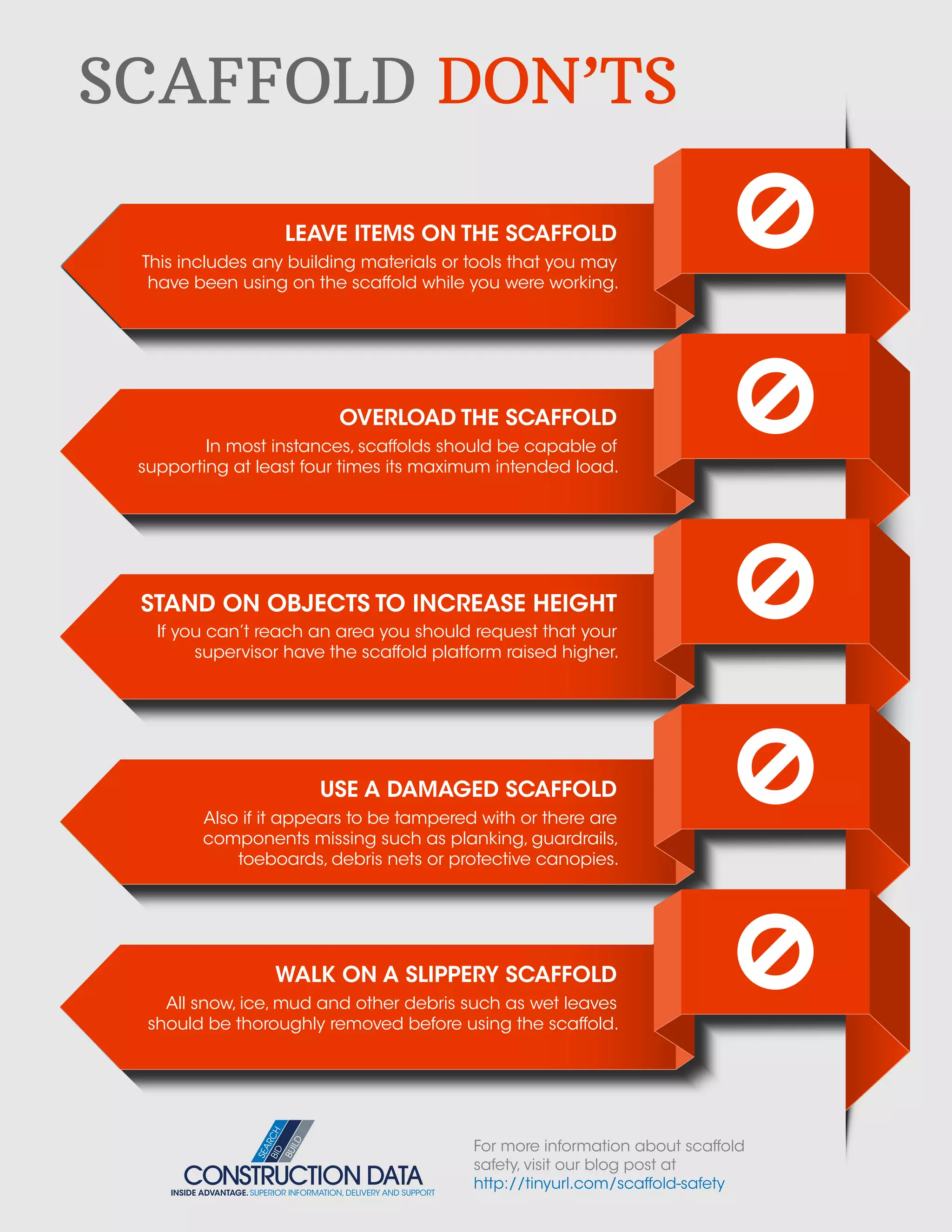
SCAFFOLD DON’TS
INSIDE ADVANTAGE. SUPERIOR INFORMATION, DELIVERY AND SUPPORT
For more information about scaffold
safety, visit our blog post at
http://tinyurl.com/scaffold-safety
LEAVE ITEMS ON THE SCAFFOLD
This includes any building materials or tools that you may
have been using on the scaffold while you were working.
OVERLOAD THE SCAFFOLD
In most instances, scaffolds should be capable of
supporting at least four times its maximum intended load.
USE A DAMAGED SCAFFOLD
Also if it appears to be tampered with or there are
components missing such as planking, guardrails,
toeboards, debris nets or protective canopies.
WALK ON A SLIPPERY SCAFFOLD
All snow, ice, mud and other debris such as wet leaves
should be thoroughly removed before using the scaffold.
STAND ON OBJECTS TO INCREASE HEIGHT
If you can’t reach an area you should request that your
supervisor have the scaffold platform raised higher.
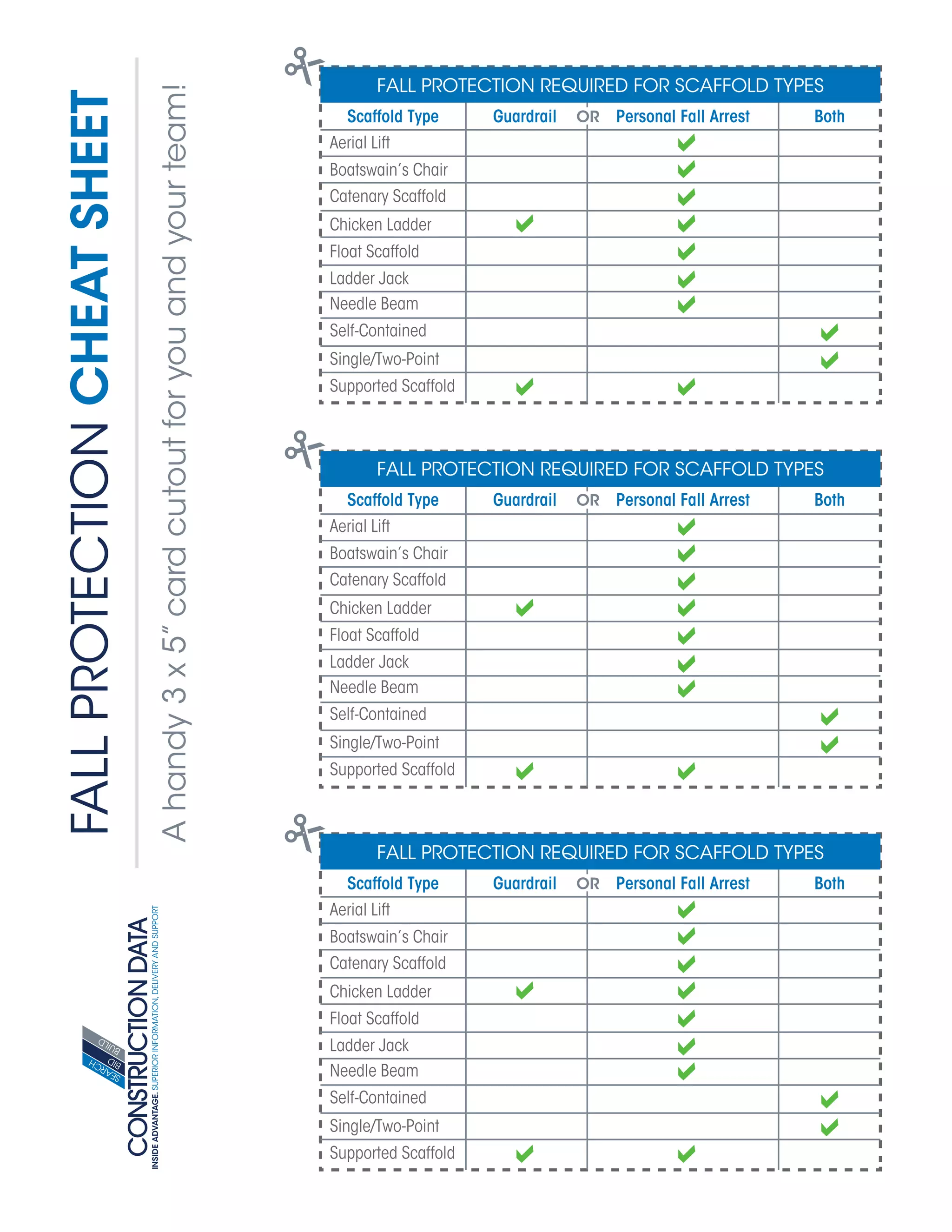
FALLPROTECTIONCHEATSHEET
Ahandy3x5”cardcutoutforyouandyourteam!
Scaffold Type Guardrail Personal Fall Arrest Both
Aerial Lift
FALL PROTECTION REQUIRED FOR SCAFFOLD TYPES
Boatswain’s Chair
Catenary Scaffold
Chicken Ladder
Float Scaffold
Ladder Jack
Needle Beam
Self-Contained
Single/Two-Point
Supported Scaffold
OR
Scaffold Type Guardrail Personal Fall Arrest Both
Aerial Lift
FALL PROTECTION REQUIRED FOR SCAFFOLD TYPES
Boatswain’s Chair
Catenary Scaffold
Chicken Ladder
Float Scaffold
Ladder Jack
Needle Beam
Self-Contained
Single/Two-Point
Supported Scaffold
OR
Scaffold Type Guardrail Personal Fall Arrest Both
Aerial Lift
FALL PROTECTION REQUIRED FOR SCAFFOLD TYPES
Boatswain’s Chair
Catenary Scaffold
Chicken Ladder
Float Scaffold
Ladder Jack
Needle Beam
Self-Contained
Single/Two-Point
Supported Scaffold
OR
INSIDEADVANTAGE.SUPERIORINFORMATION,DELIVERYANDSUPPORT

Do's and Don'ts of Scaffold Safety

  • 1.
  • 2.
    SCAFFOLD DO’S INSIDE ADVANTAGE.SUPERIOR INFORMATION, DELIVERY AND SUPPORT For more information about scaffold safety, visit our blog post at http://tinyurl.com/scaffold-safety GET PROPERLY TRAINED Training must be done by a qualified person and includes identification of electrocution, fall and falling objects hazards. GET RETRAINED ON NEW SITES You can also be required to receive additional training if your boss feels that your initial training was not adequately retained. INSPECT THE SCAFFOLD BEFORE USE Scaffolds can only be erected, dismantled, altered or moved under direct supervision of a “competent” person by trained personnel. WEAR SAFETY EQUIPMENT Always wear your hardhat when working on, under or around a scaffold. Consider wearing non-skid boots and tool lanyards as well. BE AWARE OF YOUR SURROUNDINGS Be mindful of coworkers working above and below you at all times, as well as others working on the scaffold.
  • 3.
    SCAFFOLD DON’TS INSIDE ADVANTAGE.SUPERIOR INFORMATION, DELIVERY AND SUPPORT For more information about scaffold safety, visit our blog post at http://tinyurl.com/scaffold-safety LEAVE ITEMS ON THE SCAFFOLD This includes any building materials or tools that you may have been using on the scaffold while you were working. OVERLOAD THE SCAFFOLD In most instances, scaffolds should be capable of supporting at least four times its maximum intended load. USE A DAMAGED SCAFFOLD Also if it appears to be tampered with or there are components missing such as planking, guardrails, toeboards, debris nets or protective canopies. WALK ON A SLIPPERY SCAFFOLD All snow, ice, mud and other debris such as wet leaves should be thoroughly removed before using the scaffold. STAND ON OBJECTS TO INCREASE HEIGHT If you can’t reach an area you should request that your supervisor have the scaffold platform raised higher.
  • 4.
    FALLPROTECTIONCHEATSHEET Ahandy3x5”cardcutoutforyouandyourteam! Scaffold Type GuardrailPersonal Fall Arrest Both Aerial Lift FALL PROTECTION REQUIRED FOR SCAFFOLD TYPES Boatswain’s Chair Catenary Scaffold Chicken Ladder Float Scaffold Ladder Jack Needle Beam Self-Contained Single/Two-Point Supported Scaffold OR Scaffold Type Guardrail Personal Fall Arrest Both Aerial Lift FALL PROTECTION REQUIRED FOR SCAFFOLD TYPES Boatswain’s Chair Catenary Scaffold Chicken Ladder Float Scaffold Ladder Jack Needle Beam Self-Contained Single/Two-Point Supported Scaffold OR Scaffold Type Guardrail Personal Fall Arrest Both Aerial Lift FALL PROTECTION REQUIRED FOR SCAFFOLD TYPES Boatswain’s Chair Catenary Scaffold Chicken Ladder Float Scaffold Ladder Jack Needle Beam Self-Contained Single/Two-Point Supported Scaffold OR INSIDEADVANTAGE.SUPERIORINFORMATION,DELIVERYANDSUPPORT