Introduction to
Data-Oriented Design
@YaroslavBunyak
Senior Software Engineer, SoftServe
Programming, M**********r
Do you speak it?
Story
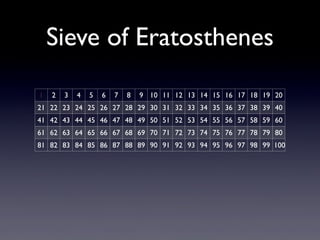
Sieve of Eratosthenes
1

2

3

4

5

6

7

8

9 10 11 12 13 14 15 16 17 18 19 20

21 22 23 24 25 26 27 28 29 30 31 32 33 34 35 36 37 38 39 40
41 42 43 44 45 46 47 48 49 50 51 52 53 54 55 56 57 58 59 60
61 62 63 64 65 66 67 68 69 70 71 72 73 74 75 76 77 78 79 80
81 82 83 84 85 86 87 88 89 90 91 92 93 94 95 96 97 98 99 100
Sieve of Eratosthenes
1

2

3

4

5

6

7

8

9 10 11 12 13 14 15 16 17 18 19 20

21 22 23 24 25 26 27 28 29 30 31 32 33 34 35 36 37 38 39 40
41 42 43 44 45 46 47 48 49 50 51 52 53 54 55 56 57 58 59 60
61 62 63 64 65 66 67 68 69 70 71 72 73 74 75 76 77 78 79 80
81 82 83 84 85 86 87 88 89 90 91 92 93 94 95 96 97 98 99 100
Sieve of Eratosthenes
1

2

3

4

5

6

7

8

9 10 11 12 13 14 15 16 17 18 19 20

21 22 23 24 25 26 27 28 29 30 31 32 33 34 35 36 37 38 39 40
41 42 43 44 45 46 47 48 49 50 51 52 53 54 55 56 57 58 59 60
61 62 63 64 65 66 67 68 69 70 71 72 73 74 75 76 77 78 79 80
81 82 83 84 85 86 87 88 89 90 91 92 93 94 95 96 97 98 99 100
Sieve of Eratosthenes
1

2

3

4

5

6

7

8

9 10 11 12 13 14 15 16 17 18 19 20

21 22 23 24 25 26 27 28 29 30 31 32 33 34 35 36 37 38 39 40
41 42 43 44 45 46 47 48 49 50 51 52 53 54 55 56 57 58 59 60
61 62 63 64 65 66 67 68 69 70 71 72 73 74 75 76 77 78 79 80
81 82 83 84 85 86 87 88 89 90 91 92 93 94 95 96 97 98 99 100
Sieve of Eratosthenes
1

2

3

4

5

6

7

8

9 10 11 12 13 14 15 16 17 18 19 20

21 22 23 24 25 26 27 28 29 30 31 32 33 34 35 36 37 38 39 40
41 42 43 44 45 46 47 48 49 50 51 52 53 54 55 56 57 58 59 60
61 62 63 64 65 66 67 68 69 70 71 72 73 74 75 76 77 78 79 80
81 82 83 84 85 86 87 88 89 90 91 92 93 94 95 96 97 98 99 100
Sieve of Eratosthenes
1

2

3

4

5

6

7

8

9 10 11 12 13 14 15 16 17 18 19 20

21 22 23 24 25 26 27 28 29 30 31 32 33 34 35 36 37 38 39 40
41 42 43 44 45 46 47 48 49 50 51 52 53 54 55 56 57 58 59 60
61 62 63 64 65 66 67 68 69 70 71 72 73 74 75 76 77 78 79 80
81 82 83 84 85 86 87 88 89 90 91 92 93 94 95 96 97 98 99 100
Sieve of Eratosthenes
1

2

3

4

5

6

7

8

9 10 11 12 13 14 15 16 17 18 19 20

21 22 23 24 25 26 27 28 29 30 31 32 33 34 35 36 37 38 39 40
41 42 43 44 45 46 47 48 49 50 51 52 53 54 55 56 57 58 59 60
61 62 63 64 65 66 67 68 69 70 71 72 73 74 75 76 77 78 79 80
81 82 83 84 85 86 87 88 89 90 91 92 93 94 95 96 97 98 99 100
Sieve of Eratosthenes

Simple algorithm
Sieve of Eratosthenes

Simple algorithm
Easy to implement
Sieve of Eratosthenes
int array[SIZE];
Sieve of Eratosthenes
int array[SIZE];
array[i] = 1;
Sieve of Eratosthenes
int array[SIZE];
array[i] = 1;
if (array[i]) ...
Sieve of Eratosthenes
int array[SIZE];
array[i] = 1;
if (array[i]) ...
Sieve of Eratosthenes
int array[SIZE];
array[i] = 1;
if (array[i]) ...
int bits[SIZE / 32];
Sieve of Eratosthenes
int array[SIZE];
array[i] = 1;
if (array[i]) ...
int bits[SIZE / 32];
bits[i / 32] |= 1 << (i % 32);
Sieve of Eratosthenes
int array[SIZE];
array[i] = 1;
if (array[i]) ...
int bits[SIZE / 32];
bits[i / 32] |= 1 << (i % 32);
if (bits[i / 32] & (1 << (i % 32))) ...
Sieve of Eratosthenes
Simple algorithm
Sieve of Eratosthenes
Simple algorithm
Easy to implement
Sieve of Eratosthenes
Simple algorithm
Easy to implement
But...
Sieve of Eratosthenes
Simple algorithm
Easy to implement
But...
unexpected results
Sieve of Eratosthenes
The second implementation (bitset) is 3-5x
faster than first (array)
Sieve of Eratosthenes
The second implementation (bitset) is 3-5x
faster than first (array)
Even though it actually does more work
Why?!.
Fast Forward
...
...
• Years have passed
...
• Years have passed
• I become a software engineer
...
• Years have passed
• I become a software engineer
• And one day...
This Graph

CPU/Memory performance

Slide 17

Computer architecture: a quantitative approach
By John L. Hennessy, David A. Patterson, Andrea C. Arpaci-Dusseau
This Table
1980

Modern PC

Improvement, %

Clock speed, Mhz

6

3000

+500x

Memory size, MB

2

2000

+1000x

Memory bandwidth, MB/s

13

7000 (read)
2000 (write)

+540x
+150x

Memory latency, ns

225

~70

+3x

Memory latency, cycles

1.4

210

-150x
Our Programming
Model
Our Programming
Model
• High-level languages
Our Programming
Model
• High-level languages
• OOP
Our Programming
Model
• High-level languages
• OOP
• everywhere!
Our Programming
Model
• High-level languages
• OOP
• everywhere!
• objects scattered throughout the
address space
Our Programming
Model
• High-level languages
• OOP
• everywhere!
• objects scattered throughout the
address space

• access patterns are unpredictable
Meet
Data-Oriented Design
Ideas
Ideas
• Programs transform data
Ideas
• Programs transform data
• nothing more
Ideas
• Programs transform data
• nothing more
• Think about data, not code
Ideas
• Programs transform data
• nothing more
• Think about data, not code
• Hardware is not a black box
Program
data

xform

data
Program
data

xform

Your Program

data
Claim
• Memory latency is the king
• CPU cycles almost free
Memory
Memory
CPU

•

CPU registers
Memory
CPU

•
•

CPU registers
Cache Level 1

L1i
Cache

L1d
Cache
Memory
CPU

•
•
•

CPU registers
Cache Level 1
Cache Level 2

L1i
Cache

L1d
Cache

L2
Cache
Memory
CPU

•
•
•
•

CPU registers
Cache Level 1
Cache Level 2

L1i
Cache

L1d
Cache

L2
Cache

RAM
RAM
Memory
CPU

•
•
•
•
•

CPU registers
Cache Level 1
Cache Level 2

L1i
Cache

L1d
Cache

L2
Cache

RAM
RAM

HDD
Disk
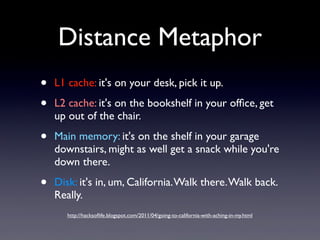
Distance Metaphor
Distance Metaphor
•

L1 cache: it's on your desk, pick it up.
Distance Metaphor
•
•

L1 cache: it's on your desk, pick it up.
L2 cache: it's on the bookshelf in your office, get
up out of the chair.
Distance Metaphor
•
•

L1 cache: it's on your desk, pick it up.

•

Main memory: it's on the shelf in your garage
downstairs, might as well get a snack while you're
down there.

L2 cache: it's on the bookshelf in your office, get
up out of the chair.
Distance Metaphor
•
•

L1 cache: it's on your desk, pick it up.

•

Main memory: it's on the shelf in your garage
downstairs, might as well get a snack while you're
down there.

•

Disk: it's in, um, California. Walk there. Walk back.
Really.

L2 cache: it's on the bookshelf in your office, get
up out of the chair.
Distance Metaphor
•
•

L1 cache: it's on your desk, pick it up.

•

Main memory: it's on the shelf in your garage
downstairs, might as well get a snack while you're
down there.

•

Disk: it's in, um, California. Walk there. Walk back.
Really.

L2 cache: it's on the bookshelf in your office, get
up out of the chair.

http://hacksoflife.blogspot.com/2011/04/going-to-california-with-aching-in-my.html
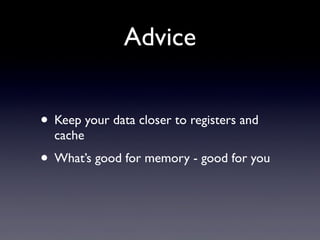
Advice
Advice
• Keep your data closer to registers and
cache
Advice
• Keep your data closer to registers and
cache

• What’s good for memory - good for you
Example 1: AoS vs SoA
struct Tile
{
bool ready;
Data pixels; // big chunk of data
};
Tile tiles[SIZE];
vs
struct Image
{
bool ready[SIZE];

// hot data

Data pixels[SIZE]; // cold data
};
Example 1: AoS vs SoA
for (int i = 0; i < SIZE; ++i)
{
if (tiles[i].ready)
draw(tiles[i].pixels);
}
vs
for (int i = 0; i < SIZE; ++i)
{
if (image.ready[i])
draw(image.pixels[i]);
}
Example 1: AoS vs SoA

vs
Example 2: Existence
struct Image
{
bool ready[SIZE];
Data pixels[SIZE];
};
Image image;
vs
Data ready_pixels[N];
Data no_pixels[M];
// N + M = SIZE
Example 2: Existence
for (int i = 0; i < SIZE; ++i)
{
if (image.ready[i])
draw(image.pixels[i]);
}
vs
for (int i = 0; i < N; ++i)
{
draw(ready_pixels[i];
}
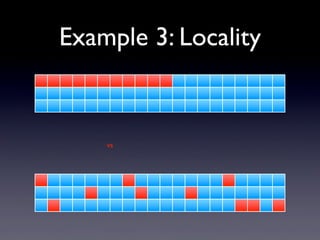
Example 3: Locality
std::vector<float> numbers;
float sum = 0.0f;
for (auto it : numbers)
sum += *it;
vs
std::list<float> numbers;
float sum = 0.0f;
for (auto it : numbers)
sum+ = *it;
Example 3: Locality

vs
Few Patterns
• A to B transform
• In place transform
• Existence based processing
• Data normalization
• DB design says hello!
• Task, gather, dispatch, and more...
Benefits of DOD
Benefits of DOD
•

Maximum performance

•

CPU doesn’t wait & starve
Benefits of DOD
•
•

Maximum performance

•

CPU doesn’t wait & starve

Easy to parallelize

•
•

data is grouped, transforms separated
ready for Parallel Processing, OOP doesn’t
Benefits of DOD
•
•
•

Maximum performance

•

CPU doesn’t wait & starve

Easy to parallelize

•
•

data is grouped, transforms separated
ready for Parallel Processing, OOP doesn’t

Simpler code

•

surprise!
References: Memory
• Ulrich Drepper “What Every Computer

Programmer Should Know About Memory”

• Крис Касперски “Техника оптимизации
програм. Еффективное использование
памяти”

• Christer Ericson “Memory Optimization”
• Igor Ostrovsky “Gallery of Processor Cache
Effects”
References: DOD
•

Noel Llopis “Data-Oriented Design”, Game Developer
Magazine, September 2009

•

Richard Fabian “Data-Oriented Desing”, book draft
http://www.dataorienteddesign.com/dodmain/

•
•

Tony Albrecht “Pitfalls of Object-Oriented Programming”

•
•

Mike Acton “Typical C++ Bullshit”

Niklas Frykholm “Practical Examples of Data Oriented
Design”
Data Oriented Design @ Google+
Thank You!
Q?

Introduction to Data-Oriented Design